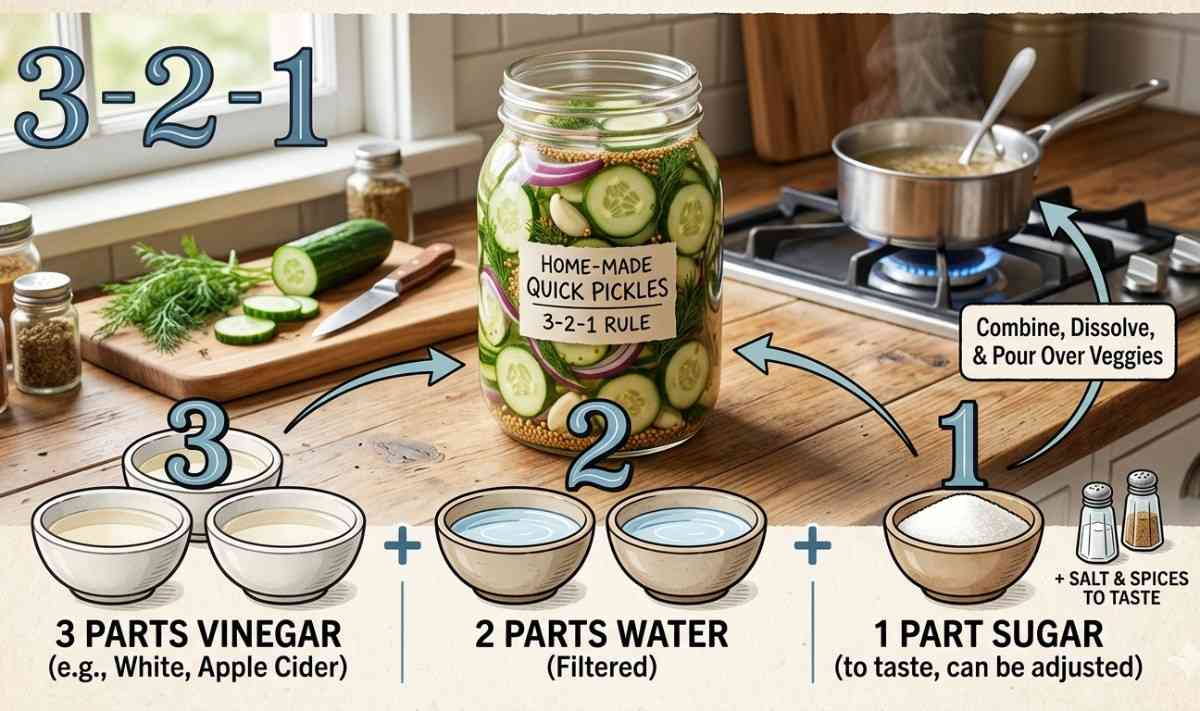
Pickling is one of the oldest and most reliable methods of preserving food. Across cultures and centuries, people have relied on salt, vinegar, and time to transform fresh produce into something tangy, complex, and long-lasting. While there are countless pickling recipes available today, one simple formula consistently delivers reliable, well-balanced results: the 3-2-1 rule.
The 3-2-1 rule for pickles is a ratio-based brine formula that simplifies the pickling process. Instead of memorizing long ingredient lists, you follow a proportion: three parts vinegar, two parts water, and one part sugar. Add salt and spices as needed, and you have a dependable pickling liquid that works for cucumbers and far beyond. This guide explores everything you need to know about the 3-2-1 rule—how it works, why it works, how to adapt it, and how to use it to create consistently delicious pickles at home.
What Is the 3-2-1 Rule for Pickles?
At its core, the 3-2-1 rule is a brine ratio:
- 3 parts vinegar
- 2 parts water
- 1 part sugar
Salt is typically added separately, usually about 1 tablespoon per cup of liquid, though this can vary depending on preference and recipe style.
The power of this formula lies in balance. Vinegar provides acidity, water moderates intensity, and sugar softens the sharp edges while enhancing flavor complexity. When these three elements are combined in the right proportions, they create a brine that is assertive yet rounded.
For example, if you’re making a small batch of refrigerator pickles, you might use:
- 1 ½ cups vinegar
- 1 cup water
- ½ cup sugar
That maintains the 3:2:1 ratio. From there, you add salt and seasonings to customize the flavor.
Why the 3-2-1 Ratio Works?
To understand why this rule is so effective, it helps to look at the function of each component.
1. Vinegar: The Preserving Agent
Vinegar provides acidity, which inhibits the growth of harmful bacteria and preserves the vegetables. Most pickling recipes use distilled white vinegar (5% acidity) or apple cider vinegar.
Acidity does three things:
- Preserves the produce
- Creates the signature tang
- Alters texture by firming vegetables slightly
Using three parts vinegar ensures the brine is strong enough to preserve properly while still allowing dilution and sweetness to balance the flavor.
2. Water: The Moderator
Straight vinegar can be overwhelmingly sharp. Water softens the acidity, allowing the other flavors to shine.
Two parts water strike a balance: enough to prevent harshness, but not so much that the brine becomes weak or unsafe.
3. Sugar: The Balancer
One part sugar does not necessarily make the pickles sweet. Instead, it balances the acidity. Even in savory pickles, sugar rounds out the flavor and prevents harsh sourness.
The sugar level can be adjusted slightly to taste, but the 1-part baseline offers a reliable starting point.
Salt: The Unsung Hero
While not included in the “3-2-1” name, salt is essential.
Salt:
- Enhances flavor
- Draws moisture out of vegetables
- Contributes to texture
- Supports preservation
For quick pickles, kosher salt or pickling salt is preferred. Avoid iodized salt, which can cloud the brine.
A common guideline is:
- 1 tablespoon salt per 1–2 cups total liquid
Taste the brine before pouring it over vegetables. It should taste pleasantly sharp and balanced.
Types of Pickles You Can Make with the 3-2-1 Rule
The beauty of this rule is its versatility. It works well for refrigerator pickles, quick pickles, and even some water-bath canned recipes (with proper safety verification).
Here are some vegetables that adapt beautifully to the 3-2-1 brine:
Cucumbers
The classic choice. Use pickling cucumbers for best texture. Slice into spears, chips, or leave whole if small.
Flavor ideas:
- Dill and garlic
- Mustard seed and peppercorn
- Red chili flakes
Red Onions
Thinly sliced red onions become bright pink and pleasantly tangy within hours. They’re excellent on tacos, salads, and sandwiches.
Additions:
- Black pepper
- Bay leaf
- A splash of lime juice
Carrots
Carrots retain crunch while absorbing flavor well.
Try:
- Ginger and garlic
- Coriander seeds
- Cumin seeds
Radishes
Quick-pickled radishes offer sharpness and vibrant color.
Pair with:
- Thyme
- Honey (replace part of the sugar)
- Crushed red pepper
Green Beans
Blanched green beans in a 3-2-1 brine create crisp, savory pickles.
Add:
- Garlic
- Dill
- Mustard seed
Step-by-Step Guide to Using the 3-2-1 Rule
Step 1: Prepare the Vegetables
Wash thoroughly. Slice uniformly for consistent pickling. For firmer vegetables like carrots or green beans, a brief blanch (30–60 seconds) helps texture.
Step 2: Make the Brine
Combine:
- 3 parts vinegar
- 2 parts water
- 1 part sugar
- Salt (to taste)
Heat gently until sugar and salt dissolve. No need to boil aggressively—just ensure everything is dissolved.
Step 3: Add Spices
Common pickling spices include:
- Mustard seeds
- Black peppercorns
- Dill seed or fresh dill
- Garlic cloves
- Bay leaves
- Coriander seeds
- Red chili flakes
Place spices in the jar before adding vegetables.
Step 4: Pack the Jars
Fill jars with vegetables, leaving some headspace at the top.
Step 5: Pour the Brine
Pour hot brine over vegetables, ensuring they are fully submerged.
Step 6: Cool and Refrigerate
Let jars cool to room temperature before sealing and refrigerating.
Most quick pickles taste good within 24 hours but improve after 48–72 hours.
Customizing the 3-2-1 Rule
The ratio is flexible, and you can adapt it based on your taste preferences.
For Less Sweet Pickles
Reduce sugar slightly, perhaps adjusting to:
- 3 parts vinegar
- 2 parts water
- ¾ part sugar
Be careful not to reduce sugar too drastically unless increasing salt or other balancing elements.
For Sweeter Pickles
Increase sugar to 1 ¼ parts or add honey for part of the sugar.
For Stronger Tang
Increase vinegar slightly, such as:
- 4 parts vinegar
- 2 parts water
- 1 part sugar
For Milder Pickles
Increase water slightly, but avoid reducing vinegar below safe acidity levels for shelf-stable canning without proper testing.
Understanding Safety Considerations
The 3-2-1 rule is generally safe for refrigerator pickles. However, if you intend to can pickles for long-term shelf storage, you must ensure:
- Vinegar is at least 5% acidity.
- The final brine maintains sufficient acidity.
- You follow approved canning guidelines for processing time and headspace.
For shelf-stable canning, always consult reliable food safety resources.
Flavor Variations Using the 3-2-1 Rule
Classic Dill Pickles
Add:
- Fresh dill sprigs
- Garlic cloves
- Mustard seeds
- Black peppercorns
Bread and Butter Style
Add:
- Thinly sliced onions
- Turmeric
- Mustard seed
- Celery seed
Spicy Pickles
Add:
- Sliced jalapeños
- Red chili flakes
- Whole dried chilies
Asian-Inspired Pickles
Add:
- Ginger slices
- Rice vinegar (replace part of white vinegar)
- A splash of soy sauce
- Sesame seeds
Mediterranean Style
Add:
- Oregano
- Lemon peel
- Garlic
- Coriander seeds
Texture Tips for Crisp Pickles
Crispness is often the difference between average and exceptional pickles.
To improve texture:
- Use fresh, firm produce.
- Trim blossom ends of cucumbers (they contain enzymes that soften pickles).
- Add grape leaves or a pinch of tannin-rich tea leaves to the jar.
- Avoid overcooking the brine.
- Refrigerate promptly.
Common Mistakes to Avoid
Using Weak Vinegar
Always use vinegar labeled at 5% acidity. Lower acidity can compromise safety and flavor.
Skipping Salt
Salt is not optional. It enhances flavor and texture.
Overcrowding Jars
Packed too tightly, vegetables may not pickle evenly.
Impatience
While quick pickles can be eaten within hours, full flavor develops after a couple of days.
Scaling the 3-2-1 Rule
The beauty of a ratio is scalability.
Small batch:
- ¾ cup vinegar
- ½ cup water
- ¼ cup sugar
Large batch:
- 6 cups vinegar
- 4 cups water
- 2 cups sugar
As long as you maintain the ratio, the brine will stay balanced.
The Science Behind the Balance
Pickling is fundamentally about acidification. Harmful bacteria struggle to survive in highly acidic environments. The vinegar lowers the pH, while salt reduces water activity, and sugar influences osmotic pressure and flavor.
The 3-2-1 rule creates an environment that is inhospitable to spoilage while remaining pleasant to eat.
Flavor perception also depends on contrast. Sourness feels sharper when unsupported. Sugar softens acidity by activating different taste receptors. Salt amplifies both. The ratio works because it aligns with how humans perceive balance between sweet and sour.
Refrigerator vs. Fermented Pickles
The 3-2-1 rule applies to vinegar-based pickles, not fermented pickles.
Fermented pickles rely on salt and beneficial bacteria to create acidity naturally over time. They do not typically include vinegar or sugar in this format.
If you’re using the 3-2-1 rule, you’re making quick or vinegar pickles—not lacto-fermented ones.
Why Home Cooks Love the 3-2-1 Rule
- It’s easy to remember.
- It’s adaptable.
- It works across vegetables.
- It eliminates guesswork.
- It encourages creativity.
Instead of searching for a new recipe every time, you memorize a formula.
Final Thoughts
The 3-2-1 rule for pickles is more than a ratio—it’s a framework. It simplifies the process of pickling while delivering consistently delicious results. Whether you’re making classic dill cucumbers, vibrant pink onions, or spicy carrots, this formula provides a reliable foundation.
Pickling can seem intimidating at first, but the 3-2-1 rule removes the complexity. With just vinegar, water, sugar, salt, and your choice of spices, you can transform ordinary vegetables into something bold and memorable. Once you understand the balance behind the ratio, you can adjust it confidently to suit your taste. That’s the true power of the 3-2-1 rule: structure with room for creativity.
FAQ’s
Is the 3-2-1 rule safe for canning?
It is generally safe for refrigerator pickles. For shelf-stable canning, always ensure the vinegar is 5% acidity and follow approved canning guidelines for proper processing.
Can I reduce the sugar in the 3-2-1 pickle brine?
Yes, you can slightly reduce the sugar if you prefer less sweetness. However, removing too much may make the pickles taste overly sharp and unbalanced.
Can I make the brine without sugar?
You can omit sugar, but the flavor will be more intensely sour. If skipping sugar, consider adjusting salt or adding mild spices to balance the acidity.
What type of vinegar works best for the 3-2-1 rule?
Distilled white vinegar and apple cider vinegar are the most common choices. Any vinegar used should have at least 5% acidity for safe pickling.
How much salt should I add to the 3-2-1 brine?
A common guideline is about 1 tablespoon of salt per 1–2 cups of total liquid. Adjust according to taste and the type of vegetable used.
How long do 3-2-1 refrigerator pickles last?
When stored properly in the refrigerator and kept submerged in brine, they typically last 3 to 4 weeks.
How long does it take for pickles to be ready?
Quick pickles can taste good within 24 hours. For deeper flavor, allow 48 to 72 hours before serving.
Can I use the 3-2-1 rule for vegetables other than cucumbers?
Yes, this ratio works well for onions, carrots, radishes, green beans, cauliflower, and more.
Do I need to boil the brine?
You only need to heat the brine enough to dissolve the sugar and salt. A gentle simmer is sufficient.
Why are my pickles soft instead of crisp?
Soft pickles may result from overripe vegetables, trimming issues, or excessive heat. Using fresh produce and avoiding overcooking helps maintain crispness.
Can I reuse pickle brine?
Reusing brine is not recommended for safety and flavor reasons. It is best to prepare a fresh batch each time.
What spices work well with the 3-2-1 brine?
Common options include mustard seeds, dill, garlic, peppercorns, coriander seeds, bay leaves, and chili flakes.
Can I substitute honey for sugar in the 3-2-1 rule?
Yes, honey can replace sugar in equal proportion. It adds a slightly floral and richer flavor to the pickles.
Why is it called the 3-2-1 rule?
The name comes from the easy-to-remember ratio of 3 parts vinegar, 2 parts water, and 1 part sugar, making it simple for home cooks to follow without memorizing detailed recipes.
Also Read: