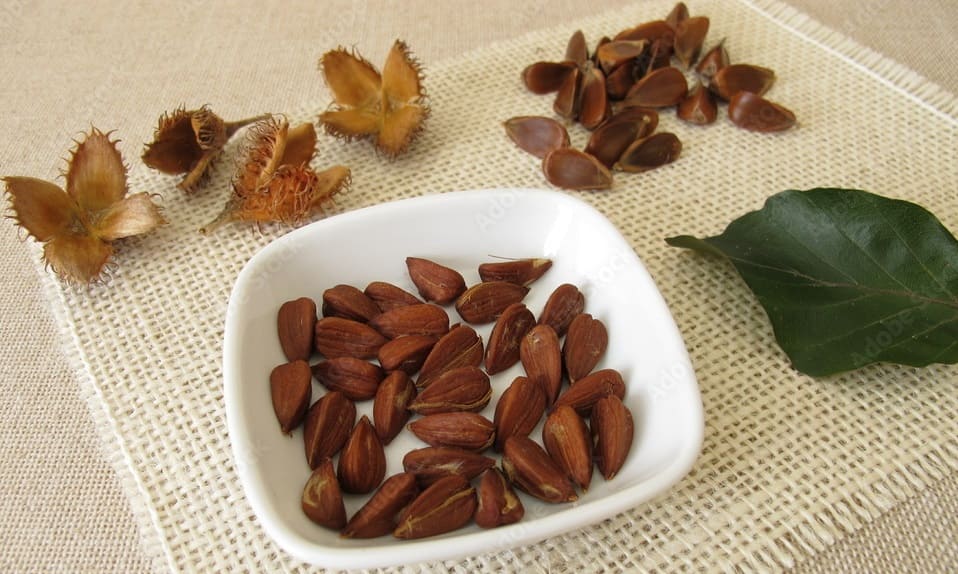
Have you ever gone for a walk in a forest and noticed tiny triangular nuts hidden inside spiky husks beneath tall beech trees? Those are beech nuts—nature’s little treasure that many people overlook. Historically, they have been a valuable food source across Europe, Asia, and North America. Although not as popular as almonds, walnuts, or peanuts, beech nuts offer remarkable nutritional goodness and health benefits.
In this guide, we’ll break down everything you need to know about beech nuts: their nutrition, how to eat them, who should and shouldn’t consume them, potential side effects, dosage tips, and much more.
What are Beech Nuts?
Beech nuts are edible seeds that grow inside the burr-like fruit of the beech tree (genus Fagus). These nuts are small, brown, and triangular with three distinct sides. Each husk usually contains two or three nuts. Beech trees are commonly found in temperate forests, especially in Europe and North America. Their nuts have long been part of traditional diets, especially during times when other food sources were scarce.
Beech nuts have a slightly sweet, mild, and nutty flavor. They can be eaten raw in very small amounts, but it is generally recommended to roast or cook them before consumption. This helps neutralize a mild toxin naturally present in the nuts, making them safer and easier to enjoy.
Nutrition Facts of Beech Nuts (per 100g)
Beech nuts provide a powerful mix of nutrients, especially healthy fats and essential minerals.
| Nutrient | Amount |
|---|---|
| Calories | 575 kcal |
| Protein | 6.0 g |
| Carbohydrates | 36 g |
| Dietary Fiber | 6.5 g |
| Total Fat | 50 g |
| Vitamin B6 | 0.45 mg |
| Vitamin E | 15 mg |
| Folate | 65 mcg |
| Iron | 2.2 mg |
| Magnesium | 137 mg |
| Calcium | 40 mg |
| Potassium | 540 mg |
| Zinc | 2 mg |
| Copper | 1 mg |
| Manganese | 2.5 mg |
Beech nuts are rich in monounsaturated and polyunsaturated fats, which are excellent for heart health. They also contain antioxidants and essential micronutrients needed for overall well-being.
20 Proven Health Benefits of Beech Nuts
Here are the top science-backed benefits that make beech nuts worth adding to your diet in moderation:
- Promotes heart health: Their healthy fats help reduce bad cholesterol and support strong cardiovascular function.
- Good source of energy: The high calorie and fat content makes them ideal for enhancing stamina and energy levels.
- Supports brain function: Fatty acids and B vitamins promote better cognition and memory.
- Improves digestion: Dietary fiber keeps digestion smooth and helps prevent constipation.
- Rich in antioxidants: Vitamin E and plant compounds fight oxidative stress and aging.
- Boosts immune system: Minerals like zinc and copper strengthen immune defenses.
- Supports strong bones: Magnesium, manganese, and calcium improve bone density and strength.
- Helps reduce inflammation: Natural anti-inflammatory compounds may reduce chronic inflammation.
- Aids muscle health: Potassium and magnesium support muscle repair and prevent cramps.
- Promotes skin health: Vitamin E nourishes the skin, keeping it healthy and youthful-looking.
- Balances blood pressure: High potassium content supports improved blood pressure management.
- Improves blood circulation: Iron and copper help in red blood cell production.
- Supports hormonal balance: The healthy fats are vital for balanced hormone production.
- May help manage weight: Although calorie-dense, small portions keep hunger under control for longer.
- Stabilizes blood sugar: Fiber helps slow glucose absorption into the bloodstream.
- Natural stress reliever: Magnesium plays a key role in calming the nervous system.
- Enhances fertility: Essential fatty acids can support reproductive health.
- Supports metabolism: B vitamins help convert food into usable energy.
- Improves hair health: Nutrients nourish hair roots, reducing breakage and enhancing shine.
- Promotes detoxification: Antioxidants and fiber help flush out toxins from the body.
10 Side Effects of Beech Nuts
Even though beech nuts are nutritious, they are not free from risks:
- Raw beech nuts may cause toxicity: They contain a naturally occurring toxin called Fagin, which can irritate the digestive system if eaten in large amounts.
- Digestive issues: Overconsumption may lead to stomach discomfort, including bloating, nausea, gas, or diarrhea.
- Allergic reactions: Individuals with nut allergies may experience symptoms like itching, swelling, skin rash, or breathing difficulty after consumption.
- Headaches and dizziness: Some people may develop headaches or dizziness when consuming too many raw or improperly prepared beechmast.
- Weight gain: Beech nuts are calorie-dense and high in fats — eating large amounts regularly may contribute to weight gain.
- Risk of choking in children: Their small, hard shape makes them a choking hazard for toddlers and young children.
- Mold contamination: Nuts stored improperly may develop mold toxins, which can be harmful when eaten.
- Interference with medications: Those taking blood thinners or managing digestive conditions should consult a healthcare provider before consuming beechmast.
- Possible kidney strain: People with kidney disorders may need to avoid mineral-rich nuts like beech nuts, as excess minerals can stress kidneys.
- Not suitable for some medical conditions: High-fat foods like beech nuts may worsen gallbladder issues or pancreatitis symptoms.
How to Eat Beech Nuts?
Here are the safest and tastiest ways to enjoy beech nuts:
- Roasted: The most common method; enhances flavor and removes toxicity.
- Boiled: Softens the nuts and makes them easier to digest.
- Ground into flour: Can be added to baking recipes.
- Used in granola: Adds healthy fat and crunch.
- Nut butter: Homemade spreads work great on bread and in desserts.
- Mixed in salads or snacks: Adds a crunchy texture.
To roast:
Remove the nuts from the husk, spread on a baking tray, and roast at 180°C (350°F) for 8–10 minutes.
Tips for Consuming Beech Nuts
- Always cook or roast before eating.
- Start with small amounts to ensure your stomach tolerates them.
- Avoid consuming if they taste bitter or have an odd smell.
- Mix with other nuts for balanced nutrition.
- Drink enough water to help digestion.
Other Uses of Beech Nuts
Beech nuts are not just a snack; they have fascinating uses:
- Beech nut oil: Used in cooking, skincare, and lubricants.
- Animal feed: Traditionally fed to pigs due to high fat.
- Traditional medicine: Used for digestive and skin-related remedies.
- Craft and décor: The shells can be used for crafts and decoration.
How Much Beech Nuts Can You Eat in a Day?
A safe intake would be:
10 to 20 roasted beech nuts per day
This provides nutrition without risking toxicity or digestive issues.
Beech Nuts Dosage
- Beginners: 5–10 nuts per day
- Regular consumers: 10–20 nuts per day
- Children: 3–5 nuts per day after consultation with a pediatrician
Best Time to Eat Beech Nuts
- Morning or midday
They provide energy and keep you full throughout the day.
Avoid eating late at night since they are calorie-dense and take longer to digest.
Who Should Eat Beech Nuts?
Beech nuts are especially beneficial for:
- People needing high-energy snacks
- Individuals with nutrient deficiencies
- Athletes and active people
- Those looking for natural plant-based fats
- People who want to improve their skin and digestive health
Who Should Not Eat Beech Nuts?
You should avoid or strictly limit beechmast if you:
- Have nut allergies
- Suffer from kidney or gallbladder diseases
- Experience digestive issues with nuts
- Are pregnant or breastfeeding, unless approved by a doctor
- Have small children who may choke on hard foods
- Take blood thinning medication
Always consult a healthcare professional if unsure.
How to Store Beech Nuts?
Proper storage keeps them fresh and safe:
- Remove nuts from husks before storing.
- Keep inside an airtight container.
- Store in a cool, dark, and dry place.
- Refrigerate for longer shelf life.
- Freeze if storing for several months to prevent rancidity.
Check periodically for mold or odd smell.
Precautions and Interactions
- Do not consume raw beechmast in large quantities.
- Always roast to remove natural toxins.
- If you take medications like anticoagulants, consult your doctor.
- Stop eating immediately if you notice allergic symptoms such as swelling, rash, or breathing difficulty.
Your safety always comes first when experimenting with new foods.
Final Thoughts
Beech nuts might look tiny, but they carry impressive nutritional power. Whether you love exploring wild foods or want to try healthy and unique snacking options, roasted beech nuts are worth adding to your diet. They are rich in heart-friendly fats, antioxidants, minerals, and vitamins. However, like many wild foods, they must be eaten in moderation and prepared correctly to avoid side effects.
If you’re someone who enjoys connecting with nature, discovering beechmast during a forest walk and transforming them into a healthy treat can be a rewarding experience. So the next time you’re outdoors and spot a beech tree, you’ll know that those spiky little husks hide a nutritious treasure.
FAQ’s
What do beech nuts taste like?
Beech nuts have a mild, slightly sweet, and nutty flavor that becomes richer when roasted.
Can you eat beech nuts raw?
You can eat them raw only in very small amounts, but roasting is recommended to destroy natural toxins and improve digestibility.
Are beech nuts safe for children?
Small quantities of properly roasted beechmast may be safe for older children, but they can be a choking hazard. Consult a pediatrician before introducing them.
Can pregnant women eat beech nuts?
Pregnant or breastfeeding women should avoid beechmast unless advised by a healthcare professional due to their natural toxins and strong fats.
Are beech nuts good for diabetics?
They may help stabilize blood sugar due to fiber content, but must be consumed in moderation. Diabetic individuals should consult their doctor.
Can I use beech nuts for cooking or baking?
Yes, beech nuts can be roasted, ground into flour, used in nut butter, or added to snacks, salads, and baked goods.
Are beech nuts good for skin and hair?
Yes, vitamin E and essential fatty acids support glowing skin and stronger hair.
Is it good to eat beech nuts every day?
Yes, you can eat beechmast in small amounts daily, ideally after roasting. However, they should be consumed in moderation because raw or excessive intake can irritate the stomach due to naturally occurring toxins. A small handful a day is safe enough for most healthy adults.
Are beech nuts good to eat?
Beechmast are definitely good to eat when properly prepared. They have a mild nutty flavor and are rich in healthy fats, vitamins, and minerals. Roasting enhances their taste and makes them safe to eat.
What is another name for a beech nut?
Beechmast are commonly just called beechnuts. They come from trees in the Fagus genus, so in some botanical references, they may be referred to as Fagus nuts, but “beech nuts” is the widely accepted name.
What are beech nuts called in India?
Beech trees are not very common in India, so there is no major traditional Indian name for beech nuts. In India, they are generally referred to by their English name: beech nuts.
How to prepare beech nuts to eat?
To safely consume beech nuts, remove them from the husk, peel the shell, and roast them for 8–10 minutes at about 180°C (350°F). This process neutralizes natural toxins and enhances the flavor. Boiling is another safe preparation method.
Are beech nuts poisonous?
Beechmast contain a mild toxin called Fagin, which can cause nausea or discomfort if eaten raw in large quantities. Roasting or cooking reduces this toxin significantly, making them safe to enjoy in moderation.
Where do beech nuts grow?
Beechmast grow on beech trees found in temperate regions. They are native to Europe, North America, and some parts of Asia. These nuts usually ripen and fall to the ground during autumn.
Also Read: