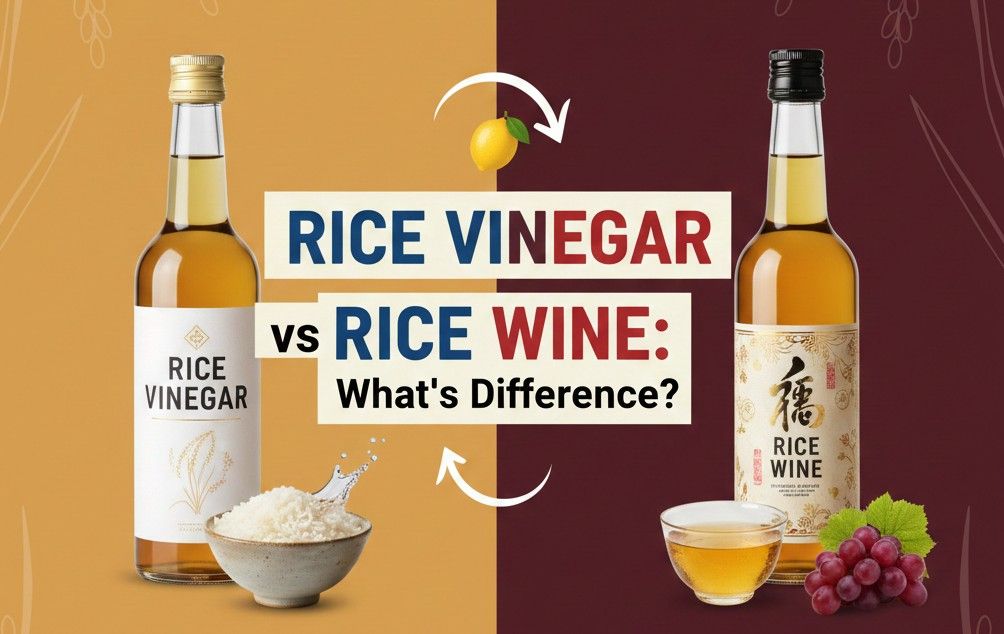
Rice vinegar and rice wine are two staples in Asian kitchens that are often confused due to their similar origins. While both are derived from rice, their production processes, taste profiles, uses, and nutritional benefits differ significantly. Understanding these differences can elevate your cooking and help you choose the right ingredient for each dish. In this guide, we’ll explore what rice vinegar and rice wine are, their differences, how they are made, their culinary applications, health benefits, and potential side effects.
What is Rice Vinegar?
Rice vinegar, also known as rice wine vinegar, is a type of vinegar made from fermented rice or rice wine. It is commonly used in Asian cuisines, particularly Chinese, Japanese, and Korean dishes. It has a mild, slightly sweet flavor and is less acidic than Western vinegar, making it ideal for delicate dishes.
How is Rice Vinegar Made?
The process of making rice vinegar involves two main fermentation steps:
- Alcoholic Fermentation: Rice is cooked and then fermented by yeast, which converts the sugars in rice into alcohol.
- Acetic Acid Fermentation: Bacteria (Acetobacter) convert the alcohol into acetic acid, producing vinegar.
Depending on the region and type, rice vinegar may also be seasoned with sugar or salt to enhance flavor.
Types of Rice Vinegar
- White Rice Vinegar: Mild and slightly sweet, used in dressings, dipping sauces, and sushi rice.
- Black Rice Vinegar: Darker, stronger flavor, often used in braised dishes and Chinese sauces.
- Red Rice Vinegar: Popular in Chinese cuisine, slightly tangy with a reddish hue.
- Seasoned Rice Vinegar: Typically contains added sugar and salt, often used for sushi rice.
What is Rice Wine?
Rice wine, on the other hand, is an alcoholic beverage made from fermented rice. It is widely consumed in China, Japan, and Korea, both as a drink and as a cooking ingredient. Unlike rice vinegar, rice wine is sweet and alcoholic, and it is used to enhance flavors rather than add acidity.
How is Rice Wine Made?
The production of rice wine involves fermenting rice starches into sugar and then converting the sugar into alcohol using yeast. Unlike vinegar, rice wine does not undergo a second fermentation to form acetic acid.
Types of Rice Wine
- Sake (Japan): A Japanese rice wine that can be served hot or cold.
- Shaoxing Wine (China): A Chinese cooking wine with a nutty, slightly sweet flavor.
- Makgeolli (Korea): A milky, lightly sweet Korean rice wine.
Rice Vinegar vs. Rice Wine: What’s the Difference?
Although rice vinegar and rice wine share a common base—fermented rice—their end products are very different. Here are the main differences:
| Feature | Rice Vinegar | Rice Wine |
|---|---|---|
| Definition | A vinegar made from fermented rice or rice wine, acidic and tangy | An alcoholic beverage made from fermented rice, sweet and alcoholic |
| Primary Use | Cooking, salad dressings, sushi rice, pickling | Drinking, cooking, marinades, sauces |
| Flavor | Tangy, slightly sweet, less acidic than Western vinegar | Sweet, slightly nutty, mild alcohol flavor |
| Alcohol Content | Trace amounts (usually less than 1%) | 10–20% depending on type |
| Acidity | High (typically 4–7%) | Low (negligible acetic acid) |
| Nutritional Benefits | Contains amino acids, some minerals, low in calories | Contains carbohydrates, amino acids, B vitamins, moderate calories |
| Culinary Role | Adds acidity and balance to dishes | Enhances flavor, tenderizes meat, adds umami |
| Common Types | White, black, red, seasoned | Sake, Shaoxing, Makgeolli |
| Substitutions | Can substitute with lemon juice or apple cider vinegar in a pinch | Can substitute with mirin or sherry in cooking |
Flavor Profiles Explained
Understanding the flavor profiles of rice vinegar and rice wine is essential for using them correctly in recipes.
Rice Vinegar Flavor Profile
- Mild acidity with a subtle sweetness
- Less harsh than distilled vinegar
- Balances rich or oily dishes
- Enhances freshness in salads, sushi, and pickled vegetables
Rice Wine Flavor Profile
- Sweet with a hint of nuttiness
- Provides depth to marinades and sauces
- Softens and tenderizes meats
- Adds complexity without adding acidity
Culinary Uses
How to Use Rice Vinegar
- Sushi Rice: Essential for seasoning sushi rice to achieve the perfect balance of sweet and tangy flavor.
- Salad Dressings: Works well in vinaigrettes for a mild, sweet acidity.
- Pickling: Great for pickled vegetables due to its subtle taste.
- Sauces: Adds a mild tang to stir-fry sauces, dipping sauces, and glazes.
How to Use Rice Wine
- Cooking: Adds depth to soups, stews, and sauces.
- Marinades: Helps tenderize meats and balance flavors.
- Drinking: Enjoyed as a warm or chilled beverage.
- Braising: Enhances the umami flavor of braised dishes in Asian cuisine.
Health Benefits
Rice Vinegar Benefits
- Supports Digestion: The acetic acid can help regulate stomach pH and aid digestion.
- Low Calorie: Ideal for flavoring without adding significant calories.
- Rich in Amino Acids: Can contribute to overall nutrient intake.
- Potential Blood Sugar Regulation: Some studies suggest vinegar may improve insulin sensitivity.
Rice Wine Benefits
- B-Vitamin Source: Contains B vitamins essential for energy metabolism.
- Amino Acids: Offers small amounts of amino acids beneficial for the body.
- Antioxidants: Certain types, like Shaoxing wine, contain polyphenols that have antioxidant properties.
- Heart Health: Moderate consumption may support cardiovascular health, similar to other alcoholic beverages.
Side Effects and Precautions
Rice Vinegar
- Generally safe when consumed in cooking amounts.
- Excess consumption may irritate the stomach or worsen acid reflux.
- Should be avoided in concentrated form by people with ulcers or sensitive digestive systems.
Rice Wine
- Contains alcohol; excessive consumption can harm the liver and overall health.
- Should be avoided by pregnant women, children, or those with alcohol sensitivities.
- May interact with medications or cause drowsiness if consumed in large amounts.
Substitutions
Knowing substitutions is helpful if a recipe calls for one but you only have the other.
- Rice Vinegar Substitute: Lemon juice, apple cider vinegar, white wine vinegar (adjust for sweetness).
- Rice Wine Substitute: Dry sherry, mirin (Japanese sweet rice wine), or a mild white wine.
Tips for Cooking with Rice Vinegar and Rice Wine
- Measure Carefully: Rice vinegar is more acidic than rice wine; a little goes a long way.
- Balance Flavors: Rice wine adds sweetness, rice vinegar adds tang. Combine with sugar, salt, or soy sauce as needed.
- Storage: Both should be stored in a cool, dark place. Rice vinegar can last longer than rice wine once opened.
- Pairing with Ingredients: Use rice vinegar with fresh vegetables and seafood, rice wine with meats and rich sauces.
Common Myths
- Rice Wine and Rice Vinegar Are the Same: False. They are different products with distinct flavors and culinary uses.
- Rice Vinegar Contains a Lot of Alcohol: False. The alcohol is almost completely converted to acetic acid during fermentation.
- Rice Wine Is Only for Drinking: False. It’s also an essential cooking ingredient that enhances flavor.
Summary
While rice vinegar and rice wine may seem similar because they are both rice-derived, they serve entirely different purposes in cooking. Rice vinegar is acidic, tangy, and ideal for adding freshness and balance to dishes. Rice wine is sweet, alcoholic, and used to enhance flavors, tenderize meats, and enrich sauces.
Understanding the differences, flavor profiles, and uses of these ingredients allows home cooks and professional chefs alike to make informed choices in the kitchen.
| Feature | Rice Vinegar | Rice Wine |
|---|---|---|
| Origin | Fermented rice or rice wine | Fermented rice |
| Taste | Tangy, mildly sweet | Sweet, nutty, alcoholic |
| Alcohol Content | Minimal (<1%) | 10–20% |
| Acidity | High (4–7%) | Low |
| Culinary Use | Salad dressings, sushi, pickling, sauces | Cooking, marinating, braising, drinking |
| Health Benefits | Supports digestion, low calorie, amino acids, may regulate blood sugar | Contains B vitamins, amino acids, antioxidants, may support heart health |
| Types | White, black, red, seasoned | Sake, Shaoxing, Makgeolli |
| Substitutions | Lemon juice, apple cider vinegar | Dry sherry, mirin, white wine |
| Storage | Cool, dark place; long shelf life | Cool, dark place; shorter shelf life once opened |
FAQ’s
Can I use rice vinegar instead of rice wine in cooking?
You can substitute rice vinegar for rice wine in a pinch, but keep in mind that rice vinegar is acidic and lacks the sweetness and alcohol of rice wine. You may need to add a bit of sugar or reduce other acidic ingredients to balance the flavor.
Does rice wine contain alcohol?
Yes, rice wine is an alcoholic beverage, usually containing between 10–20% alcohol depending on the type. It is used both for drinking and for cooking to enhance flavor.
Is rice vinegar healthier than rice wine?
Rice vinegar is lower in calories and contains minimal alcohol, making it a lighter option. Rice wine, on the other hand, provides some B vitamins, amino acids, and antioxidants. Both have unique benefits depending on your dietary needs.
Can rice vinegar be used for pickling?
Absolutely. Rice vinegar’s mild acidity makes it perfect for pickling vegetables, adding tang without overpowering the natural flavors.
What is the best way to store rice wine and rice vinegar?
Both should be kept in a cool, dark place. Rice vinegar has a longer shelf life and can last for years, while rice wine should ideally be consumed within months after opening.
Are rice vinegar and rice wine the same thing?
No. Rice vinegar is acidic and tangy, while rice wine is sweet, mildly alcoholic, and used for enhancing flavors rather than adding acidity.
Can I use rice wine in sushi rice instead of rice vinegar?
Rice wine is not recommended for sushi rice because it lacks the acidity needed to season the rice properly. Rice vinegar is essential for achieving the right balance of tang and sweetness.
Final Thoughts
Rice vinegar and rice wine are fundamental ingredients in Asian cuisine, each bringing unique flavors and functions to the table. Choosing the right one depends on the dish, desired flavor, and cooking method. By understanding their differences, you can elevate your dishes and confidently experiment with Asian recipes.
Also Read: