Food has always reflected culture, but for Gen Z, food is more than nourishment or tradition—it’s identity, activism, creativity, and content. Born roughly between the late 1990s and early 2010s, Gen Z is reshaping the global food landscape in ways that feel radically different from previous generations. Their food choices are driven by values, emotions, digital influence, and an ongoing desire for authenticity.
Unlike Millennials, who popularized avocado toast and artisanal coffee, Gen Z takes food culture a step further. They want food that aligns with their beliefs, fits their lifestyle, looks good on social media, and still feels comforting in uncertain times. From plant-based experiments and nostalgic snacks to global flavors and functional foods, Gen Z food trends are redefining how brands, restaurants, and home kitchens operate This guide explores the most influential Gen Z food trends, why they matter, and how they are shaping the future of eating.
Who Is Gen Z and Why Their Food Choices Matter
Gen Z is the first truly digital-native generation. They grew up with smartphones, social media, food delivery apps, and global exposure at their fingertips. This constant connectivity has influenced how they discover, evaluate, and consume food.
Several factors shape Gen Z’s food habits:
- Economic uncertainty and rising food costs
- Climate anxiety and sustainability concerns
- Mental health awareness
- Cultural diversity and global exposure
- Short attention spans paired with visual storytelling
Gen Z doesn’t just eat food—they research it, review it, remix it, and share it. Their preferences are already influencing grocery shelves, restaurant menus, and food marketing strategies worldwide.
Gen Z Food Trends
Gen Z is currently the most influential demographic in the food industry, treating food as a form of self-expression, a mental health tool, and a digital currency. By 2026, their habits have shifted away from “diet culture” toward “holistic wellness” and high-sensory experiences. Here are the top food trends defining Gen Z right now:
1. The “Swicy” & “Next-Gen” Texture Revolution
Flavor is no longer enough; mouthfeel is now a primary driver. Gen Z values “sensory explorations” where food is as fun to feel as it is to eat.
- Swicy (Sweet + Spicy): This has moved from a TikTok fad to a menu staple. Think hot honey on everything, chili-infused chocolate, and “Mangonada” inspired snacks.
- Playable Textures: There is a massive surge in “squishy” and “crunchy” combinations. Popular items include Dubai Chocolate (pistachio-tahini with crunchy kataifi), popping boba, and ultra-thick “cold foam” on beverages.
- Functional Fizzes: Prebiotic sodas (like Olipop or Poppi) are replacing traditional colas, offering “gut health” benefits with a classic soda ritual.
2. Global “Authenticity” Over “Fusion”
While previous generations loved “fusion,” Gen Z prefers deep cultural storytelling. They want to know the specific regional origin of an ingredient.
- Hyper-Regional Flavors: Instead of just “Asian food,” they are seeking out Filipino silog breakfasts, West African jollof rice, and Levantine herb blends like za’atar.
- Third-Culture Cuisine: Gen Z chefs are creating “purposeful fusion” that reflects their actual heritage—such as Vietnamese-Cajun or Korean-Mexican—rather than just mixing flavors for the sake of a trend.
3. Wellness as “Vibe” (Not a Diet)
For Gen Z, health is about mental clarity and mood regulation rather than weight loss.
- “Mood-Food”: Ingredients like Ashwagandha (for stress), Lion’s Mane (for focus), and Magnesium (for sleep) are being infused into everyday snacks and “moon milks.”
- The Protein-Maxxing Shift: Protein is no longer just for bodybuilders; it’s for everyone. High-protein “Ninja CREAMI” recipes and fortified beverages are mainstream.
- Sobriety & Ritual: The “Damp” or “Sober Curious” lifestyle is driving a boom in botanical-forward mocktails and adaptogenic elixirs that provide a social “buzz” without the alcohol.
4. Conscious & “Low-Key” Sustainability
Gen Z expects ethics to be “baked in” to a brand. They are less interested in preachy marketing and more interested in radical transparency.
- Upcycled Ingredients: Using “ugly” fruit or cacao fruit pulp (which was previously wasted) is a major selling point.
- Animal Fat Resurgence: There is a growing movement away from highly processed seed oils in favor of “ancestral fats” like grass-fed butter and beef tallow, often linked to the “Make America Healthy Again” (MAHA) aesthetic.
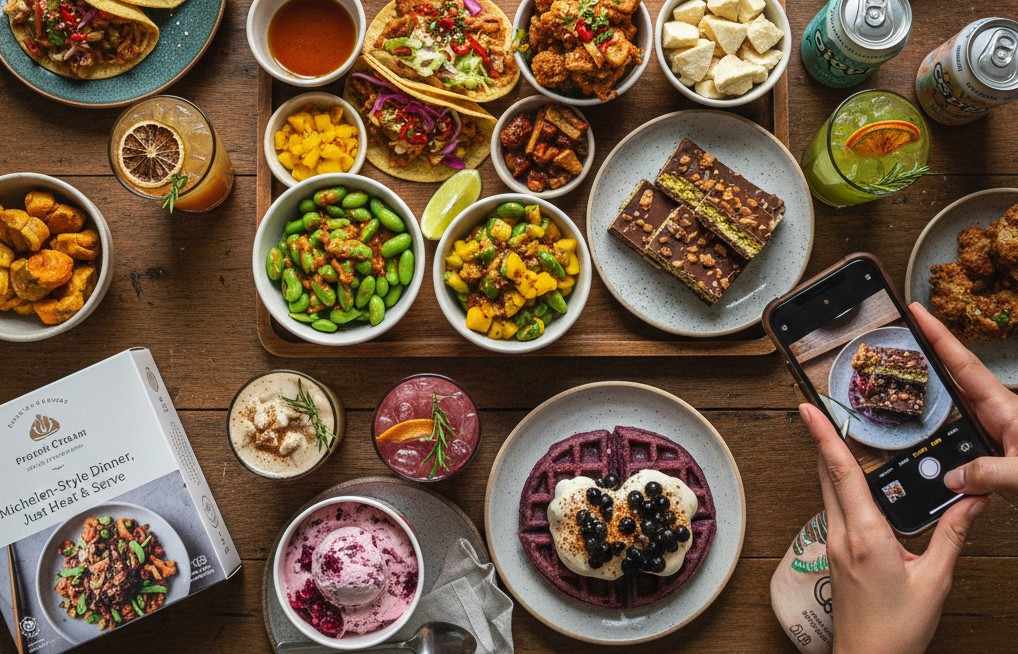
- Hyper-Convenience: They are the “frozen food generation,” but with a gourmet twist. They favor high-quality, Michelin-style frozen meals that save time without sacrificing values.
5. The “Phone-First” Dining Room
Food is a core part of their digital identity. If it’s not “grid-worthy,” it’s a missed opportunity.
- Digital Discovery: Over 70% of Gen Z find their next meal on TikTok or Instagram.
- AI-Shuffled Diets: Many are using AI to “shuffle” their weekly meal plans, asking tools to create diverse, culturally rich recipes based on what’s in their fridge.
- Small Plate Renaissance: The “tapas-style” or “snack plate” dinner is preferred over large entrees. It allows for more variety, better photos, and a more social, sharing-based experience.
Plant-Based and Flexitarian Eating Is the New Normal
One of the most defining Gen Z food trends is the shift toward plant-based and flexitarian diets. Unlike earlier generations that viewed vegetarianism as a strict lifestyle, Gen Z approaches it with flexibility.
Many Gen Z consumers are not fully vegan or vegetarian, but they intentionally reduce animal-based foods. Their motivation goes beyond health—it includes environmental impact, animal welfare, and ethical sourcing.
Why Gen Z Is Choosing Plant-Based Foods
- Concern about climate change and carbon footprints
- Awareness of factory farming practices
- Influence from documentaries and social media educators
- Desire for lighter, gut-friendly meals
Popular plant-based foods among Gen Z include oat milk, almond milk, tofu bowls, vegan burgers, jackfruit tacos, lentil-based snacks, and dairy-free desserts.
Importantly, Gen Z expects plant-based food to taste good. Bland or overly “healthy” options no longer work. Flavor, texture, and creativity matter more than labels.
Comfort Food With a Modern Twist
Despite their progressive outlook, Gen Z craves comfort—especially in a world shaped by pandemics, economic stress, and digital burnout. However, they don’t want comfort food in its traditional form. They want upgraded, personalized, and sometimes ironic versions of it.
Classic comfort foods like mac and cheese, instant noodles, grilled sandwiches, pancakes, and fried snacks are being reinvented with:
- Global spices
- Plant-based alternatives
- Gourmet toppings
- Fusion flavors
For example, instant ramen topped with chili oil, soft-boiled eggs, and cheese has become a cultural staple online. Similarly, loaded fries, upgraded grilled cheese, and gourmet instant meals reflect Gen Z’s desire for comfort without boredom.
Food for Gen Z is emotional—it’s about feeling safe, nostalgic, and satisfied while still being interesting.
Social Media-Driven Food Trends
No discussion of Gen Z food trends is complete without talking about social media. Platforms like TikTok, Instagram, and YouTube Shorts have become powerful engines for food discovery.
Gen Z doesn’t rely on cookbooks or traditional recipes. They trust creators, influencers, and viral trends. A single viral video can turn a niche dish into a global obsession overnight.
Examples of Social Media Food Trends:
- Baked feta pasta
- Cloud bread
- Korean corn dogs
- Chili oil eggs
- Cottage cheese hacks
- Matcha-based drinks
- DIY Starbucks-style beverages
These trends thrive because they are visual, simple, and remixable. Gen Z loves food that can be customized and shared, making social media both a recipe book and a food diary.
Global Flavors Without Borders
Gen Z has grown up in a multicultural, globally connected world. As a result, their food preferences are far more adventurous than those of previous generations.
They are comfortable mixing cuisines, experimenting with spices, and embracing foods from different cultures—often without the “exotic” label older generations used.
Popular global flavors among Gen Z include:
- Korean (gochujang, kimchi, tteokbokki)
- Japanese (ramen, matcha, onigiri)
- Mexican (birria, elote, hot sauces)
- Middle Eastern (hummus, falafel, tahini)
- Indian (butter chicken, paneer wraps, masala fries)
Fusion is especially popular. Think sushi burritos, butter chicken pizza, ramen burgers, and masala mac and cheese.
For Gen Z, global food is not a special occasion—it’s everyday eating.
Functional Foods and Eating for Mental Health
Gen Z is deeply aware of mental health, and that awareness extends to food choices. They are increasingly interested in foods that support mood, energy, focus, and gut health.
Functional foods—those that offer benefits beyond basic nutrition—are gaining popularity.
Functional Food Trends Among Gen Z
- Probiotic-rich foods like yogurt, kombucha, and kimchi
- Adaptogenic drinks with ingredients like ashwagandha or matcha
- Protein-rich snacks for sustained energy
- Low-sugar, low-caffeine alternatives
- Gut-friendly meals focused on fiber and fermented foods
Gen Z doesn’t see food as a cure, but as part of a holistic wellness routine. They want transparency about ingredients and honest claims rather than exaggerated health promises.
Sustainability and Ethical Eating
Sustainability is not a trend for Gen Z—it’s an expectation. They are more likely to support brands that prioritize ethical sourcing, minimal packaging, and environmental responsibility.
Gen Z pays attention to:
- Plastic-free or recyclable packaging
- Locally sourced ingredients
- Fair-trade and cruelty-free labels
- Food waste reduction
Many Gen Z consumers prefer smaller brands and local businesses over large corporations, especially when transparency is involved. They value authenticity over perfection and are more forgiving of brands that admit mistakes and show real efforts to improve.
Food choices become a form of quiet activism, where everyday decisions align with long-term values.
Budget-Friendly and DIY Eating
Despite their interest in premium ingredients and global flavors, Gen Z is highly cost-conscious. Rising inflation, student loans, and job uncertainty have made affordability a key factor in food decisions.
As a result, Gen Z has embraced:
- Simple, budget-friendly recipes
- Meal prepping with flexible ingredients
- DIY café-style drinks at home
- Instant and semi-homemade meals
They don’t see cooking from scratch as a chore but as a creative outlet. Hacks, shortcuts, and customizable recipes dominate Gen Z food content online.
Affordable does not mean boring—it means smart, efficient, and adaptable.
Personalized Eating and “No Food Rules”
Gen Z rejects rigid food rules. Diet culture has lost its appeal, replaced by intuitive eating and personalization.
Instead of following strict diets, Gen Z prefers to eat based on:
- Mood
- Energy levels
- Cultural comfort
- Ethical beliefs
- Convenience
One day might involve a green smoothie and salad; another might include instant noodles and dessert. There is less guilt and more balance.
This flexible mindset allows Gen Z to enjoy food without attaching moral value to it—a significant cultural shift.
Nostalgia Foods From Childhood
Nostalgia plays a powerful role in Gen Z food trends. Many Gen Z consumers seek foods that remind them of childhood but with an updated twist.
Examples include:
- Upgraded versions of packaged snacks
- Homemade versions of school-time favorites
- Classic desserts with modern flavors
- Retro drinks with cleaner ingredients
This blend of nostalgia and innovation creates emotional comfort while still fitting into modern lifestyles.
Rise of Beverage Culture
Gen Z’s relationship with beverages deserves special mention. Drinks are no longer just thirst-quenchers—they’re lifestyle statements.
Popular Gen Z beverage trends include:
- Matcha lattes
- Cold brew variations
- Bubble tea
- Functional sparkling waters
- Non-alcoholic mocktails
Many Gen Z consumers are drinking less alcohol than previous generations, opting instead for creative, flavorful non-alcoholic options.
Beverages are also highly shareable, making them perfect for social media culture.
Food as Identity and Self-Expression
For Gen Z, food is personal. What they eat reflects who they are, what they believe, and how they want to be perceived.
Food choices can signal:
- Cultural pride
- Ethical values
- Health priorities
- Creativity
- Social belonging
This is why Gen Z prefers brands and restaurants that tell stories, celebrate diversity, and encourage individuality.
How Brands and Restaurants Are Adapting
To appeal to Gen Z, food brands and restaurants are making noticeable shifts:
- Simplifying ingredient lists
- Highlighting sustainability efforts
- Offering customizable menu options
- Engaging authentically on social media
- Collaborating with creators instead of celebrities
Gen Z can easily detect performative marketing. They reward honesty, humor, and consistency.
The Future of Gen Z Food Trends
As Gen Z grows older, their influence on food culture will only deepen. However, their core values are likely to remain consistent:
- Conscious consumption
- Flexibility over restriction
- Experience over excess
- Purpose-driven choices
Future food trends will likely focus on climate-friendly innovation, hyper-personalization, and deeper connections between food, mental health, and community.
Final Thought
Gen Z food trends are not just about what’s popular—they reflect a deeper shift in how people relate to food. This generation eats with intention, curiosity, and emotional awareness. They value flavor, ethics, affordability, and authenticity, often all at once. From plant-based meals and global fusion to nostalgic comfort foods and functional snacks, Gen Z is redefining modern eating. Their influence challenges the food industry to be more transparent, inclusive, and creative.
FAQ’s
Why does Gen Z prefer plant-based food?
Gen Z prefers plant-based food due to concerns about climate change, animal welfare, and overall health. Many follow a flexitarian approach, reducing meat rather than eliminating it completely.
How does social media influence Gen Z food choices?
Social media platforms like TikTok and Instagram play a major role in shaping Gen Z food trends. Viral videos, food challenges, and creator recipes strongly influence what Gen Z tries and shares.
What types of comfort food does Gen Z like?
Gen Z enjoys comfort foods with a modern twist, such as upgraded instant noodles, fusion snacks, gourmet sandwiches, and nostalgic childhood foods made with new flavors or healthier ingredients.
Are Gen Z food trends budget-friendly?
Yes, many Gen Z food trends focus on affordable, DIY, and customizable meals. Simple recipes, meal prepping, and homemade café-style drinks help balance cost with creativity.
Why is sustainability important in Gen Z food trends?
Sustainability matters to Gen Z because they are aware of environmental issues. They prefer eco-friendly packaging, ethical sourcing, and brands that reduce food waste and environmental impact.
What global cuisines are popular with Gen Z?
Gen Z loves global cuisines such as Korean, Japanese, Mexican, Indian, and Middle Eastern food. Fusion dishes that mix multiple cultures are especially popular.
How are Gen Z food trends shaping the future of food?
Gen Z food trends are pushing the food industry toward transparency, personalization, ethical practices, and innovative flavors. Their influence is reshaping menus, grocery products, and food marketing strategies.
Also Read: