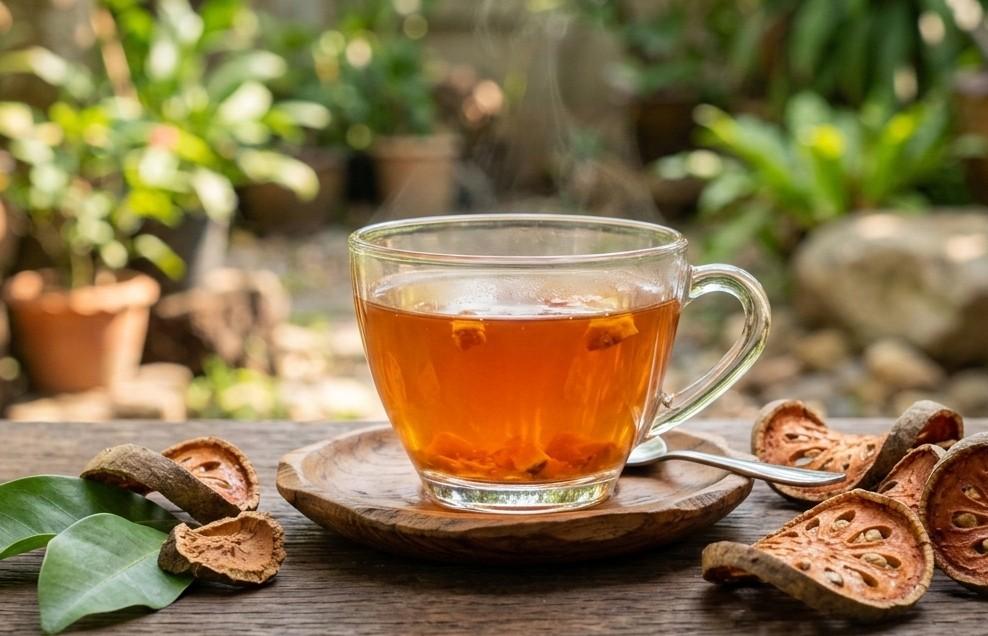
Bael Tea is a traditional herbal drink made from the fruit, leaves, or bark of the bael tree, scientifically known as Aegle marmelos. Revered in Ayurveda for thousands of years, bael is often called “Bilva” and holds both medicinal and spiritual importance in India. The fruit is commonly offered to Shiva and used in traditional healing systems to treat digestive disorders, infections, and inflammatory conditions.
In recent years, Bael Tea has gained popularity beyond India as a caffeine-free herbal beverage known for supporting gut health, immunity, and overall wellness. This detailed guide explores everything you need to know about Bael Tea, including its proven health benefits, side effects, preparation method, and who should or should not consume it.
What is Bael Tea?
Bael Tea is an herbal infusion prepared from dried bael fruit slices, fresh pulp, leaves, or sometimes powdered bael. The bael fruit has a hard woody shell and aromatic orange pulp inside. When dried and steeped in hot water, it produces a mildly sweet, earthy, and slightly tangy tea.
In Ayurveda, bael is classified as having cooling and digestive properties. It is traditionally used to balance Vata and Kapha doshas while strengthening digestion and immunity.
Bael Tea is naturally:
- Caffeine-free
- Rich in antioxidants
- High in tannins
- Containing plant compounds like marmelosin, aegeline, flavonoids, and coumarins
Nutritional Facts of Bael Tea
The nutritional content varies depending on whether the tea is made from fruit pulp, dried slices, or leaves. Below is an approximate nutritional breakdown per 1 cup (240 ml) of Bael Tea made from dried fruit slices (without added sugar):
| Nutrient | Approximate Amount |
|---|---|
| Calories | 20–35 kcal |
| Carbohydrates | 5–8 g |
| Natural Sugars | 3–5 g |
| Dietary Fiber | 1–2 g (if pulp is included) |
| Vitamin C | 8–15% of RDI |
| Vitamin A | Small amounts |
| Potassium | 80–120 mg |
| Calcium | 20–40 mg |
| Iron | 0.3–0.5 mg |
| Antioxidants | High |
| Tannins | Moderate to high |
| Flavonoids | Present |
Bael Tea is especially valued for its polyphenols and bioactive compounds that contribute to its medicinal properties.
20 Science-Backed Benefits of Bael Tea
1. Supports Digestive Health
Bael Tea contains tannins and fiber that help regulate bowel movements and soothe digestive disturbances like diarrhea and indigestion.
2. Helps Manage Diarrhea
The astringent properties of bael fruit reduce intestinal inflammation and help control acute and chronic diarrhea.
3. Relieves Constipation
When prepared from ripe bael pulp, the tea provides mild laxative effects that ease constipation naturally.
4. Reduces Inflammation
Its flavonoids and phenolic compounds help lower inflammatory markers in the body.
5. Boosts Immunity
Vitamin C and antioxidant compounds enhance immune function and protect against infections.
6. Supports Gut Microbiome
Bael acts as a prebiotic, encouraging the growth of beneficial gut bacteria.
7. May Help Control Blood Sugar
Research suggests bael leaf extracts may improve insulin sensitivity and help regulate blood glucose levels.
8. Promotes Liver Health
Bael contains hepatoprotective compounds that help shield the liver from toxin-induced damage.
9. Supports Heart Health
Its potassium content and antioxidant effects may help regulate blood pressure and reduce oxidative stress in blood vessels.
10. May Reduce Cholesterol
Some studies indicate bael extracts can lower LDL cholesterol and triglycerides.
11. Has Antimicrobial Properties
Bael shows antibacterial and antifungal activity against certain harmful microorganisms.
12. Helps Manage Ulcers
Its protective mucilage and anti-inflammatory properties may soothe gastric ulcers.
13. May Reduce Respiratory Issues
Traditionally, bael has been used to relieve asthma, cough, and bronchitis symptoms.
14. Supports Weight Management
Low in calories and supportive of digestion, Bael Tea can complement a balanced weight management routine.
15. Acts as a Natural Detoxifier
Its antioxidant compounds help neutralize free radicals and support natural detox pathways.
16. May Reduce Stress
Bael contains compounds believed to have mild adaptogenic and calming effects.
17. Supports Kidney Function
Its mild diuretic action may help flush toxins and support urinary health.
18. Promotes Skin Health
Antioxidants help combat oxidative damage that contributes to premature skin aging.
19. May Improve Appetite
In Ayurveda, bael is used to stimulate appetite and improve nutrient absorption.
20. Supports Overall Metabolic Health
The combined digestive, anti-inflammatory, and antioxidant effects contribute to better metabolic balance.
10 Side Effects of Bael Tea
1. May Cause Constipation in Excess
High tannin content can overly slow bowel movement if consumed in large quantities.
2. May Lower Blood Sugar Too Much
People on diabetes medication may experience hypoglycemia if taken excessively.
3. Possible Allergic Reactions
Some individuals may experience itching or skin irritation.
4. May Interfere with Thyroid Function
Certain plant compounds could potentially affect thyroid hormone levels when consumed in high doses.
5. May Cause Stomach Cramps
Overconsumption can irritate sensitive digestive systems.
6. Not Safe During Pregnancy in High Doses
Traditional texts caution against excessive medicinal doses during pregnancy.
7. May Slow Digestion Excessively
Unripe bael preparations can be too astringent.
8. May Interact with Blood Pressure Medications
Its mild hypotensive effect may amplify medication action.
9. Risk of Dehydration
Strong astringent properties may reduce fluid secretion if consumed without adequate hydration.
10. May Affect Surgery Outcomes
Because it may influence blood sugar levels, it is advised to stop use before surgery.
How to Make Bael Tea?
Bael Fruit Tea:
Ingredients:
- 1–2 tablespoons dried bael fruit slices (or 1 tablespoon bael powder)
- 2 cups water
- Optional: honey or lemon
Method:
- Bring water to a boil.
- Add dried bael slices.
- Simmer for 10–15 minutes.
- Turn off heat and steep for another 5–10 minutes.
- Strain and serve warm.
For iced Bael Tea, let it cool and refrigerate before serving.
Bael Leaf Tea:
Ingredients:
- 5–7 fresh bael leaves (washed thoroughly)
or 1 teaspoon dried bael leaves - 2 cups water
- Optional: honey or a few drops of lemon
Method:
- Bring 2 cups of water to a boil.
- Add the fresh or dried bael leaves.
- Reduce heat and let it simmer for 8–10 minutes.
- Turn off the heat and allow it to steep for another 5 minutes.
- Strain the tea into a cup.
- Add honey or lemon if desired, and drink warm.
Other Uses of Bael Tea
- As a digestive tonic after heavy meals
- As a summer cooling drink
- As a mild detox beverage
- As a gargle for sore throat
- In herbal blends with ginger, tulsi, or fennel
- As a natural remedy during mild gastrointestinal infections
How Much Bael Tea Can You Drink a Day?
For general wellness:
- 1–2 cups per day is considered safe for most healthy adults.
For therapeutic use:
- Consult an Ayurvedic practitioner or healthcare provider.
Avoid exceeding 3 cups daily unless guided by a professional.
Tips for Consuming Bael Tea
- Use ripe bael fruit for constipation relief.
- Use slightly unripe bael for diarrhea management.
- Avoid adding too much sugar.
- Drink fresh; do not store for more than 24 hours.
- Start with small amounts to assess tolerance.
Best Time to Drink Bael Tea
- Morning on an empty stomach for digestion support.
- After meals for bloating relief.
- Mid-afternoon as a caffeine-free refreshment.
- Avoid very late-night consumption if you have slow digestion.
Who Should Drink Bael Tea?
Bael Tea may benefit:
- Individuals with digestive issues
- People with mild diarrhea or IBS symptoms
- Those seeking caffeine-free herbal alternatives
- Individuals aiming for immune support
- People looking for traditional Ayurvedic digestive tonics
Who Should Not Drink Bael Tea?
Avoid or consult a doctor if you:
- Are pregnant or breastfeeding
- Have chronic constipation
- Take diabetes medication
- Have thyroid disorders
- Are scheduled for surgery
- Have known plant allergies
Precautions and Interactions
- Monitor blood sugar levels if diabetic.
- Stop use at least 2 weeks before surgery.
- Do not combine with strong laxatives.
- Avoid excessive use with blood pressure medications.
- Consult a healthcare professional if taking prescription drugs.
Conclusion
Bael Tea is a time-tested herbal remedy deeply rooted in Ayurvedic tradition. Derived from the sacred bael tree, Aegle marmelos, this caffeine-free beverage offers numerous digestive, immune, and metabolic benefits backed by both traditional use and emerging scientific research.
When consumed in moderation, Bael Tea can be a powerful addition to a holistic wellness routine. However, like all herbal remedies, it should be used responsibly and with proper awareness of potential side effects and interactions.
FAQ’s
What is Bael Tea made from?
Bael Tea is made from the dried fruit, pulp, leaves, or bark of the bael tree, scientifically known as Aegle marmelos.
Is Bael Tea caffeine-free?
Yes, Bael Tea is naturally caffeine-free, making it a suitable herbal alternative to black or green tea.
What does Bael Tea taste like?
Bael Tea has a mildly sweet, earthy, and slightly tangy flavor, especially when made from ripe bael fruit.
Can Bael Tea help with diarrhea?
Yes, Bael Tea made from slightly unripe fruit contains tannins that may help control diarrhea by reducing intestinal inflammation.
Is Bael Tea good for constipation?
Yes, tea made from ripe bael pulp has mild laxative properties that may help relieve constipation.
Can Bael Tea help manage blood sugar levels?
Some studies suggest bael leaf extracts may support blood sugar control, but people with diabetes should consult a healthcare professional before regular use.
Is Bael Tea safe during pregnancy?
Pregnant women should avoid medicinal doses of Bael Tea and consult a doctor before consumption.
Can children drink Bael Tea?
Small amounts may be safe for children for digestive issues, but it is best to consult a pediatrician first.
Can Bael Tea help with weight loss?
Bael Tea may support digestion and metabolism, which can complement a healthy weight management plan, but it is not a standalone weight loss solution.
Can Bael Tea be consumed daily?
Yes, moderate daily consumption is generally considered safe for most healthy individuals.
Does Bael Tea help boost immunity?
Bael Tea contains antioxidants and vitamin C that may help strengthen the immune system.
How should Bael Tea be stored?
Dried bael slices should be stored in an airtight container in a cool, dry place away from moisture and sunlight.
Can You Drink Bael Leaf Tea on an Empty Stomach?
Yes, it is traditionally consumed in the morning on an empty stomach for digestive and metabolic support, but start with small amounts to assess tolerance.
How long does it take for Bael Tea to work?
The effects of Bael Tea depend on the purpose for which it is consumed; for digestive relief such as mild bloating or diarrhea, some people may notice improvement within a few hours, while benefits like improved gut health or blood sugar balance may take several days to a few weeks of consistent use, especially when made from the fruit of Aegle marmelos.
What is Bael Tea good for?
Bael Tea is primarily known for supporting digestive health, helping manage diarrhea and constipation (depending on ripeness), boosting immunity, providing antioxidants, supporting liver function, and contributing to overall metabolic wellness as recognized in traditional Ayurvedic practice.
How long should you boil bael fruit for tea?
When making Bael Tea from dried bael fruit slices, boil or simmer them for about 10–15 minutes and then allow the tea to steep for an additional 5–10 minutes to extract the beneficial compounds properly.
Also Read: