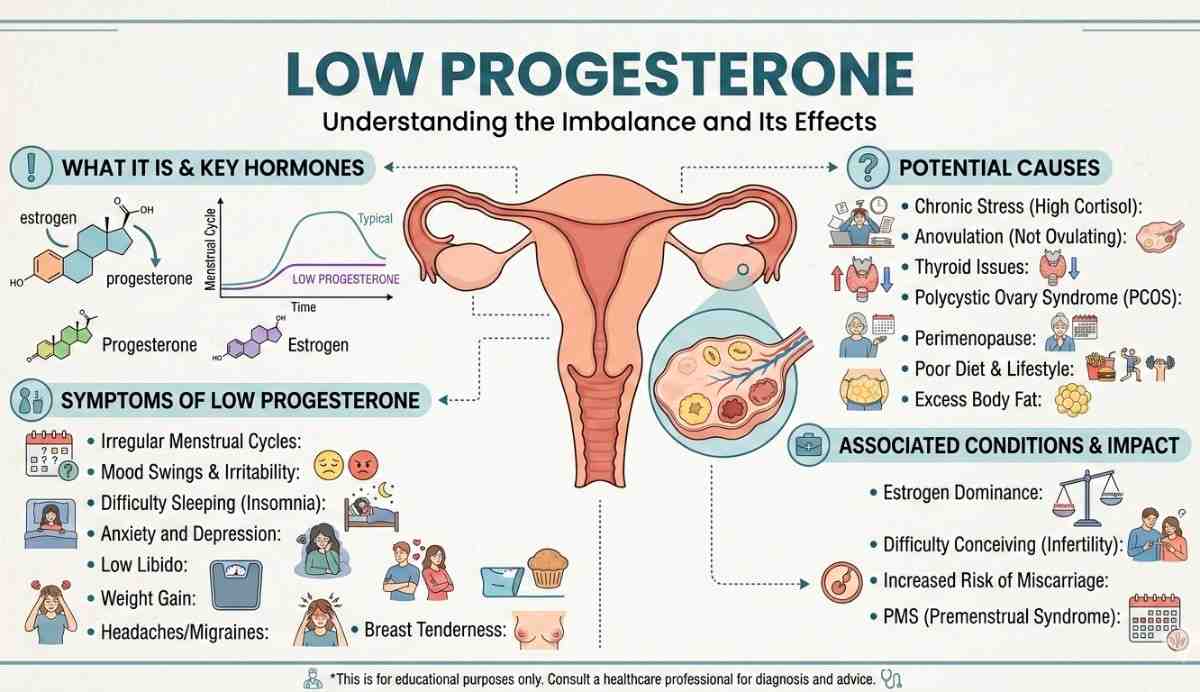
Hormones are powerful chemical messengers that influence nearly every system in your body. Among them, progesterone plays a central role in reproductive health, menstrual balance, pregnancy, mood stability, and even sleep. When progesterone levels drop below optimal levels, the effects can ripple through the body in noticeable and sometimes distressing ways.
Low progesterone is especially common in women during their reproductive years, perimenopause, and menopause. It may contribute to irregular periods, fertility challenges, anxiety, and heavy bleeding. Understanding the signs, causes, and treatment options can help you take informed steps toward restoring hormonal balance. This guide explains what low progesterone is, how it affects your body, why it happens, and what you can do about it.
What Is Progesterone?
Progesterone is a hormone primarily produced in the ovaries after ovulation. Smaller amounts are also made in the adrenal glands, and during pregnancy, the placenta becomes the main source.
Progesterone works closely with estrogen to regulate the menstrual cycle. While estrogen thickens the uterine lining during the first half of the cycle, progesterone stabilizes and prepares that lining for possible pregnancy during the second half. If pregnancy does not occur, progesterone levels drop, triggering menstruation.
Beyond reproduction, progesterone also:
- Supports early pregnancy
- Regulates the menstrual cycle
- Balances estrogen’s effects
- Supports thyroid function
- Promotes restful sleep
- Influences mood and brain function
- Helps maintain bone health
When progesterone levels are too low, these systems may become disrupted.
What Is Low Progesterone?
Low progesterone, sometimes referred to as progesterone deficiency, occurs when the body does not produce enough progesterone during the luteal phase (the second half) of the menstrual cycle. It can also occur during perimenopause and menopause as ovulation becomes irregular or stops entirely.
A common cause of low progesterone in cycling women is anovulation, meaning ovulation does not occur. Since progesterone is primarily produced after ovulation, if no egg is released, progesterone levels remain low. Low progesterone may exist alone or alongside estrogen dominance, a condition where estrogen levels are normal or high relative to progesterone.
Symptoms of Low Progesterone
The symptoms of low progesterone can vary depending on age, life stage, and overall hormone balance. Some symptoms are subtle, while others significantly affect daily life.
1. Irregular Menstrual Cycles
One of the most common signs is irregular periods. This may include:
- Short cycles
- Spotting between periods
- Delayed ovulation
- Unpredictable menstruation
Without adequate progesterone, the uterine lining may shed irregularly.
2. Heavy or Prolonged Periods
Progesterone stabilizes the uterine lining. Low levels can result in excessive buildup under the influence of estrogen, leading to heavy bleeding.
3. Premenstrual Syndrome (PMS)
Low progesterone is often linked with:
- Mood swings
- Irritability
- Anxiety
- Breast tenderness
- Bloating
- Headaches
Progesterone has calming effects on the brain, so reduced levels may intensify emotional symptoms.
4. Difficulty Getting Pregnant
Progesterone is essential for implantation and maintaining early pregnancy. Low levels may cause:
- Short luteal phase
- Recurrent early miscarriage
- Implantation failure
5. Spotting Before Period
Spotting a few days before menstruation can be a sign of insufficient progesterone during the luteal phase.
6. Anxiety and Mood Changes
Progesterone supports the production of calming neurotransmitters such as GABA. Low levels may contribute to:
- Anxiety
- Insomnia
- Restlessness
- Low mood
7. Sleep Problems
Progesterone promotes deeper sleep. Women with low levels may experience difficulty falling or staying asleep.
8. Low Libido
Hormonal imbalances can reduce sexual desire and contribute to vaginal dryness.
9. Headaches or Migraines
Hormonal fluctuations, particularly in the luteal phase, may trigger migraines in some women.
Causes of Low Progesterone
Low progesterone can result from various underlying conditions or life transitions.
1. Anovulation
If ovulation does not occur, progesterone is not produced adequately. Causes of anovulation include:
- Polycystic ovary syndrome
- Thyroid disorders
- Extreme stress
- Eating disorders
- Excessive exercise
2. Perimenopause
As women approach menopause, ovulation becomes irregular. Some cycles may occur without ovulation, reducing progesterone production.
3. Chronic Stress
Stress increases cortisol production. Since progesterone is a precursor to cortisol, chronic stress may divert resources away from reproductive hormone production.
4. Thyroid Dysfunction
Thyroid disorders can disrupt ovulation and interfere with progesterone levels.
5. Polycystic Ovary Syndrome (PCOS)
Polycystic Ovary Syndrome often involves irregular ovulation, which directly reduces progesterone production.
6. High Prolactin Levels
Elevated prolactin can suppress ovulation and reduce progesterone.
7. Aging and Menopause
After menopause, ovulation stops entirely, and progesterone production significantly declines.
Low Progesterone and Pregnancy
Progesterone is sometimes called the “pregnancy hormone.” It prepares the uterus for implantation and prevents uterine contractions in early pregnancy.
Low progesterone during early pregnancy may increase the risk of:
- Miscarriage
- Preterm labor
- Bleeding in early pregnancy
Doctors may prescribe progesterone supplementation in women with a history of recurrent pregnancy loss or documented luteal phase deficiency.
How Is Low Progesterone Diagnosed?
Diagnosis typically involves a combination of symptom review and hormone testing.
1. Blood Tests
Progesterone levels are usually tested around day 21 of a 28-day cycle or approximately seven days after ovulation. Timing is crucial, as progesterone fluctuates throughout the cycle.
2. Ovulation Tracking
Methods include:
- Basal body temperature charting
- Ovulation predictor kits
- Ultrasound monitoring
3. Comprehensive Hormone Panels
Some practitioners evaluate estrogen, progesterone, thyroid hormones, and cortisol together to assess overall hormonal balance.
Treatment for Low Progesterone
Treatment options depend on the underlying cause, age, and whether pregnancy is desired.
1. Progesterone Supplementation
Doctors may prescribe:
- Oral progesterone
- Vaginal suppositories
- Progesterone creams
- Injections
Bioidentical progesterone is often used to mimic the body’s natural hormone.
2. Hormone Replacement Therapy (HRT)
During perimenopause or menopause, combined estrogen-progesterone therapy may be recommended to reduce symptoms and protect the uterine lining.
3. Treating Underlying Conditions
Addressing issues such as thyroid disorders or PCOS can help restore ovulation and improve progesterone production.
Natural Ways to Support Progesterone Levels
Lifestyle and nutrition play a powerful role in hormone balance.
1. Reduce Stress
Chronic stress disrupts hormone production. Techniques include:
- Meditation
- Deep breathing
- Yoga
- Adequate rest
2. Support Ovulation
Ovulation is key to progesterone production. To support ovulation:
- Maintain a healthy weight
- Avoid excessive dieting
- Balance blood sugar
- Get adequate protein
3. Improve Sleep
Sleep regulates cortisol and reproductive hormones. Aim for 7 to 9 hours per night.
4. Balance Blood Sugar
Insulin resistance can interfere with ovulation. Focus on:
- Whole foods
- Fiber-rich vegetables
- Healthy fats
- Lean protein
5. Micronutrients for Hormone Health
Nutrients that support progesterone production include:
- Vitamin B6
- Magnesium
- Zinc
- Vitamin C
Always consult a healthcare provider before starting supplements.
Low Progesterone vs. Estrogen Dominance
Low progesterone often presents alongside relative estrogen dominance. This does not always mean estrogen is high; instead, progesterone is insufficient to balance estrogen’s effects.
Symptoms of estrogen dominance may include:
- Weight gain
- Breast tenderness
- Heavy periods
- Mood swings
- Water retention
Balancing both hormones is essential for symptom relief.
When to See a Doctor?
Seek medical advice if you experience:
- Recurrent miscarriages
- Heavy or prolonged periods
- Severe PMS
- Infertility
- Persistent irregular cycles
- Postmenopausal bleeding
Early evaluation can help identify hormonal imbalances and prevent complications.
Can Low Progesterone Affect Mental Health?
Yes. Progesterone influences neurotransmitters involved in mood regulation. Low levels may contribute to:
- Anxiety disorders
- Depression
- Premenstrual dysphoric disorder
If mood symptoms are severe or persistent, consult a healthcare professional.
Complications of Untreated Low Progesterone
When left untreated, chronic progesterone deficiency may increase the risk of:
1. Infertility and Difficulty Conceiving:
Low progesterone may prevent proper implantation of a fertilized egg and shorten the luteal phase, making pregnancy harder to achieve.
2. Recurrent Miscarriage:
Insufficient progesterone in early pregnancy may increase the risk of early pregnancy loss.
3. Endometrial Hyperplasia:
Without progesterone to balance estrogen, the uterine lining may thicken excessively, leading to irregular bleeding and potential complications.
4. Heavy or Prolonged Periods:
Low levels can cause unstable shedding of the uterine lining, resulting in heavy, long, or painful periods.
5. Severe PMS:
Progesterone deficiency may worsen mood swings, anxiety, bloating, and breast tenderness before menstruation.
6. Mood Disorders and Anxiety:
Since progesterone has calming effects on the brain, low levels may contribute to anxiety, irritability, and sleep problems.
7. Estrogen Dominance:
Low progesterone can create a hormonal imbalance where estrogen’s effects become stronger, worsening menstrual and weight-related symptoms.
8. Bone Density Loss:
Long-term hormone imbalance, especially near menopause, may gradually affect bone strength.
9. Thyroid Disruption:
Low progesterone may worsen symptoms in people with underlying thyroid issues.
10. Chronic Fatigue and Poor Sleep:
Because progesterone supports restful sleep, deficiency may lead to insomnia and persistent fatigue.
Final Thoughts
Low progesterone is more than just a hormonal number on a lab test. It can significantly affect menstrual health, fertility, mood, sleep, and overall well-being. Because progesterone works in harmony with estrogen and other hormones, identifying the root cause of imbalance is essential for effective treatment.
If you suspect low progesterone, tracking your symptoms and consulting a healthcare professional can provide clarity. With the right combination of medical care, lifestyle adjustments, and nutritional support, it is possible to restore balance and improve quality of life.
FAQ’s
What is considered a low progesterone level?
Progesterone levels vary depending on the phase of the menstrual cycle. In the luteal phase, levels below the expected range for ovulation may indicate low progesterone, and your doctor will interpret results based on cycle timing and lab reference values.
Can you have low progesterone and still have regular periods?
Yes, it is possible to have regular periods but still experience a short luteal phase or insufficient progesterone production. In such cases, cycles may appear normal but fertility or PMS symptoms may still be present.
What causes progesterone to drop suddenly?
Progesterone naturally drops before menstruation, triggering bleeding. Sudden drops can also occur due to stress, anovulatory cycles, thyroid imbalance, or approaching perimenopause.
Is low progesterone the same as estrogen dominance?
Not exactly. Estrogen dominance often occurs when progesterone levels are too low relative to estrogen, even if estrogen itself is within a normal range.
Can low progesterone cause anxiety?
Yes, progesterone has calming effects on the brain through its interaction with GABA receptors. Low levels may contribute to anxiety, irritability, and sleep disturbances.
Does low progesterone affect ovulation?
Low progesterone is usually the result of not ovulating, rather than the cause. If ovulation does not occur, progesterone levels remain low throughout the cycle.
Can birth control cause low progesterone?
Hormonal birth control suppresses natural ovulation, which lowers your body’s own progesterone production. However, it replaces it with synthetic progestins to regulate the cycle.
Can low progesterone cause miscarriage?
Progesterone is essential for maintaining early pregnancy. Low levels in early pregnancy may increase the risk of miscarriage, and supplementation is sometimes prescribed in high-risk cases.
Is low progesterone common during perimenopause?
Yes, during perimenopause ovulation becomes irregular, leading to fluctuating and often lower progesterone levels compared to estrogen.
Can thyroid problems cause low progesterone?
Yes, thyroid disorders can disrupt ovulation and menstrual regularity, which may indirectly reduce progesterone production.
Does low progesterone cause heavy periods?
It can. Without enough progesterone to stabilize the uterine lining, estrogen may cause excessive buildup, leading to heavier or prolonged menstrual bleeding.
How do I know if I have a short luteal phase?
A luteal phase shorter than about 10 days may indicate insufficient progesterone. Tracking ovulation and menstruation over several cycles can help identify this pattern.
Can exercise lower progesterone?
Excessive or intense exercise, especially combined with low calorie intake, can suppress ovulation and reduce progesterone levels.
Can low progesterone cause weight gain?
Low progesterone may contribute to fluid retention and estrogen dominance, which can cause bloating and mild weight gain.
Can diet improve progesterone levels?
A balanced diet that supports blood sugar stability and provides essential nutrients may help improve ovulatory function and progesterone production.
How long does it take to correct low progesterone?
This depends on the cause. Lifestyle changes may show improvement within a few months, while medical treatments may work more quickly.
Can stress lower progesterone?
Yes. Chronic stress increases cortisol production, which may reduce available resources for progesterone synthesis.
Does low progesterone always cause infertility?
Not always, but it can make implantation and pregnancy maintenance more difficult.
Also Read: