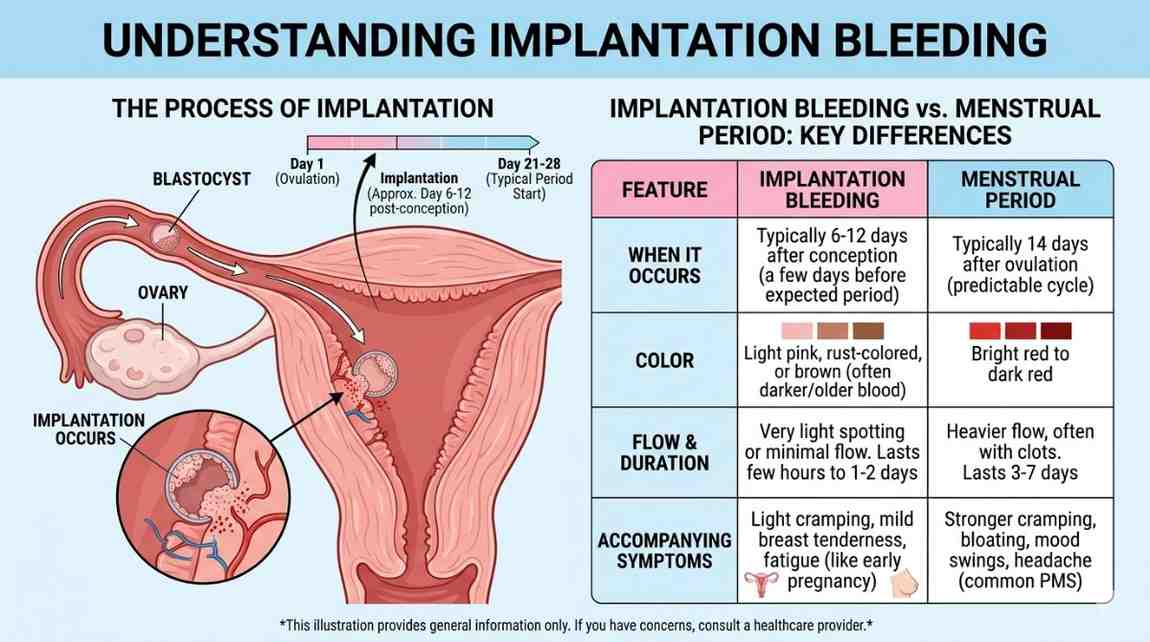
Implantation bleeding is one of the earliest possible signs of pregnancy, yet it is often misunderstood. Many women mistake it for a light period, while others become concerned that something may be wrong. Understanding what implantation bleeding is, why it happens, how it looks, and how it differs from menstruation can help reduce anxiety and provide clarity during the early stages of pregnancy. This guide explains everything you need to know about implantation bleeding, including causes, symptoms, timing, differences from periods, diagnosis, and when to see a doctor.
What Is Implantation Bleeding?
Implantation bleeding refers to light spotting or mild bleeding that occurs when a fertilized egg attaches itself to the lining of the uterus. This typically happens in the very early stages of pregnancy, before many women even realize they are pregnant.
After ovulation, if sperm fertilizes the egg, the resulting embryo travels through the fallopian tube toward the uterus. Once it reaches the uterus, it embeds into the uterine lining, also known as the endometrium. This process is called implantation. During this process, small blood vessels in the uterine lining may break, causing light spotting. Not every pregnant woman experiences implantation bleeding. In fact, it is estimated that only about 15 to 25 percent of pregnant women notice this type of spotting.
When Does Implantation Bleeding Occur?
Timing is one of the most important clues in identifying implantation bleeding. Implantation usually occurs:
- About 6 to 12 days after ovulation
- Around 7 to 10 days after fertilization
- A few days before an expected period
For women with a 28-day menstrual cycle, implantation bleeding may happen around day 20 to 24 of the cycle. Because this timing is close to when a period is expected, it can easily be confused with a light menstrual flow. It is important to track ovulation and menstrual cycles to better determine whether bleeding may be related to implantation or the start of menstruation.
What Does Implantation Bleeding Look Like?
Implantation bleeding typically differs from a normal period in several ways.
Color
- Light pink
- Brown
- Rust-colored
Unlike menstrual blood, which is usually bright red to dark red, implantation bleeding is often lighter in color because it is older blood that takes longer to exit the body.
Flow
- Very light spotting
- Not enough to fill a pad or tampon
- Often only noticeable when wiping
It does not usually involve a steady flow or heavy bleeding. Most women describe it as spotting rather than bleeding.
Duration
- A few hours to two days
- Rarely longer than three days
Implantation bleeding is typically brief. If bleeding continues beyond a couple of days or becomes heavier, it is more likely to be a menstrual period.
Implantation Bleeding vs. Menstrual Period
Distinguishing implantation bleeding from a regular period can be challenging. However, there are several key differences.
1. Timing
- Implantation bleeding occurs before the expected period.
- Menstrual bleeding starts at the beginning of the cycle.
2. Flow
- Implantation bleeding is light and spotty.
- Periods usually begin light and become heavier.
3. Clotting
- Implantation bleeding does not typically contain clots.
- Menstrual blood may include small clots.
4. Cramping
- Implantation cramping is mild and brief.
- Period cramps may be more intense and last longer.
5. Duration
- Implantation bleeding lasts a short time.
- Periods generally last 3 to 7 days.
If bleeding increases in intensity or lasts several days, it is more likely to be menstruation.
Other Early Signs of Pregnancy
Implantation bleeding may occur alongside other early pregnancy symptoms. These symptoms can appear before or shortly after a missed period. Common early signs include:
- Mild cramping
- Breast tenderness
- Fatigue
- Nausea
- Increased urination
- Heightened sense of smell
- Mood changes
- Bloating
These symptoms are caused by hormonal changes, particularly rising levels of human chorionic gonadotropin (hCG), progesterone, and estrogen.
However, it is important to note that some women experience no symptoms at all in early pregnancy.
What Causes Implantation Bleeding?
Implantation bleeding occurs as a result of the embryo attaching to the uterine lining. The endometrium is rich in blood vessels to support a developing pregnancy. When the embryo burrows into this lining, it may disrupt small capillaries, causing light spotting.
This is a natural and normal biological process. It is not a sign of miscarriage or pregnancy complications in most cases. However, not all implantation causes visible bleeding. Many women do not experience any spotting during this stage.
How Common Is Implantation Bleeding?
Estimates suggest that approximately 15 to 25 percent of pregnant women notice implantation bleeding. The majority do not experience it, so its absence does not indicate a problem. Because it can be so light, some women may not even realize it happened. Others may mistake it for the beginning of a lighter-than-usual period.
Can Implantation Bleeding Be Heavy?
Implantation bleeding is almost always light. Heavy bleeding is unlikely to be caused by implantation.
If you experience:
- Heavy bleeding
- Severe abdominal pain
- Dizziness
- Shoulder pain
It is important to seek medical attention immediately. These symptoms could indicate an ectopic pregnancy or another serious condition.
How Soon After Implantation Can You Take a Pregnancy Test?
After implantation occurs, the body begins producing hCG, the hormone detected by pregnancy tests.
However, hCG levels may not be high enough for detection immediately. For the most accurate results:
- Wait until the first day of a missed period
- Use first-morning urine
- Consider retesting after 48 hours if the result is negative
Taking a test too early may result in a false negative because hCG levels double approximately every 48 to 72 hours in early pregnancy.
Implantation Bleeding and IVF
For women undergoing in vitro fertilization (IVF), implantation bleeding may occur after embryo transfer. The timing depends on whether a fresh or frozen embryo is used.
Spotting after IVF can also be caused by:
- Hormonal medications
- Cervical irritation
- Progesterone supplementation
It is important to follow up with your fertility specialist if you experience unusual symptoms.
Is Implantation Bleeding a Good Sign?
Implantation bleeding can be considered a positive sign that the embryo has attached to the uterine lining. However, its absence does not mean implantation did not occur. Some healthy pregnancies occur without any spotting at all. Every pregnancy is different.
When to See a Doctor?
While implantation bleeding is usually harmless, you should contact a healthcare provider if you experience:
- Heavy bleeding
- Severe pain
- Fever
- Foul-smelling discharge
- Bleeding after a confirmed pregnancy
Early medical evaluation is essential to rule out complications such as miscarriage or ectopic pregnancy.
Implantation Bleeding vs. Miscarriage
A miscarriage often involves heavier bleeding, stronger cramping, and sometimes tissue passage. Implantation bleeding is much lighter and shorter in duration.
If you have already confirmed pregnancy and experience bleeding, consult a healthcare provider for proper evaluation.
Emotional Impact of Implantation Bleeding
For women trying to conceive, spotting before a missed period can cause confusion and anxiety. Some may feel hopeful, while others worry about complications.
It is important to approach the situation calmly and wait for accurate pregnancy testing rather than jumping to conclusions. Tracking your menstrual cycle, ovulation, and symptoms can provide helpful context.
Myths About Implantation Bleeding
Myth 1: Implantation bleeding happens in every pregnancy
Fact: Most pregnancies do not involve noticeable implantation bleeding.
Myth 2: Heavy bleeding can be implantation
Fact: Implantation bleeding is light.
Myth 3: Implantation bleeding guarantees a successful pregnancy
Fact: While it can be a normal sign, it does not guarantee pregnancy continuation.
Tracking Your Cycle for Clarity
Understanding your cycle helps identify implantation bleeding more accurately. Consider:
- Using ovulation predictor kits
- Tracking basal body temperature
- Logging symptoms in a journal
- Using fertility tracking apps
Knowing your ovulation date helps calculate when implantation might occur.
Final Thoughts
Implantation bleeding is a natural biological process that can occur in early pregnancy when a fertilized egg attaches to the uterine lining. It is typically light, short-lived, and occurs before a missed period. Because it closely resembles light menstrual spotting, it can be confusing. Paying attention to timing, flow, color, and associated symptoms can help distinguish it from a regular period.
If you suspect implantation bleeding, wait until the first day of your missed period to take a pregnancy test for the most accurate results. If you experience heavy bleeding, severe pain, or unusual symptoms, seek medical advice promptly.
Every woman’s body is unique. Whether you experience implantation bleeding or not, it does not determine the health or success of a pregnancy. Staying informed and consulting healthcare professionals when necessary is the best way to ensure your reproductive health and peace of mind.
FAQ’s
How long does implantation bleeding last?
Implantation bleeding usually lasts from a few hours up to two days. It rarely continues longer than that.
What color is implantation bleeding?
It is often light pink, brown, or rust-colored. It is generally lighter in color than menstrual blood.
Does implantation bleeding have clots?
Implantation bleeding does not typically contain blood clots. Clots are more common during menstruation.
Can implantation bleeding be bright red?
It is usually pink or brown, but in some cases, it may appear light red. Persistent bright red bleeding should be evaluated by a healthcare provider.
Does implantation bleeding cause cramps?
Some women experience mild cramping during implantation. These cramps are usually lighter and shorter than menstrual cramps.
Can implantation bleeding happen after a missed period?
It most often happens before a missed period. Bleeding after a missed period is less likely to be implantation-related.
Can you take a pregnancy test during implantation bleeding?
It is best to wait until the first day of a missed period. Testing too early may result in a false negative because hCG levels may not be high enough yet.
Is implantation bleeding a sign of a healthy pregnancy?
It can be a normal sign of early pregnancy, but its presence or absence does not determine pregnancy health.
Can implantation bleeding be mistaken for a period?
Yes, it is often confused with a light period because it occurs close to the expected menstrual date. However, implantation bleeding is usually lighter and shorter.
Can stress cause implantation bleeding?
Stress does not directly cause implantation bleeding. However, stress can affect your menstrual cycle timing.
Can implantation bleeding happen with IVF?
Yes, implantation bleeding may occur after embryo transfer in IVF cycles. However, spotting can also be caused by medications or cervical irritation.
Can implantation bleeding occur more than once?
Implantation itself happens only once in a pregnancy. Spotting may occur over a short period, but repeated heavy bleeding is not typical.
Can implantation bleeding have tissue?
No, implantation bleeding does not involve passing tissue. Tissue passage may indicate menstruation or miscarriage.
Does implantation bleeding smell?
It should not have a strong or foul odor. An unusual smell may indicate an infection and should be checked by a healthcare provider.
Can implantation bleeding happen without pregnancy?
No, true implantation bleeding only occurs if a fertilized egg attaches to the uterus. Spotting outside pregnancy may have other causes such as hormonal changes.
Does everyone experience implantation bleeding?
No. Most women do not notice implantation bleeding.
Should I use a tampon during implantation bleeding?
It is generally better to use a panty liner to monitor the flow.
Also Read: