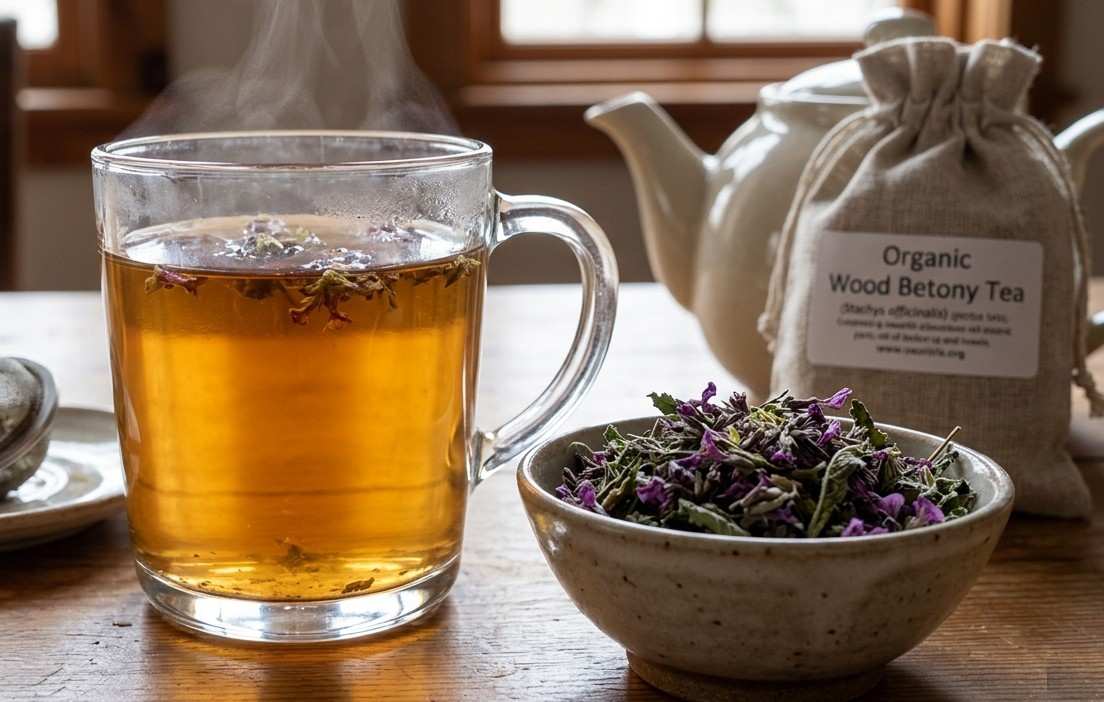
Wood Betony Tea is a traditional herbal infusion made from the leaves, flowers, and sometimes the stems of the wood betony plant. Revered for centuries in European herbal medicine, wood betony has been used to support nervous system health, digestive balance, and overall vitality. Today, this gentle yet powerful herbal tea is gaining renewed attention for its potential science-backed benefits. In this guide, we’ll explore everything you need to know about Wood Betony Tea, including its nutritional profile, health benefits, side effects, preparation methods, dosage recommendations, and safety precautions.
What is Wood Betony Tea?
Wood Betony Tea is an herbal beverage prepared from the dried aerial parts of Stachys officinalis (formerly known as Betonica officinalis), a perennial herb belonging to the mint family (Lamiaceae). Native to Europe and parts of Asia, the plant produces purple-pink flowers and aromatic leaves.
Historically, wood betony was highly valued in traditional European herbal medicine and was often referred to as a “cure-all” herb. Ancient herbalists used it to treat headaches, anxiety, digestive problems, wounds, and even spiritual ailments. Wood Betony Tea has a mildly bitter, earthy taste with subtle floral undertones. It is caffeine-free, making it suitable for those seeking a calming herbal alternative to traditional teas.
Components of Wood Betony Tea
Although Wood Betony Tea is not consumed for calories or macronutrients, it contains beneficial plant compounds that contribute to its therapeutic effects.
| Nutrient / Compound | Approximate Presence | Health Contribution |
|---|---|---|
| Calories | Negligible | No significant caloric intake |
| Carbohydrates | Trace | Minimal impact |
| Dietary Fiber | None (infusion) | Not significant in tea form |
| Tannins | Moderate | Astringent, digestive support |
| Flavonoids | Present | Antioxidant and anti-inflammatory effects |
| Phenolic acids | Present | Cellular protection |
| Iridoids | Present | Nervous system support |
| Essential oils | Trace | Aromatic and calming properties |
| Alkaloids | Trace | May contribute to mild relaxation |
| Minerals (Iron, Calcium, Magnesium) | Small amounts | General body support |
The primary value of Wood Betony Tea lies in its phytochemicals rather than its macronutrient content.
20 Science-Backed Benefits of Wood Betony Tea
1. Supports Nervous System Balance
Wood Betony Tea contains iridoids and flavonoids that may help calm the nervous system and reduce overstimulation.
2. May Help Relieve Mild Anxiety
Traditional use and preliminary research suggest that its calming compounds can promote relaxation and reduce anxious feelings.
3. Supports Headache Relief
Wood betony has historically been used to relieve tension headaches due to its potential muscle-relaxing and anti-inflammatory properties.
4. May Improve Sleep Quality
Its mild sedative effects may support more restful sleep when consumed before bedtime.
5. Aids Digestive Comfort
The tannins in Wood Betony Tea may help soothe mild digestive upset and promote gut balance.
6. May Reduce Inflammation
Flavonoids present in the herb exhibit antioxidant and anti-inflammatory activity that supports overall health.
7. Supports Cognitive Clarity
Traditional herbal medicine considered wood betony beneficial for mental clarity and focus.
8. May Ease Mild Muscle Tension
The calming properties of the herb may contribute to relaxation of tense muscles.
9. Provides Antioxidant Protection
Phenolic compounds help combat oxidative stress and cellular damage.
10. May Support Respiratory Health
Historically used for coughs and congestion, wood betony may help soothe mild respiratory irritation.
11. May Assist in Stress Reduction
Its nervine qualities can help regulate stress responses.
12. Supports Circulatory Health
Traditional herbalists used wood betony to promote healthy blood flow.
13. May Help with Mild Menstrual Discomfort
Its antispasmodic properties may support women experiencing mild cramps.
14. Supports Liver Function
Some herbal traditions suggest wood betony may help support detoxification processes.
15. May Promote Mild Pain Relief
Its anti-inflammatory components may help reduce minor aches.
16. Supports Immune Function
Antioxidants in the tea may help strengthen natural immune responses.
17. May Help with Nervous Exhaustion
Traditionally used to combat fatigue related to mental strain.
18. Supports Oral Health
The astringent quality of tannins may help tone gum tissue.
19. May Assist with Mild Vertigo
Historically recommended for dizziness and lightheadedness.
20. Supports Overall Relaxation
As a gentle nervine herb, wood betony promotes a balanced and calm state of mind.
10 Side Effects of Wood Betony Tea
1. May Cause Drowsiness
Its calming properties may lead to mild sleepiness in some individuals.
2. May Lower Blood Pressure
Those prone to low blood pressure should use caution.
3. Possible Allergic Reaction
Individuals sensitive to plants in the mint family may experience allergic responses.
4. Digestive Upset
Excessive intake may cause nausea or stomach discomfort.
5. Interaction with Sedatives
Combining with sedative medications may amplify drowsiness.
6. Not Recommended During Pregnancy
Limited safety data suggests pregnant women should avoid it unless advised by a professional.
7. May Interact with Blood Pressure Medication
Its potential hypotensive effect may compound medication effects.
8. Possible Headache in Excess
Overconsumption may paradoxically trigger mild headaches.
9. Dry Mouth
Tannins may cause slight dryness.
10. Fatigue with High Doses
Large amounts may cause excessive relaxation or tiredness.
How to Make Wood Betony Tea?
Ingredients:
- 1–2 teaspoons dried wood betony leaves and flowers
- 1 cup (240 ml) hot water
Instructions:
- Bring water to a boil and let it cool slightly (around 90–95°C).
- Place dried wood betony in a teacup or infuser.
- Pour hot water over the herb.
- Cover and steep for 10–15 minutes.
- Strain and drink warm.
Optional: Add honey or lemon to improve taste.
Other Uses of Wood Betony Tea
- Gargle for sore throat support
- Compress for minor wounds
- Hair rinse for scalp health
- Bath infusion for relaxation
- Mild facial rinse for skin toning
How Much Wood Betony Tea Can You Drink a Day?
Most herbalists recommend:
- 1–3 cups per day for general wellness
- Short-term use for specific concerns
Start with one cup daily to assess tolerance. Long-term continuous use should be discussed with a healthcare provider.
Tips for Consuming Wood Betony Tea
- Use high-quality organic dried herb.
- Store in an airtight container away from sunlight.
- Avoid excessive steeping to reduce bitterness.
- Combine with chamomile or lemon balm for enhanced calming effects.
- Drink consistently for several weeks for best results.
Best Time to Drink Wood Betony Tea
- Evening: For relaxation and sleep support
- After meals: For digestive comfort
- During stressful periods: For calming benefits
Who Should Drink Wood Betony Tea?
- Individuals experiencing mild stress or anxiety
- Those with occasional headaches
- People seeking caffeine-free relaxation
- Individuals with mild digestive discomfort
- Those interested in traditional herbal remedies
Who Should Not Drink Wood Betony Tea?
- Pregnant or breastfeeding women (without medical advice)
- Individuals with very low blood pressure
- People taking sedative medications
- Individuals allergic to mint-family plants
- Children without professional guidance
Precautions and Interactions
- Consult a healthcare provider before use if taking medications.
- Avoid combining with strong sedatives or anti-anxiety drugs.
- Discontinue use if adverse reactions occur.
- Not intended to replace medical treatment.
- Use moderate doses to prevent unwanted side effects.
Conclusion
Wood Betony Tea is a time-honored herbal infusion valued for its calming, digestive, and anti-inflammatory properties. While modern research is still evolving, traditional use and preliminary evidence suggest that it may offer meaningful support for nervous system balance, stress reduction, and mild discomfort relief. As with any herbal remedy, moderation and proper guidance are essential. When used responsibly, Wood Betony Tea can be a gentle, natural addition to a wellness routine.
FAQ’s
What does Wood Betony Tea taste like?
Wood Betony Tea has a mildly bitter, earthy flavor with subtle floral and slightly minty undertones, and it can be sweetened with honey or blended with other herbs to improve taste.
Is Wood Betony Tea caffeine-free?
Yes, Wood Betony Tea is completely caffeine-free, making it suitable for people who want a calming herbal alternative to black or green tea.
Can I drink Wood Betony Tea every day?
Most people can safely drink 1–2 cups daily, but long-term continuous use should be discussed with a healthcare professional.
How long does it take for Wood Betony Tea to work?
Some people may notice calming effects within 30–60 minutes, while digestive or stress-related benefits may take consistent use over several days or weeks.
Is Wood Betony Tea safe during pregnancy?
There is limited safety data regarding its use during pregnancy, so it is best avoided unless approved by a qualified healthcare provider.
Can Wood Betony Tea help with headaches?
Traditionally, wood betony has been used to relieve tension headaches, and its mild anti-inflammatory and calming properties may support headache relief.
Does Wood Betony Tea help with anxiety?
Wood betony is considered a gentle nervine herb that may help reduce mild anxiety and promote relaxation.
Can children drink Wood Betony Tea?
Children should only consume Wood Betony Tea under the guidance of a healthcare professional due to limited safety research.
Does Wood Betony Tea lower blood pressure?
It may have mild hypotensive effects, so individuals with low blood pressure should use caution.
Can I mix Wood Betony Tea with other herbs?
Yes, it blends well with chamomile, lemon balm, peppermint, and lavender for enhanced calming and digestive benefits.
How should Wood Betony Tea be stored?
Store dried wood betony in an airtight container away from heat, moisture, and direct sunlight to preserve potency.
Can Wood Betony Tea be used topically?
Yes, the cooled tea can be used as a gargle, compress, or skin rinse for mild irritation.
Is Wood Betony Tea good for sleep?
Its mild sedative properties may help support better sleep when consumed in the evening.
What is Wood Betony Tea made from?
Wood Betony Tea is made from the dried leaves, flowers, and sometimes the stems of the wood betony plant (Stachys officinalis), a perennial herb in the mint family (Lamiaceae).
What is Wood Betony Tea good for?
Wood Betony Tea is traditionally used to support relaxation, ease mild anxiety, relieve tension headaches, promote digestive comfort, and help with overall nervous system balance.
Also Read: