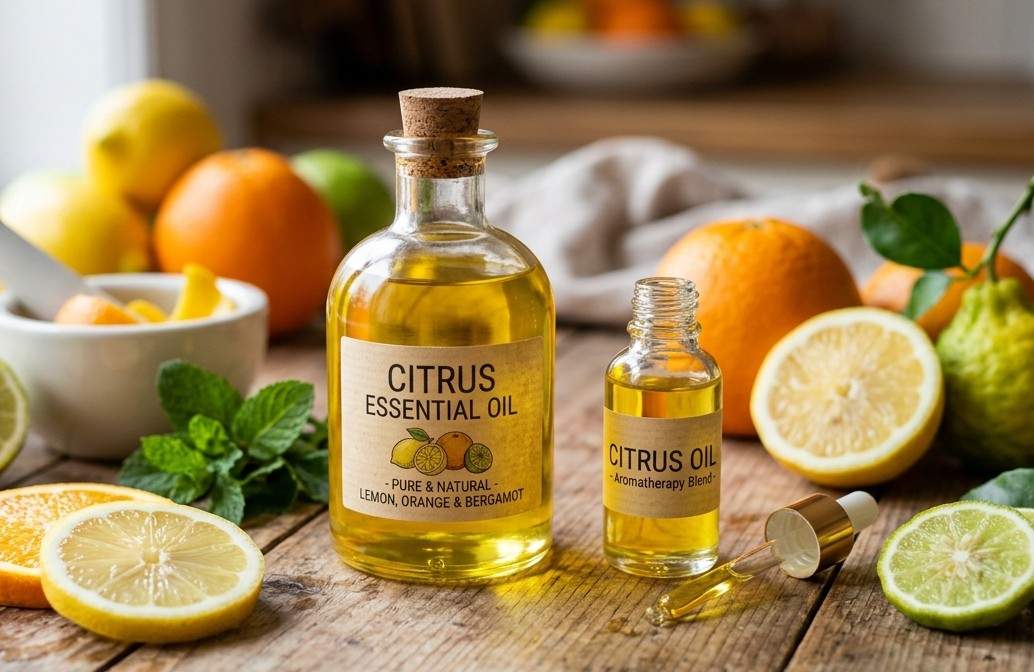
Citrus oil is one of the most refreshing and versatile essential oils available today. Extracted from the peels of fruits like oranges, lemons, limes, and grapefruits, citrus essential oil is widely used in aromatherapy, skincare, natural cleaning, and even wellness routines. Its bright aroma alone can uplift your mood within seconds, but its benefits go far beyond fragrance. In this guide, you’ll learn everything about citrus oil — from its nutrition profile and proven health benefits to side effects, dosage, storage tips, and precautions.
What is Citrus Oil?
Citrus oil refers to essential oils extracted from the peel of citrus fruits such as:
- Orange
- Lemon
- Lime
- Grapefruit
- Bergamot
- Mandarin
These oils are typically extracted through cold pressing, a method that preserves their natural compounds and aroma. Citrus oils are rich in bioactive compounds like limonene, citral, linalool, and flavonoids.
Unlike citrus fruit juice, citrus essential oil is highly concentrated. Just a few drops contain powerful plant compounds that can impact mood, skin, digestion, and overall wellness.
Citrus oil is commonly used in:
- Aromatherapy
- Skincare products
- Natural cleaning solutions
- Massage oils
- Diffusers
- Herbal wellness practices
Nutrition Facts of Citrus Oil (Per 100g – Essential Oil Composition Approximation)
| Component | Approximate Percentage |
|---|---|
| Limonene | 60–95% |
| Myrcene | 1–5% |
| Linalool | 0.5–3% |
| Citral | 1–5% |
| Flavonoids | Trace amounts |
| Vitamin C | Minimal (not nutritionally significant in oil form) |
| Beta-pinene | 0.5–2% |
| Gamma-terpinene | 1–10% |
| Aldehydes | 1–5% |
Note: Essential oils are not consumed for calories or macronutrients. Their value lies in their phytochemical content.
20 Science-Backed Benefits of Citrus Oil
1. Boosts Mood Naturally
The refreshing aroma stimulates the brain’s limbic system, helping reduce stress and promote emotional balance.
2. Reduces Anxiety
Inhalation may lower cortisol levels and calm the nervous system.
3. Supports Digestive Health
When diluted properly, citrus essential oil may help reduce bloating and indigestion.
4. Improves Skin Brightness
Citrus oil contains antioxidants that help improve dull and uneven skin tone.
5. Fights Acne
Its antibacterial properties help reduce acne-causing bacteria.
6. Strengthens Immunity
The antimicrobial properties may support immune defense.
7. Natural Detoxifier
Often used in detox blends, citrus essential oil supports liver function in aromatherapy practices.
8. Boosts Energy Levels
The uplifting scent promotes alertness and mental clarity.
9. Improves Focus
Diffusing citrus essential oil may help enhance concentration.
10. Reduces Inflammation
Certain citrus compounds have anti-inflammatory effects.
11. Acts as Natural Antibacterial
Effective against certain bacteria when used in cleaning solutions.
12. Supports Respiratory Health
Inhalation may help open airways and clear congestion.
13. Enhances Hair Shine
When added to hair products, it helps remove excess oil and buildup.
14. Improves Blood Circulation
Topical diluted use may stimulate circulation.
15. Helps Reduce Nausea
The scent may reduce feelings of nausea.
16. Promotes Better Sleep
When blended with calming oils, citrus essential oil may improve sleep quality.
17. Freshens Breath
Some citrus essential oils are used in natural oral care products.
18. Acts as Natural Deodorizer
Eliminates odors naturally without synthetic chemicals.
19. Supports Weight Management
Certain citrus essential oils are believed to reduce appetite when inhaled.
20. Protects Against Oxidative Stress
Rich in antioxidants that help neutralize free radicals.
10 Side Effects of Citrus Oil
While citrus essential oil has many benefits, improper use can cause issues.
1. Skin Irritation
Undiluted oil can cause redness and burning.
2. Photosensitivity
Some citrus oils increase sun sensitivity, leading to burns.
3. Allergic Reactions
Rashes or itching may occur in sensitive individuals.
4. Digestive Upset
Improper internal use may cause nausea.
5. Headaches
Strong scent may trigger headaches in some people.
6. Drug Interactions
May interact with certain medications.
7. Hormonal Sensitivity
Some compounds may affect hormone balance.
8. Toxicity in Pets
Citrus essential oils can be harmful to cats and dogs.
9. Increased Sunburn Risk
Especially with lemon and bergamot oil.
10. Overuse May Cause Sensitization
Repeated heavy use can increase skin sensitivity over time.
How to Use Citrus Oil?
1. Aromatherapy Diffuser
Add 3–5 drops to a diffuser for mood enhancement.
2. Topical Application
Dilute with carrier oil (like coconut or almond oil) before applying.
3. Massage Oil
Blend with carrier oil for a refreshing massage.
4. Steam Inhalation
Add a few drops to hot water and inhale steam.
5. DIY Skincare
Add 1–2 drops to face masks or creams.
Other Uses of Citrus Oil
- Natural surface cleaner
- Air freshener
- Laundry fragrance
- Floor cleaner additive
- DIY candles
- Insect repellent
- Grease remover
- Refrigerator deodorizer
Tips for Consuming Citrus Oil
Only use oils labeled as food-grade and safe for internal use.
- Always dilute in water or honey.
- Never consume undiluted.
- Start with the lowest possible dose.
- Consult a healthcare professional before ingesting.
- Avoid daily long-term internal use without supervision.
How to Take Citrus Oil?
If approved by a healthcare provider:
- 1 drop diluted in a glass of water
- 1 drop mixed with honey
- In vegetable capsules with carrier oil
Internal use should always be short-term and supervised.
How to Make Citrus Oil at Home?
Ingredients:
- Fresh citrus peels (orange, lemon, or lime)
- Carrier oil (olive oil or almond oil)
Steps:
- Wash and dry citrus peels thoroughly.
- Remove white pith to reduce bitterness.
- Place peels in a clean jar.
- Pour carrier oil to fully cover peels.
- Seal and store in a warm place for 1–2 weeks.
- Strain and store in a dark bottle.
Note: This creates an infused oil, not a pure essential oil.
How Much Citrus Oil Can You Use Per Day?
For aromatherapy:
- 3–10 drops per day in a diffuser.
For topical use:
- 1–2% dilution (about 6–12 drops per ounce of carrier oil).
For internal use (if safe and approved):
- 1 drop per day maximum.
Citrus Oil Dosage
Adults:
- Topical: 1–2% dilution.
- Diffuser: 3–5 drops.
- Internal: Only under professional supervision.
Children:
- 0.5–1% dilution only.
- Avoid internal use.
Best Time to Use Citrus Oil
Morning is ideal because citrus oil is energizing and uplifting.
Avoid heavy use at night if you are sensitive to stimulating aromas.
Before workouts or during work hours, citrus essential oil may enhance productivity.
Who Should Use Citrus Oil?
- Individuals experiencing stress
- People with low energy levels
- Those looking for natural cleaning alternatives
- Individuals with oily or acne-prone skin
- People seeking natural mood boosters
Who Should Not Use Citrus Oil?
- Pregnant or breastfeeding women without medical advice
- People with extremely sensitive skin
- Individuals taking medications that cause photosensitivity
- People allergic to citrus fruits
- Pet owners using it around cats
How to Store Citrus Oil?
- Keep in dark glass bottles.
- Store away from heat and sunlight.
- Seal tightly after each use.
- Store in a cool, dry place.
- Avoid plastic containers.
Properly stored citrus oil typically lasts 1–2 years.
Precautions and Interactions
- Always perform a patch test before topical use.
- Avoid direct sun exposure for 12–24 hours after applying photosensitive oils.
- Do not use near eyes or mucous membranes.
- Consult a doctor if you have chronic health conditions.
- Avoid mixing with alcohol-based skincare products.
- Keep away from children and pets.
- Discontinue use if irritation occurs.
Certain citrus essential oils may interact with medications metabolized by the liver. If you are taking prescription medication, consult your healthcare provider before use.
Final Thoughts
Citrus oil is a powerful, refreshing essential oil with wide-ranging benefits for mood, skin, home care, and overall wellness. From boosting energy and improving skin clarity to naturally disinfecting your home, it offers impressive versatility.
However, because it is highly concentrated, proper dilution, dosage, and precautions are essential. Used responsibly, citrus essential oil can become a valuable part of your natural health and lifestyle routine. If you plan to consume citrus essential oil internally or use it regularly, always consult a healthcare professional to ensure safety.
FAQ’s
What is citrus oil mainly used for?
Citrus essential oil is commonly used for aromatherapy, skincare, natural cleaning, and mood enhancement. It is popular for its refreshing scent and antibacterial properties.
Is citrus oil safe for daily use?
Yes, Citrus essential oil can be used daily in diluted form for aromatherapy or topical application. However, long-term internal use should only be done under professional supervision.
Can I apply citrus oil directly to my skin?
No, Citrus essential oil should always be diluted with a carrier oil before applying to the skin. Undiluted oil can cause irritation or burns.
Does citrus oil lighten skin?
Citrus essential oil may help brighten dull skin due to its antioxidant content. However, it should be used carefully because it can increase sun sensitivity.
Why does citrus oil cause photosensitivity?
Certain compounds in citrus essential oil react with UV rays, making the skin more prone to sunburn. It is recommended to avoid sun exposure for 12–24 hours after application.
Can citrus oil help with acne?
Yes, Citrus essential oil has antibacterial and anti-inflammatory properties that may help reduce acne when properly diluted.
Is citrus oil safe during pregnancy?
Pregnant women should consult a healthcare provider before using citrus essential oil, especially for internal use.
Can children use citrus oil?
Children can use citrus essential oil in very diluted form for aromatherapy or topical application. Internal use is not recommended for children.
Can citrus oil be ingested?
Only food-grade citrus essential oil labeled safe for internal use should be consumed, and only in very small diluted amounts under medical guidance.
What is the best carrier oil to mix with citrus oil?
Common carrier oils include coconut oil, almond oil, jojoba oil, and olive oil. These help reduce irritation and improve absorption.
How many drops of citrus oil should I use in a diffuser?
Typically, 3–5 drops are enough for a standard room diffuser. Adjust based on room size and personal preference.
Does citrus oil help with stress?
Yes, its uplifting aroma may help reduce stress and promote relaxation by influencing the nervous system.
Can citrus oil expire?
Yes, citrus essential oils can oxidize and lose potency over time. Most last 1–2 years when stored properly in a cool, dark place.
Is citrus oil safe for pets?
Citrus essential oils can be harmful to cats and some dogs. It is best to avoid diffusing or applying citrus oil around pets without veterinary advice.
Can citrus oil cause allergic reactions?
Yes, some individuals may experience redness, itching, or rash. A patch test is recommended before first use.
Can citrus oil help with headaches?
Some people find relief from mild tension headaches through aromatherapy, but strong scents may worsen headaches in sensitive individuals.
How long does citrus oil stay effective?
When stored properly in a sealed dark glass bottle, citrus essential oil typically remains effective for up to two years.
Can citrus oil be used in cooking?
Only certified food-grade citrus essential oil should be used in cooking, and in extremely small diluted amounts.
Is citrus oil good for hair?
Yes, when diluted and added to hair products, citrus essential oil may help reduce excess oil and add shine.
What is Citrus Oil made from?
Citrus essential oil is made from the peels of citrus fruits such as oranges, lemons, limes, grapefruits, bergamot, and mandarins. It is typically extracted through cold pressing to preserve its natural aromatic and therapeutic compounds.
How long does it take for Citrus Oil to work?
Citrus essential oil can work almost immediately when inhaled, often uplifting mood within minutes. For topical or digestive benefits, results may vary depending on the individual and method of use.
How should Citrus Oil be stored?
Citrus essential oil should be stored in a tightly sealed dark glass bottle away from heat, light, and moisture. Keeping it in a cool, dry place helps preserve its potency for up to 1–2 years.
What is Citrus Oil good for?
Citrus essential oil is commonly used for boosting mood, improving skin clarity, supporting digestion, enhancing focus, and natural cleaning. Its antibacterial and antioxidant properties make it popular in both wellness and household applications.
Also Read: