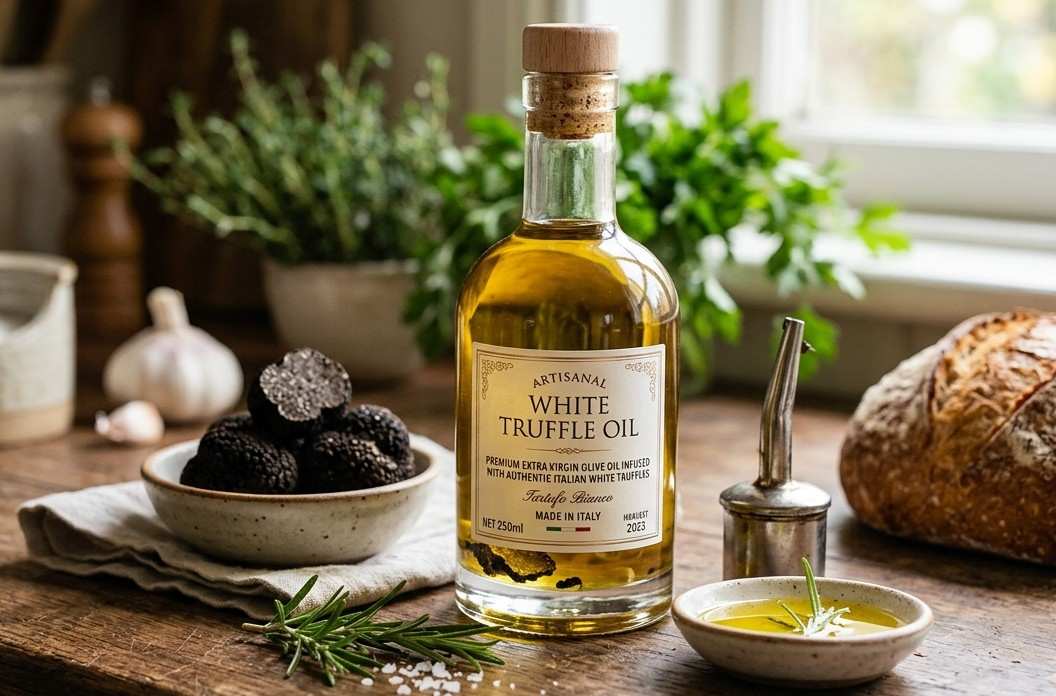
Truffle oil is one of the most luxurious and aromatic ingredients in the culinary world. Just a few drops can instantly transform a simple dish into something that tastes gourmet. Whether drizzled over pasta, pizza, risotto, or even popcorn, truffle oil adds a rich, earthy, and unforgettable flavor.
But beyond its strong aroma and high-end reputation, many people wonder: Is truffle oil healthy? Does it have real nutritional value? How much should you use? And are there any side effects? In this guide, we will explore everything you need to know about truffle oil in simple and practical terms.
What is Truffle Oil?
Truffle oil is a flavored oil made by infusing a neutral oil—usually olive oil, grapeseed oil, or sunflower oil—with the flavor of truffles. Truffles are rare and expensive underground fungi that grow near tree roots, especially in regions like Italy and France.
There are two main types:
- Black truffle oil
- White truffle oil
However, most commercial truffle oils do not contain real truffles. Instead, they use a synthetic compound called 2,4-dithiapentane, which mimics the natural aroma of truffles. High-quality truffle oils may contain small pieces of real truffles for added authenticity.
Truffle oil is primarily used as a finishing oil, meaning it is added after cooking to preserve its aroma and flavor.
Nutrition Facts of Truffle Oil (Per 1 Tablespoon – Approx. 15 ml)
| Nutrient | Amount |
|---|---|
| Calories | 120 kcal |
| Total Fat | 14 g |
| Saturated Fat | 1.5–2 g |
| Monounsaturated Fat | 9–10 g |
| Polyunsaturated Fat | 2–3 g |
| Cholesterol | 0 mg |
| Carbohydrates | 0 g |
| Protein | 0 g |
| Fiber | 0 g |
| Vitamin E | Small amounts (if olive oil based) |
| Sodium | 0 mg |
Note: Nutritional values vary depending on the base oil used.
Since truffle oil is essentially flavored oil, its nutritional profile depends on the carrier oil, not the truffle itself.
20 Proven Benefits of Truffle Oil
Below are the potential health benefits of truffle oil, especially when made with high-quality olive oil.
- Rich in Healthy Fats – Oil contains monounsaturated fats that support heart health and reduce bad cholesterol levels.
- Supports Heart Health – The olive oil base may help lower LDL cholesterol and improve overall cardiovascular function.
- Anti-Inflammatory Properties – Olive oil-based truffle oil contains compounds that may reduce inflammation in the body.
- Antioxidant Content – Vitamin E and polyphenols in the base oil help fight oxidative stress.
- Improves Skin Health – Healthy fats nourish skin cells and may promote a natural glow.
- Supports Brain Function – Monounsaturated fats are linked to better cognitive performance.
- May Help Weight Management – When used in moderation, healthy fats increase satiety and reduce overeating.
- Enhances Nutrient Absorption – Fats help the body absorb fat-soluble vitamins like A, D, E, and K.
- May Support Gut Health – High-quality oils may help lubricate and support digestive processes.
- Contains Antimicrobial Compounds – Real truffles contain compounds that may have antimicrobial effects.
- Boosts Flavor Without Extra Salt – It enhances taste naturally, helping reduce sodium intake.
- May Improve Mood – Aromatic foods stimulate the senses and may positively influence mood.
- Supports Hormone Balance – Healthy fats are essential for hormone production.
- May Reduce Oxidative Stress – Antioxidants help protect cells from free radical damage.
- Improves Metabolic Health – Replacing unhealthy fats with olive oil-based truffle oil supports metabolic balance.
- Provides Energy – Fats serve as a long-lasting energy source.
- May Promote Healthy Aging – Antioxidants help protect against age-related cellular damage.
- Supports Immune Function – Healthy fats contribute to a properly functioning immune system.
- Encourages Mindful Eating – Strong aroma promotes smaller portions and mindful consumption.
- Elevates Meal Satisfaction – Enhanced flavor may reduce cravings for processed foods.
Important: These benefits are mainly linked to the base oil (like olive oil), not synthetic truffle flavoring.
10 Side Effects of Truffle Oil
Though generally safe, excessive use may cause issues.
- High Calorie Content – Overuse can contribute to weight gain due to high calorie density.
- Digestive Discomfort – Excess oil may cause bloating or stomach upset.
- Allergic Reactions – Rarely, individuals allergic to mushrooms or truffles may react.
- Nausea – Strong aroma may cause nausea in sensitive individuals.
- Headaches – Synthetic flavor compounds may trigger headaches in some people.
- Quality Concerns – Low-quality oils may contain artificial additives.
- Oxidation Risk – Poor storage can lead to rancidity and digestive issues.
- May Increase Cholesterol – If made with unhealthy oils, it could negatively affect cholesterol levels.
- Overpowering Flavor – Excess use may lead to reduced appetite.
- Not Suitable for High-Heat Cooking – Heating can destroy beneficial compounds and create harmful byproducts.
How to Use Truffle Oil?
Oil is best used as a finishing oil. Add it after cooking to maintain its aroma.
Popular ways to use it:
- Drizzle over pasta or risotto
- Add to mashed potatoes
- Top gourmet pizza
- Mix into salad dressings
- Enhance scrambled eggs
- Drizzle over roasted vegetables
- Add to popcorn
- Use on fries
A little goes a long way. Usually ½ to 1 teaspoon per serving is enough.
Other Uses of Truffle Oil
Besides culinary use, oil can also be used for:
- Gourmet dipping oil with bread
- Flavoring aioli or mayonnaise
- Infusing butter
- Gourmet sauces
- High-end catering dishes
- Gift hampers and food presentation
It is not typically used for cosmetic or medicinal purposes.
Tips for Consuming Truffle Oil
- Use sparingly
- Choose high-quality brands
- Prefer olive oil-based versions
- Avoid cooking at high heat
- Store properly
- Check ingredient label for real truffle pieces
How to Take Truffle Oil?
Oil is taken as part of food, not as a supplement.
Recommended ways:
- Mix ½ teaspoon into cooked dishes
- Blend into salad dressing
- Add to dips
- Stir into warm soups just before serving
It should not be consumed directly in large quantities.
How to Make Truffle Oil at Home?
Making oil at home is simple if you have access to fresh truffles.
Ingredients:
- 1 cup high-quality olive oil
- Small fresh truffle (black or white)
Method:
- Clean and thinly slice the truffle.
- Warm olive oil gently (do not boil).
- Add truffle slices to oil.
- Let it infuse for 1–3 days in a sealed glass jar.
- Strain and refrigerate.
Homemade truffle oil should be used within 1–2 weeks to prevent bacterial growth.
How Much Truffle Oil Can You Use Per Day?
Safe daily use:
- 1 to 2 teaspoons per day (5–10 ml)
Since it is calorie-dense, excessive intake may contribute to weight gain.
Truffle Oil Dosage
There is no medical dosage since it is a culinary ingredient.
General recommendation:
- ½ to 1 teaspoon per serving
- Maximum 2 teaspoons per day
Best Time to Use Truffle Oil
There is no specific time requirement. However:
- Best used during meals
- Ideal as finishing touch after cooking
- Suitable for lunch or dinner dishes
Avoid using before intense workouts due to fat content.
Who Should Use Truffle Oil?
Oil may benefit:
- Food lovers
- Individuals following Mediterranean-style diets
- People reducing salt intake
- Gourmet chefs
- Those seeking flavor enhancement
Who Should Not Use Truffle Oil?
Certain individuals should limit or avoid:
- People with mushroom allergies
- Those on calorie-restricted diets
- Individuals with fat malabsorption disorders
- People sensitive to strong aromas
- Individuals with gallbladder issues
How to Store Truffle Oil?
Proper storage is important.
- Store in a cool, dark place
- Keep bottle tightly sealed
- Avoid sunlight exposure
- Refrigerate if homemade
- Use within 3–6 months after opening
If oil smells rancid, discard it.
Precautions and Interactions
While truffle oil is generally safe, consider the following:
- Consult a doctor if you have digestive disorders
- Use cautiously if allergic to fungi
- Avoid overheating
- Check ingredient labels carefully
- Monitor portion sizes
There are no known major drug interactions, but individuals with lipid disorders should consult healthcare professionals.
Final Thoughts
Truffle oil is more about flavor than nutrition. It adds elegance, aroma, and depth to dishes with just a few drops. While it does contain healthy fats—especially when made from olive oil—it should be used in moderation due to its high calorie content.
The key to enjoying oil is balance. Choose quality over quantity, use it as a finishing touch, and store it properly. When used correctly, oil can elevate everyday meals into gourmet experiences without compromising your health.
FAQ’s
What is Truffle Oil good for?
Oil is mainly used to enhance the flavor of dishes with its rich, earthy aroma and taste. It is commonly drizzled over pasta, pizza, risotto, eggs, fries, and salads as a finishing oil.
What is truffle oil made from?
Oil is made by infusing a base oil such as olive oil or grapeseed oil with truffle flavor. It may contain real truffle pieces or synthetic compounds that mimic the truffle aroma.
Why is truffle oil so expensive?
Oil can be expensive because real truffles are rare, difficult to harvest, and highly valued in gourmet cooking. Premium versions made with real truffles cost more than those made with synthetic flavoring.
Is truffle oil made from real truffles?
Most commercial truffle oils are made using synthetic flavor compounds that mimic the aroma of real truffles, while premium versions may contain small pieces of real truffles infused in olive oil.
Is truffle oil healthy?
Oil can be healthy in moderation, especially if it is made with extra virgin olive oil, as it contains heart-friendly monounsaturated fats.
Can you cook with truffle oil?
Oil should not be used for high-heat cooking because heat destroys its aroma and beneficial compounds; it is best used as a finishing oil after cooking.
Does truffle oil contain actual truffles?
Some high-quality brands contain real truffle pieces, but many affordable versions use synthetic truffle flavoring instead.
Is truffle oil vegetarian or vegan?
Yes, oil is plant-based and suitable for both vegetarians and vegans, as it is made from oil and truffle flavoring.
Does truffle oil expire?
Yes, oil can go rancid over time, especially if exposed to light or heat, and it should generally be used within 3 to 6 months after opening.
Should truffle oil be refrigerated?
Store-bought oil can be kept in a cool, dark place, but homemade truffle-infused oil should be refrigerated and used within 1–2 weeks.
Can truffle oil cause allergies?
People who are allergic to mushrooms or fungi may experience allergic reactions and should avoid truffle oil.
Is truffle oil good for weight loss?
Oil itself is calorie-dense, but when used sparingly to enhance flavor, it may help reduce the need for heavy sauces and excess salt.
What does truffle oil taste like?
Oil has a strong, earthy, musky, and slightly garlicky flavor that adds depth and richness to dishes.
Can I use truffle oil on salads?
Yes, oil works well in salad dressings when mixed with vinegar or lemon juice for added flavor.
Is truffle oil safe during pregnancy?
Oil is generally safe when used as a food ingredient in moderate amounts, but pregnant women should avoid homemade versions due to potential bacterial risks.
Can children consume truffle oil?
Children can consume small amounts in food, but due to its strong flavor, it should be used very lightly.
What is the difference between black and white truffle oil?
Black truffle oil has a deeper, earthier flavor, while white truffle oil is more pungent and garlicky in aroma.
Can truffle oil be used every day?
It can be used daily in small amounts, but moderation is important due to its high calorie content.
Why is truffle oil so strong?
Oil contains aromatic compounds that are highly concentrated, which is why even a few drops create a powerful flavor impact.
Does truffle oil contain carbs or protein?
No, oil contains only fat and calories, with no carbohydrates, protein, or fiber.
Can truffle oil upset the stomach?
Excessive consumption may cause digestive discomfort, bloating, or nausea in sensitive individuals.
Is homemade truffle oil safe?
Homemade oil can be safe if properly prepared and refrigerated, but it should be consumed quickly to reduce the risk of bacterial contamination.
Also Read: