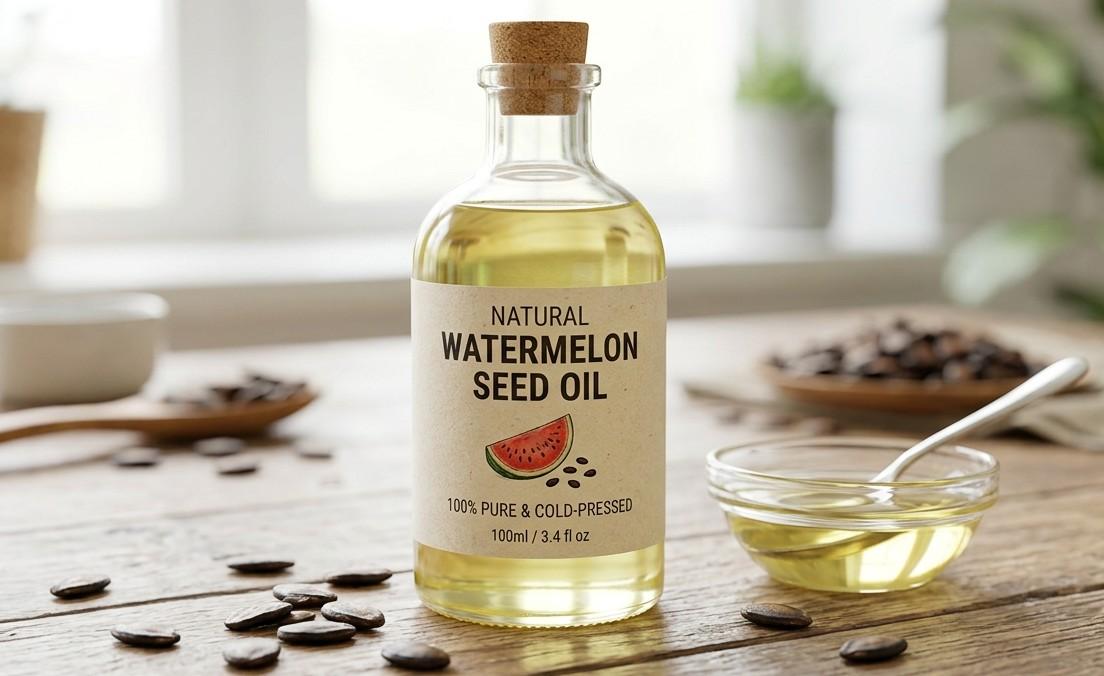
Watermelon is one of the most refreshing fruits in the world, but did you know its tiny seeds hold powerful nutritional and therapeutic value? Watermelon Seed Oil, extracted from the seeds of the watermelon fruit, is gaining popularity in skincare, haircare, and even wellness circles for its light texture and impressive nutrient profile. In this guide, you will learn everything about Watermelon Seed Oil — from its nutrition facts and science-backed health benefits to side effects, dosage, and how to use it safely.
What is Watermelon Seed Oil?
Watermelon Seed Oil, also known as Kalahari oil or Ootanga oil, is a lightweight, non-greasy oil extracted from the seeds of the watermelon fruit (Citrullus lanatus). It is typically obtained through cold-press extraction to preserve its nutrients.
The oil has been traditionally used in African regions for skin protection and hydration. Today, it is widely used in cosmetic formulations, massage oils, and natural remedies due to its rich content of essential fatty acids, antioxidants, and vitamins.
Watermelon Seed Oil is especially valued because:
- It absorbs quickly into the skin
- It does not clog pores
- It supports hydration without heaviness
- It is suitable for oily and acne-prone skin
Its mild nutty aroma and silky texture make it ideal for everyday use.
Nutrition Facts of Watermelon Seed Oil
Below is the approximate nutritional composition per 100 grams of cold-pressed Watermelon Seed Oil:
| Nutrient | Approximate Amount |
|---|---|
| Calories | 884 kcal |
| Total Fat | 100 g |
| Saturated Fat | 18–20 g |
| Monounsaturated Fat | 15–20 g |
| Polyunsaturated Fat | 60–70 g |
| Linoleic Acid (Omega-6) | 55–65% |
| Oleic Acid (Omega-9) | 15–20% |
| Palmitic Acid | 10–15% |
| Stearic Acid | 5–8% |
| Vitamin E | Moderate levels |
| Zinc | Trace amounts |
| Magnesium | Trace amounts |
| Antioxidants | Present |
Its high linoleic acid content makes it particularly beneficial for skin barrier repair and hydration.
20 Proven Benefits of Watermelon Seed Oil
- Deep Skin Hydration – Watermelon Seed Oil moisturizes the skin deeply without leaving a greasy residue, making it ideal for daily hydration.
- Balances Oily Skin – Its high linoleic acid content helps regulate sebum production and prevents excess oil buildup.
- Prevents Acne – The oil is non-comedogenic and may reduce clogged pores, lowering acne risk.
- Improves Skin Elasticity – Rich fatty acids support collagen health and maintain skin firmness.
- Reduces Fine Lines – Vitamin E and antioxidants help combat oxidative stress that contributes to wrinkles.
- Soothes Irritated Skin – Its anti-inflammatory properties calm redness and irritation.
- Supports Skin Barrier – Essential fatty acids strengthen the skin’s protective barrier.
- Enhances Wound Healing – Nutrients in the oil may support minor skin repair.
- Promotes Even Skin Tone – Regular use can help improve skin texture and brightness.
- Softens Dry Patches – The oil nourishes flaky or rough skin areas.
- Improves Scalp Health – Massaging into the scalp may reduce dryness and flaking.
- Encourages Hair Growth – Nutrient-rich fatty acids support healthier hair follicles.
- Reduces Frizz – A small amount smooths hair strands without heaviness.
- Strengthens Hair Strands – It helps prevent breakage and split ends.
- Lightweight Massage Oil – Its fast absorption makes it suitable for massage therapy.
- Supports Heart Health – When consumed in moderation, unsaturated fats may support cardiovascular wellness.
- Boosts Antioxidant Intake – Vitamin E helps protect cells from free radical damage.
- May Support Detoxification – Traditionally believed to help support kidney function.
- Improves Lip Care – Works as a nourishing lip oil for cracked lips.
- Suitable for Sensitive Skin – Its gentle nature makes it ideal for delicate or reactive skin types.
10 Side Effects of Watermelon Seed Oil
- Allergic Reactions – Some individuals may experience itching, redness, or swelling after application.
- Skin Irritation – Sensitive skin types may develop mild irritation if used excessively.
- Breakouts in Rare Cases – Although non-comedogenic, overuse may trigger breakouts in certain individuals.
- Digestive Upset – Excess oral consumption may cause nausea or diarrhea.
- Weight Gain – High calorie content may contribute to weight gain if overconsumed.
- Interaction with Medications – It may interfere with certain blood-thinning medications.
- Rancidity Risk – Using expired oil may irritate the skin.
- Low Blood Pressure – In rare cases, excessive intake may slightly lower blood pressure.
- Contamination Risk – Poorly processed oil may contain impurities.
- Hormonal Sensitivity – Excessive use may influence hormonal balance in sensitive individuals.
How to Use Watermelon Seed Oil?
Watermelon Seed Oil is versatile and easy to incorporate into daily routines:
- Apply 3–4 drops to clean facial skin as a moisturizer
- Mix into body lotion for enhanced hydration
- Massage into scalp once or twice weekly
- Use as a carrier oil for essential oils
- Apply to cuticles and nails
Always perform a patch test before first use.
Other Uses of Watermelon Seed Oil
Beyond skincare and haircare, it can be used for:
- Natural makeup remover
- Beard conditioning oil
- Massage therapy
- Lip balm formulations
- DIY soaps and creams
- Aromatherapy blends
- Natural baby oil substitute
Its light texture makes it highly adaptable.
Tips for Consuming Watermelon Seed Oil
If using for dietary purposes:
- Choose cold-pressed, food-grade oil
- Start with small amounts
- Add to salads or smoothies
- Do not use for high-heat cooking
- Store properly to prevent rancidity
Consult a healthcare professional before internal use.
How to Take Watermelon Seed Oil?
For internal use (if labeled food-grade):
- 1 teaspoon daily mixed into food
- Blend into salad dressings
- Add to yogurt or smoothies
- Consume after meals
For topical use:
- 2–5 drops for face
- 1 teaspoon for scalp massage
- A few drops for hair ends
How to Make Watermelon Seed Oil at Home?
Making oil at home is possible but labor-intensive:
- Collect watermelon seeds.
- Wash thoroughly and dry in sunlight.
- Roast lightly to remove moisture.
- Crush seeds using a grinder.
- Press using a manual oil press machine.
- Strain through cheesecloth.
- Store in a dark glass bottle.
Cold pressing yields the best quality oil.
How Much Watermelon Seed Oil Can You Use Per Day?
Topical use:
- Face: 3–5 drops per application
- Hair: 1–2 teaspoons weekly
Internal use (food-grade only):
- 1 teaspoon per day is generally sufficient
Excessive intake is not recommended.
Watermelon Seed Oil Dosage
| Purpose | Recommended Dosage |
|---|---|
| Facial Use | 3–5 drops |
| Scalp Massage | 1–2 teaspoons |
| Body Massage | 1–2 tablespoons |
| Internal Use | 1 teaspoon daily |
Always start with a lower amount and monitor reactions.
Best Time to Use Watermelon Seed Oil
- For skin: After shower or before bedtime
- For hair: Before washing hair
- For internal use: With meals
- For massage: Anytime relaxation is needed
Nighttime application enhances absorption.
Who Should Use Watermelon Seed Oil?
Watermelon Seed Oil is especially beneficial for:
- People with oily or acne-prone skin
- Individuals with dry scalp
- Those seeking lightweight moisturizers
- People looking for natural skincare alternatives
- Adults wanting plant-based healthy fats
Who Should Not Use Watermelon Seed Oil?
Avoid or consult a doctor if you:
- Have known seed allergies
- Are pregnant or breastfeeding (for internal use)
- Are on blood-thinning medication
- Have severe skin conditions
- Have chronic digestive disorders
How to Store Watermelon Seed Oil?
Proper storage is essential:
- Keep in a dark glass bottle
- Store in a cool, dry place
- Avoid direct sunlight
- Close tightly after use
- Refrigerate if necessary
Shelf life is typically 6–12 months.
Precautions and Interactions
- Perform a patch test before topical application
- Avoid contact with eyes
- Do not exceed recommended dosage
- Consult a doctor before internal use
- Stop use if irritation occurs
- Check product label for purity and certification
If you are taking anticoagulants or have underlying health conditions, seek medical advice before use.
Final Thoughts
Watermelon Seed Oil is a hidden gem in natural wellness and skincare. Its lightweight texture, impressive fatty acid profile, and versatility make it suitable for a wide range of uses — from moisturizing skin to supporting overall wellness when consumed responsibly. While generally safe, moderation and proper usage are key. Always choose high-quality, cold-pressed oil and follow recommended guidelines.
FAQ’s
What is watermelon seed oil used for?
It is used for moisturizing skin, balancing oily skin, nourishing the scalp, strengthening hair, and as a lightweight carrier oil.
Is watermelon seed oil pore clogging?
No, it is non-comedogenic and unlikely to clog pores, making it suitable for acne-prone skin.
Is watermelon seed oil good for tanning?
It is not a tanning oil, but it can help soothe and hydrate skin after sun exposure.
Is Watermelon Seed Oil good for oily skin?
Yes, Watermelon Seed Oil is excellent for oily skin because it is lightweight and rich in linoleic acid, which helps balance excess sebum production without clogging pores.
Can Watermelon Seed Oil cause acne?
It is generally non-comedogenic and unlikely to clog pores, but overuse or individual sensitivity may trigger breakouts in rare cases.
Is Watermelon Seed Oil safe for daily use?
Yes, it is usually safe for daily topical use when applied in small amounts, especially for moisturizing and skin barrier support.
Can Watermelon Seed Oil be used on the face?
Yes, it absorbs quickly and works well as a facial oil, especially for acne-prone, combination, and oily skin types.
Is Watermelon Seed Oil good for hair growth?
It may support healthier hair growth by nourishing the scalp and improving circulation when used in scalp massage.
What does Watermelon Seed Oil smell like?
It has a mild, slightly nutty aroma that is subtle and not overpowering.
Is Watermelon Seed Oil suitable for sensitive skin?
Yes, it is generally gentle and suitable for sensitive skin, but a patch test is recommended before full application.
Can pregnant women use Watermelon Seed Oil?
Topical use is generally considered safe, but pregnant women should consult a healthcare professional before internal consumption.
How long does it take to see results on skin?
Visible improvements in hydration and texture may be noticed within 1–2 weeks of consistent use.
Does Watermelon Seed Oil lighten skin?
It does not bleach or lighten skin, but it may improve overall skin tone and brightness by enhancing hydration and reducing dullness.
Can Watermelon Seed Oil reduce wrinkles?
Its antioxidant content, including Vitamin E, may help reduce the appearance of fine lines and support smoother skin over time.
Is it safe for children?
It can be used topically in small amounts, but it is best to consult a pediatrician before regular use on children.
Can Watermelon Seed Oil be used as a carrier oil?
Yes, it works well as a carrier oil for essential oils due to its light texture and fast absorption.
Also Read: