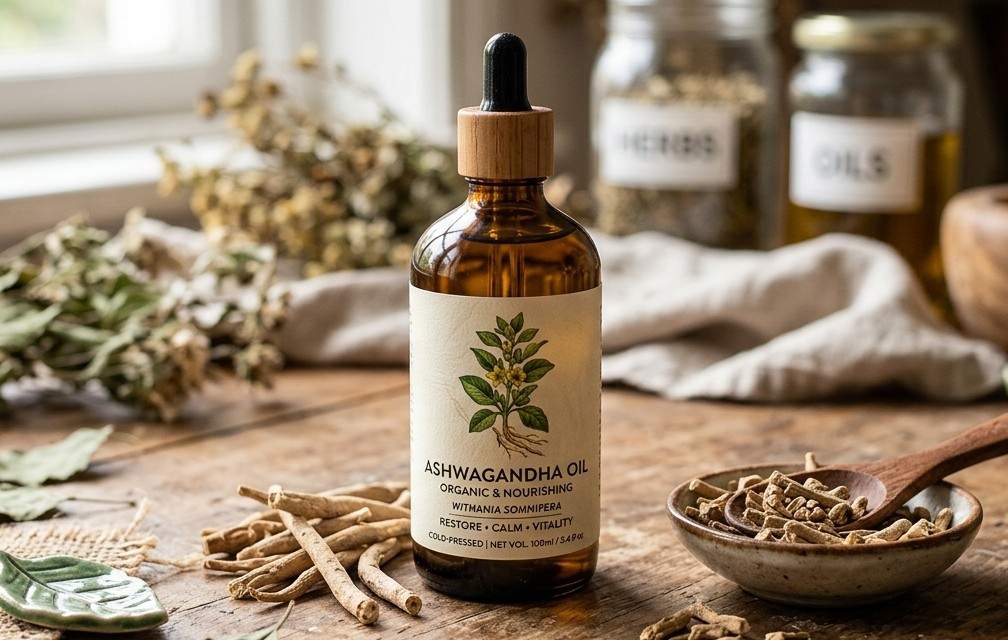
Ashwagandha has been a cornerstone of traditional wellness systems for thousands of years. Known as a powerful adaptogenic herb, it is widely used to support stress management, vitality, and overall well-being. While most people are familiar with ashwagandha powder or capsules, Ashwagandha Oil is another powerful form that offers unique benefits, especially for external use.
In this guide, we will explore everything you need to know about Ashwagandha Oil — from its nutrition profile and science-backed health benefits to side effects, dosage, precautions, and even how to prepare it at home.
What is Ashwagandha Oil?
Ashwagandha Oil is a herbal oil prepared by infusing the roots of the ashwagandha plant (Withania somnifera) into a carrier oil such as sesame oil, coconut oil, or olive oil. Traditionally used in Ayurveda, this oil is applied externally for massage, joint support, muscle relaxation, nervous system balance, and skin nourishment.
The word “Ashwagandha” translates to “smell of a horse,” symbolizing strength and vitality. The oil form captures the plant’s therapeutic compounds and delivers them directly through the skin, making it especially beneficial for topical use and therapeutic massage.
Nutrition Facts of Ashwagandha Oil
Ashwagandha oil does not provide macronutrients like edible cooking oils, as it is primarily used externally. However, it contains powerful bioactive compounds derived from the ashwagandha root and carrier oil. Below is a general nutritional and phytochemical composition:
| Nutrient / Compound | Presence in Ashwagandha Oil | Function |
|---|---|---|
| Withanolides | High | Adaptogenic, anti-inflammatory |
| Alkaloids | Moderate | Nervous system support |
| Saponins | Present | Immune modulation |
| Iron (trace) | Low | Cellular support |
| Antioxidants | High | Fights oxidative stress |
| Fatty Acids (from carrier oil) | High | Skin nourishment |
| Vitamin E (from carrier oil) | Moderate | Skin repair and protection |
| Phytosterols | Present | Anti-inflammatory properties |
The exact composition depends on the carrier oil used and preparation method.
20 Proven Benefits of Ashwagandha Oil
- Stress Relief Support – Ashwagandha oil helps calm the nervous system and may reduce physical signs of stress when used in massage therapy.
- Improves Sleep Quality – Regular application before bedtime may promote relaxation and deeper sleep.
- Reduces Muscle Tension – Massaging with ashwagandha oil can ease muscle stiffness and soreness.
- Joint Pain Relief – Its anti-inflammatory properties may help reduce discomfort in joints.
- Supports Nervous System Health – The adaptogenic compounds help balance nervous system responses.
- Enhances Skin Hydration – The oil deeply nourishes and moisturizes dry skin.
- Improves Skin Elasticity – Antioxidants in the oil may support collagen health.
- Reduces Signs of Aging – Regular use may help minimize fine lines and wrinkles.
- Boosts Circulation – Massage with this oil stimulates blood flow.
- Hair Strengthening Support – Applying to the scalp may strengthen hair roots.
- Reduces Hair Fall – The oil may nourish hair follicles and reduce breakage.
- Supports Hormonal Balance – Ashwagandha is traditionally known for its hormone-balancing properties.
- Enhances Energy Levels – By reducing stress, it indirectly supports energy and vitality.
- Supports Male Reproductive Health – Traditionally used to promote stamina and vitality.
- Improves Skin Tone – Regular massage may give a healthy glow.
- Relieves Back Pain – Warm oil massage may ease chronic back discomfort.
- Supports Immune Function – Its antioxidant content may help the body combat oxidative stress.
- Helps Reduce Anxiety Symptoms – The calming effect may help manage mild anxiety.
- Supports Recovery After Exercise – Helps reduce post-workout soreness.
- Promotes Overall Relaxation – A full-body massage with ashwagandha oil induces deep relaxation.
10 Side Effects of Ashwagandha Oil
While generally safe, some individuals may experience side effects.
- Skin Irritation – Some people may experience redness or itching after application.
- Allergic Reactions – Sensitive individuals may develop rashes.
- Contact Dermatitis – Prolonged exposure may cause skin inflammation in rare cases.
- Clogged Pores – Heavy carrier oils may block pores in acne-prone skin.
- Hormonal Sensitivity – Individuals sensitive to hormonal changes should use caution.
- Digestive Discomfort (if ingested improperly) – Internal consumption without guidance may cause stomach upset.
- Low Blood Pressure Risk – It may slightly lower blood pressure.
- Thyroid Stimulation – Ashwagandha may increase thyroid hormone activity.
- Drowsiness – May cause excessive relaxation if overused.
- Interaction with Medications – Can interact with sedatives or thyroid medications.
How to Use Ashwagandha Oil?
Oil is primarily used externally. Here are common ways to use it:
- Warm the oil slightly and massage into muscles and joints.
- Apply to the scalp and leave for 30–60 minutes before washing.
- Use as a body massage oil before bath (Abhyanga).
- Apply to the soles of the feet before sleep for relaxation.
- Use as a stress-relief neck and shoulder massage oil.
Other Uses of Ashwagandha Oil
- Aromatherapy massage therapy
- Post-workout muscle recovery oil
- Pre-sleep relaxation ritual
- Scalp nourishment treatment
- Anti-aging facial massage (in diluted form)
Tips for Consuming Ashwagandha Oil
Oil is generally not meant for direct oral consumption unless specifically formulated for internal use.
- Only consume if labeled as edible.
- Follow healthcare professional guidance.
- Start with small doses.
- Avoid mixing with alcohol.
- Monitor for any adverse reactions.
How to Take Ashwagandha Oil?
For topical use:
- Take 1–2 teaspoons of oil.
- Warm slightly.
- Massage gently for 10–20 minutes.
- Leave on for at least 30 minutes before washing.
For scalp use:
- Apply 1 tablespoon.
- Massage for 5–10 minutes.
- Leave for 1 hour or overnight.
How to Make Ashwagandha Oil at Home?
Ingredients:
- 1 cup dried ashwagandha root powder
- 2 cups sesame oil or coconut oil
- 2 cups water
Method:
- Mix ashwagandha powder and water in a pan.
- Add carrier oil.
- Heat on low flame until water evaporates.
- Stir continuously.
- Strain through muslin cloth.
- Store in a glass bottle.
Ensure no moisture remains to prevent spoilage.
How Much Ashwagandha Oil Can You Use Per Day?
For external use:
- Body massage: 1–2 tablespoons.
- Scalp: 1 tablespoon.
- Local application: A few drops.
Avoid excessive use to prevent skin irritation.
Ashwagandha Oil Dosage
Since it is mainly used externally, dosage refers to application quantity rather than consumption:
- Mild application: 5–10 ml.
- Full body massage: 15–30 ml.
- Scalp therapy: 10–15 ml.
Internal dosage should only be determined by a healthcare provider.
Best Time to Use Ashwagandha Oil
- Before bedtime for relaxation.
- After workouts for muscle recovery.
- Morning self-massage before bath.
- During stressful periods.
Night-time application is often considered most beneficial for calming effects.
Who Should Use Ashwagandha Oil?
- Individuals experiencing stress.
- People with muscle or joint discomfort.
- Those with dry skin.
- Individuals with sleep disturbances.
- People looking for natural hair care solutions.
Who Should Not Use Ashwagandha Oil?
- Pregnant or breastfeeding women without medical advice.
- Individuals with thyroid disorders.
- People with very sensitive skin.
- Those allergic to ashwagandha.
- Individuals taking sedatives or hormone medications.
How to Store Ashwagandha Oil?
- Store in a dark glass bottle.
- Keep away from sunlight.
- Seal tightly after use.
- Store in a cool, dry place.
- Use within 6–12 months.
If the oil smells rancid or changes color, discard it.
Precautions and Interactions
Oil may interact with certain medications, especially:
- Sedatives
- Thyroid medications
- Blood pressure medications
- Immunosuppressants
Precautions include:
- Perform a patch test before first use.
- Avoid broken or irritated skin.
- Do not ingest unless medically advised.
- Consult a doctor if you have chronic health conditions.
Final Thoughts
Ashwagandha Oil is a powerful herbal preparation rooted in ancient wellness traditions. While most people associate ashwagandha with capsules and powders, the oil form offers unique advantages, particularly for stress relief, muscle relaxation, skin nourishment, and overall rejuvenation.
When used correctly and responsibly, Ashwagandha Oil can become a valuable addition to your natural wellness routine. However, like any herbal product, it should be used mindfully, with attention to dosage, individual sensitivity, and potential interactions. If you are considering incorporating Ashwagandha Oil into your routine for therapeutic purposes, consult a qualified healthcare professional to ensure it aligns with your personal health needs.
FAQ’s
Can I use Ashwagandha oil every day?
Yes, oil can generally be used daily for massage or scalp application, provided you do not experience irritation or sensitivity. It is best to start with 3–4 times a week and gradually increase frequency.
Is Ashwagandha oil safe for skin?
Oil is usually safe for most skin types when used externally, especially when diluted in a suitable carrier oil. However, a patch test is recommended before first use.
Can Ashwagandha oil regrow hair?
Oil may help reduce stress-related hair fall and strengthen hair roots, which can support healthier hair growth. However, it is not a guaranteed treatment for baldness or genetic hair loss.
Does Ashwagandha oil help with anxiety?
When used in massage therapy, oil may promote relaxation and help reduce mild anxiety symptoms due to its calming properties. For clinical anxiety disorders, medical consultation is advised.
Can I leave Ashwagandha oil overnight on hair?
Yes, you can leave it overnight if your scalp tolerates it well. Wash it off the next morning with a mild shampoo.
Is Ashwagandha oil edible?
Most oils available in the market are formulated for external use only. Only consume it if the label specifically states it is safe for internal use and under medical guidance.
How long does it take for Ashwagandha oil to work?
Some people feel relaxation immediately after massage, while benefits for hair or skin may take a few weeks of consistent use. Results vary depending on individual body response and usage frequency.
Can pregnant women use Ashwagandha oil?
Pregnant women should consult a healthcare professional before using oil, even for external application, as ashwagandha may influence hormonal activity.
Does Ashwagandha oil cause weight gain?
Topical use of oil does not cause weight gain. Internal use of ashwagandha supplements may influence metabolism, but oil application itself does not directly increase body weight.
Can I mix Ashwagandha oil with other oils?
Yes, it can be blended with coconut oil, sesame oil, almond oil, or essential oils for enhanced benefits. Make sure to maintain proper dilution ratios to avoid irritation.
Is Ashwagandha oil good for joint pain?
Yes, it is traditionally used in massage therapy to help relieve joint stiffness and mild inflammatory discomfort. Warm oil application may improve effectiveness.
Can people with thyroid problems use Ashwagandha oil?
Individuals with thyroid disorders should consult a doctor before using oil regularly, as ashwagandha may influence thyroid hormone levels.
Is Ashwagandha oil suitable for sensitive skin?
It may be suitable if properly diluted, but individuals with sensitive skin should perform a patch test and use it cautiously.
How often should I apply Ashwagandha oil on my scalp?
Applying it 1–2 times per week is generally sufficient for scalp nourishment and stress relief.
Can men and women both use Ashwagandha oil?
Yes, oil is suitable for both men and women and supports overall relaxation, skin health, and hair care.
Does Ashwagandha oil help with sleep?
Applying it before bedtime, especially through foot or body massage, may promote relaxation and support better sleep quality.
Can children use Ashwagandha oil?
Use in children should only be done under medical supervision, particularly for therapeutic purposes.
Does Ashwagandha oil expire?
Yes, like all herbal oils, it has a shelf life of about 6–12 months if stored properly in a cool, dark place.
Can I use Ashwagandha oil on my face?
It can be used in small amounts and diluted properly, but those with oily or acne-prone skin should use caution.
What is Ashwagandha oil used for?
Oil is primarily used for stress relief, muscle relaxation, joint support, scalp nourishment, and overall body massage therapy.
Is Ashwagandha oil good for massage?
Yes, oil is excellent for massage because it helps relax muscles, ease tension, and calm the nervous system. When slightly warmed, it enhances circulation and promotes deep physical and mental relaxation.
Also Read: