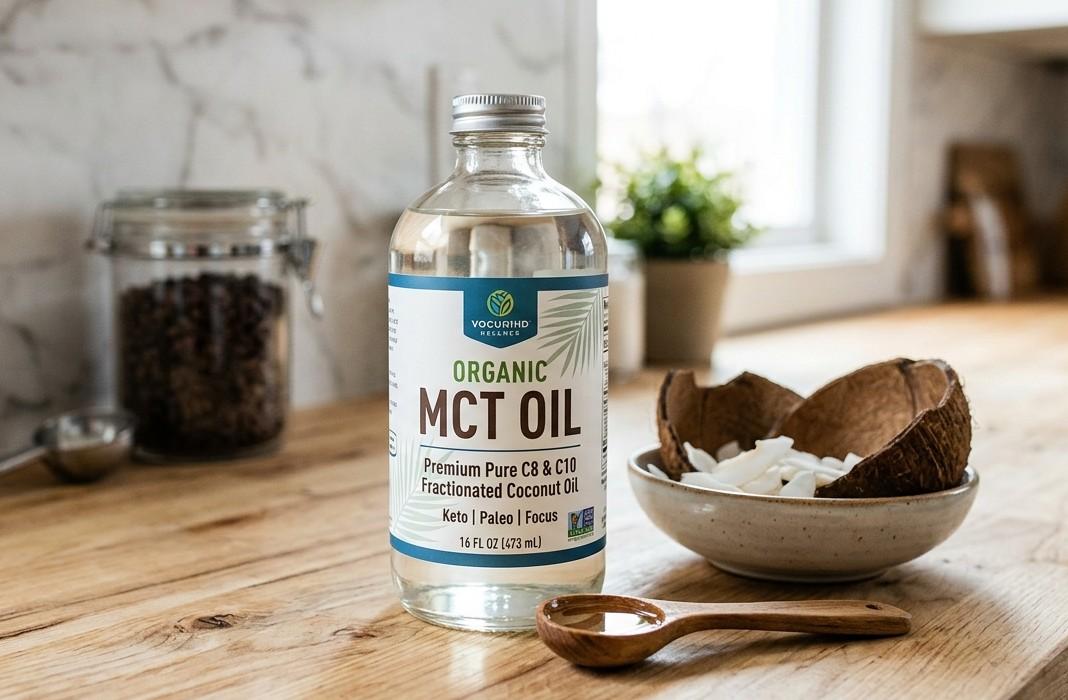
MCT Oil has gained massive popularity in recent years, especially among fitness enthusiasts, keto followers, and people looking for natural energy support. From boosting metabolism to supporting brain health, this versatile oil has carved a strong place in modern nutrition.
But what exactly is Medium-Chain Triglyceride Oil? Is it safe? How much should you take? And can you make it at home?
In this guide, you will learn everything you need to know about MCT Oil (often called fractionated coconut oil or fractionated palm kernel oil) — including science-backed health benefits, side effects, dosage, best time to take it, precautions, and much more.
What is MCT Oil?
MCT Oil stands for Medium-Chain Triglyceride Oil. It is a concentrated source of medium-chain fatty acids, usually extracted from coconut oil or palm kernel oil.
Unlike long-chain fatty acids found in most foods, medium-chain triglycerides are absorbed quickly and transported directly to the liver. There, they are rapidly converted into energy or ketones instead of being stored as body fat.
The main types of MCTs found in MCT Oil include:
- Caproic acid (C6)
- Caprylic acid (C8)
- Capric acid (C10)
- Lauric acid (C12) (sometimes included but technically borderline MCT)
Most high-quality MCT oils mainly contain C8 and C10, as they are more efficiently converted into ketones.
In simple terms, Medium-Chain Triglyceride Oil is a fast-acting energy fat that your body uses differently than most other fats.
Components of MCT Oil
| Nutrient | Amount (Per 1 Tablespoon – 15 ml) |
|---|---|
| Calories | 115–130 kcal |
| Total Fat | 14 grams |
| Saturated Fat | 14 grams |
| Monounsaturated Fat | 0 grams |
| Polyunsaturated Fat | 0 grams |
| Carbohydrates | 0 grams |
| Protein | 0 grams |
| Sugar | 0 grams |
| Fiber | 0 grams |
| Cholesterol | 0 mg |
| Sodium | 0 mg |
Medium-Chain Triglyceride Oil is pure fat, containing no carbs, protein, or micronutrients. Its value lies in how the body metabolizes it.
20 Proven Benefits of MCT Oil
- Quick Energy Boost – Medium-Chain Triglyceride Oil is rapidly absorbed and converted into energy, making it an instant fuel source for both brain and body.
- Supports Ketosis – It helps increase ketone production, making it ideal for ketogenic and low-carb diets.
- Enhances Brain Function – Ketones produced from MCT Oil provide alternative energy for the brain, improving focus and mental clarity.
- Aids Weight Loss – Oil may increase fullness and reduce calorie intake, helping with appetite control.
- Boosts Metabolism – It can slightly increase calorie burning due to its thermogenic effect.
- Improves Athletic Performance – Athletes use MCT Oil for sustained energy without sugar crashes.
- Supports Gut Health – Some MCTs have antimicrobial properties that may help balance gut bacteria.
- May Reduce Body Fat – Regular use may help decrease abdominal fat when combined with a healthy diet.
- Balances Blood Sugar – Medium-Chain Triglyceride Oil may improve insulin sensitivity and stabilize energy levels.
- Supports Heart Health – It may improve cholesterol markers when replacing unhealthy fats.
- Helps in Neurological Conditions – MCT-based ketogenic diets are sometimes used in epilepsy management.
- Improves Memory – Some research suggests ketones may benefit cognitive performance in aging adults.
- Easy to Digest – MCTs require less bile and enzymes compared to long-chain fats.
- Supports Immune Function – Certain MCTs have antibacterial and antifungal properties.
- Reduces Sugar Cravings – Stable energy from MCTs may decrease the urge for sugary snacks.
- Promotes Satiety – It can increase hormones that signal fullness.
- Enhances Intermittent Fasting – MCT Oil can provide energy without significantly disrupting ketosis.
- Supports Muscle Recovery – It may help reduce muscle breakdown during intense workouts.
- Improves Nutrient Absorption – MCTs can aid in absorption of fat-soluble vitamins.
- May Support Alzheimer’s Research – Ketone production from Medium-Chain Triglyceride Oil is being studied for brain health support.
10 Side Effects of MCT Oil
Although generally safe, Medium-Chain Triglyceride Oil may cause side effects, especially in large doses.
- Digestive Upset – Taking too much Medium-Chain Triglyceride Oil at once can cause stomach discomfort.
- Diarrhea – High doses often lead to loose stools, especially for beginners.
- Nausea – Some people experience nausea when consuming it on an empty stomach.
- Bloating – Sudden introduction may cause temporary bloating.
- Cramps – Gastrointestinal cramps can occur in sensitive individuals.
- Increased LDL Cholesterol – In some people, excessive intake may raise LDL levels.
- Calorie Overconsumption – Since it is calorie-dense, excess use may lead to weight gain.
- Liver Strain (Rare) – Very high doses may stress the liver in people with liver conditions.
- Headache During Adaptation – Beginners on keto may experience temporary headaches.
- Allergic Reaction (Rare) – People allergic to coconut may react to coconut-derived MCT Oil.
How to Use MCT Oil?
Medium-Chain Triglyceride Oil is extremely versatile and easy to incorporate into daily routines.
You can:
- Add it to coffee (popular as “bulletproof coffee”)
- Blend into smoothies
- Mix into protein shakes
- Drizzle over salads
- Add to yogurt
- Stir into oatmeal
- Use in keto baking (low heat only)
Important: Do not cook Medium-Chain Triglyceride Oil at high temperatures, as it has a low smoke point.
Other Uses of MCT Oil
Beyond consumption, Medium-Chain Triglyceride Oil has additional uses:
- As a carrier oil in essential oil blends
- For skin moisturization
- In hair masks for shine
- As a supplement in medical ketogenic therapies
- In sports nutrition formulations
Tips for Consuming MCT Oil
- Start with 1 teaspoon per day.
- Increase gradually to avoid digestive issues.
- Always mix it with food or beverages initially.
- Choose high-quality C8 or C8+C10 blends.
- Store in a cool, dark place.
- Avoid heating at high temperatures.
How to Take MCT Oil?
You can take Medium-Chain Triglyceride Oil in three common forms:
- Liquid oil (most common)
- Powdered MCT Oil
- Capsules
Liquid oil absorbs fastest. Powder is easier on digestion. Capsules are convenient for travel.
How to Make MCT Oil at Home?
True Medium-Chain Triglyceride Oil cannot be fully made at home because it requires industrial fractionation to isolate medium-chain triglycerides.
However, you can:
- Use high-quality virgin coconut oil.
- Gently warm it.
- Use it in coffee or smoothies as a substitute.
Note: Coconut oil contains MCTs but also includes other fats.
How Much MCT Oil Can You Use Per Day?
Most people can safely consume:
- 1–2 tablespoons per day
Beginners should start with:
- 1 teaspoon daily
Excessive intake may cause digestive distress.
MCT Oil Dosage
General dosage guidelines:
- Beginners: 1 teaspoon daily
- Moderate use: 1 tablespoon daily
- Advanced keto users: Up to 2 tablespoons daily
Always increase gradually.
Best Time to Use MCT Oil
The ideal time depends on your goal:
- Morning: For energy and mental clarity
- Before workout: For fuel
- During intermittent fasting: For ketosis support
- Afternoon slump: For sustained focus
Avoid taking large amounts late at night if sensitive to energy boosts.
Who Should Use MCT Oil?
Medium-Chain Triglyceride Oil may benefit:
- People on keto or low-carb diets
- Athletes
- Individuals seeking weight management support
- Busy professionals needing mental clarity
- People practicing intermittent fasting
- Those with fat malabsorption (under medical guidance)
Who Should Not Use MCT Oil?
Avoid or consult a doctor if you:
- Have liver disease
- Have chronic digestive disorders
- Are sensitive to coconut products
- Are pregnant or breastfeeding
- Have high LDL cholesterol
- Are on specialized medical treatments
How to Store MCT Oil?
- Keep at room temperature.
- Store in a cool, dry place.
- Avoid direct sunlight.
- Keep the bottle tightly sealed.
- Do not refrigerate (unless manufacturer recommends).
Oil typically has a shelf life of 1–2 years.
Precautions and Interactions
- Start with small doses.
- Avoid combining with high-fat meals initially.
- Monitor cholesterol levels if using long-term.
- Consult a healthcare provider if on medication.
- Not a replacement for balanced nutrition.
Oil may interact with:
- Liver-related medications
- Certain cholesterol medications
- Ketogenic medical therapies
Final Thoughts
Medium-Chain Triglyceride Oil is a powerful, fast-absorbing fat that can provide quick energy, support ketosis, enhance brain function, and assist in weight management. While it offers many benefits, it must be used responsibly and gradually to avoid digestive discomfort.
Whether you are following a ketogenic diet, improving mental clarity, or simply exploring healthier fat sources, oil can be a valuable addition to your routine. As with any supplement, balance and moderation are key. Always consult a healthcare professional if you have underlying health conditions.
FAQ’s
Is MCT Oil safe?
Yes, it’s safe in moderation (1–2 tablespoons daily), but high doses may cause digestive issues.
What is MCT Oil good for?
It supports quick energy, ketosis, weight management, and mental clarity.
Is ghee a MCT oil?
No, ghee contains small amounts of MCTs but is not concentrated like Medium-Chain Triglyceride Oil.
What do cardiologists say about MCT Oil?
They recommend moderation since it’s a saturated fat that may raise LDL in some people.
Which is healthier, olive oil or MCT Oil?
Olive oil is better for heart health, while oil is better for quick energy and ketosis.
How is MCT oil made?
Oil is typically extracted from coconut oil or palm kernel oil and processed to isolate medium-chain triglycerides like C8 and C10 fatty acids.
Is MCT Oil the same as coconut oil?
No, coconut oil contains some MCTs along with long-chain fats, while oil is a concentrated form of only medium-chain triglycerides.
Can MCT Oil help with weight loss?
Oil may support weight loss by increasing satiety, boosting metabolism, and promoting fat burning when combined with a balanced diet and exercise.
Does MCT Oil break a fast?
Technically yes because it contains calories, but many people use it during intermittent fasting since it supports ketosis and has minimal impact on insulin levels.
Can I take MCT Oil every day?
Yes, most healthy adults can take Medium-Chain Triglyceride Oil daily in moderate amounts, usually 1–2 tablespoons per day.
What happens if I take too much MCT Oil?
Excessive intake can cause digestive issues such as diarrhea, nausea, stomach cramps, and bloating.
Is MCT Oil safe for diabetics?
Oil may help stabilize energy and blood sugar levels, but people with diabetes should consult a healthcare professional before use.
Can MCT Oil increase cholesterol?
In some individuals, high intake may raise LDL cholesterol, so regular monitoring is recommended for long-term users.
Is MCT Oil safe during pregnancy?
There is limited research on Medium-Chain Triglyceride Oil use during pregnancy, so it is best to consult a doctor before using it.
Can children use MCT Oil?
Oil is sometimes used in medical ketogenic diets for children under supervision, but routine use should only be done with medical guidance.
How long does MCT Oil take to work?
Many people feel an energy boost within 30 to 60 minutes because MCTs are quickly converted into fuel.
Can I cook with MCT Oil?
Oil has a low smoke point, so it should not be used for high-heat cooking but can be added to foods after preparation.
Does MCT Oil cause ketosis?
Oil can increase ketone production, which helps support ketosis, especially in low-carb or ketogenic diets.
Can MCT Oil cause weight gain?
Yes, if consumed in excess without adjusting total calorie intake, it may contribute to weight gain because it is calorie-dense.
What is the difference between C8 and C10 MCT Oil?
C8 (caprylic acid) converts into ketones faster than C10 (capric acid), making it more potent for quick energy and ketosis support.
Is powdered MCT Oil better than liquid?
Powdered Medium-Chain Triglyceride Oil may be easier on digestion and more convenient, but liquid oil is absorbed more rapidly.
Can MCT Oil improve brain health?
Oil may support brain function by providing ketones as an alternative energy source for brain cells.
Should I take MCT Oil on an empty stomach?
Some people tolerate it well on an empty stomach, but beginners should take it with food to reduce digestive discomfort.
Also Read: