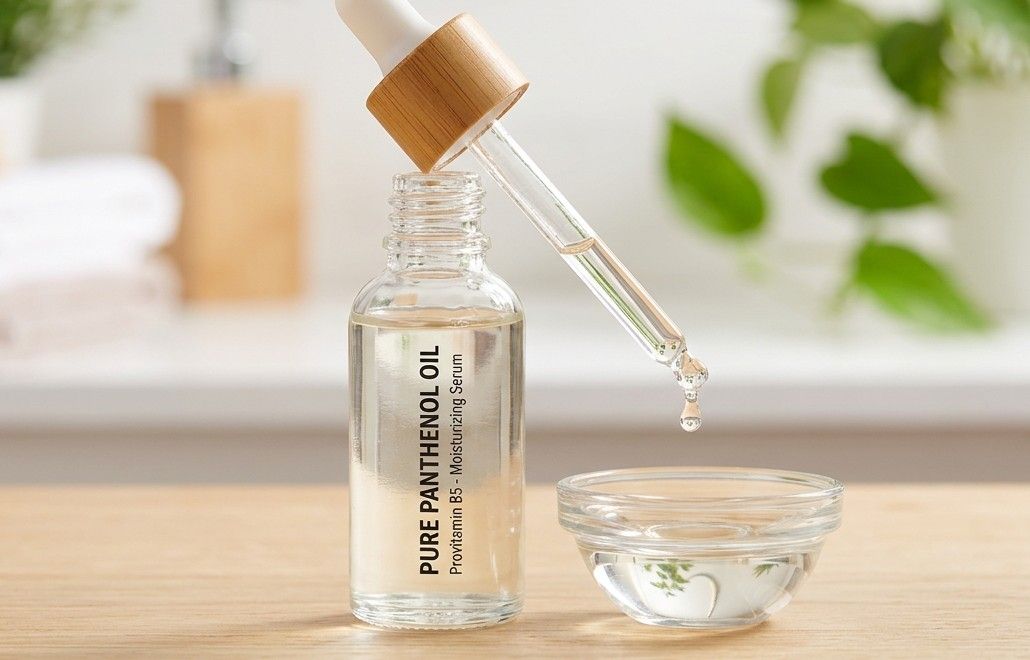
Panthenol Oil (Vitamin B5 Oil) has quietly become one of the most trusted ingredients in skincare and haircare. If you’ve ever checked the label of your moisturizer, shampoo, serum, or healing cream, chances are you’ve seen “panthenol” listed. Known for its deeply hydrating, soothing, and repairing properties, Panthenol Oil is especially popular in products designed for dry skin, damaged hair, and sensitive conditions.
In this guide, we’ll explore what Panthenol Oil is, its science-backed benefits, possible side effects, how to use it, dosage, precautions, and much more.
What is Panthenol Oil?
Panthenol Oil is a cosmetic-grade oil or solution containing panthenol, a provitamin form of Vitamin B5 (pantothenic acid). When applied to the skin or hair, panthenol converts into pantothenic acid, an essential nutrient that supports healthy skin barrier function and cell repair.
Panthenol is water-soluble, but in cosmetic formulations, it is often blended into oil-based products or lightweight oil serums for easy application and enhanced absorption. It is widely used in:
- Moisturizers
- Hair conditioners
- Serums
- After-sun products
- Baby care products
- Wound healing creams
It is valued for its ability to attract and retain moisture while also calming irritation and promoting healing.
Components of Panthenol Oil
Although Panthenol Oil is primarily used topically rather than consumed as food, here is its composition profile per 100 grams (cosmetic-grade formulation):
| Nutrient/Component | Approximate Amount |
|---|---|
| Panthenol (Provitamin B5) | 70–75 g |
| Carrier Oils/Base | 20–25 g |
| Moisture Content | 2–5 g |
| Stabilizers/Preservatives | <1 g |
| Energy (if ingested)* | Minimal |
| Fat | Depends on base |
| Carbohydrates | Negligible |
| Protein | None |
*Note: Oil is not typically meant for dietary use unless specifically labeled as food-grade.
20 Proven Benefits of Panthenol Oil
- Deep Hydration Support – Panthenol Oil acts as a humectant, attracting and locking moisture into the skin and hair for long-lasting hydration.
- Skin Barrier Repair – It strengthens the skin’s natural barrier, reducing water loss and protecting against environmental damage.
- Soothes Irritated Skin – Panthenol helps calm redness, itching, and inflammation caused by dryness or sensitivity.
- Promotes Wound Healing – It supports faster healing of minor cuts, burns, and skin abrasions.
- Improves Skin Elasticity – Regular use enhances softness and flexibility of the skin.
- Reduces Fine Lines – Hydrated skin appears plumper, minimizing the look of fine lines.
- Supports Acne Recovery – It helps repair damaged skin after breakouts without clogging pores.
- Prevents Dry Patches – Excellent for flaky or rough areas like elbows and knees.
- Enhances Hair Shine – Panthenol coats hair strands, making them smoother and glossier.
- Reduces Hair Breakage – It strengthens the hair shaft and reduces split ends.
- Improves Scalp Health – Soothes dry, itchy scalp conditions.
- Adds Volume to Hair – It penetrates hair strands, making them appear thicker and fuller.
- Protects Against Heat Damage – Creates a light protective layer before styling.
- Soothes Sunburn – Helps cool and repair sun-exposed skin.
- Safe for Sensitive Skin – Generally non-irritating and suitable for delicate skin types.
- Supports Post-Procedure Recovery – Often used after chemical peels or laser treatments.
- Improves Lip Care – Prevents chapped lips when added to lip balms.
- Gentle for Babies – Common ingredient in diaper rash creams.
- Reduces Skin Roughness – Makes skin feel smooth and supple.
- Strengthens Nail Health – Helps moisturize brittle nails and cuticles.
10 Side Effects of Panthenol Oil
- Mild Skin Irritation – Some individuals may experience slight redness or itching.
- Allergic Reaction – Rare but possible in people sensitive to Vitamin B5 derivatives.
- Contact Dermatitis – Overuse may cause irritation in sensitive skin types.
- Greasy Feeling – Oil-based formulations may feel heavy on oily skin.
- Breakouts in Acne-Prone Skin – Heavy carrier oils can clog pores if not chosen carefully.
- Eye Irritation – Accidental contact with eyes may cause discomfort.
- Scalp Buildup – Excessive use may leave residue on the scalp.
- Product Interaction Sensitivity – May react when layered with strong exfoliants.
- Digestive Upset (if ingested improperly) – Non-food-grade products should not be consumed.
- Rare Swelling or Rash – Severe reactions require immediate discontinuation.
How to Use Panthenol Oil?
For Skin:
- Cleanse your face or body.
- Apply a few drops to slightly damp skin.
- Gently massage until absorbed.
- Follow with moisturizer if needed.
For Hair:
- Add 2–3 drops to your conditioner.
- Apply directly to damp hair ends.
- Use as a scalp serum before washing.
For Lips and Nails:
- Apply a thin layer to dry lips or cuticles at night.
Other Uses of Panthenol Oil
- Added to DIY lotions and creams
- Used in beard oils
- Mixed into hair masks
- Used in cuticle treatments
- Included in baby skincare products
- Used in tattoo aftercare products
- Applied after shaving to soothe irritation
Tips for Consuming Panthenol Oil
Important: Panthenol Oil is typically for topical use only.
If labeled as food-grade:
- Always consult a healthcare professional first.
- Follow dosage instructions strictly.
- Never consume cosmetic-grade oil.
- Avoid self-prescribing high doses.
How to Take Panthenol Oil?
If prescribed in supplement form:
- Take with water after meals.
- Follow doctor-recommended dosage.
- Do not exceed daily limits.
- Store properly after use.
For topical use:
- Apply 1–2 times daily.
- Use clean hands or droppers.
How to Make Panthenol Oil at Home?
You cannot naturally extract panthenol from plants at home, but you can create a DIY blend:
Ingredients:
- 5 ml panthenol liquid (cosmetic-grade)
- 20 ml jojoba oil or almond oil
- 5 drops vitamin E oil
Method:
- Mix all ingredients in a sterilized bottle.
- Shake well.
- Store in a cool, dark place.
Always perform a patch test before using.
How Much Panthenol Oil Can You Use Per Day?
For topical use:
- Face: 2–3 drops per application
- Hair: 3–5 drops
- Body: As needed for dry areas
Generally safe for twice-daily application unless irritation occurs.
Panthenol Oil Dosage
Topical:
- 0.5%–5% concentration in skincare products
- 1%–2% common in facial serums
Oral Supplement (if applicable):
- Typically 5–10 mg Vitamin B5 daily
- Follow medical advice
Best Time to Use Panthenol Oil
- Morning for hydration and barrier protection
- Night for repair and healing
- After sun exposure
- After exfoliation or shaving
- Before heat styling hair
Who Should Use Panthenol Oil?
- People with dry or dehydrated skin
- Individuals with sensitive skin
- Those with damaged or brittle hair
- People experiencing scalp dryness
- Individuals recovering from mild skin irritation
- Anyone seeking gentle barrier repair support
Who Should Not Use Panthenol Oil?
- People allergic to Vitamin B5 derivatives
- Individuals with extremely oily or acne-prone skin (heavy formulations)
- Those using strong active treatments without guidance
- Anyone with open infected wounds without medical supervision
How to Store Panthenol Oil?
- Keep in a cool, dry place
- Avoid direct sunlight
- Store in airtight container
- Keep away from children
- Close bottle tightly after use
Shelf life typically ranges from 12 to 24 months depending on formulation.
Precautions and Interactions
- Always patch test before full use.
- Avoid mixing with high-concentration exfoliating acids unless advised.
- Do not ingest cosmetic-grade products.
- Consult a dermatologist if pregnant or breastfeeding.
- Stop use immediately if irritation develops.
- Store away from heat to prevent oxidation.
Panthenol is generally considered safe and well-tolerated, making it one of the most versatile ingredients in skincare and haircare.
Final Thoughts
Panthenol Oil is a powerful yet gentle ingredient that supports hydration, healing, and overall skin and hair health. Its ability to attract moisture, calm irritation, and strengthen protective barriers makes it suitable for almost every skin type. Whether you’re dealing with dryness, damaged hair, sensitivity, or just looking to improve your routine, oil offers noticeable results with minimal risk.
FAQ’s
What is Panthenol Oil used for?
Oil is mainly used for moisturizing skin, repairing the skin barrier, soothing irritation, and strengthening hair. It is commonly found in skincare, haircare, and healing products.
Is Panthenol Oil good for dry skin?
Yes, oil is excellent for dry skin because it attracts and retains moisture while improving the skin’s protective barrier.
Can Panthenol Oil help with acne?
Panthenol does not treat acne directly, but it helps calm inflammation, repair damaged skin, and reduce dryness caused by acne treatments.
Is Panthenol Oil safe for sensitive skin?
Yes, it is generally safe and well-tolerated for sensitive skin, but a patch test is always recommended before full application.
Can I use Panthenol Oil every day?
Yes, oil can be used daily, usually once or twice a day depending on your skin or hair needs.
Does Panthenol Oil lighten skin?
No, oil does not lighten skin; it improves hydration and texture, which may make the skin appear brighter and healthier.
Is Panthenol Oil safe during pregnancy?
Topical panthenol is generally considered safe during pregnancy, but it’s best to consult a healthcare professional before regular use.
Can Panthenol Oil regrow hair?
Panthenol does not directly regrow hair, but it strengthens hair strands, reduces breakage, and improves scalp health, which supports healthier growth.
Does Panthenol Oil clog pores?
Pure panthenol is non-comedogenic, but heavy oil-based formulations may clog pores in acne-prone skin.
Can I leave Panthenol Oil on my face overnight?
Yes, it can be left on overnight as a hydrating treatment unless you experience irritation.
How long does Panthenol Oil take to work?
Hydration benefits can be noticed within a few applications, while barrier repair and hair strengthening may take 2–4 weeks of consistent use.
Is Panthenol Oil the same as Vitamin B5?
Panthenol is a provitamin form of Vitamin B5 and converts into pantothenic acid once absorbed into the skin.
Can children use Panthenol Oil?
Yes, it is commonly used in baby care products like diaper rash creams, but use mild formulations designed for children.
Can Panthenol Oil be used on the scalp?
Yes, it helps soothe dry, itchy scalp and strengthens hair follicles when applied properly.
What percentage of Panthenol is best for skin?
Most skincare products contain 0.5% to 5% panthenol, with 1%–2% being ideal for daily facial use.
Can Panthenol Oil be mixed with other skincare ingredients?
Yes, it works well with hyaluronic acid, ceramides, and niacinamide, but use caution when combining with strong exfoliating acids.
Does Panthenol Oil expire?
Yes, most formulations last 12–24 months if stored properly in a cool, dry place.
Can Panthenol Oil reduce fine lines?
It does not directly remove wrinkles but improves hydration, which can temporarily reduce the appearance of fine lines.
Is Panthenol Oil edible?
Only food-grade panthenol supplements are safe for consumption; cosmetic-grade Panthenol Oil should never be ingested.
What is Panthenol Oil made from?
Oil is made from panthenol, a laboratory-derived provitamin form of Vitamin B5 (pantothenic acid), which is blended into a carrier oil or cosmetic base. Once applied to the skin, panthenol converts into Vitamin B5 to support hydration and skin repair.
What is Panthenol Oil good for?
Oil is good for moisturizing dry skin, repairing the skin barrier, soothing irritation, strengthening hair, improving scalp health, and supporting overall skin healing and softness.
Also Read: