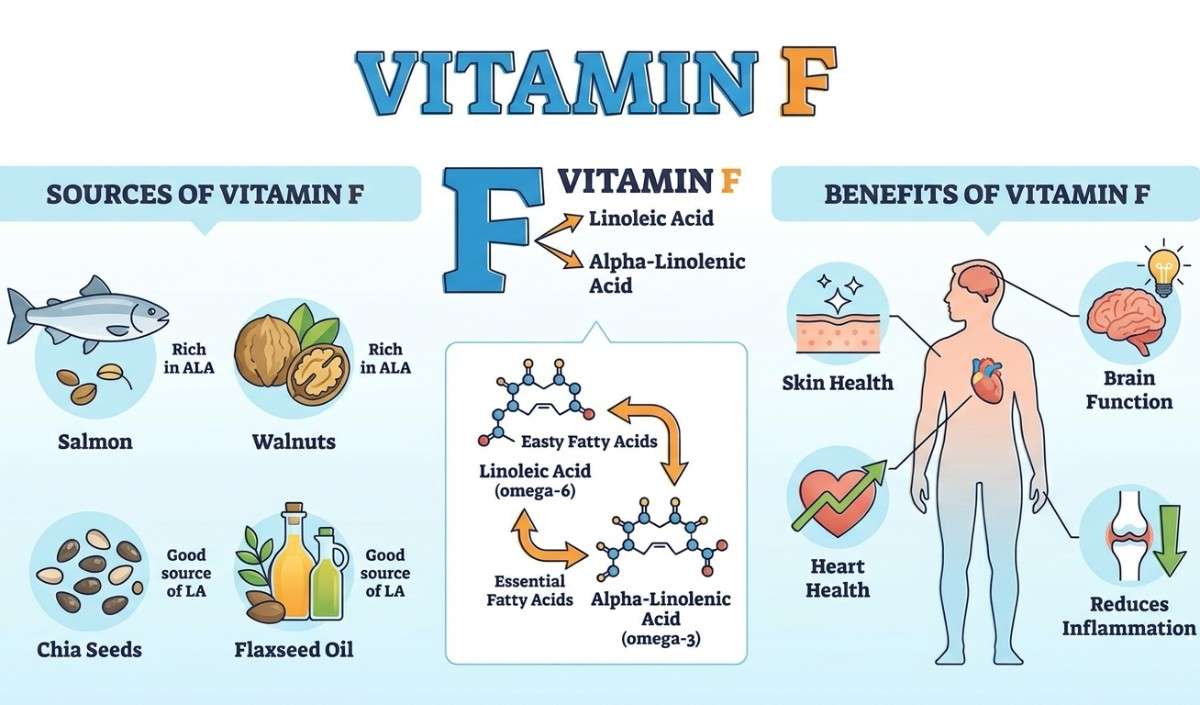
Vitamin F is not a true vitamin in the traditional sense like vitamin A or vitamin C. Instead, it refers to two essential fatty acids that your body cannot produce on its own: alpha-linolenic acid (ALA), an omega-3 fatty acid, and linoleic acid (LA), an omega-6 fatty acid. These fatty acids play a crucial role in maintaining healthy skin, brain function, heart health, hormonal balance, and overall cellular integrity.
Although the term “Vitamin F” is not officially recognized in modern nutritional science, it is still commonly used in skincare and health discussions to describe the importance of essential fatty acids in maintaining optimal health. In this guide, we will explore everything you need to know about Vitamin F, including its benefits, dosage, deficiency symptoms, food sources, risks, and more.
What is Vitamin F?
Vitamin F (commonly known as calciferol) is a historical term used to describe essential fatty acids (EFAs), primarily:
- Alpha-linolenic acid (ALA) – an omega-3 fatty acid
- Linoleic acid (LA) – an omega-6 fatty acid
These fatty acids are called “essential” because the human body cannot synthesize them. They must be obtained through diet.
Vitamin F plays a critical role in:
- Building and maintaining healthy cell membranes
- Supporting brain and nervous system function
- Regulating inflammation
- Promoting skin hydration and barrier repair
- Supporting cardiovascular health
- Producing hormone-like compounds called eicosanoids
Both ALA and LA are converted into longer-chain fatty acids in the body, such as EPA and DHA (from ALA), which are vital for heart and brain health.
Vitamin F Dosage
There is no official Recommended Dietary Allowance (RDA) for “Vitamin F” as a whole. However, there are Adequate Intake (AI) levels for essential fatty acids.
Recommended Intake of Essential Fatty Acids
| Age Group | Linoleic Acid (Omega-6) | Alpha-Linolenic Acid (Omega-3) | Upper Limit |
|---|---|---|---|
| Adult Men (19+) | 17 g/day | 1.6 g/day | No established UL (from food); excessive supplements may cause issues |
| Adult Women (19+) | 12 g/day | 1.1 g/day | No established UL (from food) |
| Pregnant Women | 13 g/day | 1.4 g/day | Consult doctor before supplementation |
| Breastfeeding Women | 13 g/day | 1.3 g/day | Consult doctor |
| Children (1–3 years) | 7 g/day | 0.7 g/day | Not established |
| Children (4–8 years) | 10 g/day | 0.9 g/day | Not established |
Note: There is no official upper intake limit for essential fatty acids from food sources. However, high-dose supplements may increase bleeding risk or digestive discomfort.
20 Benefits of Vitamin F
- Supports Heart Health – Vitamin F helps reduce bad cholesterol levels and supports healthy blood vessels, lowering the risk of cardiovascular disease.
- Reduces Inflammation – Omega-3 components of Vitamin F help regulate inflammatory responses in the body.
- Improves Skin Barrier – Linoleic acid strengthens the skin’s protective barrier and reduces water loss.
- Promotes Brain Function – Essential fatty acids support cognitive function, memory, and mental clarity.
- Balances Hormones – Vitamin F contributes to the production of hormone-like compounds called prostaglandins.
- Supports Healthy Cholesterol Levels – It helps maintain a healthy balance between LDL and HDL cholesterol.
- Enhances Wound Healing – Fatty acids promote faster skin repair and tissue regeneration.
- Prevents Dry Skin – Adequate intake helps maintain skin hydration and prevents flakiness.
- Supports Eye Health – Omega-3 fatty acids contribute to maintaining retinal health.
- Improves Hair Health – Vitamin F nourishes hair follicles and may reduce scalp dryness.
- Supports Joint Health – Anti-inflammatory properties may reduce stiffness and joint discomfort.
- Strengthens Immune Function – Essential fatty acids help regulate immune system activity.
- Supports Pregnancy and Fetal Development – Omega-3 fatty acids are crucial for fetal brain and eye development.
- Reduces Acne Severity – Linoleic acid may help regulate sebum production and reduce acne formation.
- Improves Mood Stability – Omega-3s are linked to improved mood and emotional balance.
- Supports Nervous System Health – Essential fatty acids are vital for nerve cell membrane function.
- May Reduce Risk of Chronic Diseases – Anti-inflammatory effects may lower risk of chronic conditions.
- Supports Healthy Metabolism – Fatty acids play a role in energy production and fat metabolism.
- Improves Circulation – Omega-3 fatty acids support healthy blood flow.
- Protects Cell Membranes – Vitamin F maintains the structure and flexibility of cell membranes throughout the body.
10 Side Effects of Excess Vitamin F
Excessive intake, particularly from supplements, may cause the following:
- Increased Bleeding Risk – High doses of omega-3 supplements may thin the blood excessively.
- Digestive Discomfort – Excess intake may cause bloating, diarrhea, or nausea.
- Weight Gain – Overconsumption of fatty acids increases total calorie intake.
- Imbalance of Omega-3 to Omega-6 Ratio – Too much omega-6 may promote inflammation.
- Low Blood Pressure – High omega-3 intake may lower blood pressure excessively.
- Blood Sugar Fluctuations – Very high doses may influence insulin sensitivity.
- Fishy Aftertaste – Common with high-dose omega-3 supplements.
- Allergic Reactions – Rare but possible in individuals allergic to specific oil sources.
- Oxidative Stress – Poor-quality oils may oxidize and cause cellular damage.
- Medication Interactions – High doses may interact with blood thinners or anti-inflammatory drugs.
Symptoms of Vitamin F Deficiency
Vitamin F deficiency is rare but can occur in cases of poor diet or fat malabsorption. Symptoms include:
- Dry, scaly skin
- Increased acne
- Brittle hair
- Slow wound healing
- Increased infections
- Poor growth in children
- Mood disturbances
- Fatigue
- Reduced cognitive performance
Causes of Vitamin F Deficiency
Common causes include:
- Very low-fat diets
- Fat malabsorption disorders (such as celiac disease)
- Chronic digestive disorders
- Severe malnutrition
- Long-term parenteral nutrition without fatty acids
- Excess alcohol consumption
Best Food Sources of Vitamin F
Here are the best natural sources of essential fatty acids:
| Food | Type of Fatty Acid | Approximate Content |
|---|---|---|
| Flaxseeds | Omega-3 (ALA) | 6.4 g per tbsp |
| Chia seeds | Omega-3 (ALA) | 5 g per tbsp |
| Walnuts | Omega-3 (ALA) | 2.5 g per ounce |
| Sunflower oil | Omega-6 (LA) | 9.3 g per tbsp |
| Soybean oil | Omega-6 (LA) | 7 g per tbsp |
| Corn oil | Omega-6 (LA) | 7.3 g per tbsp |
| Hemp seeds | Omega-3 & 6 | Balanced ratio |
| Almonds | Omega-6 | 3.5 g per ounce |
| Pumpkin seeds | Omega-6 | 6 g per ounce |
| Canola oil | Omega-3 & 6 | Moderate amounts |
Who is at Risk of Vitamin F Deficiency?
- People on strict low-fat diets
- Individuals with digestive disorders
- Those with eating disorders
- Elderly individuals with poor nutrition
- People with chronic liver disease
- Individuals on long-term intravenous feeding
Complications of Vitamin F Deficiency
If left untreated, deficiency may lead to:
- Chronic skin disorders
- Increased inflammation
- Cognitive decline
- Poor immune response
- Growth problems in children
- Hormonal imbalance
Preventing Vitamin F Deficiency
To prevent deficiency:
- Include healthy fats daily
- Eat nuts and seeds regularly
- Use plant-based oils in cooking
- Maintain balanced omega-3 to omega-6 ratio
- Avoid extremely low-fat diets
- Consider supplementation if advised by a doctor
Symptoms of Vitamin F Toxicity
Although rare from food sources, toxicity from supplements may cause:
- Easy bruising
- Nosebleeds
- Digestive upset
- Low blood pressure
- Prolonged bleeding
How to Maintain Healthy Vitamin F Levels
- Eat a balanced diet rich in whole foods
- Include both omega-3 and omega-6 sources
- Avoid highly processed vegetable oils
- Limit fried foods
- Store oils properly to prevent oxidation
- Maintain a healthy weight
- Consult a healthcare professional before high-dose supplementation
Who Should Take Vitamin F?
Supplementation may benefit:
- Individuals with dry skin conditions
- People with inflammatory disorders
- Pregnant or breastfeeding women (under supervision)
- Those with low dietary fat intake
- Individuals at risk of cardiovascular disease
Who Should Not Take Vitamin F?
High-dose supplementation should be avoided by:
- Individuals on blood thinners
- People with bleeding disorders
- Those scheduled for surgery
- Individuals with fish or seed oil allergies
- People with uncontrolled low blood pressure
Best Time to Take Vitamin F
Vitamin F supplements are best taken:
- With meals
- Alongside fat-containing foods
- In divided doses if high amounts are prescribed
Taking them with food improves absorption and reduces digestive discomfort.
Precautions and Interactions
It may interact with:
- Blood thinners (increase bleeding risk)
- Anti-inflammatory medications
- Blood pressure medications
- Diabetes medications
Precautions:
- Always choose high-quality, cold-pressed oils
- Avoid rancid or expired oils
- Do not exceed recommended doses
- Consult a doctor if pregnant, breastfeeding, or managing chronic illness
Conclusion
Vitamin F, though not officially recognized as a traditional vitamin, plays a fundamental role in human health through essential fatty acids like omega-3 and omega-6. These fats are critical for heart health, brain function, skin integrity, immune response, and hormonal balance.
Deficiency can lead to skin problems, inflammation, and poor overall health, while excessive supplementation may increase bleeding risk and digestive issues. The key to maintaining healthy calciferol levels lies in a balanced diet that includes nuts, seeds, and healthy plant oils.
FAQ’s
Is Vitamin F a real vitamin?
It is not an official vitamin but a historical term used to describe essential fatty acids, mainly omega-3 (ALA) and omega-6 (linoleic acid), which are vital for health.
What is Vitamin F good for?
It supports heart health, brain function, skin hydration, hormone production, immune balance, and inflammation control.
Can I take Vitamin F every day?
Yes, essential fatty acids should be consumed daily through food, but high-dose supplements should only be taken under medical supervision.
Is Vitamin F good for skin?
Yes, linoleic acid helps strengthen the skin barrier, reduce dryness, improve hydration, and may help manage acne.
Does Vitamin F help with hair growth?
It nourishes hair follicles and improves scalp health, which may support healthier hair growth.
What happens if you don’t get enough Vitamin F?
Deficiency may cause dry skin, brittle hair, slow wound healing, increased inflammation, and poor immune function.
Can Vitamin F help reduce inflammation?
Yes, omega-3 fatty acids in calciferol help regulate inflammatory processes in the body.
Is Vitamin F safe during pregnancy?
Essential fatty acids are important during pregnancy, especially for fetal brain development, but supplementation should be discussed with a healthcare provider.
Can too much Vitamin F be harmful?
Excessive intake from supplements may increase bleeding risk, cause digestive issues, or lead to imbalanced omega-3 and omega-6 levels.
Is Vitamin F the same as fish oil?
No, it refers to essential fatty acids like ALA and linoleic acid, while fish oil mainly contains EPA and DHA, which are derived from omega-3 fatty acids.
Does Vitamin F help lower cholesterol?
Yes, essential fatty acids may help improve cholesterol balance by reducing LDL levels and supporting heart health.
Can Vitamin F improve mood?
Omega-3 fatty acids are linked to better mood stability and may support mental well-being.
Also Read: