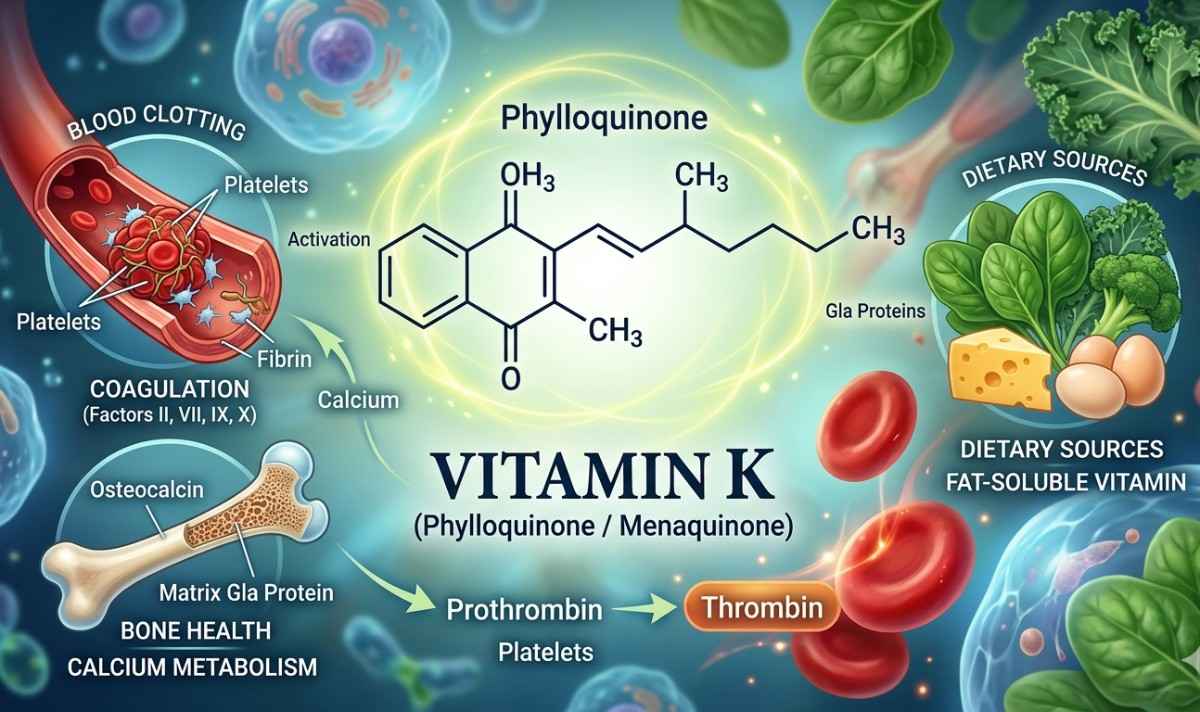
Vitamin K is one of the most essential yet often overlooked nutrients in the human body. While many people associate it only with blood clotting, this fat-soluble vitamin plays a far broader role in maintaining bone strength, heart health, brain function, and overall well-being.
In this guide, you will learn everything about Vitamin K — from its functions and dosage recommendations to deficiency risks, toxicity symptoms, and the best dietary sources.
What Is Vitamin K?
Vitamin K is a fat-soluble vitamin that plays a critical role in blood clotting, bone metabolism, and cardiovascular health. The “K” in Vitamin K comes from the German word Koagulation, meaning coagulation or clotting.
There are two primary natural forms of Vitamin K:
- Vitamin K1 (Phylloquinone): Found mainly in green leafy vegetables.
- Vitamin K2 (Menaquinone): Found in fermented foods and animal-based products.
A synthetic form called Vitamin K3 (Menadione) exists but is not commonly used in human supplements due to potential toxicity concerns.
Vitamin K works by activating proteins that help regulate blood clotting, calcium metabolism, and arterial health. Without adequate Vitamin K, the body cannot properly control bleeding or direct calcium to bones effectively.
Vitamin K Dosage
Vitamin K requirements vary depending on age, gender, and life stage. Below is a general guideline for daily intake.
Recommended Daily Intake and Upper Intake Limit
| Age Group | Recommended Daily Intake (mcg/day) | Upper Intake Limit (UL) |
|---|---|---|
| 0–6 months | 2.0 mcg | Not established |
| 7–12 months | 2.5 mcg | Not established |
| 1–3 years | 30 mcg | Not established |
| 4–8 years | 55 mcg | Not established |
| 9–13 years | 60 mcg | Not established |
| 14–18 years (Male) | 75 mcg | Not established |
| 14–18 years (Female) | 75 mcg | Not established |
| Adult Men (19+) | 120 mcg | Not established |
| Adult Women (19+) | 90 mcg | Not established |
| Pregnant Women | 90 mcg | Not established |
| Breastfeeding Women | 90 mcg | Not established |
Currently, no official upper intake limit (UL) has been established for Vitamin K1 or K2 because toxicity from food sources is extremely rare.
20 Benefits of Vitamin K
- Supports Blood Clotting: Vitamin K activates clotting proteins that help stop bleeding and prevent excessive blood loss.
- Strengthens Bones: It helps activate osteocalcin, a protein that binds calcium to bones, improving bone density.
- Reduces Risk of Osteoporosis: Adequate Vitamin K intake lowers the risk of bone fractures and age-related bone loss.
- Improves Heart Health: Vitamin K2 prevents calcium buildup in arteries, reducing the risk of heart disease.
- Prevents Arterial Calcification: It directs calcium to bones instead of arteries, supporting cardiovascular function.
- Enhances Wound Healing: It assists in faster clot formation and tissue repair.
- Supports Brain Health: It plays a role in the synthesis of sphingolipids, essential fats in brain cells.
- May Improve Cognitive Function: Some studies suggest Vitamin K supports memory and mental performance.
- Supports Healthy Teeth: Vitamin K works with Vitamin D to promote strong teeth by regulating calcium.
- Improves Insulin Sensitivity: It may help regulate blood sugar levels.
- Reduces Inflammation: It may lower inflammatory markers in the body.
- Supports Healthy Pregnancy: It prevents excessive bleeding during childbirth.
- Protects Newborns from Bleeding: Vitamin K injections at birth prevent hemorrhagic disease in infants.
- Supports Liver Function: The liver relies on Vitamin K to produce clotting factors.
- May Reduce Cancer Risk: Some research links higher Vitamin K2 intake with lower cancer risk.
- Promotes Healthy Skin: It may help reduce dark circles and bruising.
- Improves Circulation: It supports healthy blood flow and vascular integrity.
- Helps Prevent Excessive Menstrual Bleeding: Vitamin K supports clotting balance in women.
- Supports Joint Health: It may help reduce cartilage damage.
- Enhances Overall Longevity: Adequate intake is associated with lower mortality risk in some studies.
10 Side Effects of Excess Vitamin K
Although rare from food sources, excessive supplementation may cause issues.
- Interferes with Blood Thinners: High Vitamin K intake can reduce the effectiveness of warfarin and similar medications.
- Allergic Reactions: Some individuals may experience itching or rash from supplements.
- Injection Site Reactions: Vitamin K injections may cause pain or swelling.
- Digestive Upset: High doses may cause nausea or stomach discomfort.
- Liver Stress (Synthetic Forms): Vitamin K3 may cause liver toxicity.
- Hemolytic Anemia (Rare): High doses of synthetic forms can damage red blood cells.
- Jaundice in Infants: Excess synthetic Vitamin K may contribute to jaundice.
- Breathing Difficulty (Rare): Allergic reactions may cause respiratory symptoms.
- Flushing or Sweating: Some individuals report mild flushing.
- Blood Clot Risk in Sensitive Individuals: Extremely high supplementation could potentially increase clotting risk.
Symptoms of Vitamin K Deficiency
Deficiency is uncommon in healthy adults but can occur under certain conditions.
Common symptoms include:
- Easy bruising
- Excessive bleeding from wounds
- Frequent nosebleeds
- Bleeding gums
- Heavy menstrual bleeding
- Blood in urine or stool
- Weak bones or fractures
- Internal bleeding in severe cases
In newborns, deficiency can lead to serious bleeding known as deficiency bleeding (VKDB).
Causes of Vitamin K Deficiency
Several factors may lead to low levels:
- Poor dietary intake
- Long-term antibiotic use
- Fat malabsorption disorders (e.g., celiac disease, Crohn’s disease)
- Liver disease
- Pancreatic disorders
- Gallbladder disease
- Newborn status (low storage at birth)
- Long-term use of blood thinners
Best Food Sources of Vitamin K
Here are some of the richest dietary sources of Vitamin K.
| Food | Type of Vitamin K | Approximate Amount per 100g |
|---|---|---|
| Kale | Vitamin K1 | 817 mcg |
| Spinach | Vitamin K1 | 483 mcg |
| Broccoli | Vitamin K1 | 141 mcg |
| Brussels Sprouts | Vitamin K1 | 177 mcg |
| Cabbage | Vitamin K1 | 76 mcg |
| Natto (Fermented Soybeans) | Vitamin K2 | 1100 mcg |
| Cheese | Vitamin K2 | 76 mcg |
| Egg Yolk | Vitamin K2 | 34 mcg |
| Chicken | Vitamin K2 | 60 mcg |
| Beef Liver | Vitamin K2 | 106 mcg |
Green leafy vegetables are the most accessible and reliable sources.
Who Is at Risk of Vitamin K Deficiency?
Certain groups are more vulnerable:
- Newborn infants
- People with digestive disorders
- Individuals with liver disease
- Long-term antibiotic users
- People taking anticoagulant medication
- Individuals with very restrictive diets
- Older adults with poor nutrient absorption
Complications of Vitamin K Deficiency
If left untreated, deficiency may lead to:
- Severe internal bleeding
- Hemorrhaging
- Osteoporosis
- Increased fracture risk
- Cardiovascular complications
- Brain bleeding in newborns
Preventing Vitamin K Deficiency
You can prevent deficiency by:
- Eating green leafy vegetables regularly
- Including fermented foods like natto
- Maintaining gut health
- Avoiding unnecessary long-term antibiotic use
- Monitoring medication interactions
- Considering supplementation if advised by a doctor
Symptoms of Vitamin K Toxicity
Toxicity is rare but may include:
- Unusual blood clot formation
- Jaundice
- Fatigue
- Allergic reactions
- Liver abnormalities (rare)
- Digestive upset
Most toxicity cases are linked to synthetic Vitamin K (K3), not natural food sources.
How to Maintain Healthy Vitamin K Levels
- Eat a balanced diet rich in leafy greens.
- Include moderate amounts of fermented and animal products.
- Pair it with healthy fats for better absorption.
- Monitor levels if taking blood thinners.
- Avoid excessive supplementation without medical supervision.
Who Should Take Vitamin K?
Supplementation may benefit:
- Individuals with diagnosed deficiency
- People with osteoporosis
- Those with poor dietary intake
- Patients with fat malabsorption disorders
- Older adults at fracture risk
- Individuals advised by healthcare providers
Who Should Not Take Vitamin K?
Supplements may not be suitable for:
- Individuals taking warfarin (unless supervised by a doctor)
- People with clotting disorders
- Those allergic to supplement ingredients
- Individuals with certain liver conditions without medical approval
Best Time to Take Vitamin K
It is fat-soluble, meaning it absorbs best when taken with meals containing healthy fats. The best time to take it is:
- With lunch or dinner
- Alongside Vitamin D for bone health
- Consistently at the same time each day
Precautions and Interactions
It can interact with several medications and conditions.
Interactions:
- Warfarin and blood thinners: Vitamin K reduces their effectiveness.
- Antibiotics: May reduce Vitamin K production in the gut.
- Cholesterol-lowering drugs: May reduce absorption.
- Orlistat: Can decrease fat-soluble vitamin absorption.
Precautions:
- Always consult a healthcare provider before supplementation.
- Maintain consistent intake if on anticoagulants.
- Avoid synthetic forms unless prescribed.
- Pregnant and breastfeeding women should follow recommended dietary intake only.
Conclusion
Vitamin K is a powerful and essential nutrient that plays a fundamental role in blood clotting, bone health, heart protection, and overall wellness. While deficiency is rare in healthy adults, certain groups remain at risk and should monitor their intake carefully. Most people can maintain optimal levels by consuming green leafy vegetables and fermented foods regularly. Supplementation should be considered only when necessary and under professional guidance.
FAQ’s
What is the difference between Vitamin K1 and Vitamin K2?
Vitamin K1 (phylloquinone) is found mostly in green leafy vegetables and supports blood clotting, while Vitamin K2 (menaquinone) is found in fermented and animal foods and plays a stronger role in bone and heart health.
Can I take Vitamin K every day?
Yes, Vitamin K can be taken daily within recommended amounts, especially if obtained from food sources.
Is Vitamin K good for bones?
Yes, It helps activate osteocalcin, a protein that binds calcium to bones, improving bone strength and reducing fracture risk.
Does Vitamin K help with heart health?
It may help prevent calcium buildup in arteries, which supports cardiovascular health.
Can Vitamin K cause blood clots?
Vitamin K itself does not directly cause abnormal clots in healthy individuals, but excessive supplementation may interfere with blood-thinning medications.
Are Vitamin K supplements safe?
Supplements are generally safe when taken in recommended amounts, but people on anticoagulant medications should consult a healthcare provider before use.
Is Vitamin K safe during pregnancy?
Yes, Vitamin K from food is safe during pregnancy, but supplements should only be taken under medical guidance.
Can Vitamin K improve skin health?
It may help reduce bruising, dark circles, and promote skin healing, although more research is needed.
Does cooking destroy Vitamin K?
It is relatively stable during cooking, but excessive boiling may reduce some of its content.
Can Vitamin K help with heavy periods?
It supports normal blood clotting and may help reduce excessive menstrual bleeding in some cases.
Is Vitamin K fat-soluble or water-soluble?
It is a fat-soluble vitamin, meaning it is better absorbed when taken with dietary fats.
What is Vitamin K deficiency bleeding (VKDB)?
Deficiency bleeding is a serious condition in newborns that can cause internal bleeding due to low levels.
Can antibiotics affect Vitamin K levels?
Yes, long-term antibiotic use can reduce Vitamin K production in the gut by disrupting healthy bacteria.
Can you get enough Vitamin K from diet alone?
Most healthy individuals can get enough Vitamin K through a balanced diet rich in leafy greens and fermented foods.
Also Read:
1 thought on “Vitamin K: 20 Benefits, Sources, Dosage & Deficiency Signs”