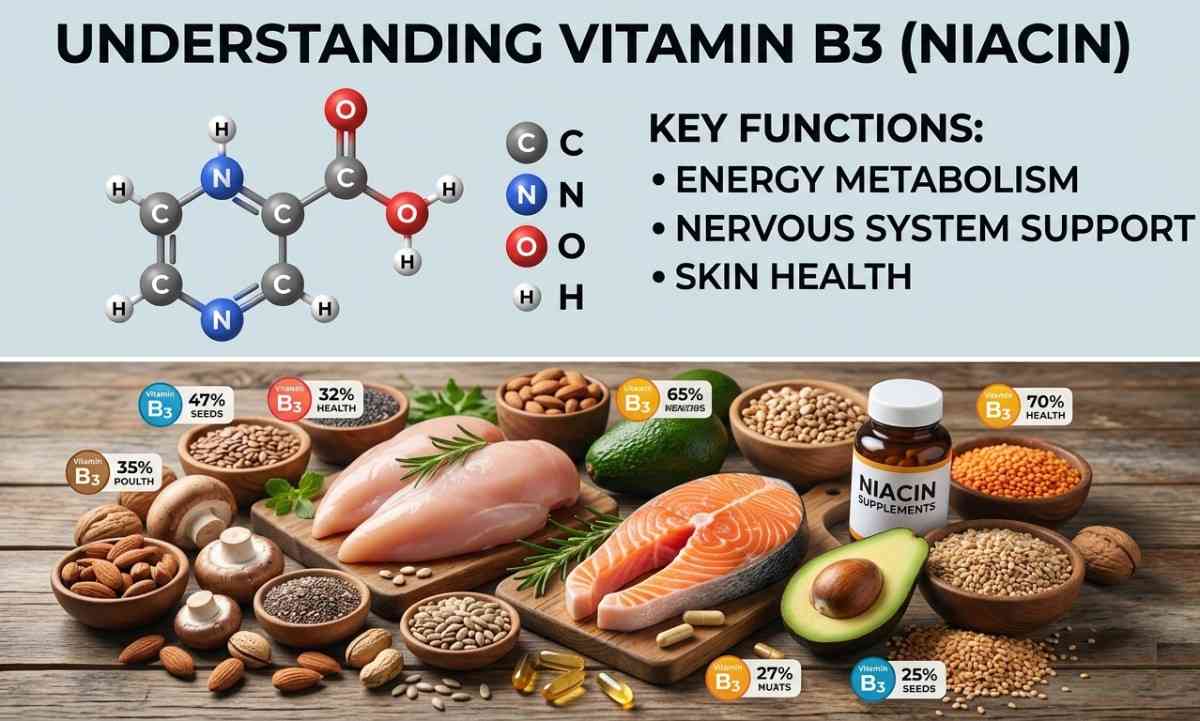
Vitamin B3 is one of the most essential nutrients your body needs for energy production, healthy skin, brain function, and proper metabolism. Though often overlooked compared to other vitamins, Vitamin B3 plays a powerful role in keeping your cells alive and functioning efficiently. From preventing deficiency diseases like pellagra to supporting heart health, this vitamin is vital at every stage of life.
In this guide, you’ll learn everything about Vitamin B3 — including its recommended dosage, benefits, side effects, food sources, deficiency symptoms, toxicity risks, and who should or should not take it.
What is Vitamin B3?
Vitamin B3, also known as niacin, is a water-soluble vitamin that belongs to the B-complex family. It exists in two primary forms:
- Nicotinic acid
- Niacinamide (nicotinamide)
Both forms help convert carbohydrates, fats, and proteins into usable energy. Vitamin B3 is also a key component of two important coenzymes:
These coenzymes are involved in hundreds of metabolic reactions, including DNA repair, cell signaling, and antioxidant defense.
Because Vitamin B3 is water-soluble, your body does not store large amounts. This means regular intake through diet or supplements is essential.
Vitamin B3 Dosage
The recommended daily intake depends on age, gender, and life stage. The values below are expressed in mg NE (Niacin Equivalents), which accounts for niacin obtained directly from food and indirectly from tryptophan conversion.
Recommended Daily Intake and Upper Limit of Vitamin B3
| Age Group | Recommended Daily Intake (mg NE/day) | Upper Intake Limit (mg/day) |
|---|---|---|
| 0–6 months | 2 mg (AI) | Not established |
| 7–12 months | 4 mg (AI) | Not established |
| 1–3 years | 6 mg | 10 mg |
| 4–8 years | 8 mg | 15 mg |
| 9–13 years | 12 mg | 20 mg |
| 14+ years (Men) | 16 mg | 35 mg |
| 14+ years (Women) | 14 mg | 35 mg |
| Pregnant Women | 18 mg | 35 mg |
| Breastfeeding Women | 17 mg | 35 mg |
Note: The upper limit mainly applies to supplemental niacin, not food-based intake.
20 Benefits of Vitamin B3
- Boosts Energy Production – Vitamin B3 helps convert carbohydrates, fats, and proteins into usable cellular energy through NAD and NADP enzymes.
- Supports Heart Health – Niacin can improve cholesterol levels by increasing HDL (good cholesterol) and lowering LDL (bad cholesterol).
- Improves Blood Circulation – It promotes better blood flow by dilating blood vessels.
- Maintains Healthy Skin – Vitamin B3 supports skin barrier function and reduces inflammation.
- Prevents Pellagra – Adequate intake prevents pellagra, a serious deficiency disease characterized by dermatitis, diarrhea, and dementia.
- Enhances Brain Function – It supports neurotransmitter function and cognitive performance.
- Reduces Inflammation – Niacinamide helps calm inflammatory skin conditions such as acne and rosacea.
- Supports DNA Repair – NAD plays a key role in DNA repair and cell regeneration.
- Improves Joint Mobility – Some studies suggest niacin may help reduce arthritis symptoms.
- Balances Cholesterol Levels – High-dose niacin is sometimes prescribed to manage dyslipidemia.
- Promotes Digestive Health – It supports the proper functioning of the digestive tract.
- Regulates Blood Sugar – Vitamin B3 contributes to stable glucose metabolism.
- Supports Nervous System Health – It helps maintain proper nerve signaling and function.
- Improves Skin Hydration – Niacinamide enhances moisture retention and skin elasticity.
- Supports Hormone Production – It assists in synthesizing stress and sex hormones.
- Enhances Detoxification – Vitamin B3 supports liver function and detox pathways.
- Reduces Oxidative Stress – NAD-related enzymes help neutralize free radicals.
- Supports Mental Health – Adequate levels may help stabilize mood and reduce fatigue.
- Improves Athletic Performance – By aiding energy metabolism, it supports endurance.
- Promotes Longevity at Cellular Level – NAD-dependent processes are linked to healthy aging and mitochondrial function.
10 Side Effects of Excess Vitamin B3
Excess intake usually occurs from high-dose supplements rather than food.
- Niacin Flush – High doses can cause redness, warmth, itching, and tingling of the skin.
- Liver Toxicity – Excessive long-term use may damage liver cells.
- Gastrointestinal Upset – Nausea, vomiting, and abdominal discomfort may occur.
- Increased Blood Sugar – High doses can raise glucose levels in some individuals.
- Low Blood Pressure – Vasodilation may cause dizziness or lightheadedness.
- Headaches – Overconsumption may trigger persistent headaches.
- Irregular Heartbeat – Rarely, large doses may cause heart rhythm disturbances.
- Blurred Vision – Very high doses may temporarily affect eyesight.
- Gout Flare-Ups – Niacin can increase uric acid levels.
- Allergic Reactions – Rare hypersensitivity reactions may occur.
Symptoms of Vitamin B3 Deficiency
Vitamin B3 deficiency leads to a condition called pellagra. The classic symptoms are known as the “3 Ds”:
- Dermatitis (inflamed, scaly skin)
- Diarrhea
- Dementia
Additional symptoms include:
- Fatigue
- Depression
- Memory problems
- Headaches
- Loss of appetite
- Mouth sores
- Swollen tongue
Severe untreated deficiency can become life-threatening.
Causes of Vitamin B3 Deficiency
Several factors can contribute to low Vitamin B3 levels:
- Poor diet lacking protein and B vitamins
- Chronic alcoholism
- Malabsorption disorders
- Crohn’s disease
- Liver disease
- Carcinoid syndrome
- Long-term certain medications
- Severe poverty or food insecurity
Since tryptophan converts into niacin, low protein intake can also increase deficiency risk.
Best Food Sources of Vitamin B3
Vitamin B3 is widely available in both animal and plant foods.
Top Food Sources of Vitamin B3:
| Food | Vitamin B3 (mg per serving) |
|---|---|
| Chicken breast (100g) | 11–14 mg |
| Turkey | 10 mg |
| Tuna | 8–10 mg |
| Salmon | 7–9 mg |
| Beef | 6–9 mg |
| Peanuts | 4–5 mg |
| Brown rice | 2–3 mg |
| Mushrooms | 3–4 mg |
| Lentils | 2 mg |
| Whole wheat bread | 2 mg |
Fortified cereals can also provide significant amounts.
Who is at Risk of Vitamin B3 Deficiency?
Certain groups are more vulnerable:
- People with alcoholism
- Individuals with digestive disorders
- Those with protein-deficient diets
- Elderly individuals
- People with carcinoid syndrome
- Individuals living in food-insecure areas
Complications of Vitamin B3 Deficiency
Untreated deficiency may lead to:
- Severe skin damage
- Neurological deterioration
- Chronic diarrhea
- Memory loss
- Psychosis
- Death in extreme cases
Early treatment usually reverses symptoms.
Preventing Vitamin B3 Deficiency
Prevention strategies include:
- Eating balanced meals rich in protein
- Including fortified grains
- Avoiding excessive alcohol
- Treating digestive disorders
- Taking supplements if prescribed
A diet containing meat, fish, legumes, and whole grains typically prevents deficiency.
Symptoms of Vitamin B3 Toxicity
Toxicity mainly occurs from high-dose supplements. Symptoms include:
- Severe flushing
- Itchy skin
- Liver enzyme elevation
- Abdominal pain
- Nausea
- Increased blood sugar
- Vision disturbances
Medical supervision is important for therapeutic doses.
How to Maintain Healthy Vitamin B3 Levels
- Consume a balanced, protein-rich diet
- Include poultry, fish, nuts, and whole grains
- Avoid unnecessary high-dose supplementation
- Monitor liver function if taking prescribed niacin
- Stay hydrated
Regular medical checkups help ensure optimal levels.
Who Should Take Vitamin B3?
Niacin supplementation may benefit:
- Individuals diagnosed with deficiency
- People with high cholesterol (under medical supervision)
- Those with poor dietary intake
- Individuals with certain metabolic disorders
- People with inflammatory skin conditions (niacinamide form)
Always consult a healthcare provider before high-dose use.
Who Should Not Take Vitamin B3?
Avoid or use caution if you have:
- Liver disease
- Active peptic ulcers
- Severe gout
- Uncontrolled diabetes
- Low blood pressure
- History of niacin sensitivity
Pregnant or breastfeeding women should not exceed recommended amounts without medical advice.
Best Time to Take Vitamin B3
- Take with meals to reduce stomach upset.
- Evening intake may reduce flushing discomfort.
- Extended-release forms should be taken exactly as prescribed.
Consistency is more important than timing.
Precautions and Interactions
Niacin may interact with:
- Cholesterol-lowering medications
- Blood pressure medications
- Diabetes medications
- Alcohol
- Anticoagulants
Precautions:
- Start with low doses to reduce flushing
- Avoid alcohol while on high-dose therapy
- Monitor liver function during long-term supplementation
- Do not exceed upper limits without medical supervision
Conclusion
Vitamin B3 is a powerful and essential nutrient that supports energy production, heart health, brain function, skin integrity, and cellular repair. While deficiency can cause serious health problems like pellagra, toxicity can also occur with excessive supplementation.
Most people can meet their needs through a balanced diet rich in poultry, fish, legumes, and whole grains. Supplementation should be reserved for those with diagnosed deficiencies or specific medical conditions under professional guidance.
FAQ’s
Can I take Vitamin B3 every day?
Yes, niacin can be taken daily within the recommended dosage range, but high-dose supplements should only be used under medical supervision.
What happens if you don’t get enough Vitamin B3?
Deficiency can lead to pellagra, which causes dermatitis, diarrhea, dementia, fatigue, and other serious symptoms if untreated.
What causes a niacin flush?
A niacin flush occurs when high doses of nicotinic acid widen blood vessels, leading to temporary redness, warmth, and itching of the skin.
Is niacinamide better than niacin?
Niacinamide does not cause flushing and is commonly used for skin health, while nicotinic acid is often used for cholesterol management.
Can Vitamin B3 lower cholesterol?
Yes, high-dose niacin may increase HDL (good cholesterol) and lower LDL (bad cholesterol), but it should only be taken for this purpose under medical supervision.
Is Vitamin B3 good for skin?
Yes, especially in the form of niacinamide, it helps improve skin hydration, reduce inflammation, and strengthen the skin barrier.
Can too much Vitamin B3 damage the liver?
Yes, prolonged use of high-dose supplements can lead to liver toxicity, so monitoring is important during therapeutic use.
Can Vitamin B3 help with energy levels?
Yes, it plays a direct role in converting food into usable cellular energy, which supports overall vitality.
Does cooking destroy Vitamin B3?
Niacin is relatively stable during cooking, but some loss may occur if food is boiled and the water is discarded.
Is Vitamin B3 safe during pregnancy?
It is safe when taken within recommended daily amounts, but high-dose supplementation should only be used with medical advice.
Can Vitamin B3 raise blood sugar levels?
High doses of niacin may increase blood glucose levels in some individuals, especially those with diabetes.
What is the difference between niacin and NAD supplements?
Niacin is a form of niacin that helps the body produce NAD, while NAD supplements aim to increase cellular NAD levels directly.
Can Vitamin B3 help with mental health?
Adequate levels support brain function and neurotransmitter activity, but it should not replace professional mental health treatment.
What is Vitamin B3 known for?
Niacin is known for its role in energy production, cholesterol management, skin health, and preventing pellagra, a deficiency disease.
Does Vitamin B3 help acne?
Yes, especially in the form of niacinamide, niacin helps reduce inflammation, regulate oil production, and improve skin barrier function, which may help manage acne.
Which fruit has the highest Vitamin B3?
Avocado is one of the fruits highest in niacin, followed by dates and certain berries, though fruits generally contain moderate amounts compared to meat and fish.
How do I increase my B3 levels?
You can increase niacin levels by eating niacin-rich foods like chicken, tuna, salmon, peanuts, whole grains, and fortified cereals, or by taking supplements under medical guidance.
How common is B3 deficiency?
Niacin deficiency is rare in developed countries due to diverse diets and food fortification, but it is more common in areas with severe malnutrition or chronic alcoholism.
What are the mental symptoms of B3 deficiency?
Mental symptoms of niacin deficiency include depression, irritability, confusion, memory loss, poor concentration, and in severe cases, dementia.
Also Read: