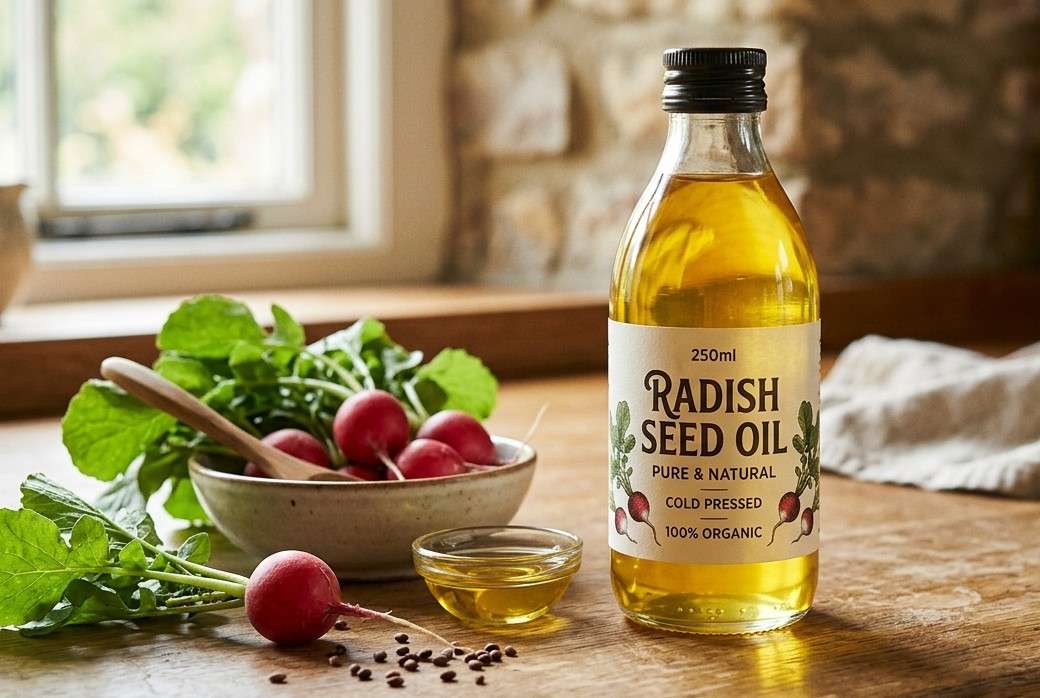
Radish Seed Oil is one of the most underrated yet powerful plant oils gaining popularity in the wellness and skincare world. Extracted from the tiny seeds of the radish plant, this lightweight, nutrient-rich oil is valued for its skin-nourishing, hair-strengthening, and potential health-supporting properties. While radish is commonly used in salads and traditional cooking, its seeds hold concentrated bioactive compounds that make the oil uniquely beneficial.
In this guide, you will learn everything about Radish Seed Oil — from nutrition facts and science-backed health benefits to side effects, dosage, usage methods, and storage tips.
What is Radish Seed Oil?
Radish Seed Oil is a natural oil extracted from the seeds of the radish plant (Raphanus sativus). The oil is typically obtained through cold pressing, a method that preserves its nutrients and active compounds.
Unlike heavier oils, Radish Seed Oil has a silky, lightweight texture and absorbs quickly without leaving a greasy residue. Because of this, it is widely used in:
- Skincare products
- Hair serums
- Massage oils
- Natural cosmetics
- Aromatherapy blends
Radish seeds are rich in fatty acids, antioxidants, and sulfur-containing compounds that contribute to the oil’s therapeutic value.
Nutrition Facts of Radish Seed Oil
Below is the approximate nutritional composition of Radish Seed Oil per 100 grams (values may vary depending on extraction method):
| Nutrient | Approximate Amount per 100g |
|---|---|
| Calories | 884 kcal |
| Total Fat | 100 g |
| Monounsaturated Fat | 45–55 g |
| Polyunsaturated Fat | 25–35 g |
| Saturated Fat | 8–12 g |
| Omega-6 Fatty Acids | 20–30 g |
| Omega-9 Fatty Acids | 40–50 g |
| Vitamin E | Moderate amounts |
| Phytosterols | Present |
| Sulfur Compounds | Present |
| Antioxidants | Present |
Radish Seed Oil is not typically used as a primary cooking oil but rather as a therapeutic and cosmetic oil due to its bioactive compounds.
20 Proven Benefits of Radish Seed Oil
- Skin Hydration – Radish Seed Oil deeply moisturizes the skin without clogging pores due to its lightweight fatty acid profile.
- Non-Greasy Finish – It absorbs quickly into the skin, leaving a smooth and silky texture rather than an oily residue.
- Anti-Aging Support – Its antioxidant content helps reduce fine lines and protects the skin from premature aging caused by free radicals.
- Improves Skin Elasticity – The essential fatty acids support collagen function and help maintain skin firmness.
- Soothes Irritated Skin – Natural anti-inflammatory compounds help calm redness, itching, and mild skin irritation.
- Acne-Friendly Oil – Being lightweight and non-comedogenic, it is suitable for acne-prone skin.
- Balances Oil Production – It helps regulate sebum production, making it useful for both oily and dry skin types.
- Hair Conditioning – Radish Seed Oil smooths hair strands and improves softness without weighing hair down.
- Adds Natural Shine – It enhances hair gloss and smoothness naturally.
- Reduces Frizz – The oil seals the hair cuticle, helping control frizz and flyaways.
- Scalp Nourishment – Its nutrients nourish the scalp and may support healthier hair growth.
- Antioxidant Protection – The oil protects cells from oxidative stress through its vitamin E and phytonutrients.
- Anti-Inflammatory Support – Natural plant compounds may help reduce internal and external inflammation.
- Supports Detoxification – Radish-derived sulfur compounds are traditionally associated with liver support.
- Boosts Circulation – When used in massage, it may help stimulate blood circulation.
- Enhances Product Absorption – It works well as a carrier oil, improving the absorption of essential oils.
- Strengthens Hair Roots – Nutrient-rich content may help strengthen hair follicles over time.
- Softens Rough Skin – It is effective for dry elbows, knees, and cracked heels.
- Improves Beard Health – It conditions beard hair and moisturizes the underlying skin.
- Natural Lubrication – Its silky consistency makes it a good natural alternative to synthetic silicones in cosmetic formulations.
10 Side Effects of Radish Seed Oil
Although generally safe when used properly, excessive or improper use may cause side effects.
- Allergic Reaction – Individuals allergic to radish or cruciferous vegetables may experience skin irritation or rash.
- Skin Sensitivity – Applying large amounts may cause redness or itching in sensitive individuals.
- Digestive Discomfort – Consuming high amounts may lead to bloating or stomach upset.
- Thyroid Interference – Excess intake of radish-derived compounds may affect thyroid function in sensitive individuals.
- Acne Breakouts – Rarely, overuse on oily skin may trigger breakouts.
- Hormonal Imbalance – Excessive consumption may affect hormone-sensitive individuals due to plant compounds.
- Interaction with Blood Thinners – It may influence blood clotting in high quantities.
- Strong Odor Sensitivity – Some individuals may find its natural aroma irritating.
- Diarrhea Risk – High internal consumption may act as a mild laxative.
- Pregnancy Concerns – Pregnant or breastfeeding women should consult a healthcare provider before internal use.
How to Use Radish Seed Oil?
Radish Seed Oil can be used both topically and internally (if food-grade).
For Skin:
- Apply 2–3 drops on clean skin.
- Use as a night serum.
- Mix with moisturizer for enhanced hydration.
For Hair:
- Use as a leave-in serum.
- Add a few drops to conditioner.
- Massage into scalp before washing.
For Massage:
- Use as a carrier oil with essential oils.
Other Uses of Radish Seed Oil
- Used in natural cosmetics as a silicone alternative.
- Ingredient in beard oils and hair serums.
- Added to DIY lip balms.
- Used in anti-aging formulations.
- Blended in aromatherapy oils.
Tips for Consuming Radish Seed Oil
- Choose cold-pressed, food-grade oil.
- Start with small amounts.
- Use in salad dressings rather than high-heat cooking.
- Do not overheat, as it may degrade nutrients.
- Consult a professional if you have thyroid issues.
How to Take Radish Seed Oil?
If consuming internally:
- Add 1 teaspoon to salads.
- Mix into smoothies.
- Blend into herbal preparations.
Never exceed recommended dosage without professional advice.
How to Make Radish Seed Oil?
Making Radish Seed Oil at home is difficult because oil extraction requires mechanical pressing. However, you can try a basic infusion method:
- Dry radish seeds completely.
- Crush them lightly.
- Soak in a carrier oil like coconut or olive oil.
- Store in a warm place for 2–3 weeks.
- Strain and store in a glass bottle.
Note: This is an infused oil, not pure cold-pressed Radish Seed Oil.
How Much Radish Seed Oil Can You Use Per Day?
For topical use:
- 3–5 drops for face.
- 5–10 drops for hair.
For internal use (if food-grade):
- 1 teaspoon (5 ml) per day is generally considered moderate.
Radish Seed Oil Dosage
Topical Dosage:
- Daily use in small amounts is generally safe.
Internal Dosage:
- 5 ml per day.
- Do not exceed 10 ml without medical supervision.
Best Time to Use Radish Seed Oil
For Skin:
- Nighttime for maximum absorption.
For Hair:
- Before washing or as a finishing serum.
For Internal Use:
- With meals for better digestion.
Who Should Use Radish Seed Oil?
- Individuals with dry or dull skin.
- People with frizzy or dry hair.
- Those seeking lightweight natural oils.
- Individuals looking for plant-based cosmetic ingredients.
- People interested in natural wellness support.
Who Should Not Use Radish Seed Oil?
- People allergic to radish or cruciferous vegetables.
- Individuals with thyroid disorders (without medical advice).
- Pregnant or breastfeeding women (internal use).
- People on blood-thinning medication.
- Children unless recommended by a healthcare professional.
How to Store Radish Seed Oil?
- Keep in a dark glass bottle.
- Store in a cool, dry place.
- Avoid direct sunlight.
- Close lid tightly after use.
- Refrigeration may extend shelf life.
Properly stored oil can last 6–12 months.
Precautions and Interactions
- Perform a patch test before first use.
- Avoid contact with eyes.
- Do not consume industrial-grade oil.
- Consult a healthcare provider if taking thyroid medication.
- Stop use if irritation occurs.
- Keep out of reach of children.
Final Thoughts
Radish Seed Oil is a versatile, lightweight, and nutrient-rich oil with impressive benefits for skin, hair, and potentially overall wellness. Its fast absorption, antioxidant properties, and nourishing fatty acids make it ideal for modern natural beauty routines. While generally safe when used properly, moderation is essential — especially for internal consumption. Choosing high-quality, cold-pressed oil ensures maximum benefits and minimal risks.
FAQ’s
What is Radish Seed Oil good for?
Oil is mainly used for skin hydration, hair conditioning, scalp nourishment, anti-aging support, and as a lightweight natural alternative to silicone in cosmetic products.
Can I use Radish Seed Oil every day?
Yes, Oil can generally be used daily in small amounts for skin and hair, especially if you have dry or frizzy concerns.
Is Radish Seed Oil safe for sensitive skin?
It is usually gentle and lightweight, but individuals with sensitive skin should perform a patch test before regular use.
Does Radish Seed Oil clog pores?
No, Oil is considered non-comedogenic and absorbs quickly, making it suitable for acne-prone and oily skin types.
Can Radish Seed Oil help with hair growth?
It may support healthier hair growth by nourishing the scalp and strengthening hair follicles, though it is not a medical hair growth treatment.
Is Radish Seed Oil edible?
Only food-grade, cold-pressed Radish Oil is suitable for consumption; cosmetic-grade oil should not be consumed.
Can Radish Seed Oil be used during pregnancy?
Topical use may be safe in small amounts, but internal consumption during pregnancy should only be done after consulting a healthcare provider.
Does Radish Seed Oil have a strong smell?
It has a mild, slightly earthy aroma, but it is not typically overpowering and blends well with essential oils.
Is Radish Seed Oil good for oily skin?
Yes, its lightweight texture helps balance sebum production without making the skin greasy.
Can Radish Seed Oil replace silicone in hair products?
Yes, it is often used as a natural silicone alternative because it provides smoothness and shine without buildup.
How long does it take to see results?
For skin hydration and hair smoothness, results may be noticeable within a few applications, while long-term benefits like improved texture may take a few weeks.
Can children use Radish Seed Oil?
Topical use in small amounts may be safe, but it is best to consult a pediatrician before using it on children.
Does Radish Seed Oil help with dandruff?
It may help reduce dryness-related dandruff by moisturizing the scalp, though severe dandruff may require medical treatment.
What is radish seed oil used for?
Oil is used for moisturizing skin, smoothing hair, nourishing the scalp, and as a lightweight natural alternative to silicone in cosmetic products.
Is radish oil good for pigmentation?
It may help improve uneven skin tone over time due to its antioxidant content, but it is not a direct treatment for deep pigmentation.
Also Read: