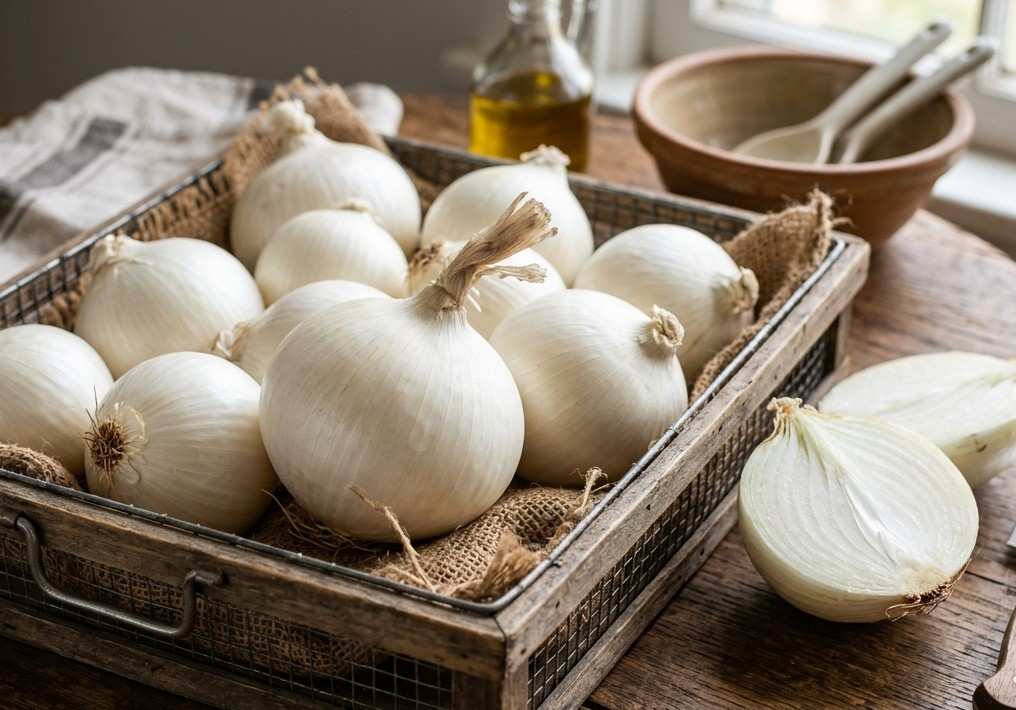
White onions are one of the most commonly used vegetables in kitchens around the world. Known for their sharp flavor, crisp texture, and mild sweetness when cooked, white onions are an essential ingredient in soups, curries, salads, sandwiches, stir-fries, and sauces. They belong to the allium family, which also includes garlic, shallots, leeks, and chives.
Besides adding flavor to meals, white onions are packed with nutrients and plant compounds that may support overall health. They contain antioxidants, vitamins, minerals, and sulfur compounds that are linked to heart health, immunity, digestion, and inflammation control. White onions are also low in calories, making them a healthy addition to balanced diets.
This guide covers everything you need to know about white onions, including their nutritional value, science-backed health benefits, side effects, storage tips, dosage, precautions, and the best ways to consume them.
What is White Onions?
White onions are bulb vegetables with white skin and white flesh. Compared to yellow onions, they usually have a sharper and cleaner flavor with a slightly less sweet taste. They are widely used in Mexican, Indian, Asian, and Mediterranean cuisines.
White onions can be eaten raw, grilled, roasted, sautéed, caramelized, or pickled. Their strong flavor becomes milder and sweeter after cooking. Because of their versatility, they are used in both home cooking and commercial food preparation.
White onions are rich in antioxidants like quercetin and sulfur-containing compounds that contribute to their medicinal properties. Traditionally, onions have been used in natural remedies for colds, coughs, digestion, and skin care.
Nutrition Facts of White Onions
| Nutrient | Amount per 100g |
|---|---|
| Calories | 40 kcal |
| Carbohydrates | 9.3 g |
| Protein | 1.1 g |
| Fat | 0.1 g |
| Fiber | 1.7 g |
| Sugar | 4.2 g |
| Vitamin C | 7.4 mg |
| Vitamin B6 | 0.1 mg |
| Folate | 19 mcg |
| Potassium | 146 mg |
| Calcium | 23 mg |
| Magnesium | 10 mg |
| Phosphorus | 29 mg |
| Sulfur Compounds | Present |
| Quercetin | Present |
20 Proven Health Benefits of White Onions
- Supports Heart Health – White onion contain antioxidants and sulfur compounds that may help reduce bad cholesterol and improve cardiovascular health.
- Boosts Immunity – Vitamin C and plant antioxidants in white onions help strengthen the immune system against infections.
- Improves Digestion – The fiber and prebiotics in white onion support healthy gut bacteria and better digestion.
- Helps Control Blood Sugar – Certain onion compounds may improve insulin sensitivity and support blood sugar regulation.
- Rich in Antioxidants – White onions contain quercetin and flavonoids that help protect cells from oxidative damage.
- Reduces Inflammation – Natural anti-inflammatory compounds in onions may help reduce swelling and chronic inflammation.
- Supports Bone Health – Regular onion intake may help maintain bone density and support stronger bones.
- Promotes Healthy Skin – Antioxidants and vitamins in white onions may help improve skin texture and reduce signs of aging.
- May Lower Blood Pressure – Potassium and sulfur compounds in onions may help relax blood vessels and support healthy blood pressure.
- Supports Weight Management – White onions are low in calories and high in fiber, helping you feel full longer.
- Improves Gut Health – Prebiotic fibers in onions nourish beneficial gut bacteria for better digestive wellness.
- May Reduce Cancer Risk – Some studies suggest that allium vegetables may help lower the risk of certain cancers.
- Supports Respiratory Health – Traditional remedies use onions to help relieve cough and congestion.
- Improves Eye Health – Antioxidants in onions may help protect the eyes from oxidative stress.
- Enhances Iron Absorption – Vitamin C in white onions may improve the body’s absorption of iron from foods.
- Supports Brain Function – Antioxidants may help reduce inflammation associated with cognitive decline.
- Helps Detoxification – Sulfur compounds in onions support the body’s natural detoxification processes.
- May Improve Sleep Quality – Prebiotics in onions may indirectly support better sleep through improved gut health.
- Supports Healthy Hair – Onion nutrients may help strengthen hair roots and improve scalp circulation.
- Provides Natural Antibacterial Effects – White onions contain compounds that may help fight certain harmful bacteria.
10 Side Effects of White Onions
- May Cause Bad Breath – Strong sulfur compounds in onions can lead to unpleasant breath odor.
- Can Trigger Acid Reflux – Raw onions may worsen heartburn or acid reflux symptoms in sensitive individuals.
- May Cause Gas and Bloating – The fermentable fibers in onions can cause digestive discomfort in some people.
- Can Irrate the Stomach – Eating large amounts of raw onions may irritate the stomach lining.
- May Cause Allergic Reactions – Some people may experience itching, swelling, or skin irritation after consuming onions.
- Can Lead to Eye Irritation – Cutting onions releases compounds that can irritate the eyes and cause tearing.
- May Interfere with Blood Thinners – Onion compounds may slightly increase the risk of bleeding when combined with anticoagulant medicines.
- Can Cause Diarrhea – Excessive onion consumption may upset digestion and lead to loose stools.
- May Trigger IBS Symptoms – People with irritable bowel syndrome may react to onion fructans.
- Can Lower Blood Sugar Too Much – Individuals taking diabetes medications should monitor blood sugar when eating large amounts of onions.
How to Eat White Onions?
White onions are highly versatile and can be included in meals in many delicious ways.
Raw White Onions
Raw onions can be sliced and added to salads, sandwiches, burgers, tacos, wraps, and chutneys for a crisp texture and spicy flavor.
Cooked White Onions
Cooking onions softens their sharpness and brings out their natural sweetness. They can be sautéed, grilled, roasted, or caramelized.
White Onion Soup
White onion are commonly used in soups and broths to create rich flavor and aroma.
Pickled White Onions
Pickled onions make a tangy side dish for tacos, rice bowls, and grilled foods.
Onion Juice
Fresh onion juice is sometimes consumed in small amounts or used in home remedies for hair and scalp care.
Tips for Consuming White Onions
- Choose firm onions without soft spots or mold.
- Peel only the outer dry layer to preserve nutrients.
- Soak sliced raw onions in cold water for milder flavor.
- Combine onions with healthy fats like olive oil for better nutrient absorption.
- Avoid overeating raw onions if you have digestive sensitivity.
- Cook onions lightly to retain more nutrients.
- Use fresh onions instead of spoiled or sprouted ones.
- Pair onions with garlic and herbs for added health benefits.
- Drink water after consuming raw onions to reduce strong aftertaste.
- Store cut onions properly to maintain freshness and safety.
Other Uses of White Onions
- Natural Hair Care Ingredient – Onion juice is commonly used in homemade hair masks to support scalp health.
- Flavor Enhancer in Cooking – White onions improve the taste and aroma of countless savory dishes.
- Traditional Cold Remedy – Onion-based remedies are sometimes used to ease cough and congestion.
- Natural Insect Repellent – Onion extracts may help repel certain insects naturally.
- Homemade Pickling Ingredient – White onion are widely used in pickling recipes for tangy flavor.
- Soup and Stock Base – Onions form a flavorful base for soups, gravies, and sauces.
- Fermented Food Ingredient – White onions can be included in fermented vegetable preparations.
- Natural Compost Material – Onion peels can be added to compost for gardening purposes.
- Scalp Massage Ingredient – Onion oil is used in some traditional scalp massage treatments.
- Culinary Garnish – Fresh onion rings are commonly used as toppings and garnishes.
How Much White Onions Can You Eat in a Day?
The ideal amount of white onions depends on age, diet, and digestive tolerance.
For most healthy adults, consuming about half to one medium onion per day is considered moderate and safe. This amount can provide beneficial nutrients without causing excessive digestive discomfort.
People with sensitive stomachs or IBS may need to consume smaller portions, especially when eating onions raw.
| Form | Recommended Amount |
|---|---|
| Raw Onion | ½ to 1 medium onion daily |
| Cooked Onion | 1 medium onion daily |
| Onion Juice | 1–2 tablespoons occasionally |
| Pickled Onion | Small serving with meals |
| Onion Powder | 1–2 teaspoons daily |
Moderation is important because excessive onion intake may cause bloating, acidity, or stomach irritation.
Best Time to Eat White Onions
During Lunch or Dinner
White onions are commonly consumed with main meals to improve flavor and digestion.
Before Meals
Small amounts of raw onion may stimulate appetite and digestive juices.
After Workouts
Adding onions to post-workout meals may support recovery through antioxidants and minerals.
Evening Meals
Cooked onions in soups or curries can be easier to digest during dinner.
Avoid consuming large amounts of raw onions late at night if you are prone to acid reflux.
Who Should Eat White Onions?
- People Wanting Better Heart Health – White onion may support healthy cholesterol and circulation.
- Individuals Managing Weight – Low-calorie onions can fit well into weight-conscious diets.
- People with Digestive Concerns – Moderate cooked onion intake may support gut health through fiber.
- Athletes and Active Individuals – Nutrients in onions may help support recovery and immunity.
- Individuals Seeking Antioxidant-Rich Foods – White onions provide plant compounds that fight oxidative stress.
- People Looking to Improve Immunity – Vitamin C and antioxidants may strengthen immune defenses.
- Older Adults – Onion nutrients may support bone and cardiovascular health.
- Vegetarians and Vegans – White onions add flavor and nutrients to plant-based diets.
- People with Mild Constipation – Fiber content may support bowel regularity.
- Individuals Seeking Flavorful Low-Calorie Foods – Onions enhance meals without adding many calories.
Who Should Not Eat White Onions?
- People with Acid Reflux – Raw onions may worsen heartburn symptoms.
- Individuals with Onion Allergy – Allergic reactions may occur in sensitive people.
- People with IBS – Onion fructans can trigger digestive discomfort and bloating.
- Individuals with Sensitive Stomachs – Large amounts of onions may cause irritation.
- People Taking Blood Thinners – Excessive onion intake may increase bleeding risk.
- Individuals with Chronic Gas Problems – Onions may worsen bloating and flatulence.
- People Preparing for Surgery – Large quantities of onions may affect blood clotting.
- Infants with Digestive Sensitivity – Strong onions may be difficult for some infants to tolerate.
- People with Severe Gastritis – Raw onions may aggravate stomach inflammation.
- Individuals Sensitive to Strong Foods – Onion compounds may trigger discomfort or nausea.
How to Store White Onions?
Proper storage helps maintain freshness, flavor, and nutritional value.
Store in a Cool and Dry Place
Whole white onions should be stored in a cool, dry, and well-ventilated area away from direct sunlight.
Avoid Plastic Bags
Plastic traps moisture and may cause onions to spoil faster.
Refrigerate Cut Onions
Once cut, onions should be sealed in an airtight container and refrigerated.
Keep Away from Potatoes
Potatoes release moisture and gases that can make onions spoil quickly.
Use Within Proper Time
Whole onions can last several weeks, while cut onions should usually be used within 7 days.
Precautions and Interactions
- May Interact with Blood Thinners – White onions may enhance the effects of anticoagulant medications.
- Monitor Blood Sugar Carefully – People with diabetes should monitor glucose levels when increasing onion intake.
- Avoid Excessive Raw Consumption – Too many raw onions may irritate the digestive tract.
- Use Caution During Pregnancy – Moderate food amounts are generally safe, but excessive intake may cause discomfort.
- Can Trigger Allergic Reactions – Sensitive individuals should stop use if symptoms occur.
- May Worsen GERD Symptoms – Acid reflux sufferers may need to limit raw onions.
- Practice Proper Food Hygiene – Store cut onions safely to reduce contamination risk.
- Avoid Spoiled Onions – Moldy or soft onions should not be consumed.
- Use Onion Juice Carefully on Skin – Direct application may irritate sensitive skin.
- Consult a Doctor if on Medication – People taking medications regularly should seek professional advice before major dietary changes.
Conclusion
White onions are more than just a flavorful kitchen staple. They are nutrient-rich vegetables packed with antioxidants, vitamins, minerals, and beneficial sulfur compounds that may support heart health, immunity, digestion, and overall wellness. Their versatility makes them easy to include in a variety of meals, whether raw, cooked, grilled, roasted, or pickled.
Although white onion offer many health benefits, they should still be consumed in moderation, especially for people with digestive sensitivities or acid reflux. Proper storage and balanced intake can help you enjoy their flavor and nutritional value safely.
FAQ’s
Are white onions healthy?
Yes, white onion are healthy because they contain antioxidants, fiber, vitamin C, and beneficial plant compounds that may support heart health, digestion, and immunity.
Can white onions be eaten raw?
Yes, white onion can be eaten raw in salads, sandwiches, tacos, and chutneys, although their flavor is stronger than cooked onions.
What do white onions taste like?
White onion have a sharp, slightly spicy flavor when raw and become sweeter and milder after cooking.
Are white onions good for weight loss?
Yes, white onion are low in calories and contain fiber, which may help promote fullness and support weight management.
Can white onions help lower blood pressure?
White onion contain potassium and antioxidants that may help support healthy blood pressure levels when included in a balanced diet.
Do white onions improve digestion?
Yes, white onion contain prebiotic fibers that support healthy gut bacteria and digestive function.
Are white onions good for the heart?
Yes, the antioxidants and sulfur compounds in white onion may help support cardiovascular health and healthy cholesterol levels.
Can diabetics eat white onions?
Yes, people with diabetes can usually eat white onion in moderation, as they may help support blood sugar control.
Why do white onions make you cry?
White onion release sulfur compounds when cut, which irritate the eyes and trigger tears.
Are white onions better than red onions?
Both white and red onions are nutritious, but red onions generally contain slightly more antioxidants while white onion have a sharper flavor.
Can white onions cause acidity?
Yes, raw white onion may trigger acidity or acid reflux in some individuals, especially when eaten in large amounts.
How long do white onions last?
Whole white onion can last several weeks in a cool, dry place, while cut onions should be refrigerated and used within a few days.
Can white onions be stored in the refrigerator?
Whole onions are best stored outside the refrigerator, but cut onions should always be refrigerated in an airtight container.
Are white onions good for immunity?
Yes, vitamin C and antioxidants in white onion may help support immune function.
Can children eat white onions?
Yes, children can eat cooked white onion in moderate amounts as part of a balanced diet.
Are white onions good for the skin?
White onion contain antioxidants and vitamins that may help support healthy skin.
Can white onions help hair growth?
Onion juice is commonly used in traditional hair care remedies and may help support scalp health and hair strength.
Do white onions contain protein?
White onion contain a small amount of protein, but they are not considered a high-protein food.
Can white onions be eaten every day?
Yes, moderate daily consumption of white onion is generally safe for most healthy people.
Is White Onions safe for pregnant women?
Yes, white onion are generally safe during pregnancy when eaten in moderation, but too much raw onion may cause heartburn or bloating.
What is White Onions good for?
White onion may support heart health, digestion, immunity, and overall wellness due to their antioxidants and nutrients.
Also Read: