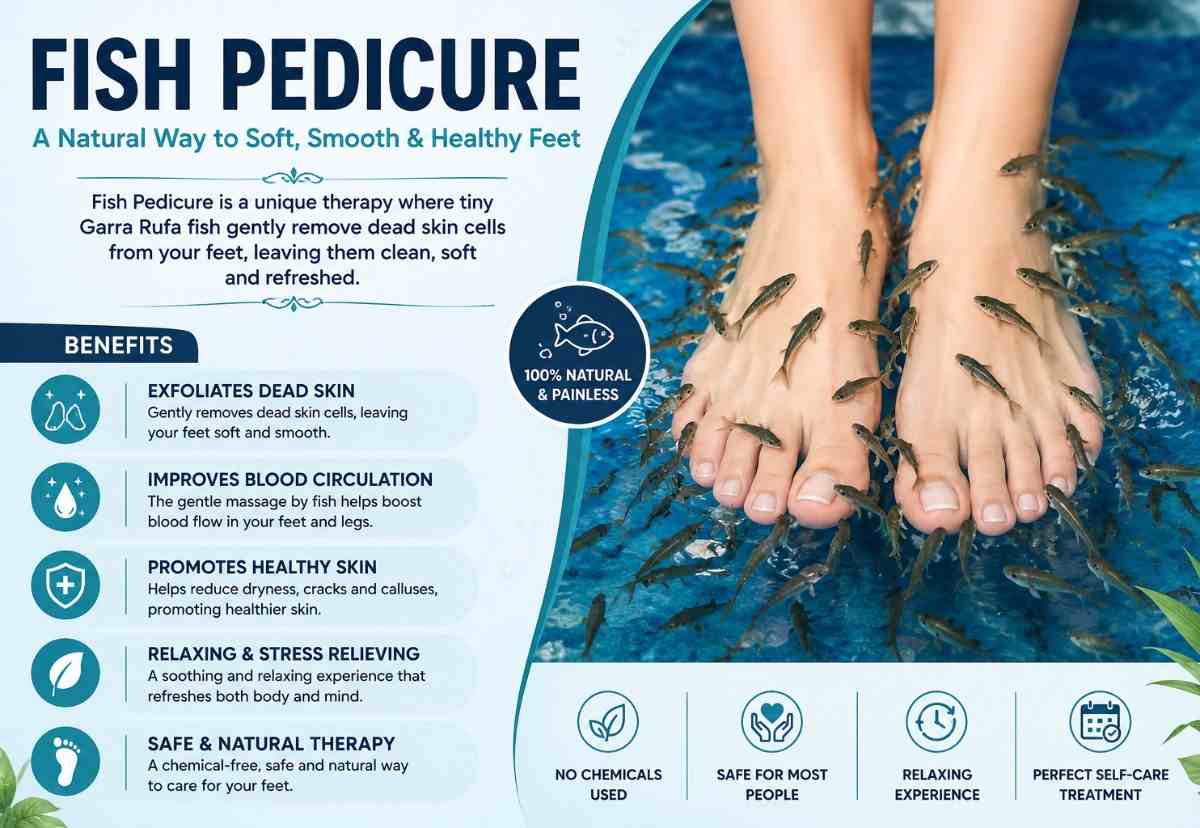
A fish pedicure may sound unusual, but it has become a popular spa treatment in many parts of the world. Instead of using a pumice stone, scrub, or exfoliating tool, a fish pedicure uses small fish to nibble away at dead skin on the feet.
The fish most commonly associated with this treatment are Garra rufa, sometimes called “doctor fish.” During a session, you place your feet into a specially prepared tank containing water and these small freshwater fish. The fish gently feed on loose, dead skin, which can leave the feet feeling smoother.
Although the experience is often described as relaxing, ticklish, or unusual, fish pedicures are not completely risk-free. Concerns include infection, difficulty disinfecting the tank and fish between customers, skin injury, and the suitability of the treatment for people with certain health conditions.
So, is a fish pedicure worth trying? This guide explains how it works, its possible benefits, potential risks, who should avoid it, and how to make a safer decision.
What Is a Fish Pedicure?
A fish pedicure, also called a fish spa or ichthyotherapy, is a cosmetic treatment in which a person’s feet are immersed in a tank of water containing small fish, usually Garra rufa.
The fish nibble at loose, dead skin on the feet. Unlike many ordinary fish, Garra rufa do not have the large teeth associated with biting fish, so the sensation is generally described as gentle nibbling or tingling rather than painful biting.
The practice became particularly associated with Turkey and parts of the Middle East and Asia. It has also been promoted as a way to exfoliate the feet and, in some settings, as a treatment for certain skin conditions. However, evidence for therapeutic benefits remains limited, and dermatology reviews emphasize that more research is needed.
How Does a Fish Pedicure Work?
A typical fish pedicure follows a fairly simple process:
- Foot inspection: The spa may examine your feet for cuts, wounds, infections, or other skin problems.
- Foot washing: Your feet should be thoroughly washed before entering the tank.
- Feet are immersed: You place your feet into a tank containing water and Garra rufa.
- Fish begin nibbling: The fish feed on loose, dead skin from the surface of your feet.
- Treatment continues: Depending on the spa, the session may last around 15 to 30 minutes.
- Feet are removed and rinsed: Afterward, your feet are washed and dried.
A reputable establishment should have clear hygiene procedures and should not allow customers with open wounds or active infections to use the tank.
What Does a Fish Pedicure Feel Like?
The sensation is usually described as light, ticklish, vibrating, or gently prickling.
When dozens of small fish gather around your feet, the sensation can initially feel strange. Some people find it relaxing, while others find the constant movement uncomfortable.
The experience is generally not supposed to feel painful. However, if you experience pain, bleeding, burning, or significant skin irritation, the treatment should be stopped.
20 Potential Benefits of Fish Pedicure
1. Gentle Exfoliation
Garra rufa fish can remove loose surface skin, giving the feet a freshly exfoliated feel without using a traditional scrub.
2. Softer-Looking Feet
Removing accumulated dead skin may temporarily make the feet appear softer and smoother, particularly around the toes and heels.
3. May Improve Rough Texture
The exfoliating action can help reduce the rough feeling associated with superficial dry skin and mild calluses.
4. Can Make Feet Feel Refreshed
The combination of soaking and exfoliation can leave the feet feeling clean, refreshed, and lighter.
5. May Improve the Appearance of Dry Skin
Removing flaky surface skin can temporarily improve the overall appearance of dry feet.
6. Provides a Unique Relaxation Experience
Sitting quietly during a fish pedicure may provide a relaxing spa experience for people who enjoy the sensation.
7. May Offer Temporary Foot Comfort
Removing excess surface skin may make some people feel more comfortable when wearing open footwear or walking barefoot.
8. Can Complement Regular Foot Care
A fish pedicure can be viewed as an occasional cosmetic addition to a broader foot-care routine rather than a replacement for regular moisturizing and hygiene.
9. May Improve the Appearance of Mild Flaking
The fish may remove loose flakes from the surface of the feet, temporarily creating a more even-looking skin texture.
10. May Make Moisturizers Feel More Effective
After surface dead skin has been removed, moisturizer can spread more easily across the feet, although this does not mean the fish treatment itself increases skin hydration.
11. Can Be an Alternative to Mechanical Exfoliation
Some people prefer the unusual sensation of fish exfoliation instead of using a pumice stone or foot scrub.
12. May Reduce the Feeling of Surface Buildup
Removing loose dead skin can reduce the rough, thick feeling that sometimes develops on areas exposed to repeated friction.
13. Can Improve the Appearance of Toenail Surrounding Skin
Gentle removal of loose skin around the toes may make the surrounding area look cleaner and more groomed.
14. May Leave Feet Looking More Polished
The temporary smoothing effect can make the feet look more prepared for sandals, vacations, or other occasions when they are more visible.
15. Can Be a Social Spa Activity
For some people, a fish pedicure is an entertaining experience to share with friends or family rather than simply a beauty treatment.
16. May Provide a Cooling Sensation
The water used during the treatment can create a refreshing and cooling sensation, particularly in warm weather.
17. Encourages Attention to Foot Care
Trying a fish pedicure may encourage people to pay more attention to foot hygiene, moisturizing, and the condition of their skin.
18. May Temporarily Improve Skin Smoothness
Exfoliation can temporarily improve the tactile smoothness of the feet by removing superficial dead skin cells.
19. May Help Remove Loose Skin Around the Heels
The fish may nibble at loose surface skin around the heels, although they should not be relied upon to remove deep or extensive heel cracks.
20. Can Provide a Novel Wellness Experience
For people who enjoy unusual spa treatments, the interaction with Garra rufa can provide a memorable wellness experience.
Important Reminder: Fish pedicures have sometimes been promoted for psoriasis and other skin conditions. However, this should not be confused with established medical treatment. A dermatology review found limited evidence for effectiveness and highlighted safety concerns, particularly for people who are immunocompromised.
Are Fish Pedicures Safe?
The answer is not completely straightforward.
For a healthy person with intact skin, the risk of infection is considered low in some public-health guidance, but it cannot be completely eliminated. The infection risk is likely to be very low but cannot be excluded.
The main problem is sanitation.
A conventional foot-care instrument can be sterilized or disinfected between customers. Fish cannot be disinfected in the same way. Likewise, disinfectants strong enough to sanitize a tank may harm or kill the fish.
The difficulty of cleaning fish pedicure tanks between customers and the inability to disinfect the fish themselves as reasons some states have prohibited the practice.
Potential Risks and Side Effects of Fish Pedicures
1. Risk of Skin Infection
A fish pedicure can potentially expose broken or irritated skin to microorganisms present in the water, on the fish, or in the environment. Although reported infections are uncommon, documented cases exist. One published case described a Staphylococcus aureus infection following a fish pedicure.
2. Difficulty Sanitizing the Tank
The same tank may be used by multiple customers. Proper disinfection is difficult because the fish must remain alive in the water.
3. Fish May Carry Bacteria
Research has identified potentially concerning bacteria associated with fish used in pedicure settings. A CDC Emerging Infectious Diseases report found pathogens in fish destined for spa use and noted concerns about transmission to humans.
4. Skin Irritation
Sensitive skin may become irritated after repeated nibbling and soaking.
5. Minor Skin Damage
Although Garra rufa generally feed on dead skin, minor abrasions can occur, especially when the skin is already damaged.
6. Possible Bleeding
Bleeding is not expected with properly identified Garra rufa, but incorrect fish species may be used in some settings. The CDC warns that certain fish sometimes confused with Garra rufa have teeth and can cause bleeding.
7. Nail or Cuticle Injury
If fish gather around the toenails, irritated or damaged cuticles could potentially provide an entry point for microorganisms.
8. Worsening of Existing Skin Problems
If you have an active fungal infection, rash, open sore, eczema flare, or another skin problem, soaking the feet in a shared tank may aggravate the condition or potentially expose other customers.
9. Cross-Contamination
Water, equipment, and fish may come into contact with multiple customers, creating a theoretical route for microorganisms to move between people.
10. Unknown Long-Term Risks
There is still limited high-quality evidence regarding the long-term safety and therapeutic value of repeatedly receiving fish pedicures.
Who Should Take Fish Pedicures?
A fish pedicure is primarily a cosmetic foot-exfoliation treatment, so it is best suited to healthy adults with intact skin who understand the potential hygiene risks. There is no medical need to have a fish pedicure, and people should not use it as a treatment for infections or skin diseases.
You may consider a fish pedicure if you:
- Have healthy, intact skin on your feet with no cuts, sores, or infections.
- Want a temporary exfoliating effect to remove loose dead skin.
- Have mild dry or rough skin and are looking for a spa experience.
- Have no known condition that increases your risk of foot infections.
- Have checked that fish pedicures are legal and appropriately regulated in your area.
- Choose a facility that follows appropriate hygiene and customer-screening procedures.
Who Should Avoid Fish Pedicures?
Fish pedicures are generally a poor choice for people at increased risk of infection or those with damaged skin.
You should avoid a fish pedicure or speak with your healthcare professional first if you have:
- Diabetes or diabetes-related foot problems
- A weakened immune system
- Open cuts, wounds, or abrasions
- A current foot infection
- Athlete’s foot or another fungal infection
- Significant eczema or psoriasis affecting the feet
- Poor circulation
- Recent shaving or waxing of the legs or feet
- A condition that causes slow wound healing
- Recent surgery or injury involving the feet
- Significant cracks or bleeding skin
Public-health guidance specifically identifies people who are immunocompromised and people with conditions such as diabetes as higher-risk groups.
Fish Pedicure Safety Tips & Precautions
If you decide to have a fish pedicure, taking a few precautions can help reduce avoidable risks.
1. Check Local Regulations
Fish pedicures are restricted or prohibited in some locations. Confirm that the treatment is legally offered where you live before booking an appointment.
2. Choose a Reputable Facility
Look for a clean, professionally operated spa with clear hygiene procedures and staff who screen customers for wounds and infections.
3. Ask About the Fish Species
The fish used should be Garra rufa. Avoid facilities using fish that can bite or have teeth capable of causing bleeding.
4. Do Not Go With Open Wounds
Never put feet with cuts, blisters, sores, cracks that are bleeding, or other broken skin into a shared fish tank.
5. Avoid the Treatment After Shaving
Wait after shaving or waxing your legs or feet because microscopic cuts may increase infection risk.
6. Wash Your Feet Beforehand
Your feet should be thoroughly washed before entering the tank. Avoid applying lotions, creams, oils, or other products immediately beforehand.
7. Do Not Have a Fish Pedicure With an Active Infection
Avoid the treatment if you have athlete’s foot, bacterial infections, infected wounds, or other contagious skin conditions.
8. Ask About Tank Hygiene
Ask how the facility cleans and maintains the tank between customers. Remember that fish and tank water cannot be disinfected in the same way as conventional pedicure instruments.
9. Stop if Your Skin Bleeds
A fish pedicure should not cause significant pain or bleeding. If bleeding occurs, stop the treatment immediately and clean the affected area.
10. Monitor Your Feet Afterwards
Watch for increasing redness, swelling, warmth, pain, pus, or other unusual changes after the treatment. Seek medical advice if symptoms suggest an infection.
11. Don’t Share Personal Foot-Care Items
Use your own towel, socks, footwear, and personal foot-care products whenever possible.
12. Don’t Treat It as Medical Therapy
A fish pedicure should not replace treatment prescribed by a dermatologist, podiatrist, or other healthcare professional.
Can You Have a Fish Pedicure With a Cut?
It is better not to.
Even a small cut can provide an entry point for bacteria. The safest approach is to wait until the skin has completely healed before considering a fish pedicure.
Public-health recommendations advise against fish pedicures when there are open cuts, wounds, abrasions, or broken skin.
Can a Fish Pedicure Treat Athlete’s Foot?
A fish pedicure should not be considered a treatment for athlete’s foot.
Athlete’s foot is a fungal infection, and sharing water with fish and other customers does not eliminate the fungus. In fact, people with fungal infections may increase contamination concerns in a shared tank.
If you have persistent itching, scaling, cracking, redness, or burning of the feet, it is better to get an appropriate diagnosis and treatment rather than relying on a fish spa.
Can Fish Pedicures Treat Psoriasis?
Fish pedicures have been studied as a form of ichthyotherapy for psoriasis, but the evidence is not strong enough to consider them a standard treatment.
Some research has explored Garra rufa and psoriasis, but reviews have noted limitations in the available evidence and potential safety concerns.
If you have psoriasis, particularly if your skin is cracked or bleeding, talk with a dermatologist before considering a fish pedicure.
How to Choose a Safer Fish Pedicure Salon?
If you decide to have one despite the potential risks, take hygiene seriously.
1. Check Local Regulations
Fish pedicures are not permitted everywhere. The CDC notes that individual U.S. states may ban them, so customers should understand local regulations.
2. Inspect the Facility
Avoid a salon if the tank, surrounding area, floors, or equipment appear dirty.
3. Ask About Fish Species
Ask whether the spa uses genuine Garra rufa. Avoid treatments involving fish that can bite or have teeth.
4. Ask About Health Screening
A responsible operator should inspect customers’ feet and refuse treatment when there are open wounds or obvious infections.
5. Wash Your Feet Before Treatment
Feet should be washed thoroughly before entering the tank. This reduces contamination and removes products that could be harmful to the fish.
6. Do Not Shave Immediately Beforehand
Freshly shaved skin can have tiny cuts that are difficult to see. Waiting until the skin has recovered can reduce unnecessary exposure.
7. Never Ignore Bleeding
If your skin starts bleeding during the treatment, stop the session and wash the affected area.
Fish Pedicure vs. Traditional Pedicure
A traditional pedicure generally offers more predictable hygiene because tools can be cleaned, disinfected, or sterilized between customers.
A fish pedicure is different because the living fish and their water cannot be treated like conventional pedicure instruments. This makes infection-control procedures more complicated.
For people primarily interested in smoother feet, traditional exfoliation, moisturizing, and professional foot care may provide the same cosmetic goal without exposing the feet to shared fish-tank water.
Is a Fish Pedicure Worth It?
For some people, a fish pedicure is simply a fun and unusual spa experience. However, the cosmetic benefits are relatively modest and temporary.
The main concern is that the treatment introduces an avoidable hygiene issue: fish and tank water are difficult to disinfect between customers. Public-health authorities have therefore recommended precautions and, in some jurisdictions, restrictions or bans.
A 2020 dermatology review concluded that fish spas have potential infectious complications and that they should particularly be avoided by people with diabetes, compromised immunity, or other risk factors.
For ordinary dry or rough feet, safer alternatives include regular moisturizing, gentle exfoliation, properly cleaned foot-care tools, and professional conventional pedicures.
What to Do After a Fish Pedicure?
After the treatment:
- Wash and dry your feet thoroughly.
- Apply a simple moisturizer if your skin feels dry.
- Avoid aggressive scrubbing immediately afterward.
- Monitor the skin for unusual redness, swelling, warmth, pain, discharge, or worsening irritation.
- Seek medical advice if signs of infection develop.
An infection may not always appear immediately, so persistent or worsening symptoms should not be ignored.
Where Are Fish Pedicures Banned?
- United States: Fish pedicures are banned or restricted in several U.S. states and local jurisdictions because of sanitation, infection-control, and animal-welfare concerns.
- California: Fish pedicures are prohibited under state regulations because the fish cannot be properly disinfected between customers.
- Florida: Fish pedicures have faced restrictions under state cosmetology and sanitation regulations, so local requirements should be checked before booking.
- Texas: Certain local health authorities have restricted fish pedicures because of concerns about maintaining sanitary conditions.
- Washington: Fish pedicures have been restricted because the shared tank environment creates difficulties with effective disinfection.
- New Hampshire: State regulations have prohibited fish pedicures because of concerns related to sanitation and infection transmission.
- Canada: Fish pedicure regulations vary by province and municipality, with some jurisdictions restricting the practice because fish and shared tanks cannot be adequately sanitized.
- United Kingdom: Fish pedicures are not subject to a blanket nationwide ban, but health authorities provide specific infection-control guidance for businesses offering them.
- European Countries: Regulations vary between countries and local authorities, with some places restricting or prohibiting fish pedicures because of hygiene and animal-welfare concerns.
- Australia: Fish pedicure services may be subject to state and territory health regulations, so local requirements should be checked before receiving treatment.
Important: Fish-pedicure laws can change, and restrictions may differ even within the same country. Always check with your local health or licensing authority for the most current rules before booking a fish pedicure.
Why Are Fish Pedicures Restricted?
The primary concern is infection control. Conventional pedicure tools can be cleaned, disinfected, or sterilized between customers. Fish cannot be disinfected, and the shared water environment can be difficult to sanitize without harming the fish. Research has also identified potentially pathogenic bacteria associated with fish used in pedicure settings.
For people who simply want smoother feet, conventional foot exfoliation and professional pedicure methods generally provide a more controllable approach to hygiene.
Fish Pedicure Cost
The cost of a fish pedicure varies widely depending on the country, city, spa, session length, and whether the treatment is offered as part of a larger spa package.
- India: A fish pedicure may cost around ₹300–₹1,000 per session at many spas, although premium locations can charge more.
- United States: Where legally available, fish pedicures may cost approximately $20–$60 or more for a session.
- United Kingdom: A fish pedicure may cost approximately £15–£40 or more, depending on the location and treatment duration.
- Other countries: Prices can range from the equivalent of $10 to $60+, particularly in tourist destinations and specialist fish spas.
- Session duration: A basic session commonly lasts around 15–30 minutes, while longer spa packages may cost considerably more.
- Premium fish spas: Upscale spas may charge more when the fish pedicure is combined with foot massage, conventional pedicure services, scrubs, or other treatments.
Because fish pedicures are restricted or prohibited in some areas, availability and pricing can also vary significantly from one location to another.
FAQ’s
Is a fish pedicure good for your feet?
A fish spa may temporarily make the feet feel smoother by removing surface dead skin, but it is mainly a cosmetic treatment and does not replace proper foot care.
Does a fish pedicure hurt?
Most people describe the sensation as ticklish, tingling, or slightly prickly rather than painful. Stop the treatment if you experience pain or bleeding.
How long does a fish pedicure take?
A typical fish pedicure session lasts approximately 15 to 30 minutes, although the duration varies between spas.
Does a fish pedicure remove dead skin?
Yes. Garra rufa feed on loose surface skin, which can provide a temporary exfoliating effect.
Do fish pedicures remove calluses permanently?
No. They may remove some surface dead skin, but calluses can return because they are often caused by repeated pressure or friction.
Can a fish pedicure cause an infection?
Yes, infection is a possible but uncommon complication. The risk may be higher when there are cuts, wounds, damaged skin, or other factors that increase susceptibility to infection.
Can people with diabetes have fish pedicures?
People with diabetes, particularly those with foot complications or reduced circulation, should avoid fish pedicures or seek medical advice first because foot infections can become more serious.
Can pregnant women have a fish pedicure?
Pregnancy does not automatically make fish pedicures unsafe, but the sanitation concerns remain. Pregnant women should consider discussing the treatment with their healthcare professional beforehand.
Can children have fish pedicures?
Children with healthy, intact skin may not necessarily have a specific medical contraindication, but parents should check local regulations and the spa’s hygiene standards before considering the treatment.
How often can you have a fish pedicure?
There is no medically established ideal frequency. Because of infection-control concerns, fish pedicures should not be treated as a routine substitute for conventional foot care.
What fish are used for fish pedicures?
The fish most commonly associated with fish pedicures are Garra rufa, small freshwater fish that feed on loose skin.
Do fish pedicures improve blood circulation?
There is not enough reliable evidence to say that fish pedicures significantly improve blood circulation. Claims about circulation should therefore be treated cautiously.
Can fish pedicures make your feet softer?
Yes. Removing loose surface skin can make the feet feel temporarily softer and smoother.
Should I shave my legs before a fish pedicure?
It is better to avoid shaving or waxing immediately before a fish pedicure because tiny cuts or irritation may increase the risk of infection.
Can fish pedicures spread bacteria?
There is a potential risk because the fish and tank water come into contact with multiple customers and cannot be disinfected like conventional pedicure equipment.
Are fish pedicures legal everywhere?
No. Regulations differ by location, and some jurisdictions have restricted or banned fish pedicures because of sanitation and animal-health concerns.
Is a fish pedicure better than a regular pedicure?
Not necessarily. A conventional pedicure may offer more controllable hygiene because reusable tools can be properly cleaned and disinfected or sterilized between customers.
How long do the results of a fish pedicure last?
The smoother feeling is generally temporary because skin naturally builds up again through normal shedding, friction, and pressure.
Final Thoughts
A fish pedicure is certainly one of the more unusual ways to exfoliate your feet. The tiny Garra rufa fish can remove some loose dead skin and leave the feet feeling temporarily smoother, but the treatment is not without concerns.
The biggest issue is infection control. Fish cannot be disinfected like conventional pedicure instruments, and tanks can be difficult to sanitize while keeping the fish alive. Documented infections are uncommon but show that the risk is not purely theoretical.
If you have diabetes, weakened immunity, broken skin, an active foot infection, or another condition that increases infection risk, avoiding fish pedicures is the safer choice. For simple dry or rough skin, conventional foot care usually provides a more controllable alternative.
The best beauty treatment is not necessarily the most unusual one. When it comes to your feet, hygiene and skin health should come before novelty.
Sources / References:
About the Author:
Written by: Kirti Solanki (Health Content Researcher)
Kirti Solanki creates research-based health and wellness content designed to make complex health information easier to understand. Her articles prioritize reliable sources, practical information, and reader-friendly explanations.
Disclaimer:
This article is for general educational purposes only and is not a substitute for professional medical advice. If you have a medical condition, open wounds, or concerns about infection, consult a qualified healthcare professional before having a fish pedicure.
Also Read: