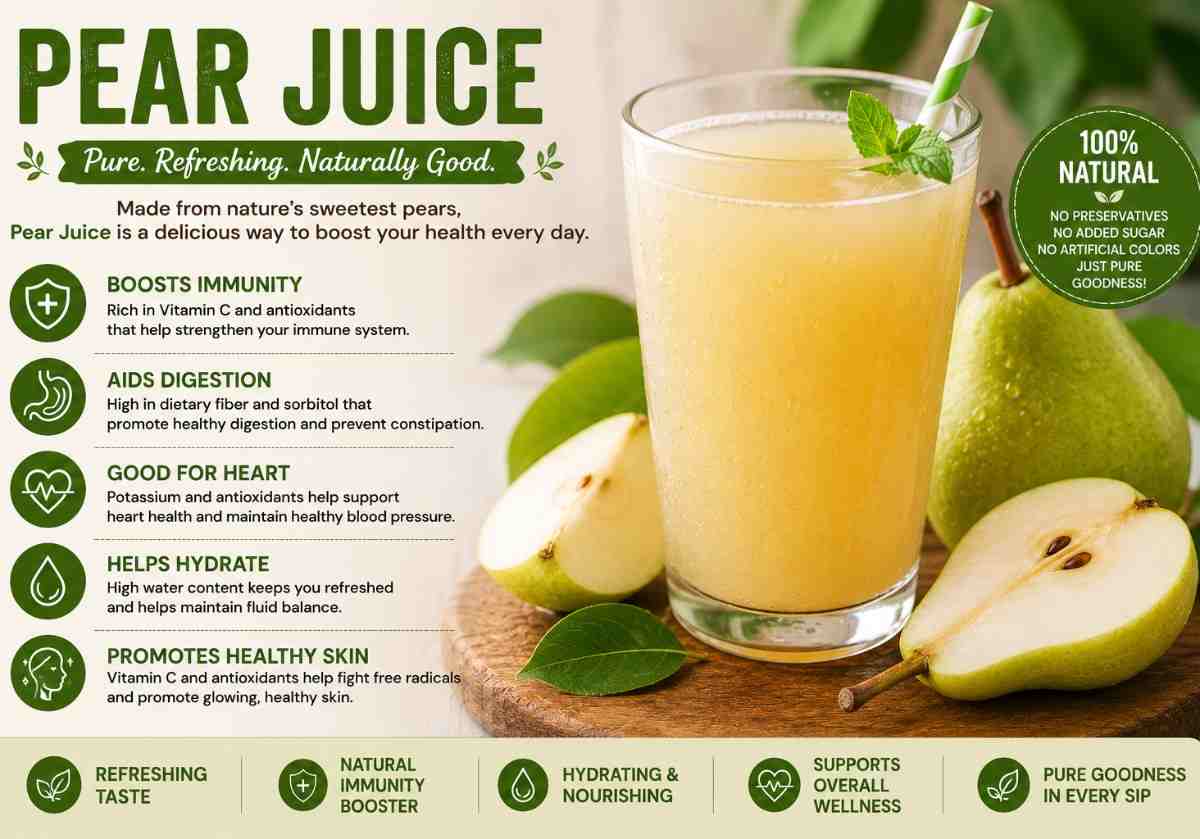
Pear juice is a naturally sweet, refreshing drink made from ripe pears. It has a mild flavor and contains nutrients such as carbohydrates, potassium, and small amounts of vitamin C and other micronutrients. Depending on how it is prepared, pear juice may also provide some of the plant compounds found in pears.
While whole pears are generally a better source of fiber because the fruit’s pulp and skin are retained, pear juice can still be a convenient way to enjoy the flavor and some nutrients of pears. Choosing unsweetened juice and keeping portions moderate can help you enjoy it as part of a balanced diet.
What Is Pear Juice?
Pear juice is a beverage prepared by crushing, pressing, blending, or extracting the liquid from fresh pears. Commercial varieties may be filtered, pasteurized, concentrated, or combined with water and other ingredients.
The nutritional profile varies depending on the pear variety, preparation method, and whether sugar or other ingredients are added. Homemade pear juice usually contains more fruit solids if the pulp is retained, while clear commercial pear juice generally contains little or no dietary fiber.
Pear juice is naturally sweet because pears contain fructose, glucose, and sorbitol. It can be enjoyed on its own, diluted with water, added to smoothies, or used in cooking and baking.
Nutrition Facts of Pear Juice
The following values are approximate and can vary according to the pear variety and preparation method. Unsweetened commercial pear juice typically contains roughly the following nutrients per 1 cup (240 mL):
| Nutrient | Approximate Amount |
|---|---|
| Calories | 115 kcal |
| Carbohydrates | 28–30 g |
| Total Sugars | 24–27 g |
| Protein | 0.5 g |
| Fat | 0.2 g |
| Dietary Fiber | 0–1 g |
| Potassium | 190–220 mg |
| Vitamin C | 1–5 mg |
| Calcium | 10–20 mg |
| Magnesium | 10–15 mg |
| Iron | 0.2–0.5 mg |
| Sodium | 0–5 mg |
Important: Juice is not nutritionally identical to a whole pear. Much of the fiber is removed during juicing, particularly when the juice is filtered.
20 Proven Health Benefits of Pear Juice
1. Provides Quick Energy
Pear juice provides carbohydrates and naturally occurring sugars that can supply readily available energy.
2. Supports Hydration
Because pear juice contains a large amount of water, it can contribute to daily fluid intake.
3. Provides Potassium
Pear juice contributes potassium, an essential mineral involved in normal muscle, nerve, and fluid balance.
4. Contains Vitamin C
Depending on the pear variety and processing method, pear juice can provide a modest amount of vitamin C.
5. Supplies Plant Compounds
Pears contain various plant compounds, including phenolic compounds, although the amount retained in juice varies with processing.
6. May Support Digestive Comfort
Pears naturally contain sorbitol, a sugar alcohol that can have a mild laxative effect and may support bowel regularity in some people.
7. May Help Increase Fruit Intake
Unsweetened pear juice can be an easy way to incorporate some nutrients and flavors from fruit into the diet.
8. Supports Normal Muscle Function
Potassium in pear juice contributes to normal muscle contraction and nerve function.
9. Supports Normal Nerve Function
The potassium and fluid provided by pear juice contribute to normal nerve signaling.
10. May Support Heart-Healthy Eating
Unsweetened pear juice is naturally very low in fat and can fit into an overall heart-conscious eating pattern.
11. Provides a Refreshing Alternative
Its naturally sweet taste can make pear juice an alternative to some sugar-sweetened beverages when an unsweetened product is chosen.
12. May Complement a Balanced Diet
Pear juice can add carbohydrates, fluid, and small amounts of micronutrients to a varied diet.
13. May Support Bowel Regularity
The combination of sorbitol and naturally occurring fruit sugars may help some people maintain regular bowel movements.
14. Can Be Used After Physical Activity
Pear juice provides both water and carbohydrates, which can be useful as part of a balanced recovery snack after exercise.
15. May Help Replace Sugary Soft Drinks
Replacing some sugar-sweetened soft drinks with unsweetened pear juice can reduce intake of added sugars, although pear juice still contains naturally occurring sugars.
16. Contains Small Amounts of Magnesium
Pear juice can provide a small amount of magnesium, a mineral involved in normal muscle and nerve function.
17. Provides a Naturally Sweet Taste
Fresh homemade pear juice can be naturally sweet without requiring additional sugar.
18. Can Be Combined With Other Nutritious Foods
Pear juice can be incorporated into smoothies or paired with foods such as yogurt, oats, or nuts for a more balanced snack.
19. May Provide Polyphenols
Pears contain polyphenols that have antioxidant activity, although the concentration in juice depends heavily on processing and whether pear pulp is retained.
20. Can Add Variety to a Healthy Diet
Moderate amounts of unsweetened pear juice can add variety to an eating pattern that already includes whole fruits, vegetables, whole grains, and other nutrient-rich foods.
10 Side Effects of Pear Juice
Pear juice is generally safe for most people when consumed in reasonable amounts, but drinking too much may cause problems.
1. May Cause Bloating
The fructose and sorbitol naturally present in pears may cause bloating or abdominal discomfort in sensitive individuals.
2. May Cause Gas
Some people may experience increased gas after drinking pears juice because certain carbohydrates can ferment in the digestive tract.
3. May Cause Loose Stools
Sorbitol in pears can have a laxative effect, particularly when large quantities of pears juice are consumed.
4. Can Raise Blood Sugar
Pear juice contains a substantial amount of naturally occurring sugar and can raise blood glucose more quickly than eating a whole pear.
5. May Add Excess Calories
Drinking large quantities can contribute significant calories without providing the same fullness as eating whole fruit.
6. May Worsen IBS Symptoms
Pears are high in FODMAP carbohydrates, so pears juice may trigger symptoms in some people with irritable bowel syndrome.
7. May Cause Tooth Decay Risk
Frequent exposure to sugary beverages can contribute to dental problems, particularly when oral hygiene is poor.
8. May Cause Allergic Reactions
People with a pear allergy may experience symptoms after consuming pears juice.
9. May Cause Digestive Upset in Young Children
Large quantities may cause diarrhea, gas, or abdominal discomfort in some children.
10. May Displace More Nutritious Foods
Drinking too much juice can reduce appetite for whole fruits and other foods that provide more fiber and chewing-related satiety.
How to Make Pear Juice?
Making fresh pear juice at home is simple.
Ingredients:
- 2–3 ripe pears
- ½–1 cup cold water, as needed
- A small amount of lemon juice, optional
- Ice, optional
Method:
- Wash the pears thoroughly.
- Remove the stems and cores.
- Cut the pears into small pieces.
- Keep the skin on if the pears are well washed and you want more fruit solids.
- Add the pear pieces to a blender.
- Add a small amount of water and blend until smooth.
- Strain through a fine-mesh strainer if you prefer a thinner juice.
- Add a little lemon juice if desired.
- Serve immediately over ice or chilled.
For greater nutritional value, you can leave the pulp in the drink rather than straining it completely. This will give you a thicker pear drink with more of the fruit’s natural fiber.
How to Drink Pear Juice?
Pear juice can be enjoyed in several simple ways:
- Drink a small glass of unsweetened pears juice with breakfast.
- Dilute pear juice with water if you find it too sweet.
- Add it to a smoothie with yogurt and other fruits.
- Use fresh pears juice as a base for a fruit beverage.
- Combine it with sparkling water for a refreshing drink.
- Avoid routinely adding sugar, honey, or syrups because pears are already naturally sweet.
If you’re drinking pears juice for its nutritional value, remember that whole pears generally provide more fiber and greater satiety.
Tips for Consuming Pear Juice
- Choose 100% pear juice without added sugar when possible.
- Prefer fresh homemade juice when practical.
- Keep portions moderate because juice is relatively high in natural sugar.
- Consider diluting it with water.
- Drink it alongside a meal or balanced snack rather than relying on juice as a meal replacement.
- If you experience bloating or diarrhea, reduce the portion.
- Look at the ingredient list on packaged products to check for added sugars.
- Do not assume that “pear drink” and “100% pears juice” are the same product.
- For greater fiber, blend pears instead of completely straining the juice.
- Prioritize whole pears as your main source of pear fruit.
Other Uses of Pear Juice
Pear juice is useful beyond simply drinking it.
Smoothies
Use pear juice as the liquid base for smoothies containing yogurt, oats, spinach, berries, or other fruits.
Marinades
Its sweetness and acidity can complement marinades for poultry and other foods.
Baking
Juice can be used in some cakes, muffins, and other recipes to add moisture and natural sweetness.
Sauces
It can be reduced and used as part of a fruit-based sauce.
Desserts
Juice can be incorporated into homemade sorbets, popsicles, and fruit desserts.
Cocktails and Mocktails
Unsweetened pear juice can be combined with sparkling water, herbs, citrus, or other ingredients to make non-alcoholic beverages.
Cooking
Juice can be used to add natural sweetness to oatmeal, sauces, and certain savory dishes.
How Much Pear Juice Can You Drink in a Day?
There is no universal amount of pear juice that everyone needs to drink. For most healthy adults, keeping a serving around 120–240 mL (4–8 ounces) is a practical approach.
Because juice contains less fiber and is easier to consume quickly than whole fruit, larger quantities can provide a considerable amount of sugar and calories.
If you’re choosing between whole pears and juice, whole pears are generally the better everyday option because they provide substantially more fiber and tend to be more filling.
Children generally need smaller portions, and their overall fruit intake should emphasize whole fruit rather than juice.
Best Time to Drink Pear Juice
There is no medically established “best” time to drink juice.
Morning
Pear juice can be included with breakfast as a source of carbohydrates and fluid.
Before Exercise
A small serving may provide easily available carbohydrates before physical activity.
After Exercise
It can contribute fluid and carbohydrates as part of a balanced post-workout snack.
With a Meal
Drinking a moderate amount with a meal can be more satisfying than consuming juice alone.
During the Evening
There is no specific reason healthy adults must avoid juice at night, but large portions close to bedtime may be uncomfortable for people who are sensitive to its sugars or sorbitol.
Who Should Drink Pear Juice?
1. Healthy Adults
Healthy adults can enjoy moderate amounts of unsweetened pears juice as part of a balanced diet.
2. People Looking for a Fruit-Based Beverage
People who want a naturally sweet fruit beverage may choose 100% pears juice instead of drinks with added sugar.
3. Active Individuals
People who exercise may use a small amount of pears juice as part of a balanced pre- or post-workout snack.
4. People Who Enjoy Homemade Drinks
Those who prefer minimally processed foods can make fresh pear juice at home.
5. People Increasing Fruit Variety
Juice can add another fruit option to an otherwise varied diet.
Who Should Avoid Pear Juice?
1. People With Pear Allergy
Anyone with a known pear allergy should avoid juice unless their healthcare professional has advised otherwise.
2. People Sensitive to Sorbitol
Individuals who react poorly to sorbitol may experience bloating, gas, or diarrhea after drinking juice.
3. People With Fructose Malabsorption
People with fructose malabsorption may need to limit juice because pears contain fructose and other fermentable carbohydrates.
4. People With IBS
Individuals following a low-FODMAP diet may need to avoid or limit juice depending on their personal tolerance.
5. People Managing Blood Glucose
People with diabetes or other blood-glucose concerns should account for juice’s carbohydrate content and choose portions appropriate for their individual dietary plan.
6. People With Frequent Diarrhea
Pear juice may worsen loose stools in some people because pears contain sorbitol.
7. People Trying to Reduce Sugar Intake
Those following a low-sugar eating plan may prefer whole pears or lower-sugar beverages.
8. People With Dental Concerns
Frequent sipping of fruit juice can expose teeth to sugars repeatedly, so intake should be moderate.
How to Store Pear Juice?
1. Refrigerate Fresh Juice
Place freshly prepared pears juice in a clean, covered container and refrigerate it promptly.
2. Use an Airtight Container
A tightly sealed glass or food-safe container helps limit exposure to air and contamination.
3. Drink Fresh Juice Quickly
Homemade juice is best consumed soon after preparation because its flavor, color, and nutritional quality can change over time.
4. Do Not Leave It at Room Temperature
Avoid leaving freshly prepared juice unrefrigerated for extended periods.
5. Check Packaged Juice Labels
Follow the manufacturer’s refrigeration and storage instructions after opening commercial juice.
6. Freeze When Appropriate
Fresh juice can be frozen in suitable freezer-safe containers, leaving room for expansion.
Precautions and Interactions
Pear juice is generally well tolerated, but a few precautions are worth remembering.
- Watch Portion Size: Even 100% fruit juice contains naturally occurring sugars and fewer fibers than whole fruit.
- Consider Digestive Tolerance: If pears juice causes bloating, gas, cramping, or diarrhea, reduce the amount or avoid it.
- Check Added Ingredients: Some packaged pear beverages contain added sugar, concentrates, flavorings, or other fruit juices.
- Consider Blood Glucose: People with diabetes should include juice within their overall carbohydrate plan rather than assuming that natural fruit sugar has no effect on blood glucose.
- Be Careful With Children: Young children should generally receive whole fruit more often than juice, and juice portions should be age-appropriate.
- Allergy Awareness: Stop consuming pear juice and seek appropriate medical advice if symptoms suggest an allergic reaction.
- Medication Considerations: Juice is not known to have the same well-established drug interaction profile as grapefruit juice, but people taking medications or following medically restricted diets should discuss regular juice consumption with their healthcare professional when concerned.
- Whole Fruit Is Preferable: Whenever possible, choose whole pears for their fiber and greater satiety.
FAQ’s
Can I drink pear juice every day?
Yes, most healthy adults can drink a small serving of unsweetened juice daily, but whole pears are generally a better choice because they contain more fiber.
Is pear juice good for constipation?
Juice may help relieve constipation in some people because pears naturally contain sorbitol, which can have a mild laxative effect.
Is pear juice good for the stomach?
Juice may be gentle for some people, but its fructose and sorbitol content can cause gas, bloating, or diarrhea in sensitive individuals.
Is pear juice safe during pregnancy?
Pasteurized juice is generally safe during pregnancy when consumed in moderation. Avoid unpasteurized juice because it may contain harmful bacteria.
Can children drink pear juice?
Children can have age-appropriate portions of 100% pear juice, but whole pears are generally preferred because they provide more fiber and help with fullness.
Does pear juice help with weight loss?
Juice does not directly cause weight loss. Whole pears are usually a better choice for weight management because their fiber makes them more filling.
Is pear juice good for diarrhea?
Juice is not usually recommended for diarrhea because its sorbitol and fructose content may make loose stools worse in some people.
Does pear juice contain fiber?
Clear juice contains very little fiber because most of the pulp is removed. Blended juice that retains the pulp contains more fiber.
Can I drink pear juice at night?
Yes, you can drink a small amount at night. However, people sensitive to sorbitol or fructose may experience bloating or digestive discomfort.
Does pear juice increase blood sugar?
Yes, juice contains naturally occurring sugars and carbohydrates that can raise blood glucose. People with diabetes should pay attention to portion size.
Is pear juice acidic or alkaline?
Juice is mildly acidic. It is not considered an alkaline beverage.
Can pear juice cause gas?
Yes. The fructose and sorbitol naturally found in pears may cause gas and bloating in some people.
Is homemade pear juice better than store-bought juice?
Homemade juice gives you greater control over ingredients and added sugar. Store-bought 100% pear juice can also be convenient when you choose a suitable product.
Does pear juice help digestion?
Juice may support bowel regularity in some people, but it can cause digestive symptoms in people who are sensitive to fermentable carbohydrates.
Can pear juice make you poop?
It can. The sorbitol and other carbohydrates in pears may stimulate bowel movements, especially when consumed in larger amounts.
Is pear juice good for dehydration?
Juice provides fluid and can contribute to hydration, but water and appropriate electrolyte-containing beverages are generally better choices for significant dehydration.
Can I drink pear juice on an empty stomach?
Most healthy people can, but those with sensitive digestion may experience bloating or discomfort. Drinking a smaller portion with food may be more comfortable.
What does Pear Juice taste like?
Juice has a naturally sweet, mild, and slightly floral flavor with a smooth, fruity taste. Ripe pears usually produce sweeter juice, while less-ripe pears can taste slightly crisp or tart.
What does Pear Juice smell like?
Juice generally has a fresh, sweet, fruity aroma with subtle floral notes. The smell can vary depending on the pear variety and ripeness.
What is Pear Juice good for?
Juice can provide hydration, carbohydrates, potassium, and some vitamin C and plant compounds. It may also support bowel regularity because pears naturally contain sorbitol.
What kind of juice can I make with pears?
You can make fresh juice, pear-apple juice, pear-ginger juice, pear-lemon juice, pear-pineapple juice, or pear-cucumber juice. Blending pears instead of fully straining them also retains more of the fruit’s natural fiber.
What is the best fruit to mix with pears?
Apples, peaches, berries, pineapple, mango, and oranges pair well with pears. Apple is one of the easiest combinations because both fruits have a naturally sweet and mild flavor.
Why do Koreans drink pear juice before alcohol?
Korean pear juice and Asian pear are sometimes consumed before or alongside alcohol because of traditional beliefs and research interest surrounding pear components and alcohol metabolism. However, juice should not be considered a proven way to prevent intoxication, hangovers, or alcohol-related harm.
How quickly does pear juice work?
If you’re asking about bowel movements, juice may work within several hours for some people, while others may notice an effect later or not at all. The response depends on the amount consumed and individual digestive sensitivity.
Is pear juice safe for kidneys?
For most healthy people, moderate amounts of juice can fit into a balanced diet. However, people with kidney disease or those who need to restrict potassium, fluids, or carbohydrates should ask their healthcare professional whether juice is appropriate for them.
Sources / References:
About the Author:
Written by: Kirti Solanki (Health Content Researcher)
Kirti Solanki creates reader-friendly health and nutrition content based on established nutrition information and reputable health sources.
Disclaimer:
This article is for general educational purposes and is not a substitute for professional medical advice, diagnosis, or treatment. People with medical conditions, allergies, or special dietary requirements should consult a qualified healthcare professional before making significant dietary changes.
Also Read: