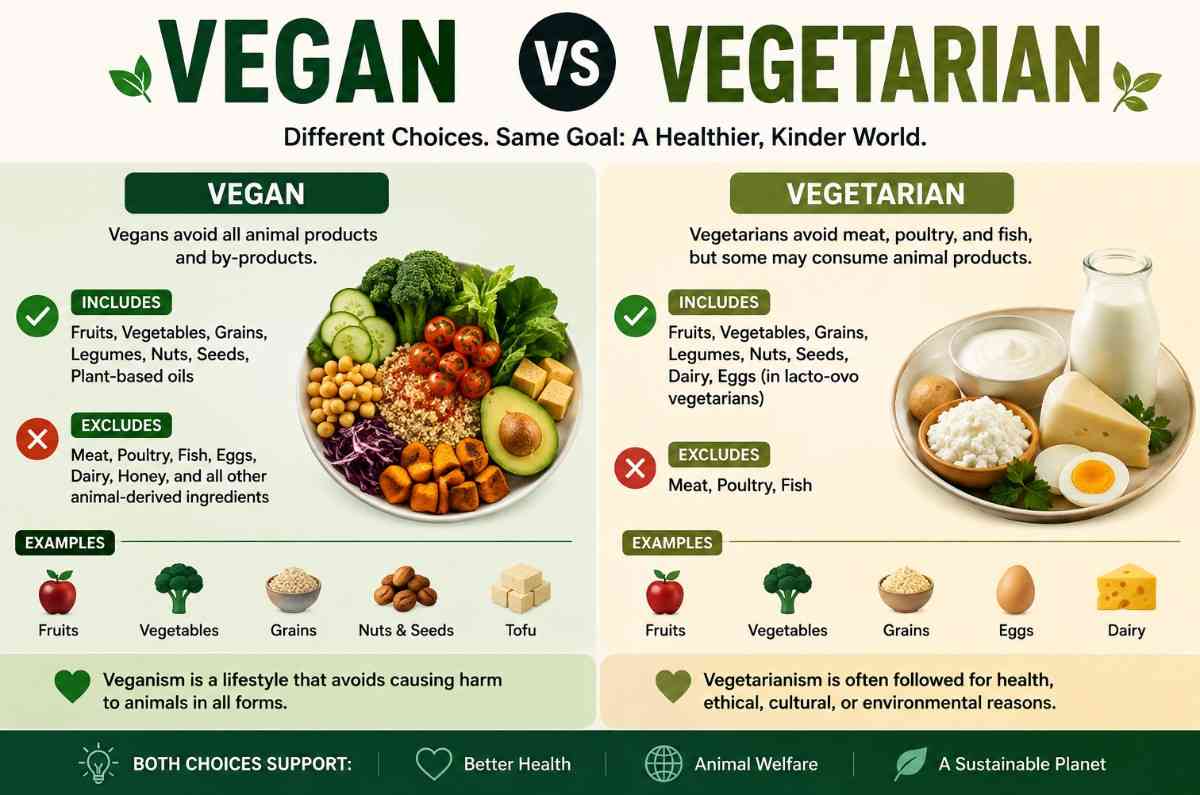
Vegan and vegetarian diets have become increasingly popular among people who want to eat more plant foods, reduce their intake of animal products, support animal welfare, or simply adopt a different approach to healthy eating. Although the terms are often used interchangeably, vegan and vegetarian diets are not the same.
The biggest difference is simple: vegetarians generally avoid meat, poultry, and seafood, while vegans avoid all foods derived from animals. This means that some vegetarians may still eat eggs, milk, yogurt, or cheese, while vegans avoid these foods completely. The Academy of Nutrition and Dietetics’ current position paper states that appropriately planned vegetarian and vegan dietary patterns can be nutritionally adequate and may provide long-term health benefits for adults.
However, neither diet is automatically healthy just because it is plant-based. Food quality, variety, protein intake, fortified foods, and attention to nutrients such as vitamin B12, iron, calcium, vitamin D, iodine, and omega-3 fats all matter.
This guide explains vegan vs vegetarian diets, their major differences, potential benefits and drawbacks, nutrition considerations, food choices, and how to decide which approach may suit you.
What Is a Vegetarian Diet?
A vegetarian diet is a dietary pattern that excludes meat, poultry, and seafood. Depending on the type of vegetarian diet, people may continue to consume eggs, dairy products, or both.
Most vegetarian diets emphasize:
- Fruits and vegetables
- Whole grains
- Beans and lentils
- Nuts and seeds
- Soy foods
- Eggs, depending on the type
- Milk, yogurt, and cheese, depending on the type
Vegetarian diets can range from relatively flexible to highly restrictive.
Common Types of Vegetarian Diets:
- Lacto-ovo vegetarian: Avoids meat, poultry, and seafood but includes dairy products and eggs.
- Lacto-vegetarian: Avoids meat, poultry, seafood, and eggs but includes dairy products.
- Ovo-vegetarian: Avoids meat, poultry, seafood, and dairy but includes eggs.
- Pescatarian: Avoids meat and poultry but includes fish and seafood. Technically, pescatarianism is generally considered a separate eating pattern rather than vegetarianism.
What Is a Vegan Diet?
A vegan diet excludes all foods of animal origin. This includes meat, poultry, seafood, eggs, milk, cheese, yogurt, butter, and other animal-derived ingredients.
A vegan diet is based primarily on:
- Fruits
- Vegetables
- Whole grains
- Beans
- Lentils
- Peas
- Soybeans and tofu
- Nuts
- Seeds
- Plant-based milk
- Plant-based yogurt
- Other plant-derived foods
Because vitamin B12 is difficult to obtain naturally from unfortified plant foods, vegans need a reliable source through fortified foods or supplements.
It is also important to distinguish a vegan diet from a broader vegan lifestyle. A vegan lifestyle may also avoid animal-derived materials and products beyond food, whereas a vegan diet specifically describes what someone eats.
Main Difference Between Vegan and Vegetarian
The easiest way to understand the difference is to look at what each diet excludes.
| Food | Vegetarian | Vegan |
|---|---|---|
| Beef | No | No |
| Chicken | No | No |
| Fish | No | No |
| Seafood | No | No |
| Eggs | Sometimes | No |
| Milk | Sometimes | No |
| Cheese | Sometimes | No |
| Yogurt | Sometimes | No |
| Butter | Sometimes | No |
| Honey | Depends on personal definition/type | Generally no |
| Fruits | Yes | Yes |
| Vegetables | Yes | Yes |
| Beans | Yes | Yes |
| Lentils | Yes | Yes |
| Nuts and seeds | Yes | Yes |
| Tofu | Yes | Yes |
| Plant-based milk | Yes | Yes |
The important point is that vegetarianism has several variations, while veganism is more restrictive regarding animal-derived foods.
Vegan vs Vegetarian Nutrition Comparison
Both diets can provide plenty of important nutrients when they are well planned. However, the sources of certain nutrients can differ.
| Nutrient | Vegetarian Sources | Vegan Sources |
|---|---|---|
| Protein | Eggs, dairy, beans, lentils, tofu, nuts | Beans, lentils, tofu, tempeh, soy foods, nuts and seeds |
| Calcium | Milk, yogurt, cheese, fortified foods, tofu | Fortified plant milks, calcium-set tofu, tahini, leafy greens |
| Iron | Lentils, beans, nuts, seeds, eggs, fortified foods | Lentils, beans, tofu, seeds, nuts, fortified foods |
| Vitamin B12 | Dairy, eggs, fortified foods | Fortified foods or supplements |
| Vitamin D | Fortified dairy and foods | Fortified plant milks and foods, supplements when needed |
| Omega-3 fats | Eggs and plant foods | Chia, flaxseed, hemp seeds, walnuts, algae-based sources |
| Zinc | Dairy, eggs, legumes, nuts and seeds | Legumes, nuts, seeds, whole grains and fortified foods |
| Iodine | Dairy and eggs, iodized salt | Iodized salt and selected fortified foods |
The NHS notes that both vegetarians and vegans need to pay attention to nutrients such as iron and vitamin B12, while vegan diets require particular attention to B12 because reliable natural sources are limited.
10 Major Differences Between Vegan and Vegetarian Diets
1. Animal Products
Vegetarians may consume some animal products, while vegans avoid foods derived from animals altogether.
2. Dairy Products
Many vegetarians consume milk, cheese, and yogurt, while vegans avoid dairy products.
3. Eggs
Lacto-ovo vegetarians can eat eggs, whereas vegans do not include eggs in their diet.
4. Vitamin B12
Vegetarians may obtain B12 from eggs and dairy, while vegans generally need fortified foods or a reliable supplement source.
5. Meal Planning
Vegan diets often require more careful planning because several commonly available animal-derived foods are excluded.
6. Restaurant Choices
Vegetarian diets may offer more restaurant options because dishes containing cheese, milk, or eggs can still fit the diet.
7. Food Labels
Vegans often need to check ingredient labels more carefully for milk, whey, casein, gelatin, eggs, and other animal-derived ingredients.
8. Protein Sources
Both diets can provide adequate protein, but vegans generally rely more heavily on legumes, soy foods, nuts, seeds, and other plant proteins.
9. Calcium Sources
Vegetarians can use dairy products as a convenient calcium source, while vegans often rely on fortified plant beverages, calcium-set tofu, seeds, and selected vegetables.
10. Lifestyle Considerations
Veganism can extend beyond food, while vegetarianism usually describes a person’s dietary choices.
Health Benefits of Vegetarian Diets
A well-planned vegetarian diet can be rich in vegetables, fruits, whole grains, legumes, nuts, seeds, and other nutrient-dense foods.
Potential benefits include:
- More Fiber: Beans, lentils, fruits, vegetables, and whole grains can significantly increase dietary fiber intake.
- Heart Health: Plant-rich eating patterns can be low in saturated fat and high in fiber and unsaturated fats.
- Better Diet Quality: A thoughtfully planned vegetarian diet can encourage greater consumption of vegetables, fruits, legumes, nuts, seeds, and whole grains.
- Blood Sugar Support: High-fiber plant foods can be useful as part of an overall balanced eating pattern.
- Weight Management: Nutrient-dense plant foods can provide substantial volume and fiber without necessarily providing large amounts of calories.
- Cholesterol Support: Replacing foods high in saturated fat with fiber-rich plant foods may support healthier blood lipid levels.
- Greater Plant Diversity: Vegetarian diets encourage people to experiment with different legumes, grains, vegetables, fruits, seeds, and nuts.
These benefits depend on the overall quality of the diet. A vegetarian diet dominated by refined carbohydrates, sugary drinks, fried foods, and highly processed snacks is not automatically nutritious.
Health Benefits of Vegan Diets
A balanced vegan diet can also provide substantial amounts of fiber, potassium, folate, vitamin C, antioxidants, and various plant compounds.
Potential benefits include:
- High Plant Food Intake: Vegan diets naturally emphasize fruits, vegetables, legumes, grains, nuts, and seeds.
- High Fiber Intake: Beans, lentils, whole grains, fruits, vegetables, nuts, and seeds provide dietary fiber.
- Lower Saturated Fat Intake: Avoiding meat and dairy can reduce some major sources of saturated fat, particularly when replaced with minimally processed plant foods.
- Heart-Friendly Eating Pattern: A well-designed vegan diet can support cardiovascular health as part of an overall healthy lifestyle.
- Weight Management: High-fiber, minimally processed plant foods may help with fullness and overall calorie control.
- More Whole Plant Foods: Vegan eating can encourage greater variety of vegetables, fruits, legumes, grains, nuts, and seeds.
- Potential Cardiometabolic Benefits: Current evidence supports appropriately planned vegetarian and vegan dietary patterns as potentially beneficial for several cardiometabolic outcomes.
Potential Nutritional Concerns
One of the biggest misconceptions is that plant-based automatically means nutritionally complete.
Both diets require some planning, but the more restrictive the eating pattern becomes, the more important it is to understand nutrition.
1. Vitamin B12
Vitamin B12 deserves special attention, particularly for vegans.
Natural, reliable B12 sources are primarily animal-derived foods, so vegans should use fortified foods or an appropriate B12 supplement. Some vegetarians may obtain B12 through eggs and dairy, depending on how much they consume.
2. Iron
Plant foods contain iron, but the form found in plants is absorbed differently from the heme iron found in animal foods.
Good plant sources include:
- Lentils
- Chickpeas
- Kidney beans
- Tofu
- Pumpkin seeds
- Nuts
- Dark green vegetables
- Iron-fortified cereals
Eating vitamin C-rich foods with plant sources of iron can improve iron absorption.
3. Calcium
Vegetarians who consume dairy may find calcium intake easier to achieve.
Vegans can obtain calcium from:
- Fortified soy or other plant beverages
- Calcium-set tofu
- Tahini
- Sesame seeds
- Certain leafy vegetables
- Fortified foods
The NHS specifically recommends paying attention to calcium and vitamin D in vegan diets.
4. Vitamin D
Vitamin D can be difficult to obtain from food regardless of dietary pattern.
Depending on individual circumstances, fortified foods, sunlight exposure, and supplements may all have a role.
5. Iodine
Iodine is important for normal thyroid function. People following vegan diets should pay attention to reliable iodine sources because dairy and seafood are common dietary sources for people who eat animal products. Fortified foods and appropriately used iodized salt can help, depending on the overall diet.
6. Omega-3 Fatty Acids
Vegans can obtain plant-based omega-3 ALA from:
- Flaxseeds
- Chia seeds
- Walnuts
- Hemp seeds
- Flaxseed oil
The NHS lists flaxseed, chia, hemp seeds, and walnuts as suitable vegan sources of omega-3 fats.
Which Has More Protein: Vegan or Vegetarian?
There is no automatic winner.
A vegetarian diet may make it easier to obtain protein because eggs, milk, yogurt, and cheese can contribute significant amounts of protein.
However, a vegan diet can also provide plenty of protein when meals regularly include:
- Lentils
- Chickpeas
- Beans
- Tofu
- Tempeh
- Soy milk
- Peas
- Seitan
- Peanuts
- Nuts
- Seeds
The key is to focus on protein-rich foods rather than simply eating foods labeled “vegan.”
A meal of lentils with brown rice and vegetables, for example, can be considerably more nutritious than a highly processed vegan snack.
Vegan vs Vegetarian for Weight Loss
Neither diet guarantees weight loss.
Weight changes depend on total calorie intake, food quality, physical activity, sleep, individual metabolism, and other factors.
A vegetarian or vegan diet may support weight management when it emphasizes:
- Vegetables
- Fruits
- Beans
- Lentils
- Whole grains
- Nuts and seeds in appropriate portions
- Minimally processed foods
On the other hand, vegan cookies, fries, desserts, sugary drinks, refined grains, and processed meat substitutes can still be high in calories.
The healthiest approach is not simply to remove animal foods but to replace them with nutritious plant foods.
Vegan vs Vegetarian for Heart Health
Both diets can be heart-friendly when they emphasize whole or minimally processed plant foods.
A diet rich in vegetables, fruits, whole grains, legumes, nuts, and seeds can provide fiber and unsaturated fats while reducing reliance on foods high in saturated fat. The Academy of Nutrition and Dietetics’ current evidence review supports appropriately planned vegetarian and vegan diets as potentially beneficial for several cardiometabolic outcomes.
However, dietary pattern matters more than the label.
A plant-based diet centered on whole foods is very different from one dominated by refined carbohydrates and highly processed foods.
Vegan vs Vegetarian: Which Is Healthier?
There is no universal answer.
A well-planned vegetarian diet can be extremely healthy, and a well-planned vegan diet can also be extremely healthy.
The better choice depends on:
- Nutritional needs
- Food preferences
- Cooking habits
- Budget
- Cultural foods
- Availability of foods
- Ethical considerations
- Ability to plan meals
- Personal tolerance and lifestyle
For some people, vegetarian eating provides a comfortable way to increase plant foods while keeping eggs or dairy in their diet.
For others, vegan eating better matches their ethical or lifestyle goals.
The goal should be nutritional adequacy and food quality rather than simply choosing the stricter diet.
Vegan vs Vegetarian Food List
| Food Group | Vegetarian | Vegan |
|---|---|---|
| Fruits | Yes | Yes |
| Vegetables | Yes | Yes |
| Whole grains | Yes | Yes |
| Beans | Yes | Yes |
| Lentils | Yes | Yes |
| Chickpeas | Yes | Yes |
| Tofu | Yes | Yes |
| Tempeh | Yes | Yes |
| Nuts | Yes | Yes |
| Seeds | Yes | Yes |
| Eggs | Some types | No |
| Milk | Some types | No |
| Cheese | Some types | No |
| Yogurt | Some types | No |
| Meat | No | No |
| Fish | No | No |
| Seafood | No | No |
Simple Vegetarian Meal Ideas
A balanced vegetarian day might include:
- Breakfast: Oatmeal with yogurt, berries, walnuts, and chia seeds.
- Lunch: Lentil curry with brown rice, vegetables, and yogurt.
- Snack: Fruit with nuts or Greek yogurt.
- Dinner: Vegetable and tofu stir-fry with whole-grain noodles.
- Dessert: Fresh fruit with plain yogurt.
Simple Vegan Meal Ideas
A balanced vegan day might include:
- Breakfast: Oatmeal with fortified soy milk, banana, chia seeds, and walnuts.
- Lunch: Chickpea and vegetable bowl with quinoa and tahini dressing.
- Snack: Apple with peanut butter.
- Dinner: Tofu and vegetable stir-fry with brown rice.
- Dessert: Fresh berries with fortified plant-based yogurt.
When following a vegan diet, choosing fortified foods can help provide nutrients that are otherwise harder to obtain.
How to Choose Between Vegan and Vegetarian?
If you are unsure which diet to follow, you do not necessarily have to make a dramatic change overnight.
Start by asking yourself:
What Are My Goals?
If your goal is simply to eat less meat and more plants, a vegetarian approach may be a comfortable starting point.
Am I Comfortable Avoiding Dairy and Eggs?
If you enjoy milk, yogurt, cheese, or eggs and do not want to eliminate them, vegetarian eating may be more practical.
Am I Prepared to Plan for B12?
Anyone following a vegan diet needs a dependable source of vitamin B12 through fortified foods or supplementation.
Can I Build Balanced Meals?
Whichever approach you choose, make sure meals include protein, vegetables or fruit, whole grains or other carbohydrate sources, and healthy fats.
Do I Need Professional Guidance?
People with specific medical or nutritional needs, children, pregnant or breastfeeding individuals, older adults, and athletes may benefit from individualized guidance from a registered dietitian or other qualified healthcare professional.
Tips for Following a Healthy Vegan or Vegetarian Diet
- Prioritize Whole Foods: Build most meals around vegetables, fruits, legumes, whole grains, nuts, and seeds.
- Include Protein at Meals: Use beans, lentils, tofu, tempeh, eggs, dairy, or other suitable protein sources.
- Pay Attention to B12: Vegans should have a dependable source of vitamin B12.
- Choose Fortified Foods: Fortified plant milks and cereals can help fill nutritional gaps.
- Combine Iron With Vitamin C: Pair beans, lentils, tofu, or seeds with foods such as citrus fruits, tomatoes, peppers, or broccoli.
- Eat a Variety of Foods: Variety helps improve the overall nutrient profile of your diet.
- Do Not Rely Only on Meat Substitutes: Plant-based alternatives can be convenient, but whole plant foods should remain important.
- Include Healthy Fats: Nuts, seeds, avocado, and suitable plant oils can provide valuable unsaturated fats.
- Read Food Labels: This is particularly important for vegans checking fortified nutrients and animal-derived ingredients.
- Plan Before Restricting Foods: Removing foods without replacing their nutrients can create nutritional gaps.
Myths About Vegan and Vegetarian Diets
Myth 1: Vegans Cannot Get Enough Protein
Fact: A varied vegan diet can provide protein from legumes, soy foods, nuts, seeds, grains, and other plant foods.
Myth 2: Vegetarian Diets Are Always Healthy
Fact: Vegetarian foods can include highly processed foods, sweets, fried foods, and refined carbohydrates, so dietary quality still matters.
Myth 3: Vegans Automatically Lose Weight
Fact: Weight loss is not guaranteed and depends on total dietary intake and lifestyle.
Myth 4: Vegetarians Cannot Build Muscle
Fact: Muscle development depends on adequate protein, energy intake, resistance training, recovery, and overall nutrition rather than whether someone eats meat.
Myth 5: Vegan Diets Provide Every Nutrient Naturally
Fact: Some nutrients, particularly vitamin B12, require special attention on vegan diets. Fortified foods or supplements may be necessary.
Myth 6: You Must Choose One Diet Forever
Fact: Eating patterns can change over time according to personal preferences, health needs, lifestyle, and goals.
FAQ’s
Which diet is easier to follow?
That depends on the person. Vegetarian diets can be easier for some people because eggs and dairy remain available, while others prefer the clearer boundaries of vegan eating.
Can you be vegan and vegetarian at the same time?
In dietary terms, veganism can be considered a more restrictive form of plant-based eating that excludes all animal-derived foods. Therefore, all vegan diets are meat-free, but not all vegetarian diets are vegan.
Is vegan healthier than vegetarian?
Neither is automatically healthier. Both can be healthy when meals are balanced, varied, and provide all essential nutrients.
Can vegetarians eat eggs?
Yes. Lacto-ovo vegetarians eat eggs, while some other vegetarian types avoid them.
Can vegetarians eat cheese?
Yes. Most vegetarians who consume dairy can eat cheese, although some cheeses may contain animal-derived ingredients.
Can vegans eat eggs?
No. Eggs are an animal-derived food and are excluded from a vegan diet.
Can vegans drink milk?
Vegans do not drink cow’s milk or other animal milk. They may choose plant-based alternatives such as soy, oat, almond, or coconut milk.
Do vegans eat honey?
Generally, no. Honey is produced by bees, so it is usually excluded from a vegan diet.
Can vegetarians eat fish?
Traditional vegetarian diets do not include fish or seafood. People who eat fish but avoid meat and poultry are generally described as pescatarians.
Which diet is better for weight loss, vegan or vegetarian?
Neither diet guarantees weight loss. Weight management depends on overall calorie intake, food quality, physical activity, and lifestyle habits.
Which diet provides more protein?
Both can provide adequate protein. Vegetarians may obtain protein from eggs and dairy, while vegans rely more on beans, lentils, tofu, tempeh, soy foods, nuts, seeds, and grains.
Do vegans need vitamin B12?
Yes. Vegans should obtain vitamin B12 through reliable fortified foods or supplements because natural, reliable plant sources are very limited.
Do vegetarians need vitamin B12?
Vegetarians may obtain vitamin B12 from eggs and dairy, but intake can vary. Some may still need fortified foods or supplements depending on their diet and nutritional status.
Can a vegan diet provide enough calcium?
Yes. Vegans can obtain calcium from fortified plant milks, calcium-set tofu, tahini, sesame seeds, and certain vegetables.
Can vegans build muscle?
Yes. A vegan diet can support muscle growth when it provides enough calories, protein, and essential nutrients alongside appropriate resistance training.
Are all vegan foods healthy?
No. Vegan foods can include highly processed snacks, sweets, fried foods, and sugary drinks. A healthy vegan diet should emphasize nutrient-dense whole and minimally processed foods.
Are all vegetarian foods healthy?
No. Vegetarian foods can also include highly processed and calorie-dense foods. Being vegetarian does not automatically make a diet healthy.
Can children follow a vegan or vegetarian diet?
Children can follow these diets when they are carefully planned to meet growth and nutrient needs. Parents should consider guidance from a pediatrician or registered dietitian, particularly with a vegan diet.
Can pregnant women follow a vegan or vegetarian diet?
A well-planned vegan or vegetarian diet can be compatible with pregnancy, but nutrient needs increase during pregnancy. Professional guidance can help ensure adequate intake of nutrients such as B12, iron, iodine, vitamin D, calcium, and protein.
Is vegan food more expensive than vegetarian food?
Not necessarily. Staples such as beans, lentils, rice, potatoes, vegetables, fruits, and grains can be affordable. Specialty vegan products can be more expensive.
Which diet is better for the environment?
Vegan diets generally have a lower environmental impact than diets containing animal foods, although the environmental impact of any diet depends on food choices, production methods, transportation, and other factors.
Can you switch from vegetarian to vegan?
Yes. Many people transition gradually by replacing dairy and eggs with plant-based alternatives and learning how to meet nutrients such as vitamin B12, calcium, iron, iodine, and protein.
Is vegan the same as plant-based?
Not always. “Vegan” generally describes avoiding all animal-derived foods, while “plant-based” can refer to diets that emphasize plant foods but may vary in how strictly animal products are avoided.
What is the healthiest diet: vegan, vegetarian, or omnivore?
There is no single healthiest diet for everyone. A nutritious diet can take different forms as long as it provides adequate nutrients and emphasizes vegetables, fruits, whole grains, legumes, healthy fats, and appropriate protein sources.
Final Thoughts
The debate over vegan vs vegetarian does not really need a winner.
Both eating patterns can be nutritious when they are built around a wide variety of whole plant foods and planned to meet nutritional needs. Vegetarian diets allow some people to keep eggs and dairy in their meals, while vegan diets eliminate all animal-derived foods and therefore require closer attention to certain nutrients, especially vitamin B12.
Instead of asking which label is healthier, a more useful question is: Which eating pattern can you follow comfortably while meeting your nutritional needs?
For many people, increasing vegetables, fruits, legumes, whole grains, nuts, and seeds is a positive step regardless of whether they ultimately choose a vegetarian or vegan diet. Harvard Health similarly describes plant-based eating as a spectrum that includes vegan, vegetarian, pescatarian, and other approaches rather than a single rigid diet.
Disclaimer:
This article is for general educational purposes only and does not replace individualized medical or nutritional advice. If you have a medical condition, nutritional deficiency, or special dietary needs, consult a qualified healthcare professional or registered dietitian.
Sources / References:
Also Read: