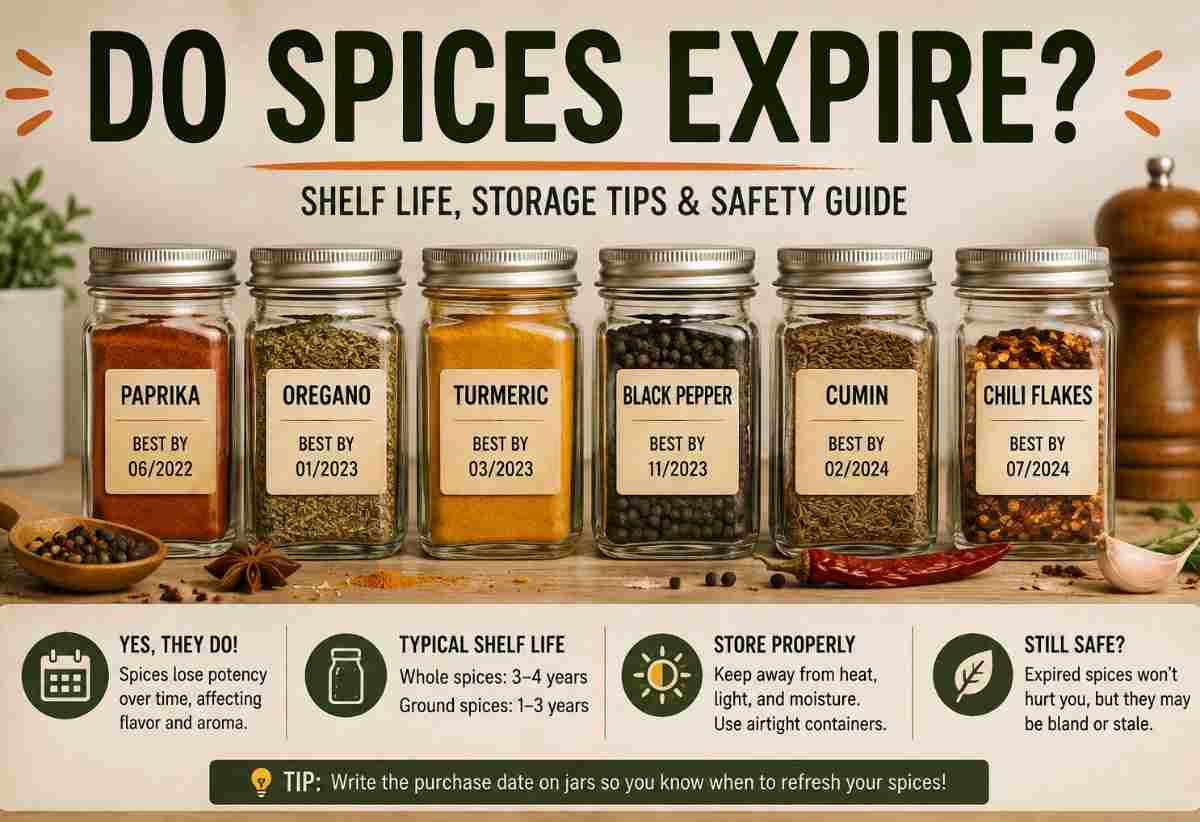
That jar of cumin sitting in the back of your kitchen cabinet may have been there longer than you remember. But does that mean it is unsafe to use?
The short answer is: spices generally do not spoil like fresh foods, but they do lose their flavor, aroma, color, and potency over time. Ground spices tend to lose quality faster than whole spices because more of their surface is exposed to air.
The date printed on a spice container is often a “Best By” date, which primarily indicates when the product is expected to have its best quality rather than an automatic point at which it becomes unsafe. Whole spices are generally best kept for about 2–4 years, while ground spices are best used within about 2–3 years.
So, should you throw away every spice that has passed its date? Not necessarily. Knowing what to look for can help you decide.
Do Spices Expire?
Spices can expire in terms of quality, but many dried spices do not suddenly become unsafe when their “Best By” date passes.
Unlike milk, meat, or fresh produce, dry spices contain very little moisture, making them relatively shelf-stable. Over time, however, their aromatic compounds gradually break down. This means an old jar of paprika may still look usable but produce very little flavor or color.
Using whole spices within approximately 2–4 years and ground spices within approximately 2–3 years for best quality.
Commercial spice manufacturers may provide somewhat different shelf-life estimates depending on the product. For example, McCormick lists approximately 2–4 years for ground spices, 4 years for whole spices, and 1–3 years for dried leafy herbs when stored properly.
What Does the Date on a Spice Bottle Mean?
Most packaged spices carry a Best By or similar quality date rather than a strict expiration date.
A Best By date generally tells you when the manufacturer expects the spice to have its best flavor, aroma, color, and overall quality. McCormick specifically explains that its Best By dates are intended for optimum flavor and consistency rather than functioning as expiration dates.
That does not mean you should automatically keep a spice forever. Storage conditions matter, and a container exposed repeatedly to moisture, heat, or contamination can deteriorate much faster.
How Long Do Spices Last?
There is no single expiration period for every spice. Whole spices, ground spices, dried herbs, and seasoning blends have different typical shelf lives.
| Type of Spice | Approximate Best-Quality Period |
|---|---|
| Whole spices | 2–4 years |
| Ground spices | 2–3 years |
| Dried leafy herbs | 1–3 years |
| Seasoning blends | 1–2 years |
| Whole peppercorns | About 2–4 years |
| Ground cinnamon | About 2–3 years |
| Ground cumin | About 2–3 years |
| Paprika | About 2–3 years |
| Chili powder | About 2–3 years |
| Dried oregano | About 1–3 years |
| Dried basil | About 1–3 years |
These are general guidelines, not guarantees. Actual longevity depends heavily on packaging, storage, processing, and how frequently the container is opened.
Whole Spices vs. Ground Spices
One of the easiest rules to remember is that whole spices generally retain their quality longer than ground spices.
A whole peppercorn, cumin seed, coriander seed, or nutmeg has less surface area exposed to oxygen than the same spice after grinding. Once ground, aromatic compounds can escape more readily.
For example:
- Whole peppercorns generally retain their aroma longer than ground pepper.
- Whole cumin seeds usually stay aromatic longer than ground cumin.
- Whole cinnamon sticks can maintain their character longer than ground cinnamon.
- Whole nutmeg tends to retain its fragrance longer than pre-ground nutmeg.
This is why grinding whole spices shortly before cooking can provide noticeably stronger flavor.
10 Signs Your Spices May Be Too Old or Spoiled
Age alone does not necessarily mean a spice is unsafe, but certain changes are good reasons to replace it.
1. The Aroma Has Disappeared
A weak or nearly nonexistent smell is one of the clearest signs that a spice has lost its freshness. Crush or rub a small amount between your fingers and smell it; if there is little aroma, its flavor is probably significantly reduced.
2. The Color Has Faded
A major change in color can indicate that the spice has lost some of its quality. This can be particularly noticeable with paprika, turmeric, chili powder, and other brightly colored spices.
3. The Flavor Is Very Weak
If you need to add several times more than usual to taste the spice, it may simply be past its prime. Old spices can remain visually recognizable while becoming surprisingly bland.
4. The Spice Has Become Damp
Moisture can cause dried spices to clump and can create conditions that support spoilage. A small amount of harmless caking is different from obvious moisture damage, but a damp container deserves closer inspection.
5. You See Mold
Visible mold is a reason to discard the entire container. Do not simply remove the affected portion and continue using the remaining spice.
6. There Is an Unusual Smell
A sour, musty, rancid, or otherwise unfamiliar odor is a warning sign. Fresh dried spices should generally have a recognizable aroma characteristic of that spice.
7. Insects Are Present
Discard spices if you find insects, larvae, webbing, or other signs of pantry pests. Do not try to salvage the unaffected-looking portion.
8. The Container Has Been Exposed to Moisture
Repeated exposure to steam from cooking can shorten the useful life of spices. This is why sprinkling spices directly from the bottle into a steaming pot is not ideal.
9. The Packaging Is Damaged
A broken seal, damaged lid, or compromised container can expose spices to air, moisture, and contaminants. Replace spices if the packaging has clearly failed.
10. You Cannot Remember How Long It Has Been Stored
If a spice is extremely old and has little aroma, flavor, or color left, replacing it is usually the simplest option. Fresh spices are relatively inexpensive compared with the disappointment of a bland meal.
Can You Use Spices After the Expiration Date?
In many cases, dried spices can still be used after their Best By date if they have been stored properly and show no signs of spoilage.
The important distinction is between quality and safety.
A spice that is several months past its Best By date may simply be less aromatic. However, a spice contaminated with moisture, mold, insects, or other contaminants should not be used.
Food product dates do not always indicate safety and that proper handling and storage are important when evaluating food beyond its date.
Can Old Spices Make You Sick?
Old spices that have simply lost flavor are generally different from spices that have actually become contaminated.
A very old, dry bottle of cinnamon that has lost its aroma is primarily a quality issue. But spices exposed to moisture, mold, pests, dirty utensils, or other sources of contamination should be discarded.
This is why you should not rely solely on the date printed on the bottle. Consider the date, storage conditions, appearance, smell, and overall condition of the spice.
Why Do Spices Lose Their Flavor?
Spices contain aromatic compounds that contribute to their characteristic smell and taste. These compounds gradually degrade through exposure to:
- Oxygen
- Heat
- Light
- Moisture
- Repeated opening
- Improper storage
Ground spices are particularly vulnerable because grinding increases the surface area exposed to the surrounding environment.
Storing spices in tightly closed containers and keeping them away from heat, moisture, and direct sunlight.
How to Test If a Spice Is Still Good?
You can perform a simple smell, appearance, and taste check.
1. Smell Test
Take a small amount and smell it. A strong, recognizable aroma suggests that the spice still has useful flavor.
2. Appearance Test
Look for unusual discoloration, moisture, mold, insects, or other abnormalities.
3. Taste Test
If the spice looks and smells normal, you can taste a tiny amount. If the flavor is extremely weak, replacing the spice may make more sense.
Never taste a spice that shows visible mold, insect contamination, or other obvious spoilage.
How to Store Spices Properly?
Proper storage can significantly help preserve spice quality.
1. Keep Spices in Airtight Containers
A tightly closed container helps limit exposure to air and moisture. Keep the original container if it provides a good seal.
2. Store Them in a Cool, Dry Cabinet
A pantry or cabinet away from heat is usually a better location than the area immediately above your stove.
3. Keep Spices Away From Sunlight
Direct sunlight can contribute to fading and quality loss. A darker cabinet is preferable.
4. Keep Water Away
Always use a dry measuring spoon when handling spices. Introducing water into the container can encourage clumping and deterioration.
5. Avoid Shaking Spices Over Steam
Opening a spice jar directly over a steaming pan can allow moisture to enter the container. McCormick specifically recommends avoiding this practice.
6. Label Newly Opened Spices
Writing the opening date on the container can help you keep track of older spices. This is especially useful if you have a large collection.
7. Don’t Store Every Spice Beside the Stove
Convenience can come at the expense of freshness when spices are repeatedly exposed to cooking heat. Choose a nearby cabinet that remains relatively cool and dry.
Should You Refrigerate Spices?
Most dried spices do not need refrigeration.
In fact, repeatedly moving dried spices between the refrigerator and room temperature can introduce condensation. Freezing dried herbs and spices because freezing does not extend their shelf life and temperature changes can cause condensation.
For most households, a tightly sealed container stored in a cool, dry, dark cabinet is sufficient.
Can You Freeze Spices?
Freezing generally isn’t necessary for ordinary dried spices.
The potential problem is condensation when containers are repeatedly removed from the freezer and exposed to warmer air. That moisture can negatively affect dried spices.
For everyday kitchen use, proper pantry storage is usually simpler.
Do Different Spices Expire Differently?
Yes. The form of the spice makes a significant difference.
Ground Spices
Ground cumin, turmeric, ginger, paprika, chili powder, and similar spices generally lose their aroma faster than whole spices.
Whole Spices
Whole peppercorns, cumin seeds, coriander seeds, cloves, and other intact spices can maintain their quality longer when properly stored.
Dried Herbs
Dried basil, oregano, rosemary, thyme, parsley, and similar leafy herbs often have a shorter best-quality period than whole spices.
Seasoning Blends
Curry powder, taco seasoning, garam masala, and similar blends can lose their individual aromatic notes over time because they contain multiple ingredients with different stability.
What About Salt?
Pure salt is an unusual case because it does not deteriorate in the same way many herbs and spices do.
Salt itself is highly stable when kept dry. However, flavored salts, seasoning salts, or blends containing other ingredients can have different shelf-life considerations.
The container’s labeling and the condition of the product should always be considered.
What About Homemade Spice Blends?
Homemade spice blends can lose their freshness relatively quickly because grinding and mixing expose the ingredients to air.
If you make your own:
- Prepare smaller batches.
- Store them in airtight containers.
- Keep them away from heat and moisture.
- Label the date you made the blend.
- Check the aroma before using older batches.
Making smaller quantities means you are more likely to use the blend while it still tastes fresh.
Should You Throw Away Clumpy Spices?
Not every clump means a spice is spoiled.
Dried spices can become clumpy simply because of exposure to moisture or humidity. Heat and moisture can cause spices to cake and harden.
However, if the clumping is accompanied by moisture, mold, an unusual odor, insects, or other signs of contamination, discard the product.
How Often Should You Replace Spices?
There is no universal schedule that works for every kitchen.
A practical approach is to review your spice cabinet once or twice a year and replace spices that have clearly lost their aroma, have been stored improperly, or show signs of contamination.
For the best flavor, consider these approximate guidelines:
- Ground spices: around 2–3 years
- Whole spices: around 2–4 years
- Dried herbs: around 1–3 years
- Seasoning blends: around 1–2 years
These are quality guidelines rather than strict expiration rules. Manufacturer recommendations may differ.
How to Make Your Spices Last Longer?
A few simple habits can prevent unnecessary waste.
- Buy Smaller Quantities: If you only use cumin occasionally, buying a small container is better than keeping a large bottle for years.
- Choose Whole Spices: When practical, whole spices generally retain their aromatic qualities longer.
- Grind as Needed: Grinding spices shortly before cooking can give you stronger flavor.
- Keep Containers Closed: Close the lid immediately after measuring.
- Avoid Heat: Keep spices away from the stove and other heat sources.
- Use Dry Spoons: Never introduce wet utensils into spice containers.
- Organize Your Cabinet: Put frequently used spices where you can easily see them and periodically check older bottles.
When Should You Definitely Throw Spices Away?
Discard a spice if:
- You see mold.
- You find insects or larvae.
- The spice has become visibly wet.
- It has an unusual or rancid odor.
- The packaging is damaged or contaminated.
- It has been exposed to significant moisture.
- Its appearance is clearly abnormal.
- You are unsure whether it has been contaminated.
If the only problem is that the spice is old and its aroma has faded, the main issue may simply be poor flavor rather than spoilage.
The Bottom Line: Do Spices Expire?
Yes, spices eventually lose their freshness, but most dried spices don’t suddenly become unsafe simply because the date on the bottle has passed.
Think of spices as products that gradually lose quality rather than foods that suddenly “expire.” Whole spices generally last longer than ground spices, while dried herbs and seasoning blends often lose their best flavor sooner.
The best approach is to check the Best By date, smell, color, texture, storage conditions, and signs of contamination before deciding whether to keep or replace a spice.
When in doubt—especially if you see mold, insects, moisture, or an unusual smell—throw it away.
A well-organized spice cabinet does not need to be filled with dozens of ancient jars. Keeping smaller quantities, storing them properly, and replacing spices when their flavor fades can make cooking both easier and more enjoyable.
FAQ’s
How do I know if a spice has gone bad?
Check for mold, insects, moisture, unusual smells, major color changes, or other signs of contamination.
Does ground spice expire faster than whole spice?
Yes. Whole spices generally retain their flavor and aroma longer because less surface area is exposed to air.
Does cinnamon expire?
Yes, cinnamon gradually loses its aroma and flavor, especially when it is ground.
Does turmeric expire?
Turmeric loses its color, aroma, and flavor over time. Discard it if it becomes damp, moldy, or develops an unusual smell.
What happens if I use very old spices?
Very old spices may still be usable but often provide much less flavor, aroma, and color.
Can I use spices that are 5 years old?
If they have been stored properly and show no contamination, they may not necessarily be unsafe, but their quality is likely to be poor. Replacing them is usually best.
Do dried herbs expire?
Dried herbs also lose their flavor and aroma over time and generally have a shorter best-quality period than many whole spices.
Is it safe to use expired paprika?
Paprika past its Best By date may still be usable if it has been properly stored and shows no signs of contamination, but its color and flavor may have faded.
About the Author:
Written by: Kirti Solanki (Health Content Researcher)
Kirti Solanki writes health and nutrition content with a focus on making everyday wellness information clear, practical, and easy to understand. Her articles are researched using reputable health, nutrition, government, and scientific sources.
Disclaimer:
This article is for general educational purposes only and is not a substitute for professional medical or food-safety advice. If you have concerns about contaminated food or a specific health condition, consult a qualified professional.
Sources / References:
About the Author:
Written by: Kirti Solanki (Health Content Researcher)
Kirti Solanki writes health and nutrition content with a focus on making everyday wellness information clear, practical, and easy to understand. Her articles are researched using reputable health, nutrition, government, and scientific sources.
Disclaimer:
This article is for general educational purposes only and is not a substitute for professional medical or food-safety advice. If you have concerns about contaminated food or a specific health condition, consult a qualified professional.
Also Read: