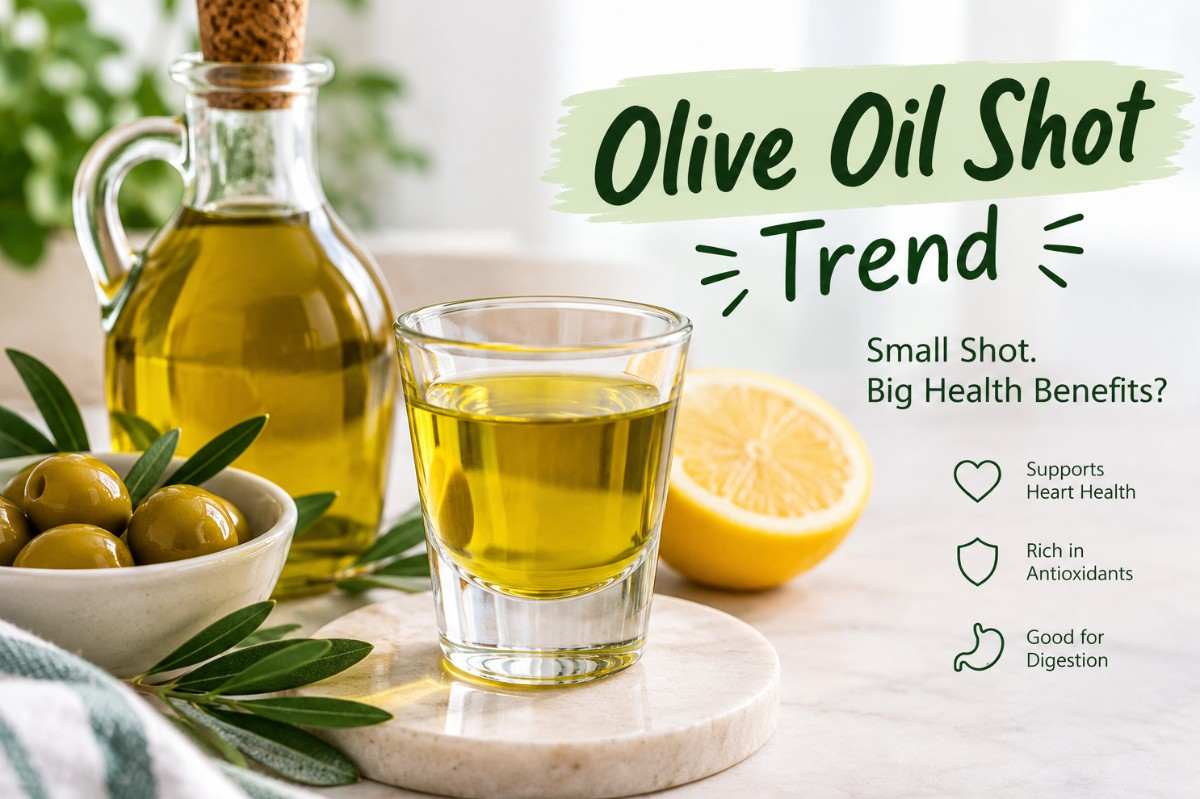
The olive oil shot trend has gained popularity on social media, with people drinking a small amount of extra virgin olive oil, often first thing in the morning, to support their health. Supporters claim that this simple habit can improve digestion, relieve constipation, support heart health, reduce inflammation, and help with weight management.
Olive oil is a well-known part of the Mediterranean diet and contains monounsaturated fats and beneficial plant compounds. However, there is an important difference between the proven nutritional value of olive oil and the health claims associated with drinking it straight.
Is taking an olive oil shot every morning actually beneficial? Let’s explore seven potential benefits, possible side effects, how to try the trend, and what scientific evidence says about this popular wellness habit.
What Is the Olive Oil Shot Trend?
The olive oil shot trend involves drinking a small amount of olive oil, typically one tablespoon, on its own rather than mixing it into food. Most people who follow this trend choose extra virgin olive oil and consume approximately one tablespoon, usually in the morning before breakfast.
Extra virgin olive oil is minimally processed and contains monounsaturated fats, vitamin E, and naturally occurring antioxidant compounds called polyphenols.
People often try this trend to improve digestion, support heart health, encourage regular bowel movements, or improve their overall well-being. However, research has not established that drinking olive oil on an empty stomach provides greater health benefits than consuming it with meals.
The potential benefits come primarily from olive oil’s nutritional properties, not from taking it as a shot.
7 Potential Benefits of the Olive Oil Shot Trend
Olive oil can be a nutritious addition to a balanced diet. The following benefits are associated with olive oil consumption, although they have not been specifically established for the olive oil shot trend.
1. Supports Heart Health: Extra virgin olive oil contains monounsaturated fats that may help improve cholesterol levels when they replace saturated fats, and olive oil-rich Mediterranean dietary patterns are associated with better cardiovascular health.
2. May Help With Constipation: Olive oil may influence bowel movements in some people, but scientific evidence is limited, and drinking it should not replace adequate fiber, fluids, physical activity, or appropriate constipation treatment.
3. Provides Antioxidants: Extra virgin olive oil contains polyphenols and vitamin E, which help protect cells against oxidative damage and contribute to its nutritional value.
4. May Support Healthy Cholesterol Levels: Replacing butter, ghee, and other sources of saturated fat with olive oil can help improve LDL cholesterol levels as part of a heart-healthy eating pattern.
5. May Help Manage Inflammation: Compounds such as oleocanthal in extra virgin olive oil have shown anti-inflammatory activity in research, although more evidence is needed to establish their effects on specific health conditions in humans.
6. Helps Absorb Certain Nutrients: The fat in olive oil helps the body absorb fat-soluble vitamins A, D, E, and K, as well as carotenoids found in vegetables, making it useful when included in balanced meals.
7. Can Fit Into a Weight-Management Diet: Olive oil can be part of a balanced weight-management plan when used in place of less favorable fat sources, but it is calorie-dense and does not directly burn body fat or guarantee weight loss.
How Much Olive Oil Should You Take?
There is no officially recommended dose for the olive oil shot trend, but some people choose to take one teaspoon to one tablespoon of extra virgin olive oil. Since one tablespoon contains approximately 119 calories, consume it in moderation and consider adding it to meals instead of taking it as a separate shot.
How to Do the Olive Oil Shot Trend?
If you want to try the olive oil shot trend, keep the amount modest and pay attention to how your body responds. There is no medically established dose or special timing required for this practice.
- Choose Extra Virgin Olive Oil: Select a good-quality extra virgin olive oil because it generally retains more naturally occurring polyphenols than refined olive oil.
- Start With a Small Amount: If you want to try drinking it directly, begin with one teaspoon rather than immediately taking a full tablespoon, particularly if you are unsure how your digestive system will respond.
- Choose a Convenient Time: Some people take an olive oil shot before breakfast, but there is no strong evidence that morning consumption or an empty stomach provides additional health benefits.
- Consume It Slowly: Take the oil in a small spoonful or measured serving rather than drinking a large quantity quickly.
- Drink Water Normally: Maintain your usual fluid intake throughout the day, especially if your goal is to support regular bowel movements.
- Monitor Your Body’s Response: Stop taking olive oil shots if you experience nausea, abdominal discomfort, bloating, or diarrhea.
- Consider Taking It With Food: If drinking oil directly feels unpleasant, drizzle it over vegetables, salads, beans, or other meals instead; you can obtain its nutritional benefits without taking a shot.
Important: A tablespoon of olive oil contains approximately 119 calories. Include these calories in your overall diet rather than automatically adding a daily shot to your existing food intake.
Possible Side Effects of Drinking Olive Oil Shots
Olive oil is generally safe when consumed in normal food amounts, but drinking it directly may cause unwanted effects, especially in larger quantities.
1. Digestive Discomfort: Drinking olive oil on its own may cause nausea, bloating, or stomach discomfort in people who are sensitive to concentrated amounts of fat.
2. Excess Calorie Intake: Olive oil provides approximately 119 calories per tablespoon, so adding daily shots without replacing other foods or fats may contribute to excess calorie intake.
3. Diarrhea or Loose Stools: Consuming too much olive oil may cause loose stools or diarrhea in some people, particularly those who are sensitive to high-fat intake.
4. Worsening of Gallbladder Symptoms: People with gallstones or certain gallbladder conditions may experience symptoms after consuming fatty foods and should seek individualized medical advice before trying concentrated oil shots.
5. Difficulty With Fat Digestion: People with conditions that affect fat digestion or absorption may need to limit their fat intake according to guidance from their healthcare professional.
6. Possible Problems With Weight Goals: Drinking olive oil in addition to regular meals can make it harder to maintain a calorie deficit if weight loss is the goal.
7. Delayed Medical Treatment: Relying on olive oil shots to manage persistent constipation, high cholesterol, or other medical problems may delay appropriate diagnosis and treatment.
Is It Better to Take an Olive Oil Shot on an Empty Stomach?
There is no strong scientific evidence that taking olive oil on an empty stomach is healthier than consuming it with food.
Olive oil provides monounsaturated fats and other beneficial compounds regardless of whether it is taken before breakfast or added to a meal. Consuming it with food may also be more comfortable for people who experience nausea or digestive discomfort after drinking oil directly.
If you enjoy olive oil, you can drizzle it over cooked vegetables, add it to salad dressings, or use it in place of butter or other saturated fats. These approaches allow you to include olive oil in your diet without following a separate wellness ritual.
Who Should Be Careful With the Olive Oil Shot Trend?
Although olive oil is a common food, drinking it directly may not suit everyone.
People with gallbladder problems, conditions affecting fat digestion, frequent diarrhea, or a prescribed low-fat diet should consult a healthcare professional before trying concentrated olive oil shots.
People who are managing their calorie intake should also remember that olive oil is energy-dense and that additional calories can affect their dietary goals.
If you have a medical condition or take medication for an ongoing health problem, do not use olive oil shots as a replacement for professional advice or prescribed treatment.
Olive Oil Shot vs. Olive Oil With Food
| Feature | Olive Oil Shot | Olive Oil With Food |
|---|---|---|
| How it is consumed | Drunk directly | Added to meals |
| Health benefits | No proven additional benefit from the shot method | Supports a balanced eating pattern |
| Nutrient absorption | Does not guarantee extra benefits | Helps absorb fat-soluble nutrients in the meal |
| Digestive comfort | May cause discomfort in some people | May be easier to tolerate |
| Calorie intake | Adds calories if consumed separately | Can replace other fats in meals |
For most people, adding olive oil to meals is a convenient way to enjoy its nutritional benefits without consuming extra calories through a separate daily shot.
Is the Olive Oil Shot Trend Worth Trying?
The olive oil shot trend may appeal to people looking for a simple morning wellness habit, but it is not a proven shortcut to better health.
Olive oil has recognized nutritional value, particularly when it replaces saturated fats in a balanced diet. However, there is insufficient evidence that drinking it straight improves digestion, accelerates weight loss, or produces better health outcomes than using it in everyday meals.
If you enjoy the taste and tolerate it well, a small amount may fit into your routine. If you dislike drinking oil, there is no reason to force yourself to do so.
A more practical approach is to include extra virgin olive oil in balanced meals, eat a variety of nutrient-rich foods, stay physically active, and maintain habits that support your long-term health.
Final Thoughts
The olive oil shot trend has brought attention to a food that can be part of a healthy diet, but social media claims sometimes go beyond what research supports. Olive oil provides beneficial fats and antioxidant compounds, yet drinking it on an empty stomach has no established advantage over consuming it with food.
For most people, using a moderate amount of extra virgin olive oil in meals is a simple and sustainable choice. Focus on your overall dietary pattern rather than relying on a single ingredient or morning ritual to improve your health.
FAQ’s
Can olive oil shots help with constipation?
Olive oil may help bowel movements in some people, but evidence is limited, and it is not a proven treatment for constipation.
Can drinking olive oil help you lose weight?
Olive oil does not directly burn fat, and consuming extra calories from daily shots may make weight loss more difficult.
What is the best time to take an olive oil shot?
There is no scientifically established best time to take an olive oil shot; you can consume olive oil with meals instead.
Which olive oil is best for the olive oil shot trend?
Extra virgin olive oil is generally preferred because it contains beneficial monounsaturated fats and naturally occurring antioxidant compounds.
Can you take an olive oil shot every morning?
Many healthy adults can consume olive oil regularly, but daily shots are unnecessary, and the amount should fit into their overall diet.
Is it better to drink olive oil or eat it with food?
Adding olive oil to meals is generally a practical choice because it provides beneficial fats without requiring a separate shot.
Can olive oil shots improve cholesterol levels?
Replacing saturated fats with olive oil may help improve LDL cholesterol levels, but drinking it as a shot has no proven additional advantage.
Why are people doing olive oil shots?
People take olive oil shots to support heart health, digestion, and bowel movements, although these benefits are not proven to be greater than consuming olive oil with food.
Why do people drink a shot of olive oil before bed?
Some people drink olive oil before bed hoping to improve digestion or relieve constipation, but there is no strong scientific evidence that nighttime consumption provides special benefits.
Can olive oil reduce belly fat?
No, olive oil does not directly burn belly fat. It can be part of a balanced weight-loss diet when used in moderation and substituted for less healthy fats.
Sources and References:
- Harvard T.H. Chan School of Public Health
- USDA FoodData Central
- National Institute of Diabetes and Digestive and Kidney Diseases
- Medical News Today
Disclaimer:
This article is for informational purposes only and is not a substitute for professional medical advice, diagnosis, or treatment.
Also Read: