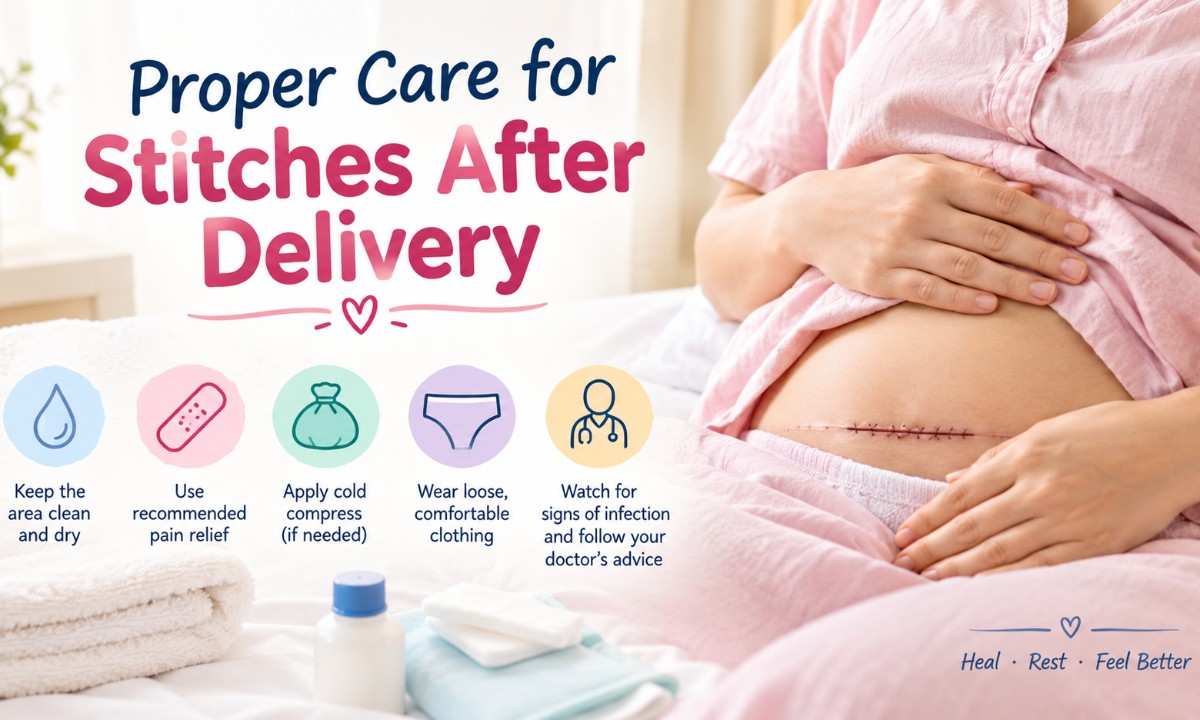
After a C-section delivery, caring for your abdominal stitches properly is essential for healing, reducing infection risk, and making recovery more comfortable. Whether your incision is closed with stitches, surgical staples, or medical glue, keeping the area clean, following your doctor’s instructions, and avoiding unnecessary strain can help support recovery.
Most C-section incisions heal gradually over several weeks. However, the exact healing time depends on the type of closure, your overall health, and whether any complications develop.
This guide explains how to clean C-section stitches, when to shower, which activities to avoid, how to recognize infection, and when to seek medical care.
How to Care for Stitches After a C-Section Delivery?
The following steps can help you care for your abdominal incision safely at home.
1. Keep the Incision Clean and Dry
Gently clean the incision according to your healthcare provider’s instructions. When showering is permitted, allow clean water to run over the area without scrubbing it. Pat the incision dry with a clean, soft towel.
Avoid rubbing, scratching, or picking at scabs, as this can irritate the healing skin and increase the risk of infection.
2. Wash Your Hands Before Touching the Area
Always wash your hands with soap and water before checking your incision or changing a dressing. Clean hands help prevent bacteria from entering the healing wound.
Avoid touching the stitches unnecessarily, even if the incision feels itchy as it heals.
3. Follow Your Dressing Instructions
Your doctor may recommend removing the original dressing after a specific period or keeping it in place longer, depending on the type of dressing used.
- Change the dressing only as instructed.
- Replace it if it becomes wet, dirty, or loose, following your care team’s guidance.
- Do not pull out surgical staples or stitches yourself.
- Attend your scheduled appointment for removal if non-dissolvable stitches or staples were used.
Some closures use dissolvable stitches or surgical glue that do not require removal.
4. Wear Loose and Comfortable Clothing
Choose soft, breathable clothing that does not rub against your lower abdomen. High-waisted, loose-fitting underwear may feel more comfortable if its waistband sits above or below the incision rather than pressing on it.
Avoid tight waistbands or garments that cause friction, moisture, or discomfort around the wound.
5. Support Your Abdomen When Coughing or Sneezing
Coughing, laughing, sneezing, or getting out of bed may cause discomfort after surgery. Holding a folded pillow gently against your abdomen can provide support during these movements.
When getting out of bed, try rolling onto your side first and then pushing yourself up with your arms instead of sitting straight up.
6. Keep the Area Under Your Belly Fold Dry
If your abdomen hangs over the incision, moisture and friction may collect around the wound. Gently lift the skin fold, if comfortable, to allow the area to air-dry.
After showering, make sure the skin around the incision is completely dry. Do not insert tissue, cotton, or other materials into the wound or apply powders underneath the skin fold unless your healthcare provider recommends them.
7. Take Medicines as Prescribed
Take prescribed pain relievers and any other medicines according to your doctor’s instructions. Do not start antibiotics, antiseptic creams, herbal remedies, or medicated ointments on the incision without medical advice.
If you are breastfeeding, ask your doctor or pharmacist which pain medicines are appropriate for you.
8. Eat Nutritious Foods to Support Healing
Your body needs enough energy, protein, vitamins, minerals, and fluids to repair tissue after surgery.
Include foods such as:
- Protein: Eggs, lentils, beans, milk, yogurt, tofu, fish, and lean meat.
- Vitamin C: Guava, oranges, amla, tomatoes, and bell peppers.
- Iron-rich foods: Lentils, beans, leafy green vegetables, and meat.
- Zinc-containing foods: Eggs, dairy products, legumes, nuts, and seeds.
- Fluids: Water, soups, and other suitable drinks to maintain hydration.
No particular food can guarantee faster healing, but a balanced diet supports normal tissue repair and overall postpartum recovery.
9. Walk Gently and Rest Regularly
Although you need rest after a C-section, staying in bed all day is generally not recommended. Gentle walking, as advised by your healthcare team, can improve circulation and reduce the risk of blood clots.
Avoid overexertion, and ask family members to help with household chores, shopping, and lifting heavier objects.
10. Attend Follow-Up Appointments
Your healthcare provider will check whether the incision is healing properly and advise you about returning to normal activities.
Dissolvable stitches usually disappear gradually over several weeks, while non-dissolvable stitches or staples need removal according to your care plan. Never attempt to remove them yourself.
What Not to Do After C-Section Stitches
Avoid these common mistakes while your incision heals:
- Do not scrub the incision: Rubbing can irritate healing skin.
- Do not apply home remedies: Avoid turmeric paste, oils, powders, or other substances directly on the wound unless approved by your clinician.
- Do not use hydrogen peroxide or alcohol on the incision: These can irritate tissue and interfere with healing.
- Do not pull at stitches or scabs: Let dissolvable stitches and scabs come away naturally.
- Do not lift heavy objects: Avoid lifting anything heavier than your baby until your healthcare provider says it is safe.
- Do not perform strenuous exercise too soon: Gradually resume activity according to your recovery and medical advice.
- Do not swim until the wound has healed: Wait until the incision is fully closed and your clinician confirms it is safe.
- Do not ignore worsening symptoms: Increasing pain, swelling, discharge, fever, or wound separation requires prompt medical attention.
These precautions help protect the healing incision and reduce the chance of complications.
How Long Do C-Section Stitches Take to Heal?
Approximate recovery timeline; individual healing varies.
Days 1–7
Early healing
The incision may feel sore, tender, or slightly itchy. Keep it clean and dry, follow dressing instructions, and watch for signs of infection.
Weeks 2–3
Gradual improvement
Pain and movement may improve, but the deeper tissues are still healing. Avoid strenuous activity and follow your recovery plan.
Weeks 4–6
Continued recovery
The skin incision is often substantially healed by this stage. Dissolvable stitches may take up to six weeks to disappear completely.
Months
Scar maturation
The scar may gradually become flatter, softer, or less noticeable over several months. Deeper healing and changes in sensation can take longer.
The skin may look healed before the deeper tissues have fully recovered. Do not use the appearance of the scar alone to decide when to resume heavy lifting or intense exercise.
Signs of Infection in C-Section Stitches
Contact your doctor or maternity care team promptly if you notice any of the following:
- Increasing redness, warmth, or swelling around the incision.
- Pain that becomes worse rather than gradually improving.
- Pus, foul-smelling fluid, or persistent drainage.
- Fever of 38°C (100.4°F) or higher, or chills.
- The wound edges separating or the incision opening.
- Increasing tenderness or feeling generally unwell.
Seek emergency medical care if you experience shortness of breath, chest pain, fainting, or severe symptoms. New pain or swelling in one leg also needs urgent assessment because a blood clot is possible.
Important: Do not wait for all signs of infection to appear. A wound can be infected even without obvious redness, particularly when changes in skin colour are difficult to see.
When to Worry About C-Section Stitches
Some pain, mild swelling, bruising, and itching around your C-section incision can be normal during the first few weeks of recovery. However, certain symptoms may indicate an infection, wound separation, or another complication that requires medical attention.
Warning Signs You Should Not Ignore
- Increasing pain: Contact your doctor if the incision becomes more painful instead of gradually improving.
- Spreading redness or swelling: Redness, warmth, or swelling that worsens around the incision may indicate an infection.
- Pus or unusual discharge: Yellow or green discharge, foul-smelling fluid, or persistent drainage needs prompt medical assessment.
- Fever or chills: A temperature of 38°C (100.4°F) or higher after delivery warrants urgent medical advice, particularly if accompanied by incision changes.
- Opening of the wound: If the incision edges separate, contact your healthcare provider immediately.
- Persistent bleeding: Seek medical advice if the incision continues to bleed or the bleeding increases.
- A painful lump near the incision: New or worsening swelling, a lump, or significant tenderness should be evaluated by a healthcare professional.
When to Seek Emergency Medical Care
Get emergency medical help if you experience severe abdominal pain, heavy bleeding, fainting, chest pain, difficulty breathing, or a wound that opens widely or deeply. New pain or swelling in one leg also requires urgent assessment because it may indicate a blood clot.
When Should You Contact Your Doctor?
Do not wait for symptoms to become severe before seeking advice. Contact your maternity care team if you are unsure whether your incision is healing normally, notice new symptoms, or feel increasingly unwell.
Remember: A healing C-section incision should generally become less painful and more comfortable over time. If symptoms worsen rather than improve, arrange a medical assessment promptly. Early treatment can help prevent complications and support recovery.
FAQ’s
How can I keep my C-section stitches dry?
Gently pat the incision dry with a clean towel after showering and avoid rubbing or scrubbing the area.
Can I apply coconut oil to C-section stitches?
Avoid applying coconut oil directly to an unhealed incision unless your healthcare provider approves it.
When can I take a bath after a C-section?
Follow your doctor’s instructions and wait until the incision has healed before soaking in a bathtub.
Is itching around C-section stitches normal?
Mild itching can be part of healing, but severe itching, a rash, or worsening redness should be checked by a healthcare professional.
Can I sleep on my side after a C-section?
Yes, side sleeping is generally safe when comfortable, provided it does not put excessive pressure on your incision.
When can I remove my C-section stitches?
Dissolvable stitches disappear gradually, while non-dissolvable stitches or staples must be removed by a healthcare professional at the recommended time.
Is it normal for C-section stitches to hurt after two weeks?
Mild tenderness may persist, but worsening or severe pain requires prompt medical assessment.
Can I walk after a C-section?
Gentle walking is generally encouraged as tolerated because it supports circulation and helps reduce the risk of blood clots.
What should I do if my C-section stitches open?
Contact your healthcare provider immediately, cover the area with a clean dressing if available, and seek emergency care for a deep or widely open wound.
When can I start exercising after a C-section?
Begin with gentle walking and resume strenuous exercise only when your healthcare provider confirms it is safe.
How do I clean C-section stitches at home?
Gently rinse the incision with clean water when showering is permitted, then pat it dry with a clean towel. Follow your doctor’s instructions about dressings and avoid scrubbing the wound.
How do I know if my C-section stitches are healing properly?
The incision should gradually become less painful and swollen. Increasing redness, warmth, discharge, fever, or wound separation may indicate a complication and requires medical assessment.
How long do dissolvable C-section stitches last?
Dissolvable stitches usually disappear gradually over several weeks, often within about six weeks. The exact time depends on the material used and your healing process.
Can I use a belt or abdominal binder after a C-section?
An abdominal binder may provide comfort and support for some women. Ask your healthcare provider whether it is suitable for you, and ensure it does not press tightly against or irritate the incision.
Sources / References:
Disclaimer:
This article is for educational purposes only and does not replace professional medical advice. Consult your healthcare provider for personalized C-section wound-care instructions.
Also Read: