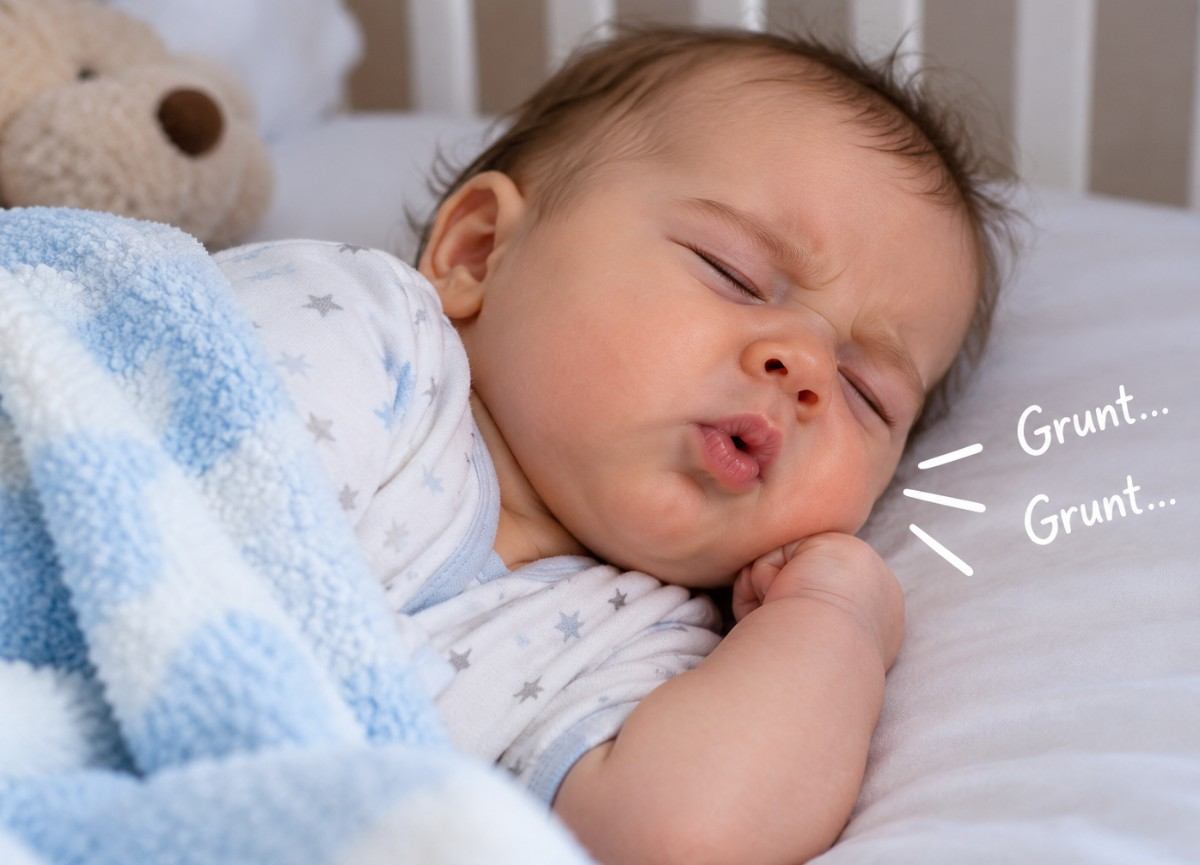
Hearing your baby make little grunting, squeaking, snorting, or groaning sounds while sleeping can be surprising, especially for first-time parents. You may find yourself checking the crib repeatedly to make sure your little one is breathing comfortably.
The good news is that baby grunting while sleeping is often normal, particularly in newborns. Babies have developing respiratory systems, immature digestive systems, and different sleep patterns from adults. These factors can make their sleep surprisingly noisy.
Understanding why babies grunt during sleep can help you recognize what is normal, what you can do at home, and when your baby needs to see a doctor.
Is It Normal for Babies to Grunt While Sleeping?
Yes, occasional grunting during sleep is common in newborns and young babies. Their breathing patterns are still developing, and they may make different sounds as they move between sleep stages.
Some babies grunt while stretching, passing gas, having a bowel movement, or adjusting their sleeping position.
Newborns can also experience periodic breathing, which involves brief pauses followed by faster breathing. This can be normal in some healthy babies, provided there are no signs of breathing distress.
However, grunting with every breath, especially when accompanied by rapid breathing, chest retractions, or changes in skin color, is not normal and requires immediate medical evaluation.
Why Do Babies Grunt While Sleeping? 10 Common Reasons
There are several possible reasons why your baby makes grunting noises during sleep. Most are related to normal newborn development, digestion, or minor discomfort.
1. Active Sleep
Newborns spend a significant amount of time in active sleep, a stage similar to REM sleep in adults. During this stage, babies may move their arms and legs, twitch, smile, make facial expressions, and produce little grunting sounds.
Their breathing may also become irregular for short periods.
What parents can do: If your baby appears comfortable, has normal skin color, and is breathing without difficulty, observe quietly before disturbing their sleep.
2. Immature Digestive System
A newborn’s digestive system is still developing. Gas can build up in the stomach and intestines, causing discomfort and making babies grunt, squirm, or stretch while sleeping.
You may notice these sounds more often after feeding.
What parents can do: Burp your baby during and after feeding. Gentle tummy massage while your baby is awake may also help relieve gas.
3. Passing Gas
Sometimes, babies grunt because they are trying to pass gas. Their abdominal muscles and coordination are still developing, so releasing trapped gas may require extra effort.
Your baby may pull their knees toward their stomach, wiggle, turn red briefly, or make groaning sounds.
What parents can do: Try gentle bicycle-leg movements while your baby is awake. Avoid pressing the stomach or forcing the legs.
4. Nasal Congestion
Babies have very small nasal passages, so even a small amount of mucus can make their breathing sound noisy.
A stuffy nose may cause snorting, snuffling, snoring, or grunting sounds, particularly when your baby is sleeping.
What parents can do: If your baby has nasal congestion, ask your pediatrician about using infant-appropriate saline drops and gentle nasal suction. Avoid overusing suction because it can irritate the nasal passages.
5. Difficulty Passing Stool
Some babies grunt, strain, and turn red when trying to pass stool. This can happen because they are still learning how to coordinate their abdominal muscles and relax their pelvic floor.
If your baby eventually passes soft stool, this may be a normal developmental process called infant dyschezia.
What parents can do: Give your baby time to develop this coordination. Do not use suppositories, rectal stimulation, or laxatives unless recommended by a healthcare professional.
6. Gastroesophageal Reflux (GER)
Gastroesophageal reflux happens when stomach contents flow back into the esophagus. It is common in infants because the muscle that keeps stomach contents from coming back up is still developing.
Some babies may grunt, swallow repeatedly, hiccup, spit up, or appear uncomfortable after feeding.
What parents can do: Feed your baby in a comfortable position, avoid overfeeding, and burp regularly. You can hold your baby upright while awake after feeding. Always place your baby flat on their back for sleep, even if they have reflux.
7. Developing Breathing Patterns
Newborns are still developing the coordination needed for regular breathing. Their breathing may sometimes be uneven, with short pauses followed by several quicker breaths.
This pattern is known as periodic breathing.
It is generally considered normal when brief pauses occur without changes in skin color, difficulty breathing, or other signs of distress.
What parents can do: Observe your baby’s breathing and overall comfort. If pauses last longer than 10 seconds, seek medical advice promptly. If your baby turns blue, becomes limp, or struggles to breathe, seek emergency help.
8. Hunger or Need for Feeding
Sometimes, grunting and other little noises are part of your baby’s early hunger cues.
Your baby may also move their head from side to side, open their mouth, suck their hands, or make sucking sounds while sleeping or waking up.
What parents can do: Look for additional hunger cues and follow your baby’s usual feeding schedule. Crying is often a later sign of hunger.
9. Premature Birth
Babies born prematurely may have less mature lungs, breathing control, and digestive systems than full-term babies.
As a result, they may experience more irregular breathing patterns and require additional monitoring.
However, persistent grunting during breathing should never be assumed to be normal simply because a baby was born prematurely.
What parents can do: Follow your neonatal team’s recommendations and discuss any new or unusual breathing sounds with your baby’s healthcare provider.
10. Respiratory Infection or Breathing Problems
Although many baby sleep noises are harmless, grunting can sometimes indicate a respiratory problem.
Conditions such as bronchiolitis, pneumonia, or newborn respiratory distress can make breathing difficult.
Other symptoms may include:
- Rapid or difficult breathing.
- Nostrils widening with each breath.
- Skin pulling inward between or below the ribs.
- Persistent coughing.
- Poor feeding.
- Unusual sleepiness.
- Bluish or gray lips, tongue, or skin.
What parents can do: Seek immediate medical attention if your baby has persistent grunting with breathing or any other signs of respiratory distress. Do not wait for the symptoms to disappear on their own.
What Does Different Baby Grunting Sound Like?
Not every grunting sound has the same meaning. Paying attention to when the sound occurs can help you describe it to your pediatrician.
| Type of sound | Possible explanation |
|---|---|
| Occasional soft grunts | Active sleep or normal movements |
| Grunting with leg movements | Gas or bowel movements |
| Snorting or snuffling | Nasal congestion |
| Grunting after feeding | Reflux or digestive discomfort |
| Grunting with every breath | Possible breathing difficulty |
| Grunting with coughing | Respiratory irritation or infection |
Remember that sounds alone cannot diagnose a medical condition. Your baby’s breathing effort, color, feeding, and overall behavior are equally important.
When Is Baby Grunting While Sleeping a Cause for Concern?
Parents should pay particular attention to grunting that appears to happen with every breath rather than occasional noises during sleep.
Seek emergency medical help:
Get emergency medical assistance immediately if your baby:
- Makes a grunting sound with almost every breath.
- Has blue or gray lips, tongue, or face.
- Shows deep pulling in of the chest or skin between the ribs while breathing.
- Has nostrils that flare with each breath.
- Struggles to breathe or has severe breathing difficulty.
- Becomes unusually limp or difficult to wake.
- Has a breathing pause accompanied by color change or difficulty breathing.
Contact your pediatrician promptly if grunting is new, persistent, becoming more frequent, or accompanied by poor feeding, coughing, fever, or fewer wet diapers.
Newborns can become unwell quickly, so it is better to seek medical advice early rather than assume unusual breathing sounds are harmless.
How to Help a Baby Who Grunts While Sleeping
If your baby makes occasional grunting sounds but otherwise appears comfortable, a few simple measures may help improve their comfort.
1. Burp Your Baby After Feeding
Trapped air can make babies uncomfortable. Burping during and after feeding may help release swallowed air and reduce gas-related discomfort.
2. Check for Nasal Congestion
Listen for signs of a blocked nose. If your baby has difficulty breathing through the nose, ask your pediatrician whether saline drops and gentle suction are appropriate.
3. Avoid Overfeeding
Feeding more milk than your baby comfortably tolerates may contribute to spit-up and digestive discomfort. Follow your baby’s hunger and fullness cues.
4. Monitor Your Baby’s Breathing
Notice whether grunting happens occasionally or with every breath. Watch for chest movements, nostril flaring, skin color changes, and unusual breathing pauses.
5. Keep Your Baby Comfortable
Check whether your baby is too hot, cold, or wearing uncomfortable clothing. Dress your baby appropriately for the room temperature.
6. Follow a Safe Sleep Routine
Always place your baby on their back on a firm, flat, non-inclined sleep surface. Keep the crib free of pillows, blankets, stuffed toys, and positioners.
Do not use inclined sleepers or elevate the mattress to reduce grunting or reflux.
Is Baby Grunting While Sleeping Different at Different Ages?
Yes. The reasons behind sleep-related grunting can change as babies grow and develop.
| Baby’s age | What may cause grunting |
|---|---|
| 0–1 month | Immature breathing patterns, active sleep, digestion, and newborn adjustment |
| 1–2 months | Active sleep, gas, nasal congestion, and developing digestion |
| 2–3 months | Digestive development, sleep transitions, and occasional congestion |
| 3–6 months | Sleep movements, digestive discomfort, and respiratory congestion |
| 6–12 months | Congestion, reflux, sleep transitions, and occasional discomfort |
These are general developmental patterns, not diagnostic age guidelines. Persistent or unusual grunting at any age deserves medical attention, especially when it occurs with breathing difficulty.
How Long Does Baby Grunting While Sleeping Last?
For many babies, noisy sleep is most noticeable during the newborn period and gradually becomes less frequent as their nervous system, breathing coordination, and digestive system mature.
Some babies become quieter sleepers within the first few months, while others continue making occasional noises for longer.
There is no exact age when all babies stop grunting during sleep.
However, persistent grunting with every breath is not something to wait out. It requires prompt medical assessment regardless of your baby’s age.
Should You Wake a Baby Who Is Grunting While Sleeping?
Not necessarily.
If your baby makes occasional soft grunts, has normal skin color, breathes comfortably, and remains peacefully asleep, you generally do not need to wake them just because of the sound.
However, if the grunting sounds unusual, happens with every breath, or is accompanied by signs of breathing difficulty, seek immediate medical attention rather than simply trying to wake or reposition your baby.
Does Baby Grunting Mean the Baby Is Uncomfortable?
Not always.
Some babies grunt during active sleep without experiencing pain or discomfort. Others may grunt because of gas, a bowel movement, hunger, or nasal congestion.
Look for additional signs, such as persistent crying, arching of the back, pulling up the legs, difficulty feeding, or unusual restlessness.
If these symptoms continue or interfere with feeding and sleeping, discuss them with your pediatrician.
FAQ’s
Why does my baby grunt while sleeping but seem comfortable?
Babies may grunt during active sleep because their nervous systems and breathing patterns are still developing. If your baby has normal skin color and breathes comfortably, occasional grunting is usually nothing to worry about.
Why does my baby grunt and squirm while sleeping?
Your baby may be experiencing gas, active sleep, digestive discomfort, or difficulty passing stool. These activities can cause grunting, stretching, and leg movements.
Can gas cause a baby to grunt during sleep?
Yes. Trapped gas can cause abdominal discomfort, making babies grunt, squirm, pull their legs toward their stomach, or briefly wake up.
Why does my baby grunt while sleeping after feeding?
Babies may grunt after feeding because of swallowed air, gas, or gastroesophageal reflux. Burping your baby during and after feeding may help reduce discomfort.
Is baby grunting a sign of reflux?
Sometimes. Babies with reflux may grunt, spit up, hiccup, or swallow repeatedly after feeding. However, grunting alone does not confirm reflux.
Why does my baby grunt while sleeping but not wake up?
Babies often make noises during active sleep without fully waking. They may grunt, move their arms, twitch, or make facial expressions while remaining asleep.
Can nasal congestion make babies grunt while sleeping?
Yes. Babies have narrow nasal passages, so mucus can make breathing sound noisy. Saline drops and gentle nasal suction may help when recommended by a pediatrician.
Do babies grunt more during active sleep?
Yes. During active sleep, babies may move, twitch, make facial expressions, and produce different sounds. Their breathing can also become temporarily irregular.
When do babies stop grunting while sleeping?
Many babies become quieter sleepers as their digestive systems, nervous systems, and breathing coordination mature. However, there is no specific age when all babies stop grunting.
Is grunting while sleeping normal for a 2-month-old baby?
Occasional grunting is common in two-month-old babies because their sleep patterns and digestive systems are still developing. Persistent grunting during breathing should be assessed immediately.
Can breastfeeding cause a baby to grunt while sleeping?
Breastfeeding itself does not usually cause grunting. However, babies may swallow air during feeding, leading to gas and digestive discomfort that can cause grunting afterward.
Should I worry if my baby grunts after feeding?
Occasional grunting after feeding may be related to swallowed air or reflux. However, repeated choking, coughing, breathing difficulty, or poor feeding should be assessed by a healthcare professional.
Can overfeeding cause grunting?
Yes, overfeeding can cause grunting due to gas, stomach discomfort, and reflux, especially after feeding.
Sources / References:
Disclaimer:
This article is for educational purposes only and does not replace professional medical advice. Consult a qualified pediatrician about your baby’s symptoms. Seek emergency care for signs of breathing difficulty.
Also Read: