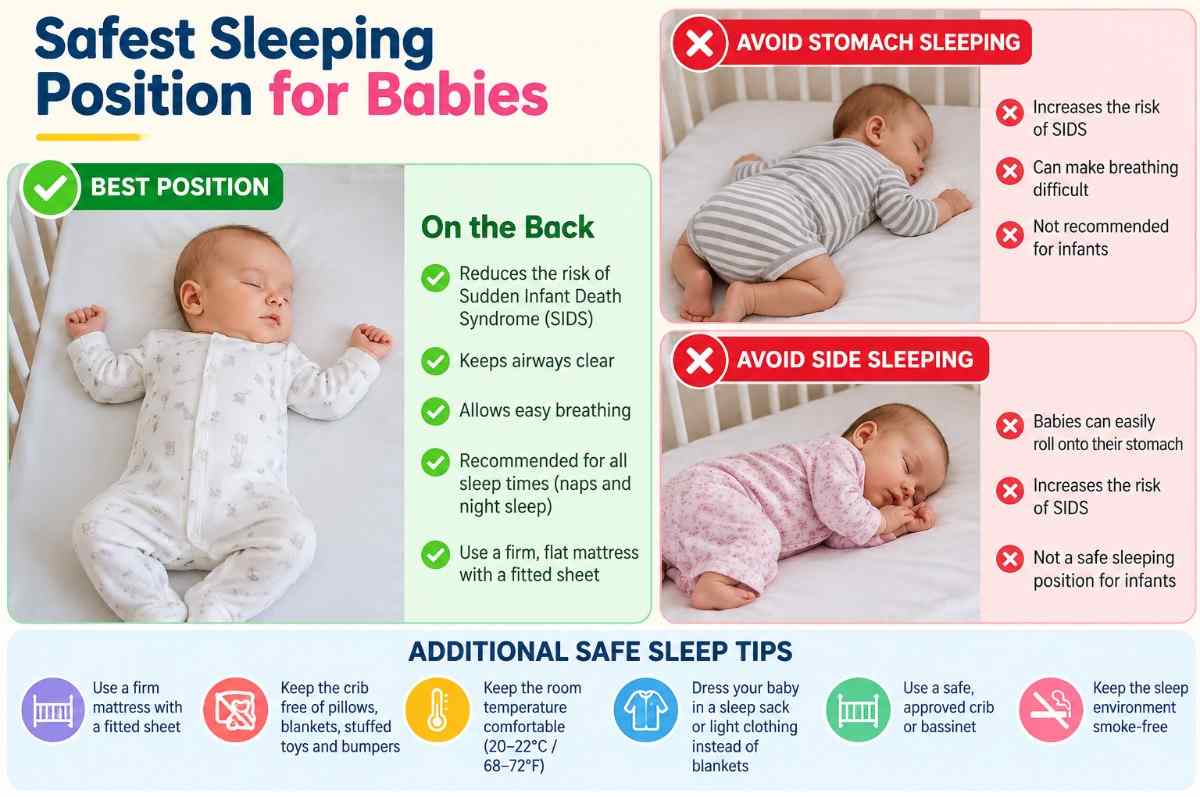
The safest sleeping position for babies is on their backs (face-up) for every sleep, including naps and nighttime sleep. This position significantly reduces the risk of sudden infant death syndrome (SIDS) and other sleep-related infant deaths.
For new parents, putting a baby to sleep can feel overwhelming. You may worry about whether your baby is comfortable, whether they can breathe properly, or whether sleeping on their back could cause choking. These concerns are common, especially during the first few months.
In this guide, we explain the safest sleeping position for babies, why it matters, which positions to avoid, and how to create a safe sleeping environment.
What Is the Safest Sleeping Position for Babies?
The safest sleeping position for babies is sleeping on their backs on a firm, flat, non-inclined mattress. Babies should be placed on their backs every time they sleep, whether during the day or at night.
This recommendation applies to healthy babies throughout their first year of life.
Back sleeping helps keep the baby’s airway in a safer position and is associated with a lower risk of SIDS compared with stomach or side sleeping.
Parents should remember that babies do not need pillows, soft blankets, or special sleep-positioning products to sleep safely.
Why Is Back Sleeping Recommended for Babies?
Back sleeping is recommended because it helps reduce the risk of SIDS (Sudden Infant Death Syndrome), an unexplained death of an otherwise healthy baby, usually during sleep.
There are several important reasons why this position is considered safer.
- Keeps the Airway in a Safer Position: Sleeping on the back helps maintain a safer position for the baby’s airway.
- Reduces the Risk of SIDS: Babies who sleep on their backs have a lower risk of SIDS than babies who sleep on their stomachs or sides.
- Reduces the Risk of Rebreathing: Back sleeping reduces the likelihood of breathing in air that has already been exhaled.
- Supports Safer Breathing: A flat, firm sleep surface combined with back sleeping helps reduce the risk of accidental suffocation.
- Suitable for Newborns: Back sleeping is recommended for healthy newborns, including babies born prematurely once they are medically stable.
Is It Safe for Babies to Sleep on Their Side?
No. Side sleeping is not recommended for babies under 1 year of age.
Although some parents believe that side sleeping is a comfortable alternative, it is an unstable position. A baby placed on their side can easily roll onto their stomach, which increases the risk of sleep-related death.
Instead, always place your baby flat on their back when putting them down to sleep.
Important: Do not use rolled towels, pillows, blankets, or sleep positioners to keep your baby on their side.
Is It Safe for Babies to Sleep on Their Stomach?
No. Babies should not be placed on their stomachs for sleeping during their first year.
Stomach sleeping can increase the risk of SIDS and accidental suffocation. It may also make it harder for babies to move their heads freely or escape from a position that affects their breathing.
However, tummy time is important for healthy development.
The difference is:
- Sleeping on the stomach: Not recommended.
- Tummy time while awake and supervised: Recommended.
Give your baby regular supervised tummy time when they are awake to help develop neck, shoulder, and upper-body muscles.
Safest Sleeping Position for Babies by Age
Back sleeping is recommended throughout the first year, but certain sleep-related precautions change as babies grow.
| Baby’s age | Recommended sleeping position | Important safety advice |
|---|---|---|
| 0–3 months | On the back | Always use a firm, flat mattress. |
| 3–6 months | On the back | Watch for early signs of rolling and stop swaddling when rolling attempts begin. |
| 6–9 months | On the back | If baby rolls independently in both directions, they can remain in their chosen position. |
| 9–12 months | On the back initially | Continue following safe-sleep practices and keep the sleep space empty. |
Even when babies become more active, always start every sleep by placing them on their backs.
How to Create a Safe Sleeping Environment for Your Baby
Choosing the correct sleeping position is important, but the sleep environment matters just as much. Follow these practical tips to make your baby’s sleeping area safer.
1. Choose a Firm and Flat Mattress
A baby should sleep on a firm, flat, level mattress that does not sag or sink under their body.
Soft mattresses, waterbeds, sofas, and adult pillows are not appropriate sleeping surfaces for infants.
2. Keep Pillows and Blankets Away
Avoid placing pillows, loose blankets, quilts, stuffed toys, and soft cushions inside your baby’s sleeping area.
These objects can cover the baby’s face and create a suffocation risk.
3. Use a Properly Fitted Bedsheet
Use only a fitted sheet designed for the baby’s mattress. Make sure it fits securely and does not come loose during sleep.
4. Let Your Baby Sleep in Your Room
Room-sharing is recommended, particularly during the first six months.
Keep your baby’s crib, bassinet, or separate infant sleep space close to your bed. This allows you to monitor and respond to your baby while maintaining a separate sleeping surface.
5. Avoid Overheating
Dress your baby appropriately for the room temperature. Avoid excessive clothing, heavy blankets, and covering the baby’s head while sleeping.
Signs of overheating may include sweating, a hot chest, or flushed skin.
6. Avoid Inclined Sleep Products
Do not allow your baby to sleep in inclined sleepers, baby loungers, swings, or car seats outside their intended use.
If your baby falls asleep in a car seat, stroller, or other sitting device, move them to a firm, flat sleep surface as soon as it is practical.
7. Keep the Crib Empty
A baby’s sleeping space should contain only the baby and a firm mattress with a fitted sheet.
Avoid crib bumpers, stuffed animals, positioners, and decorative bedding.
What If Your Baby Rolls Over While Sleeping?
Many babies begin rolling over independently as they grow. This is a normal part of physical development, but it can make parents nervous.
Here is what you should know:
- If Your Baby Rolls From Back to Stomach and Back Again: Continue placing your baby on their back at the beginning of every sleep. Once they can roll independently in both directions, you do not need to keep turning them back.
- If Your Baby Can Roll Only One Way: If they roll onto their stomach, gently reposition them onto their back when you notice it.
- If Your Baby Starts Trying to Roll: Stop swaddling immediately, even if they have not completed a full roll yet.
- Keep the Crib Empty: Remove pillows, blankets, toys, and other objects that could obstruct breathing.
Remember that rolling over is a normal milestone. Your main responsibility is to provide a safe sleeping environment and always begin sleep with your baby on their back.
Unsafe Sleeping Positions for Babies
Not all sleeping positions are safe for babies. Certain positions can increase the risk of suffocation, breathing difficulties, and sudden infant death syndrome (SIDS). Parents should understand which positions to avoid to protect their baby’s health and safety.
Here are some unsafe sleeping positions for babies:
- Stomach Sleeping: Placing a baby on their stomach increases the risk of SIDS and sleep-related infant deaths. Always place your baby on their back for sleep.
- Side Sleeping: Side sleeping is unsafe because babies can easily roll onto their stomachs, making breathing more difficult.
- Sleeping Face-Down: A baby’s face pressed against a mattress, pillow, or soft surface can obstruct breathing and increase the risk of suffocation.
- Sleeping on Soft Mattresses: Soft mattresses, cushions, and pillows can create an unsafe sleep surface because they may cover the baby’s nose and mouth.
- Sleeping on Inclined Surfaces: Inclined sleepers, bouncy seats, and swings are not safe for routine infant sleep because babies can slide into positions that restrict breathing.
- Sleeping With Loose Blankets: Loose blankets can move over the baby’s face and create a suffocation hazard.
- Sleeping With Pillows or Stuffed Toys: Soft objects inside the crib can obstruct the baby’s airway and increase the risk of accidental suffocation.
- Sleeping in an Adult Bed: Adult beds may contain pillows, blankets, and soft mattresses that increase the risk of accidental suffocation and entrapment.
Important Safety Tip: Always place your baby on their back on a firm, flat, non-inclined sleep surface with only a fitted sheet. Keep pillows, blankets, stuffed toys, and other loose objects out of the baby’s sleeping area.
Will My Baby Choke If They Sleep on Their Back?
No. Healthy babies are not more likely to choke when sleeping on their backs.
Some parents worry that milk or spit-up may enter the baby’s airway during sleep. However, babies have natural protective reflexes, including swallowing and coughing, that help protect their airways.
The anatomy of a baby’s airway also helps prevent fluids from entering the lungs when they are sleeping on their backs.
Even babies with gastroesophageal reflux (GERD) are generally recommended to sleep flat on their backs unless a specialist provides specific medical instructions for an individual condition.
Do not raise the mattress, use a wedge, or place your baby on their stomach to manage reflux.
Is Swaddling Safe for Babies?
Swaddling can help some newborns feel calm and comfortable, but it must be done correctly.
If you choose to swaddle your baby, follow these precautions:
- Always place the swaddled baby on their back.
- Keep the swaddle comfortably fitted around the upper body without restricting breathing.
- Allow enough room around the hips and legs for natural movement.
- Avoid weighted swaddles and weighted blankets.
- Stop swaddling as soon as your baby shows signs of trying to roll over.
Swaddling does not prevent SIDS. Continuing to swaddle a baby who is beginning to roll can increase the risk of suffocation.
Common Baby Sleeping Mistakes Parents Should Avoid
Even caring parents can unknowingly make mistakes when preparing their baby’s sleeping area.
Here are some common habits to avoid:
- Placing the Baby on Their Side: Side sleeping is unstable and can allow the baby to roll onto their stomach.
- Using Soft Mattresses: Soft surfaces can increase the risk of suffocation.
- Keeping Pillows in the Crib: Pillows are unnecessary and unsafe for infants.
- Using Baby Sleep Positioners: These products can restrict movement and create entrapment or suffocation hazards.
- Covering the Baby With Heavy Blankets: Loose bedding can cover the baby’s face.
- Allowing the Baby to Sleep on a Sofa: Sofas and armchairs are particularly dangerous places for infant sleep.
- Ignoring Rolling Milestones: Swaddling should stop as soon as the baby shows signs of attempting to roll.
- Using Inclined Sleepers: Inclined products are not safe for routine infant sleep.
- Bed-Sharing: Sharing an adult bed increases the risk of accidental suffocation and sleep-related death. A separate infant sleep surface is safer.
When Should Parents Consult a Pediatrician?
Although back sleeping is recommended for almost all babies, some infants may have individual medical circumstances that require professional assessment.
Consult a pediatrician if:
- Your baby has a medical condition affecting breathing.
- Your baby was born prematurely and you have concerns about their sleeping position.
- Your baby has persistent breathing difficulties during sleep.
- Your baby experiences frequent choking episodes or unusual feeding-related symptoms.
- You are unsure how to manage sleep because of a diagnosed medical condition.
If your baby has pauses in breathing, turns blue or grey, or has severe difficulty breathing, seek emergency medical care immediately.
Do not change your baby’s sleeping position or use special positioning devices without medical advice.
Final Thoughts
The safest sleeping position for babies is on their backs for every nap and nighttime sleep during the first year of life. Back sleeping, combined with a firm and flat mattress, an empty crib, and a comfortable room temperature, helps reduce the risk of sleep-related infant deaths.
Parents should also remember that side sleeping and stomach sleeping are not safe alternatives, even when a baby seems more comfortable in those positions.
Following consistent safe-sleep habits and ensuring that everyone who cares for your baby understands these recommendations can help create a safer sleeping environment.
FAQ’s
How long should babies sleep on their backs?
Babies should be placed on their backs for every nap and nighttime sleep until their first birthday.
Does back sleeping cause a flat head in babies?
Back sleeping may contribute to positional flat spots, but supervised tummy time and changing your baby’s head position while lying on their back can help prevent them.
Can babies with acid reflux sleep on their backs?
Yes, babies with acid reflux should generally sleep on their backs on a firm, flat surface unless their specialist gives specific medical instructions.
Is it safe for newborns to sleep without a pillow?
Yes, newborns should sleep without pillows because soft bedding can increase the risk of suffocation.
Can newborn babies sleep on their parents’ chests?
Contact naps on a parent’s chest are safest only when the adult is fully awake and actively supervising. If the adult feels sleepy, the baby should be moved to their own safe sleep space.
When should parents stop swaddling their babies?
Parents should stop swaddling as soon as their baby shows signs of trying to roll over, even if the baby has not rolled completely.
Is tummy time important for babies?
Yes, supervised tummy time while babies are awake helps strengthen their neck, shoulder, and upper-body muscles and supports healthy development.
Should I turn my baby onto their back if they roll over?
If your baby can roll independently in both directions, you do not need to reposition them every time. If they can roll only one way, gently reposition them onto their back when they roll onto their stomach.
Can newborns sleep in a swing?
A swing is not a safe routine sleeping surface. If your newborn falls asleep in a swing, move them to a firm, flat, separate infant sleep surface as soon as possible.
Can I use a baby sleep positioner?
No. Sleep positioners and anti-roll pillows are not recommended because they can increase the risk of suffocation and entrapment.
What are the signs of baby sleep problems?
Common signs of baby sleep problems include frequent night waking, difficulty falling asleep, excessive fussiness, irregular sleep patterns, short naps, and unusual tiredness during the day.
What should I do if my baby is not sleeping properly?
Establish a consistent bedtime routine, keep the sleeping environment calm and comfortable, follow age-appropriate sleep schedules, and always place your baby on their back to sleep. Consult a pediatrician if sleep difficulties persist or are accompanied by other concerning symptoms.
Sources / References:
Disclaimer:
This article is for informational purposes only and should not replace professional medical advice. Consult your pediatrician for concerns about your baby’s sleep or health.
Also Read: