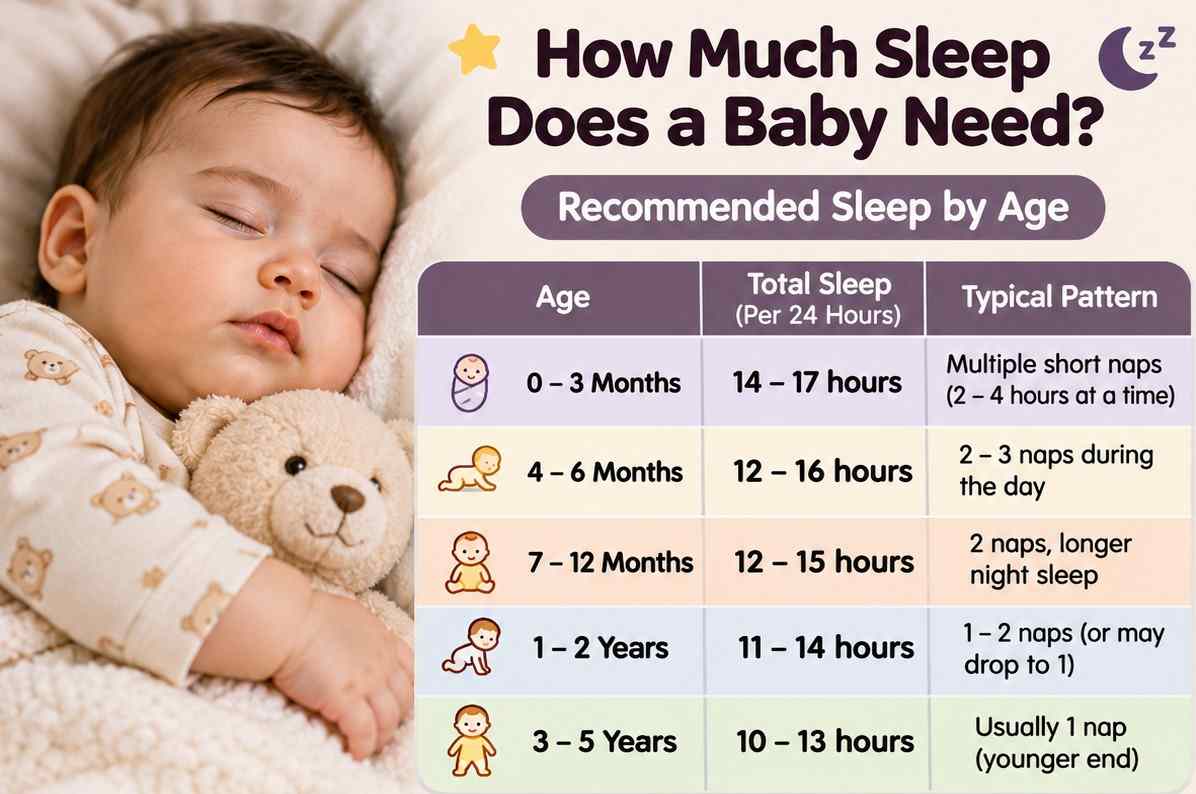
Sleep plays an important role in a baby’s growth, brain development, learning, and overall health. During the first year of life, babies spend a significant amount of time sleeping because their bodies and brains are developing rapidly. However, their sleep patterns change as they grow.
Some newborns sleep for several short periods throughout the day and night, while older babies gradually develop longer nighttime sleep patterns and more predictable naps.
As a parent, you may wonder whether your baby is sleeping enough, how many naps are appropriate, or when your little one should start sleeping longer at night.
So, how much sleep does a baby need by age?
Most newborns sleep approximately 14–17 hours in a 24-hour period, although sleep patterns vary. Babies aged 4–12 months generally need 12–16 hours of total sleep, including daytime naps. As babies grow, their sleep requirements gradually decrease.
In this guide, we will explain how much sleep babies need at different ages, typical nap patterns, signs of insufficient sleep, and practical ways to establish healthy sleep habits.
How Much Sleep Do Babies Need by Age?
A baby’s sleep requirements change significantly during the first year. Newborns need frequent sleep throughout the day and night, while older babies gradually develop more consistent sleeping routines.
Here is a general guide to recommended sleep durations:
| Baby’s Age | Recommended Sleep Per Day | Typical Sleep Pattern |
|---|---|---|
| 0–1 month | Around 14–17 hours | Several short sleep periods |
| 1–2 months | Around 14–17 hours | Frequent daytime and nighttime sleep |
| 2–3 months | Around 14–17 hours | Gradually developing sleep patterns |
| 4–6 months | 12–16 hours | Longer nighttime stretches and multiple naps |
| 7–9 months | 12–16 hours | Usually 2–3 daytime naps |
| 10–12 months | 12–16 hours | Usually 2 daytime naps |
Important: The 14–17-hour range for newborns is a commonly used general guideline, not a formal American Academy of Sleep Medicine recommendation. The AASM does not establish a specific sleep-duration recommendation for babies younger than 4 months because of wide individual variation. For babies aged 4–12 months, the recommendation is 12–16 hours per 24 hours, including naps.
How Much Sleep Does a Newborn Need (0–1 Month)?
Newborn babies need plenty of sleep because they are adjusting to life outside the womb. During the first month, sleeping for several short periods is completely normal.
Most newborns sleep approximately 14–17 hours throughout a 24-hour period. However, they rarely sleep for long stretches because they need frequent feeding and care.
Typical sleep pattern:
- Total sleep: Around 14–17 hours daily.
- Nighttime sleep: Divided into several short periods.
- Daytime naps: Multiple short naps throughout the day.
- Sleep duration: Often 1–3 hours at a time.
Why do newborns wake up so frequently?
Newborns have small stomachs and need frequent breast milk or formula feedings. Their internal body clocks are also not fully developed, which means they cannot yet distinguish clearly between daytime and nighttime.
Parents should not expect a newborn to follow a fixed sleep schedule. Feeding, diaper changes, and comforting are normal parts of newborn care.
How Much Sleep Does a 1–2-Month-Old Baby Need?
A 1–2-month-old baby generally needs around 14–17 hours of sleep per day.
At this stage, babies may begin staying awake for slightly longer periods. However, their sleep remains unpredictable, and nighttime waking for feeding is still common.
Typical sleep pattern:
- Total sleep: Around 14–17 hours daily.
- Nighttime sleep: Several short stretches.
- Daytime naps: Multiple naps throughout the day.
- Sleep duration: Usually a few hours at a time.
What changes at this age?
Your baby may gradually become more alert during the day and more responsive to familiar voices and surroundings. Some babies also begin developing slightly longer nighttime sleep stretches.
However, every baby develops differently. Frequent waking does not necessarily mean that your baby has a sleep problem.
How Much Sleep Does a 2–3-Month-Old Baby Need?
A 2–3-month-old baby generally sleeps around 14–17 hours in a 24-hour period.
During this stage, babies may begin developing more predictable sleep patterns. Some may sleep for longer stretches at night, although waking for feeding remains normal.
Typical sleep pattern:
- Total sleep: Around 14–17 hours daily.
- Nighttime sleep: Gradually becoming more organized.
- Daytime naps: Several naps.
- Sleep duration: Longer stretches may gradually develop.
What changes at this age?
Your baby may become more active and interested in the surrounding environment. You might notice longer periods of alertness between naps.
A consistent day-and-night routine can help babies gradually understand the difference between daytime activities and nighttime rest.
How Much Sleep Does a 4–6-Month-Old Baby Need?
Babies between 4 and 6 months generally need 12–16 hours of sleep per day, including naps.
At this stage, sleep patterns often become more organized. Some babies begin sleeping for longer periods at night, while others continue waking for feeding or comfort.
Typical sleep pattern:
- Total sleep: 12–16 hours daily.
- Nighttime sleep: Longer stretches may develop.
- Daytime naps: Usually 2–4 naps, depending on age and individual needs.
- Sleep duration: More predictable sleep periods may develop.
What changes at this age?
Babies become increasingly aware of their surroundings and may develop more consistent sleeping and waking times.
Some parents also notice changes in their baby’s sleep around this period, sometimes called the 4-month sleep regression. These changes may be related to developing sleep patterns and increased awareness.
It is important to remember that waking during the night is still normal at this age.
How Much Sleep Does a 7–9-Month-Old Baby Need?
A 7–9-month-old baby generally needs 12–16 hours of sleep over 24 hours, including daytime naps.
Many babies in this age group settle into a more predictable routine with nighttime sleep and two or three daytime naps.
Typical sleep pattern:
- Total sleep: 12–16 hours daily.
- Nighttime sleep: Often longer and more consistent.
- Daytime naps: Usually 2–3 naps.
- Sleep duration: More organized sleep and waking patterns.
What changes at this age?
Your baby may become more physically active, learning to sit, crawl, or move around. These developmental changes can sometimes affect sleep.
Separation anxiety may also begin during this stage. Some babies become upset when parents leave the room, making bedtime more challenging.
A familiar bedtime routine, a comfortable sleeping environment, and consistent sleep times can help.
How Much Sleep Does a 10–12-Month-Old Baby Need?
Babies between 10 and 12 months generally need 12–16 hours of sleep per day, including naps.
By their first birthday, many babies have developed more predictable sleeping routines. Most gradually move toward two daytime naps, although individual schedules can differ.
Typical sleep pattern:
- Total sleep: 12–16 hours daily.
- Nighttime sleep: Usually more consistent.
- Daytime naps: Generally 2 naps.
- Sleep duration: Longer nighttime sleep periods may become established.
What changes at this age?
Babies may become increasingly active as they learn to stand, cruise along furniture, or take their first steps.
Teething, separation anxiety, and developmental milestones can temporarily interrupt sleep.
Parents should continue following a consistent bedtime routine rather than worrying about occasional changes in sleep patterns.
How Much Sleep Does a 1-Year-Old Baby Need?
Once babies reach 1 year of age, they enter the toddler stage.
Children aged 1–2 years generally need 11–14 hours of sleep per 24 hours, including daytime naps, according to the American Academy of Sleep Medicine.
Many 1-year-olds continue taking two naps, while others gradually transition toward one longer daytime nap.
Typical sleep pattern:
- Total sleep: 11–14 hours daily.
- Nighttime sleep: Usually more predictable.
- Daytime naps: One or two naps.
- Sleep duration: Longer periods of nighttime sleep.
A consistent bedtime, quiet sleeping environment, and relaxing bedtime activities can support healthy sleep habits.
Why Is Sleep Important for a Baby?
Sleep is not simply a period of rest. It supports several important processes that help babies grow and develop.
Here are some reasons why sufficient sleep matters:
- Supports Brain Development: Sleep supports the developing brain and helps babies process new experiences and information.
- Promotes Physical Growth: Healthy sleep supports normal growth and development during infancy.
- Supports Memory and Learning: Sleep plays a role in processing and retaining information babies experience throughout the day.
- Helps Regulate Emotions: Adequate rest can support better emotional regulation as babies grow.
- Supports Immune Function: Healthy sleep contributes to the normal functioning of the immune system.
- Improves Alertness: Well-rested babies may be more alert and engaged during their waking hours.
How Many Naps Does a Baby Need by Age?
Daytime naps are an important part of a baby’s total sleep requirement. The number of naps usually decreases as babies get older.
| Baby’s Age | Typical Number of Naps |
|---|---|
| 0–2 months | Several naps throughout the day |
| 2–3 months | Multiple naps |
| 4–6 months | Around 2–4 naps |
| 7–9 months | Around 2–3 naps |
| 10–12 months | Usually 2 naps |
| 1–2 years | Usually 1–2 naps |
These are approximate patterns rather than strict schedules. Some babies need more naps, while others naturally sleep for longer periods at a time.
Signs Your Baby Is Not Getting Enough Sleep
Babies cannot tell parents when they feel tired. However, their behavior may provide clues that they need more rest.
Watch for these common signs:
- Frequent Fussiness: Your baby becomes unusually irritable or cries more than usual.
- Rubbing Eyes: Repeatedly rubbing the eyes can be a sign of tiredness.
- Yawning: Frequent yawning may indicate that your baby needs sleep.
- Difficulty Settling: Your baby struggles to relax or fall asleep.
- Increased Clinginess: Your baby may want to be held or comforted more frequently.
- Short Naps: Your baby may wake up after a brief nap and still appear tired.
- Reduced Alertness: Your baby may seem less interested in playing or interacting.
These signs are not always caused by insufficient sleep. Hunger, illness, discomfort, and developmental changes can also affect a baby’s behavior.
How to Help Your Baby Sleep Better
Establishing healthy sleep habits early can make bedtime easier for both babies and parents.
Here are some practical tips:
- Create a Bedtime Routine: Follow simple activities such as bathing, changing clothes, feeding, and reading a short story before bedtime.
- Maintain a Consistent Schedule: Try to keep bedtime and morning wake-up times reasonably consistent as your baby grows.
- Recognize Sleepy Cues: Look for yawning, reduced activity, eye rubbing, and fussiness to recognize when your baby needs rest.
- Keep Nights Calm: Use dim lighting and quiet voices during nighttime feeding and diaper changes.
- Encourage Daytime Activity: Provide age-appropriate opportunities for talking, playing, and supervised tummy time while your baby is awake.
- Create a Comfortable Environment: Keep the sleeping area quiet and at a comfortable temperature.
- Avoid Overstimulation Before Bedtime: Reduce exciting activities and bright lights as bedtime approaches.
- Be Patient With Sleep Changes: Teething, illness, travel, and developmental milestones can temporarily affect sleep.
Safe Sleep Guidelines Every Parent Should Follow
Getting enough sleep is important, but creating a safe sleeping environment is equally essential.
The American Academy of Pediatrics recommends the following safe sleep practices:
- Always Place Your Baby on Their Back: Put your baby on their back for every nap and nighttime sleep until their first birthday.
- Use a Firm, Flat Mattress: Choose a safety-approved crib, bassinet, or play yard with a firm, flat sleeping surface.
- Keep the Sleeping Area Empty: Remove pillows, blankets, stuffed toys, bumpers, and other soft objects from the baby’s sleeping space.
- Avoid Bed-Sharing: The safest arrangement is for babies to sleep in their own sleep space in the parents’ room, ideally for at least the first six months.
- Avoid Overheating: Dress your baby appropriately and avoid excessive layers.
- Avoid Weighted Sleep Products: Do not use weighted blankets, swaddles, or sleep clothing for infants.
- Stop Swaddling When Rolling Begins: Discontinue swaddling as soon as your baby shows signs of attempting to roll.
Following these precautions helps reduce the risk of sleep-related infant deaths.
When Should You Worry About Your Baby’s Sleep?
Occasional changes in sleep are normal. However, certain symptoms should not be ignored.
Contact your pediatrician if your baby:
- Consistently sleeps much less or much more than expected and you are concerned.
- Has persistent difficulty falling or staying asleep.
- Snores frequently or makes unusual breathing sounds during sleep.
- Experiences repeated pauses in breathing.
- Appears unusually sleepy or difficult to wake.
- Has feeding difficulties or is not gaining weight appropriately.
Seek immediate medical attention if your baby has difficulty breathing, turns blue or gray, or is unresponsive.
Parents should also remember that premature babies and babies with certain medical conditions may have different sleep needs. Their pediatrician can provide individualized guidance.
FAQ’s
How much sleep does a 3-month-old baby need?
A 3-month-old baby generally needs around 14–17 hours of sleep in a 24-hour period, including daytime naps.
How much sleep does a 6-month-old baby need?
A 6-month-old baby typically needs 12–16 hours of total sleep per day, including naps.
When do babies start sleeping through the night?
Some babies begin sleeping for longer stretches between 4 and 6 months, but nighttime waking is normal throughout infancy.
Is it normal for babies to sleep more during the day?
Yes, especially newborns. However, excessive daytime sleep that interferes with feeding or makes a baby difficult to wake should be discussed with a pediatrician.
Should I wake my baby up from daytime naps?
It depends on your baby’s age, feeding requirements, and sleep schedule. Young newborns may need to be awakened for regular feedings, particularly if they have weight-gain concerns.
How many naps should a baby take each day?
Newborns take several naps daily. Older babies gradually move toward two naps, while many toddlers transition to one daytime nap.
Why does my baby wake up every 2 hours at night?
Hunger, discomfort, developmental changes, teething, and normal infant sleep cycles can cause frequent nighttime waking.
Can a baby sleep too much?
Yes, unusually prolonged sleep can sometimes indicate an underlying problem, particularly if the baby is difficult to wake, feeds poorly, or appears unwell. Consult a pediatrician if you notice these signs.
What is the best bedtime for a baby?
There is no single ideal bedtime for every baby. A consistent bedtime that allows enough total sleep according to age is more important.
Do babies sleep better in a dark room?
A dim or dark room can help create a comfortable sleeping environment. During daytime, natural light and normal household activity can help babies gradually distinguish day from night.
Is it normal for a newborn to sleep 18 hours a day?
Some newborns may occasionally sleep for extended periods. However, regularly sleeping around 18 hours or more is worth discussing with a pediatrician, especially if the baby is difficult to wake, feeds poorly, or shows signs of illness.
Do babies sleep more during growth spurts?
Some babies experience temporary changes in their sleep patterns during periods of rapid development. However, increased sleep is not a reliable way to identify a growth spurt.
Do babies need daytime naps?
Yes. Daytime naps contribute to a baby’s total daily sleep requirement and support healthy development. The number and duration of naps change with age.
Is 10 Hours of Sleep Enough for a Baby?
Usually, 10 hours is not enough for a baby under 1 year old. Babies aged 4–12 months generally need 12–16 hours of total sleep in 24 hours, including naps.
Is a 2-Hour Nap Too Long for a 4-Month-Old?
No, a 2-hour nap can be normal for a 4-month-old baby. However, make sure your baby gets enough nighttime sleep and regular feedings throughout the day.
Should I Let My Baby Nap Past 5 PM?
Yes, a baby can nap after 5 PM if needed. However, a long or late nap may affect bedtime. Consider your baby’s usual bedtime and overall sleep needs when planning naps.
Is It Okay if My 4-Month-Old Only Naps for 30 Minutes?
Yes, 30-minute naps are common among 4-month-old babies. Their sleep cycles are still developing, and some babies naturally wake after a short nap. If your baby is feeding well, growing normally, and getting enough total sleep, occasional short naps are usually not a concern.
When Do Babies Start Sleeping from 7 PM to 7 AM?
Some babies begin sleeping for longer nighttime stretches between 6 and 12 months, but not all babies sleep continuously from 7 PM to 7 AM. Sleep patterns vary depending on age, feeding needs, and development. Nighttime waking can remain normal during infancy.
How Much Sleep Does a 2-Year-Old Need?
A 2-year-old generally needs 11–14 hours of sleep in 24 hours, including daytime naps. Most toddlers take one daytime nap and sleep for around 10–12 hours at night, although individual sleep patterns vary.
Sources / References::
- American Academy of Pediatrics (AAP)
- CDC
- PMC
- National Institute of Child Health and Human Development
Disclaimer:
This article is for informational purposes only and should not replace professional medical advice. Consult your pediatrician if you have concerns about your baby’s sleep, feeding, or development.
Also Read: