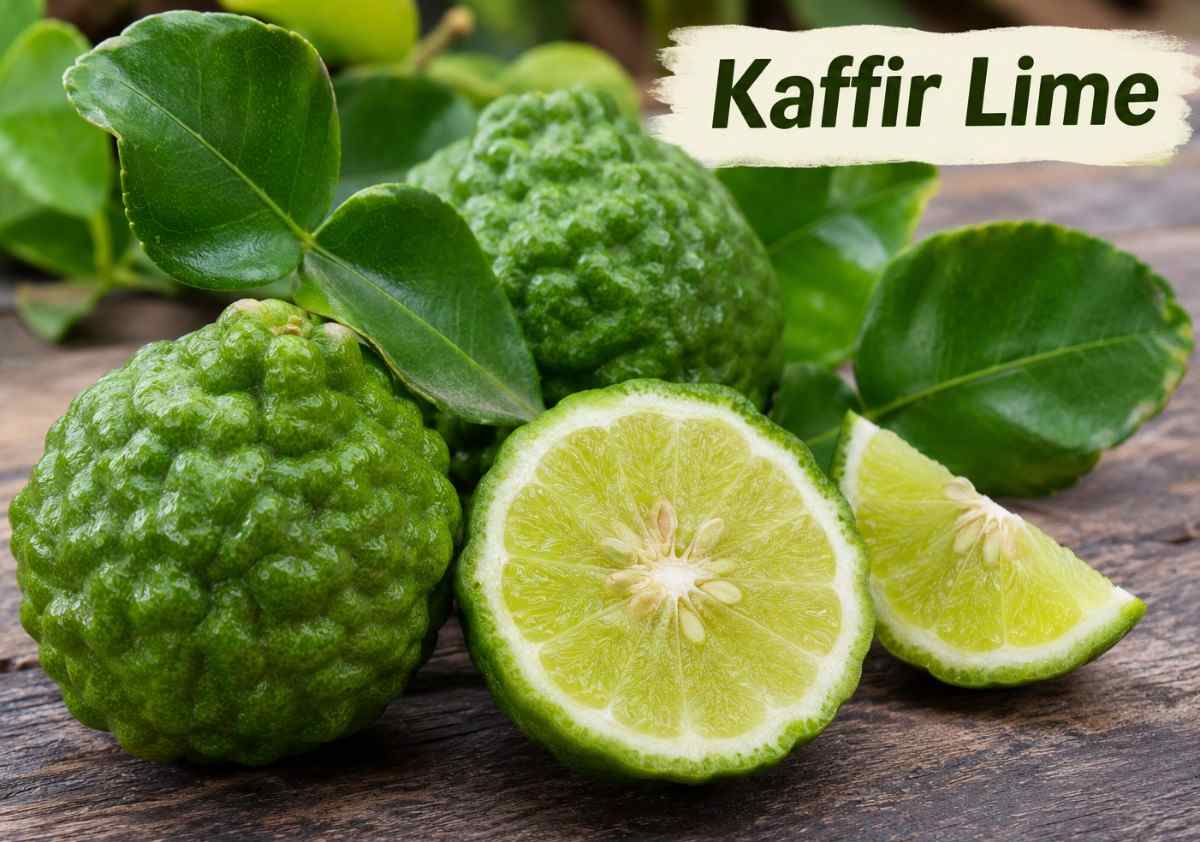
Kaffir lime is a fragrant citrus fruit known for its distinctive bumpy green skin, refreshing aroma, and strong citrus flavor. Popular in Southeast Asian cooking, this unique fruit is valued for both its culinary uses and its aromatic leaves. It is commonly used in Thai curries, soups, sauces, marinades, and herbal preparations.
Also known as makrut lime, kaffir lime is particularly appreciated for its aromatic peel and leaves, which contain natural plant compounds responsible for its characteristic fragrance. Its fruit provides vitamin C and other nutrients, while its leaves and peel contain various phytochemicals that have attracted scientific interest.
In this guide, you will learn about kaffir lime nutrition facts, potential health benefits, possible side effects, how to eat it, and precautions to consider before using it regularly.
What Is Kaffir Lime?
Kaffir lime (Citrus hystrix) is a tropical citrus fruit native to Southeast Asia. It belongs to the Rutaceae family, which also includes lemons, oranges, and other citrus fruits.
The fruit is easily recognizable by its dark green, rough, wrinkled, and bumpy outer skin. Unlike regular limes, kaffir limes have relatively little juice and a strong, distinctive citrus fragrance.
The fruit, peel, and leaves are used in different ways. Its leaves are especially popular in Thai, Indonesian, Cambodian, Malaysian, and other Southeast Asian cuisines.
Key characteristics of kaffir lime:
- Scientific Name: Citrus hystrix
- Common Name: Kaffir lime or makrut lime
- Plant Family: Rutaceae
- Origin: Southeast Asia
- Fruit Color: Green, turning yellowish as it ripens
- Taste: Strong, sour, bitter, and aromatic
- Texture: Thick, rough, and bumpy outer peel
- Edible Parts: Fruit juice, zest, and leaves
- Popular Uses: Curries, soups, sauces, marinades, drinks, and aromatic preparations
One important distinction is that kaffir lime leaves are often used as a seasoning rather than eaten in large quantities. They are usually added whole or finely sliced to dishes to provide their distinctive aroma.
Nutrition Facts of Kaffir Lime (per 100 g of raw lime)
| Nutrient | Approximate Amount |
|---|---|
| Calories | 30 kcal |
| Carbohydrates | 10.5 g |
| Protein | 0.7 g |
| Total Fat | 0.2 g |
| Dietary Fiber | 2.8 g |
| Natural Sugars | 1.7 g |
| Vitamin C | 29.1 mg |
| Calcium | 33 mg |
| Potassium | 102 mg |
| Magnesium | 6 mg |
| Iron | 0.6 mg |
| Phosphorus | 18 mg |
| Sodium | 2 mg |
| Folate | 8 mcg |
Important: These are reference values for common raw lime, not confirmed values for kaffir lime. Kaffir lime leaves and peel have a different nutritional and phytochemical composition.
20 Potential Health Benefits of Kaffir Lime
- Supports Immune Function: Kaffir lime fruit contains vitamin C, a nutrient that supports normal immune system function and helps the body protect itself against infections.
- Provides Antioxidant Compounds: Its leaves and peel contain flavonoids and other phytochemicals that have demonstrated antioxidant activity in laboratory research.
- May Help Reduce Inflammation: Preliminary research suggests that certain kaffir lime extracts may influence inflammatory pathways and inflammatory markers.
- Supports Skin Health: Vitamin C contributes to normal collagen formation, which is important for maintaining healthy skin and supporting wound healing.
- Supports Digestive Health: The fruit’s acidity and aromatic leaves can make meals more flavorful, while using citrus alongside fiber-rich foods can contribute to a balanced diet.
- May Support Oral Hygiene: The refreshing citrus aroma makes kaffir lime a popular ingredient in traditional oral-care preparations, although its effectiveness as a dental treatment has not been established.
- May Support Heart Health: Its plant compounds are being investigated for antioxidant and anti-inflammatory activities, but direct cardiovascular benefits in humans remain unproven.
- Supports Collagen Production: Vitamin C is necessary for the body’s natural collagen production, which helps maintain connective tissues, skin, bones, and blood vessels.
- May Help Protect Cells From Oxidative Stress: Antioxidant compounds found in kaffir lime extracts may help neutralize free radicals under experimental conditions.
- May Have Antimicrobial Properties: Laboratory studies have found that certain kaffir lime essential oils and extracts can inhibit the growth of selected microorganisms.
- May Support Hair and Scalp Care: Kaffir lime leaves and peel are traditionally used in hair-care preparations, although strong clinical evidence for hair growth or dandruff treatment is lacking.
- May Support Healthy Digestion Through Flavor: Its fragrant leaves can improve the taste of vegetables, soups, and other nutritious meals without requiring excessive salt or heavy sauces.
- May Support Healthy Aging: Antioxidant-rich plant foods can contribute to an overall healthy eating pattern, although kaffir lime itself has not been proven to slow aging.
- May Support Metabolic Health: Preliminary laboratory research has investigated kaffir lime extracts for their effects on metabolic pathways, but human benefits have not been established.
- May Have Anti-Inflammatory Potential: A 2026 systematic review identified anti-inflammatory activity in experimental studies involving kaffir lime extracts, but human clinical confirmation is still needed.
- May Support a Healthy Diet: Adding kaffir lime to homemade meals provides citrus flavor and encourages variety in a balanced eating pattern.
- May Help Improve Food Enjoyment: Its distinctive fragrance can make simple dishes more appealing, helping people enjoy nutritious meals with fresh herbs and vegetables.
- May Offer Protective Plant Compounds: Coumarins, flavonoids, and phenolic compounds found in different parts of the plant are being investigated for their biological activities.
- May Support Hydration Habits: Adding a small amount of kaffir lime juice to water can improve its flavor and encourage people to drink water regularly.
- May Contribute to Overall Wellness: When used as part of a varied diet, kaffir lime offers aromatic plant compounds and citrus flavor that complement other nutrient-rich foods.
10 Side Effects of Kaffir Lime
Kaffir lime is generally used in small culinary quantities. However, excessive consumption, concentrated extracts, or direct application of its essential oil may cause problems in some individuals. Here are 10 possible side effects and precautions.
- Stomach Discomfort: Consuming large amounts of acidic kaffir lime juice may cause stomach irritation, nausea, or discomfort in sensitive individuals.
- Acid Reflux: Its acidic juice may worsen heartburn or acid reflux symptoms in people who are sensitive to citrus foods.
- Tooth Enamel Erosion: Frequent exposure to acidic citrus juice may gradually weaken tooth enamel, particularly when consumed undiluted.
- Allergic Reactions: Some people may experience itching, swelling, skin irritation, or other allergic symptoms after contact with or consumption of citrus products.
- Skin Irritation: Applying concentrated kaffir lime juice or essential oil directly to the skin may cause redness, burning, or irritation.
- Sun Sensitivity: Certain citrus peel compounds may cause skin reactions when they come into contact with sunlight, although the risk depends on the specific preparation and exposure.
- Contact Dermatitis: Handling citrus peel or aromatic oils may trigger an allergic or irritant skin reaction in sensitive individuals.
- Nausea From Concentrated Preparations: Strong essential oils or concentrated herbal preparations may cause nausea or digestive discomfort, especially when improperly used.
- Mouth Irritation: Undiluted citrus juice may irritate mouth ulcers, sensitive gums, or existing sores because of its acidity.
- Potential Problems With Excessive Essential Oil Use: Swallowing concentrated essential oils can expose the body to much higher amounts of plant compounds than normal food use and may cause adverse effects.
How to Eat Kaffir Lime?
Kaffir lime can be used in different ways, depending on whether you are using the fruit, peel, juice, or leaves. Here are some simple ways to include it in your meals:
- Use Fresh Kaffir Lime Leaves: Wash the leaves, remove any damaged portions, and add them to soups, curries, and broths while cooking.
- Add Kaffir Lime Zest: Grate a small amount of the clean outer peel and use it to flavor sauces, marinades, or homemade dressings.
- Prepare Kaffir Lime Juice: Squeeze a small amount of juice into water, seafood dishes, or vegetable preparations for a refreshing citrus flavor.
- Make Kaffir Lime Tea: Steep a clean, food-grade Makrut lime leaf in hot water for several minutes and remove it before drinking.
- Add It to Thai Curries: Use finely sliced leaves or a little zest in homemade Thai-style green or red curry.
- Prepare Citrus Marinades: Combine kaffir lime juice with ginger, garlic, herbs, and a little oil to prepare a flavorful marinade.
- Flavor Rice Dishes: Add a whole Makrut lime leaf while cooking rice and remove it before serving.
- Add It to Soups: Use Makrut lime leaves in vegetable soups, coconut soups, and other savory broths.
- Make a Salad Dressing: Mix a little kaffir lime juice with olive oil, herbs, and a suitable sweetener for a homemade dressing.
- Use It in Seafood Recipes: Add a small amount of juice or finely sliced leaves to fish and seafood dishes for a fresh citrus aroma.
Remember that kaffir lime leaves are often tough and fibrous. Whole leaves are generally removed before eating, while very finely sliced tender leaves can be used as a seasoning.
Tips for Consuming Kaffir Lime
- Start With Small Amounts: Its flavor is intense, so begin with a little juice, zest, or leaf.
- Wash Thoroughly: Clean fresh fruit and leaves under running water before using them.
- Choose Fresh Leaves: Select green, fragrant leaves without visible mold or excessive discoloration.
- Use the Zest Carefully: Grate only the colored outer peel and avoid excessive amounts of the bitter white pith.
- Avoid Excessive Juice: Its acidity may irritate the stomach or affect tooth enamel.
- Prefer Culinary Preparations: Use fresh fruit and leaves rather than concentrated extracts for everyday cooking.
- Use Food-Grade Ingredients: Do not consume essential oils unless a qualified healthcare professional has specifically advised their use.
- Combine With Other Foods: Pair kaffir lime with vegetables, legumes, fish, and other nutritious ingredients.
- Avoid Damaged Fruit: Do not use fruit with mold, unusual odors, or signs of spoilage.
- Store Properly: Refrigerate fresh leaves and fruit to maintain their quality.
Other Uses of Kaffir Lime
Apart from cooking, kaffir lime is traditionally used in personal-care preparations, household products, and aromatic applications. Its fragrant leaves, peel, and essential oil make it useful in several ways.
- Hair-Care Preparations: Makrut lime leaves are traditionally used in hair rinses and homemade hair-care preparations because of their refreshing fragrance.
- Skin-Care Products: Makrut lime extracts and aromatic compounds are used in some cosmetic formulations, although concentrated preparations may irritate sensitive skin.
- Natural Fragrance: Its distinctive citrus aroma makes kaffir lime a useful ingredient in perfumes, soaps, and scented products.
- Aromatherapy Products: Makrut lime essential oil is used in some aromatic preparations for its fresh citrus fragrance; it should not be swallowed or applied undiluted.
- Homemade Cleaning Products: Its citrus fragrance makes it a popular ingredient in some homemade cleaning preparations.
- Bath Preparations: Kaffir lime leaves may be added to traditional aromatic bath preparations for their refreshing scent.
- Soap Making: Makrut lime fragrance and extracts are used in certain handmade soaps and commercial cleansing products.
- Food Preservation Research: Its extracts and essential oils have been investigated for antimicrobial properties and possible applications in food preservation.
- Natural Insect-Repellent Research: Certain aromatic compounds from kaffir lime have been investigated for their potential insect-repellent properties.
- Herbal Preparations: Different parts of the plant have traditionally been used in Southeast Asian herbal practices, although their medicinal effectiveness requires further clinical research.
How Much Kaffir Lime Can You Use in a Day?
There is currently no scientifically established daily serving recommendation specifically for kaffir lime.
For most healthy adults, using small culinary quantities is a sensible approach. For example:
- Kaffir Lime Juice: Start with approximately 1–2 teaspoons in food or diluted drinks, adjusting according to taste and tolerance.
- Kaffir Lime Leaves: Use 1–3 leaves to flavor a serving of soup, curry, or rice, and remove whole leaves before eating.
- Kaffir Lime Zest: Use a small pinch to add fragrance and flavor to recipes.
These are practical cooking suggestions, not medically established dosage recommendations.
Avoid consuming large quantities of concentrated Makrut lime extracts or essential oils. People with citrus allergies, digestive sensitivity, or relevant medical conditions should seek professional advice before using it regularly.
Best Time to Use Kaffir Lime
Kaffir lime does not have a scientifically proven ideal time of day for consumption. You can enjoy it whenever it fits comfortably into your meals.
Here are some practical options:
- During Breakfast: Add a little kaffir lime juice to water or use its leaves in a savory breakfast preparation.
- With Lunch: Include Makrut lime leaves in soups, curries, rice, or vegetable dishes.
- During Evening Meals: Use its zest or juice in marinades, seafood, and homemade sauces.
- After Physical Activity: A small amount of diluted kaffir lime juice can add flavor to drinking water.
People who experience acid reflux, heartburn, or stomach irritation may prefer to avoid acidic lime drinks on an empty stomach or close to bedtime.
Who Should Eat Kaffir Lime?
The following groups may find it useful as a culinary ingredient:
- People Following a Balanced Diet: Individuals looking to add more variety and fresh flavors to their meals can use Makrut lime in everyday cooking.
- People Looking for Vitamin C Sources: Those who enjoy citrus fruits can include kaffir lime as one of several dietary sources of vitamin C.
- People Who Enjoy Southeast Asian Cuisine: Individuals preparing Thai, Indonesian, Malaysian, or Cambodian dishes can use its leaves and zest for authentic citrus flavor.
- People Who Prefer Fresh Ingredients: Those who enjoy cooking with fresh herbs, vegetables, and citrus fruits can experiment with Makrut lime.
- People Reducing Excess Salt: Its strong aroma and flavor can help make meals enjoyable without relying entirely on additional salt.
- People Interested in Plant-Based Foods: Vegetarians and vegans can use kaffir lime to enhance the flavor of vegetable dishes, tofu, beans, and lentils.
- People Who Enjoy Homemade Drinks: Individuals who like citrus-flavored water can add a small amount of juice for taste.
- People Exploring New Ingredients: Food enthusiasts interested in trying different tropical fruits and herbs may enjoy experimenting with Makrut lime.
Who Should Not Eat Kaffir Lime?
Although culinary quantities are generally used safely, certain people should be cautious about consuming or handling kaffir lime.
- People With Citrus Allergies: Individuals with a known allergy to citrus fruits should avoid kaffir lime unless an allergy specialist confirms it is safe.
- People With Acid Reflux: Those who experience frequent heartburn may find that acidic lime juice worsens their symptoms.
- People With Sensitive Stomachs: Individuals prone to gastritis or stomach irritation should limit acidic preparations if they trigger discomfort.
- People With Mouth Ulcers: Those with painful mouth sores may experience burning or irritation from direct contact with lime juice.
- People With Citrus-Related Skin Reactions: Individuals who develop contact dermatitis or photosensitivity from citrus products should avoid direct contact with the peel and concentrated oils.
- People With Sensitive Tooth Enamel: Individuals with existing enamel erosion should limit frequent exposure to acidic citrus drinks.
- People With Known Fragrance Allergies: Those who react to citrus essential oils or fragrances should be careful when using concentrated Makrut lime products.
- Pregnant or Breastfeeding Women Considering Supplements: Normal culinary use is different from medicinal doses of extracts or essential oils. Consult a healthcare professional before using concentrated products.
- Young Children: Avoid giving children concentrated kaffir lime essential oils or medicinal extracts. Use ordinary culinary amounts only when age-appropriate.
- People Taking Regular Medication: Anyone considering concentrated Makrut lime supplements or extracts should discuss possible interactions with a pharmacist or healthcare professional.
How to Store Kaffir Lime?
Proper storage helps maintain the freshness, aroma, and quality of kaffir lime fruit and leaves.
- Refrigerate Fresh Fruit: Place whole Makrut limes in a clean produce bag or airtight container in the refrigerator.
- Store Leaves Separately: Keep fresh leaves in a sealed container or food-safe bag in the refrigerator.
- Use Paper Towels: Wrap leaves loosely in a clean, dry paper towel before refrigerating to help manage excess moisture.
- Freeze Extra Leaves: Place washed and thoroughly dried leaves in a freezer-safe bag for longer storage.
- Freeze Lime Juice: Squeeze fresh juice into an ice-cube tray and freeze it in small portions for convenient use.
- Store Zest Carefully: Place freshly grated zest in a tightly sealed container and refrigerate or freeze it.
- Keep Away From Direct Sunlight: Store kaffir lime in a cool location before refrigeration to help preserve its quality.
- Avoid Excess Moisture: Excess water can encourage mold growth, so dry leaves properly before storing.
- Check for Spoilage: Discard fruit or leaves showing mold, sliminess, or an unpleasant smell.
- Use Airtight Containers: Properly sealed containers help preserve the distinctive citrus fragrance and prevent the absorption of other refrigerator odors.
Precautions and Interactions
Kaffir lime is commonly used as a food ingredient, but certain precautions are important, particularly when using concentrated oils or extracts.
- Avoid Undiluted Essential Oil: Concentrated Makrut lime essential oil should not be applied directly to the skin because it may cause irritation or sensitization.
- Be Careful With Sun Exposure: Some citrus peel oils contain compounds associated with phototoxic skin reactions. Wash off citrus residue from the skin before sun exposure.
- Do Not Consume Aromatherapy Oils: Essential oils intended for external or aromatic use should not be swallowed.
- Consider Medication Use: Evidence about specific drug interactions involving culinary kaffir lime is limited. Discuss concentrated extracts with a pharmacist before using them alongside medication.
- Protect Tooth Enamel: Avoid frequently sipping undiluted lime juice. Rinse your mouth with plain water afterward and wait before brushing your teeth.
- Check for Allergic Reactions: Stop using Makrut lime if you develop itching, swelling, hives, or other signs of an allergic reaction.
- Use Food-Grade Products: Ensure that the fruit and leaves are intended for culinary use and have been handled hygienically.
- Avoid Excessive Consumption: Large quantities of acidic juice may cause digestive discomfort in sensitive individuals.
- Be Cautious During Pregnancy: Culinary use is different from medicinal preparations. Pregnant women should avoid experimenting with concentrated extracts without medical advice.
- Seek Medical Advice When Necessary: People with chronic health conditions or those taking multiple medications should consult a qualified healthcare professional before using concentrated herbal products.
FAQ’s
What is kaffir lime good for?
Makrut lime is commonly used to add citrus flavor to food and provides naturally occurring plant compounds and vitamin C-containing citrus ingredients.
Are kaffir lime leaves edible?
Yes, Makrut lime leaves are edible and widely used in soups, curries, sauces, and other Southeast Asian dishes.
Is kaffir lime good for hair?
Makrut lime leaves are traditionally used in hair-care preparations, but scientific evidence supporting hair growth benefits is limited.
Does kaffir lime contain vitamin C?
Makrut lime is a citrus fruit, but its exact vitamin C content requires further nutritional analysis.
Can kaffir lime help with weight loss?
Makrut lime is not a proven weight-loss ingredient, but it can add flavor to low-calorie meals and drinks.
Is kaffir lime safe during pregnancy?
Small culinary amounts are generally different from concentrated extracts and essential oils. Pregnant women should consult a healthcare professional before using medicinal preparations.
Can kaffir lime cause acidity?
Yes, its acidic juice may trigger heartburn or stomach discomfort in people sensitive to citrus fruits.
What is the difference between kaffir lime and lemon?
Makrut lime has a bumpy peel, stronger fragrance, and more bitter flavor, while lemon has a smoother peel and a milder, familiar citrus taste.
What does kaffir lime smell like?
Makrut lime has a strong, refreshing citrus aroma with floral and slightly herbal notes.
What are kaffir lime leaves used for?
They are commonly used to flavor Thai curries, soups, rice dishes, marinades, sauces, and herbal preparations.
Is kaffir lime good for skin?
Makrut lime contains plant compounds with antioxidant potential, but its direct benefits for skin have not been established in human studies.
How do you store fresh kaffir lime leaves?
Store fresh leaves in an airtight container or food-safe bag in the refrigerator. You can also freeze them for longer storage.
What is kaffir lime called in India?
Kaffir lime is commonly known as Makrut lime in India. It may also be called Thai lime or wild lime, depending on the region.
What is kaffir lime used for?
Makrut lime is used in curries, soups, sauces, marinades, herbal preparations, and aromatic skincare products. Its leaves and peel are especially popular in Southeast Asian cooking.
Do kaffir limes taste like regular limes?
No. Makrut limes have a stronger, more bitter, and more aromatic flavor than regular limes.
Can kaffir limes be eaten?
Yes. The fruit, peel, and leaves can be used in food. However, the fruit is quite sour and bitter, so it is generally used as a flavoring ingredient.
Can I eat kaffir lime every day?
Yes, small culinary amounts can generally be included in a balanced diet if you tolerate citrus fruits. Avoid excessive consumption because its acidity may cause discomfort.
Is kaffir lime safe for children?
Makrut lime can be used in small, age-appropriate culinary quantities. Avoid giving children concentrated kaffir lime essential oils or extracts.
What does kaffir lime taste like?
Makrut lime has a sharp, sour, slightly bitter, and refreshing citrus taste with distinctive floral and herbal notes.
Disclaimer:
This article is for educational purposes only and should not replace professional medical advice, diagnosis, or treatment. Consult a qualified healthcare professional before using herbal extracts or essential oils for medicinal purposes.
Sources / References:
Also Read: