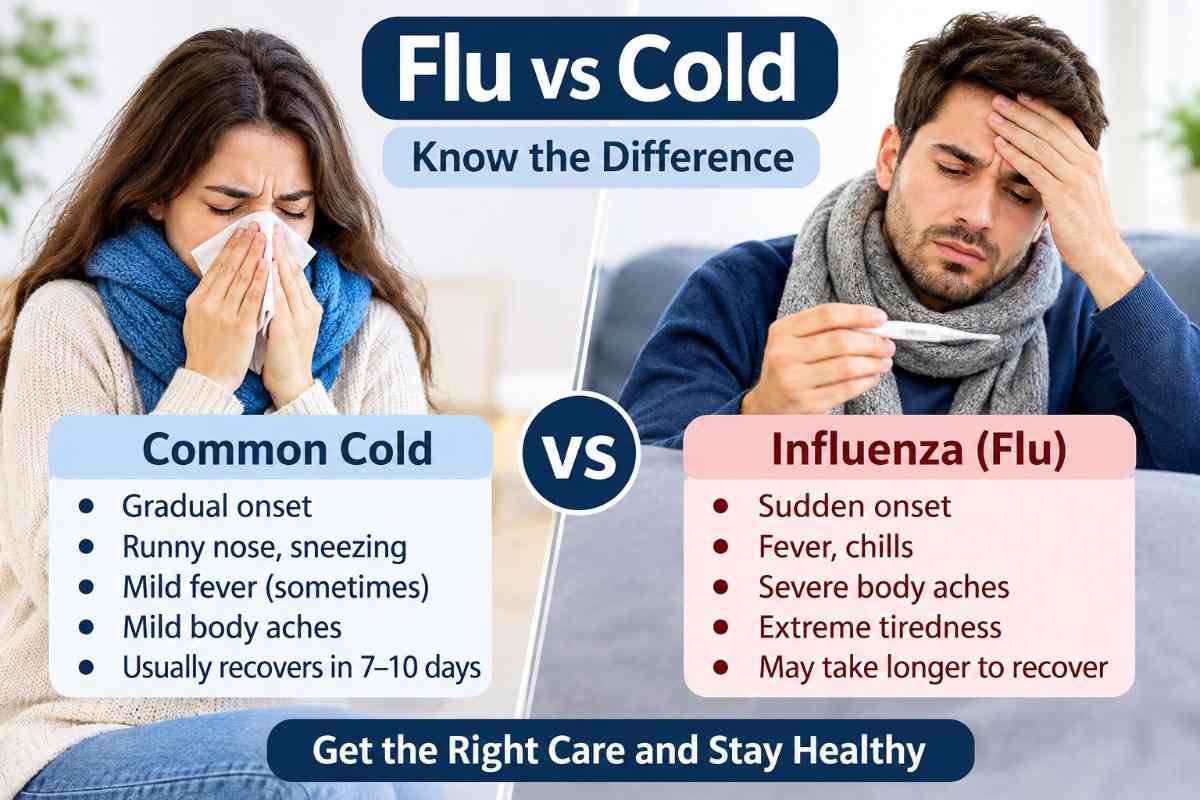
A runny nose, sore throat, cough, and tiredness can make you wonder whether you have the flu or a common cold. Although both illnesses affect the respiratory system and share several symptoms, they are not the same. The flu usually develops suddenly and can cause more severe symptoms, while a common cold generally develops gradually and tends to be milder.
Knowing the difference between flu vs cold can help you understand what is happening in your body, choose appropriate symptom relief, and recognize when medical attention may be necessary.
In this guide, we will explain the differences between flu and cold symptoms, their causes, how long they last, available treatments, and practical ways to prevent these illnesses.
What Is the Common Cold?
The common cold is a contagious viral infection that affects the upper respiratory tract, particularly the nose and throat. It can develop when cold-causing viruses enter the body through the nose, mouth, or eyes.
More than 200 different viruses can cause a common cold, with rhinoviruses being among the most frequent causes.
A cold usually develops gradually. You may initially notice a scratchy throat, sneezing, or a runny nose before other symptoms appear.
Common symptoms of a cold include:
- Runny or stuffy nose
- Sneezing
- Sore throat
- Mild cough
- Watery eyes
- Mild headache
- Slight body aches
- Low-grade fever (more common in children than adults)
- Mild tiredness
Most people recover from a common cold within 7–10 days, although coughing and nasal congestion can sometimes last longer.
What Is the Flu?
Influenza, commonly called the flu, is a contagious respiratory illness caused by influenza viruses. It can affect the nose, throat, and sometimes the lungs.
Unlike a common cold, the flu often starts suddenly. You might feel relatively normal in the morning but develop fever, chills, body aches, headaches, and extreme tiredness within a short period.
Flu symptoms can range from mild to severe. Some people recover at home, while others may develop complications such as pneumonia.
Common symptoms of the flu include:
- Fever or feeling feverish
- Chills and sweating
- Dry or persistent cough
- Sore throat
- Muscle and body aches
- Headache
- Extreme tiredness
- Runny or stuffy nose
- Weakness
- Vomiting or diarrhea (more common in children)
Most people recover from the flu within a few days to less than two weeks. However, tiredness and weakness may continue for longer.
Flu vs Cold: Key Differences
Although flu and cold symptoms overlap, several differences can help you understand which illness you might be experiencing.
| Features | Common Cold | Flu |
|---|---|---|
| Cause | Different respiratory viruses | Influenza viruses |
| Onset | Gradual | Sudden |
| Fever | Uncommon | Common |
| Body aches | Mild | Often severe |
| Chills | Uncommon | Common |
| Headache | Less common | Common |
| Sneezing | Common | Sometimes |
| Runny nose | Very common | Sometimes |
| Sore throat | Common | Sometimes |
| Cough | Usually mild | Can be severe |
| Fatigue | Mild | Often significant |
| Complications | Usually uncommon | Can be serious |
| Recovery | Usually 7–10 days | Usually several days to less than 2 weeks |
The biggest difference: A cold generally causes more nose and throat symptoms, while the flu is more likely to cause sudden fever, chills, significant body aches, and extreme fatigue.
However, symptoms alone cannot always confirm which infection you have.
10 Major Differences Between Flu and Cold
Here are some important differences to help you understand how these illnesses affect the body.
1. Onset of Symptoms: Cold symptoms usually develop gradually over one or two days, whereas flu symptoms often appear suddenly.
2. Fever: Fever is uncommon in adults with a common cold, but it is a frequent symptom of influenza.
3. Body Aches: A cold may cause mild discomfort, while the flu can cause significant muscle and joint pain.
4. Headaches: Headaches are less common with colds but are frequently associated with influenza.
5. Fatigue: Cold-related tiredness is generally mild, whereas flu-related exhaustion can make everyday activities difficult.
6. Sneezing: Frequent sneezing is more typical of a common cold than influenza.
7. Nasal Congestion: A stuffy or runny nose is a prominent cold symptom, although it can also occur with the flu.
8. Chills: Chills are uncommon with colds but are frequently experienced by people with influenza.
9. Complications: Most colds resolve without serious problems, while influenza can sometimes cause pneumonia, worsening chronic conditions, and hospitalization.
10. Recovery Time: Most colds improve within 7–10 days, while flu recovery can take several days to two weeks or longer.
Flu Symptoms vs Cold Symptoms
Understanding individual symptoms can make it easier to recognize the differences.
1. Fever and Chills
Fever is one of the more noticeable differences between flu and cold.
People with influenza commonly develop a fever, sometimes accompanied by chills, sweating, and weakness. A cold usually does not cause a fever in adults, although children may experience a low-grade fever.
Not everyone with the flu develops a fever, so its absence does not rule out influenza.
2. Cough
Both illnesses can cause coughing, but its severity may differ.
A cold usually causes a mild or moderate cough. The flu can cause a persistent, sometimes severe cough that may make your chest uncomfortable.
3. Runny or Stuffy Nose
A runny or stuffy nose is particularly common with a cold. You may experience frequent sneezing, nasal congestion, and watery discharge.
These symptoms can also occur with the flu, but they are generally less prominent than fever, body aches, and fatigue.
4. Body Pain
Body aches are usually mild when you have a cold.
With influenza, muscle pain and body aches can be more intense. You may experience discomfort in your back, arms, legs, and other muscles.
5. Fatigue and Weakness
A common cold can make you feel slightly tired, but you can often continue your regular activities.
Influenza may cause significant exhaustion. Some people need several days of rest before they feel well enough to return to their normal routine.
Flu vs Cold vs COVID-19
Flu, the common cold, and COVID-19 are respiratory illnesses caused by different viruses. Their symptoms can overlap, making it difficult to identify the infection without testing.
| Symptoms | Cold | Flu | COVID-19 |
|---|---|---|---|
| Fever | Uncommon | Common | Common |
| Cough | Common | Common | Common |
| Sore throat | Common | Sometimes | Common |
| Runny nose | Very common | Sometimes | Common |
| Sneezing | Common | Sometimes | Sometimes |
| Body aches | Mild | Often severe | Common |
| Fatigue | Mild | Often significant | Common |
| Headache | Less common | Common | Common |
| Loss of taste or smell | Uncommon | Uncommon | Can occur |
| Breathing difficulties | Uncommon | Possible | Possible |
Important: These symptoms cannot reliably distinguish all three infections. Testing may be necessary to confirm whether you have flu or COVID-19. Some people can also have more than one respiratory infection at the same time.
What Causes Flu and Cold?
Although both illnesses affect the respiratory system, they have different viral causes.
Causes of the Common Cold
The common cold can be caused by many respiratory viruses. Rhinoviruses are among the most common.
Other viruses that can cause cold symptoms include:
- Seasonal coronaviruses
- Adenoviruses
- Respiratory syncytial virus (RSV)
- Parainfluenza viruses
Causes of Flu (Influenza)
Influenza is caused by influenza viruses. Influenza A and B viruses are the main types responsible for seasonal flu outbreaks in humans.
These viruses spread mainly through respiratory droplets and particles released when an infected person coughs, sneezes, or talks.
How Do Flu and Cold Spread?
Both infections are contagious and can spread from one person to another.
Common ways of transmission include:
- Respiratory Particles: Breathing in infectious particles released when an infected person coughs, sneezes, or talks.
- Close Contact: Spending time near someone who has an active respiratory infection.
- Contaminated Hands: Touching your nose, mouth, or eyes after touching contaminated surfaces or objects.
- Shared Personal Items: Sharing items that may have respiratory secretions on them can increase exposure.
People can spread respiratory viruses before they realize they are sick, depending on the virus.
How Long Does a Cold Last vs Flu?
The recovery period varies depending on the virus, your immune system, age, and overall health.
| Recovery Stage | Common Cold | Flu |
|---|---|---|
| Initial symptoms | Usually gradual | Often sudden |
| Symptoms become noticeable | First 1–2 days | First 1–2 days |
| Peak symptoms | Around days 2–3 | Often during the first few days |
| General recovery | Usually 7–10 days | Several days to less than 2 weeks |
| Lingering symptoms | Cough or congestion | Fatigue or cough |
A cold may improve within a week, although some symptoms can continue for 10–14 days.
Flu symptoms often improve within several days, but weakness, tiredness, and coughing can last longer.
If your symptoms are getting worse instead of improving, contact a healthcare professional.
Treatment for Flu vs Cold
There is no instant cure for either a common cold or influenza. Treatment mainly focuses on relieving symptoms, supporting recovery, and preventing complications.
However, certain prescription antiviral medications are available for influenza.
How to Treat a Common Cold
Most colds improve without specific medical treatment.
Here are some ways to manage cold symptoms:
1. Get Enough Rest: Give your body enough time to recover by avoiding unnecessary physical exertion.
2. Drink Plenty of Fluids: Water, warm soups, and other suitable fluids can help prevent dehydration.
3. Use Saline Nasal Spray: Saline sprays or drops may help relieve nasal congestion.
4. Try Warm Liquids: Warm beverages may soothe an irritated throat and provide temporary comfort.
5. Use a Humidifier: A clean cool-mist humidifier may help relieve nasal dryness and congestion.
6. Consider Over-the-Counter Medicines: Certain pain relievers, fever reducers, and cough or congestion medicines may provide temporary relief. Ask a healthcare professional or pharmacist which options are appropriate for you.
7. Avoid Smoking: Smoke can irritate the respiratory tract and worsen coughing.
How to Treat the Flu
Flu treatment depends on the severity of symptoms and your risk of complications.
1. Rest: Adequate sleep and reduced physical activity can support recovery.
2. Stay Hydrated: Drink water, soups, and other fluids to replace those lost through sweating or fever.
3. Manage Fever and Pain: Appropriate over-the-counter medicines may help relieve fever, headaches, and body aches.
4. Consider Prescription Antivirals: Medicines such as oseltamivir may be prescribed for influenza. They work best when started within 48 hours of symptom onset, although treatment may still be beneficial later for people with severe or high-risk illness.
5. Avoid Spreading the Infection: Stay home while sick and limit close contact with other people.
6. Monitor Your Symptoms: Pay attention to breathing difficulties, dehydration, persistent fever, and worsening symptoms.
People at higher risk of flu complications should contact a healthcare professional promptly rather than waiting for symptoms to become severe.
Home Remedies for Flu and Cold
Some simple home-care measures can help you feel more comfortable while recovering.
1. Honey: Honey may help soothe a cough. Never give honey to babies younger than 12 months.
2. Warm Water: Drinking warm water may soothe throat irritation and help maintain hydration.
3. Chicken Soup: Warm soup provides fluids and may temporarily ease nasal congestion.
4. Saltwater Gargle: Gargling with warm salt water may help relieve a sore throat.
5. Ginger Tea: Warm ginger tea may feel soothing when you have throat discomfort.
6. Saline Nasal Rinse: Saline rinsing may help clear nasal mucus. Always use distilled, sterile, or previously boiled and cooled water.
7. Adequate Sleep: Getting enough sleep helps your body manage illness and recover.
These remedies may relieve discomfort, but they do not kill the viruses responsible for flu or colds.
When Should You See a Doctor?
Most people recover from a cold or mild flu without serious complications. However, certain symptoms require medical attention.
Contact a healthcare professional if you experience:
- Fever that lasts longer than expected
- Symptoms that worsen instead of improving
- Cough that becomes increasingly severe
- Persistent vomiting
- Signs of dehydration
- Symptoms that improve but return with a fever or worse cough
- Worsening of an existing medical condition
Emergency Warning Signs
Seek emergency medical care if you experience:
- Difficulty breathing or shortness of breath
- Persistent chest pain or pressure
- Severe dizziness or confusion
- Seizures
- Severe weakness or inability to stay awake
- Bluish lips or face
- Severe dehydration or inability to urinate
Children with breathing difficulties, unusual sleepiness, bluish lips, or signs of dehydration also need urgent medical attention.
Who Is at Higher Risk of Flu Complications?
Although anyone can develop influenza, certain groups are more likely to experience serious complications.
These include:
- Adults aged 65 years and older
- Children younger than 5 years, especially those under 2
- Pregnant women
- People with asthma or other chronic lung conditions
- People with heart disease
- People with diabetes
- Individuals with weakened immune systems
- People with certain chronic medical conditions
These individuals should contact a healthcare professional early if they develop flu symptoms because prompt antiviral treatment may reduce the risk of complications.
How to Prevent Flu and Cold
You cannot prevent every respiratory infection, but everyday precautions can lower your risk.
1. Wash Your Hands: Wash your hands regularly with soap and water, especially before eating and after coughing or sneezing.
2. Avoid Touching Your Face: Try not to touch your eyes, nose, and mouth with unwashed hands.
3. Stay Away From Sick People: Limit close contact with people who have respiratory symptoms.
4. Cover Coughs and Sneezes: Use a tissue or your elbow when coughing or sneezing.
5. Keep Indoor Spaces Ventilated: Improve indoor airflow by opening windows or using appropriate ventilation.
6. Clean Frequently Touched Surfaces: Regularly clean items such as phones, door handles, and frequently used household surfaces.
7. Stay Home When Sick: Avoid close contact with others while experiencing contagious respiratory symptoms.
8. Get an Annual Flu Vaccine: Seasonal influenza vaccination helps reduce your risk of influenza and serious complications. It does not prevent common colds.
Can You Have the Flu and a Cold at the Same Time?
Yes, it is possible to have more than one respiratory infection at the same time.
For example, someone may become infected with an influenza virus and another respiratory virus simultaneously.
However, experiencing several symptoms together does not automatically mean you have multiple infections. Testing and medical evaluation may be needed to identify the cause.
Is Flu Worse Than a Cold?
Generally, yes. Influenza tends to cause more intense symptoms and has a higher risk of serious complications than the common cold.
A cold usually causes sneezing, nasal congestion, a runny nose, and mild discomfort. The flu is more likely to cause sudden fever, chills, severe body aches, headaches, and significant fatigue.
However, both illnesses can affect people differently. Even a seemingly mild respiratory infection can become serious in certain individuals.
Final Thoughts
Understanding the difference between flu vs cold can help you recognize common symptoms and make better decisions about your health.
A common cold generally develops gradually and causes mild respiratory symptoms, while influenza often begins suddenly with fever, chills, body aches, and extreme tiredness.
Both illnesses usually improve with appropriate home care, rest, and hydration. However, influenza can cause serious complications, particularly in young children, older adults, pregnant women, and people with chronic health conditions.
If you are unsure whether you have a cold or flu, consider speaking with a healthcare professional. Testing can help identify the infection and determine whether specific treatment is needed.
FAQ’s
How do I know if I have the flu or a cold?
A cold usually develops gradually with sneezing, a runny nose, and mild symptoms. The flu often starts suddenly with fever, chills, body aches, and extreme tiredness.
Can a cold turn into the flu?
No. A cold cannot turn into the flu because they are caused by different viruses. However, you can catch influenza after having a cold.
How long does the flu last compared to a cold?
A cold usually lasts 7–10 days, while flu symptoms generally improve within several days to two weeks.
Can you have the flu without a fever?
Yes. Not everyone with influenza develops a fever, particularly older adults and people with certain health conditions.
Is sneezing more common with flu or cold?
Sneezing is more commonly associated with a common cold, although it can also occur with influenza.
What is the best medicine for flu and cold?
Treatment depends on your symptoms. Over-the-counter medicines may relieve discomfort, while prescription antiviral medications can treat influenza in appropriate cases.
Is the flu contagious for longer than a cold?
Both are contagious. People with influenza can typically spread the virus from about one day before symptoms begin to 5–7 days after becoming sick.
Does the flu vaccine protect against the common cold?
No. The flu vaccine helps protect against influenza and its complications but does not prevent common colds.
Is flu the same as a cold?
No. The flu and common cold are different respiratory infections caused by different viruses.
What kills the flu virus?
Your immune system fights the flu virus. Certain prescription antiviral medicines can also help treat influenza.
Which is more serious, flu or COVID-19?
Both can cause serious illness and complications. Their severity depends on factors such as age, health conditions, and the circulating virus.
Is staying in bed all day good for a cold?
Rest helps recovery, but you do not need to stay in bed all day. Get enough sleep and stay hydrated.
What is the hardest day of a cold?
Cold symptoms often peak around days 2–3, when congestion, sneezing, and sore throat may feel most uncomfortable.
Does vitamin C help with a cold?
Regular vitamin C supplementation may slightly shorten cold duration, but taking it after symptoms begin has limited evidence of benefit.
Can antibiotics treat a cold?
No. Antibiotics work against bacteria, not viruses, so they cannot cure a common cold.
Sources / References:
Disclaimer:
This article is for educational purposes only and does not replace professional medical advice, diagnosis, or treatment. Consult a qualified healthcare professional for personalized medical guidance.
Also Read: