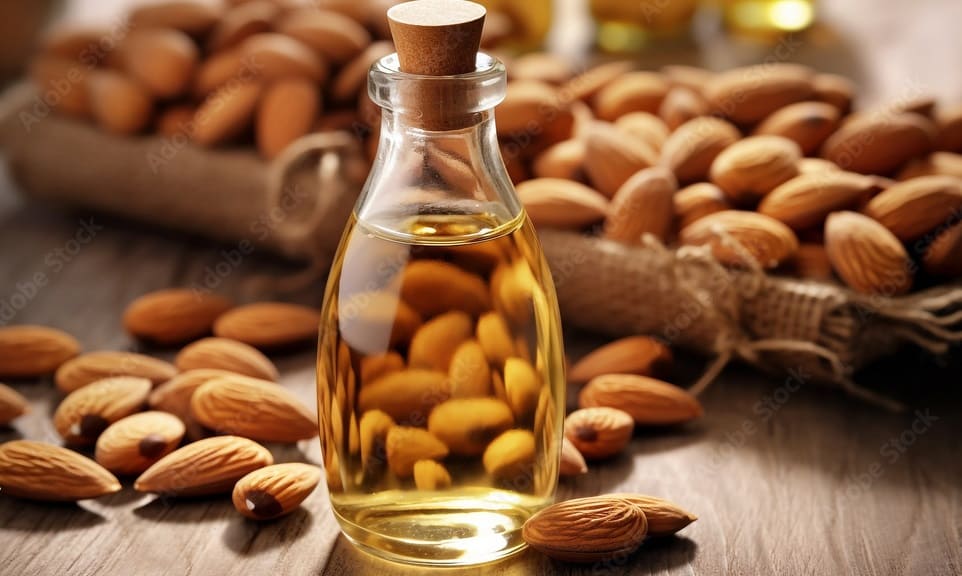
Almond oil has been revered for centuries for its beauty and health benefits. Extracted from raw or roasted almonds, this natural oil is packed with nutrients that can support your body inside and out. From promoting glowing skin to improving heart health, almond oil is often considered a natural elixir. In this guide, we’ll explore everything you need to know about almond oil, including its benefits, uses, precautions, and dosage.
What is Almond Oil?
Almond oil is a natural oil extracted from almonds. It is available in two main types: sweet almond oil and bitter almond oil. Sweet almond oil is most commonly used for culinary, cosmetic, and health purposes, while bitter almond oil contains compounds that are toxic in large amounts and is mainly used for medicinal purposes under strict supervision.
Sweet almond oil is rich in vitamins, minerals, and healthy fats. Its light texture allows it to be easily absorbed into the skin and hair, making it a popular choice in beauty routines. Beyond beauty, almond oil is also used in cooking and traditional medicine for its nutritional benefits.
Nutrition Facts of Almond Oil
Here’s a nutritional composition of 1 tablespoon (approximately 14 grams) of almond oil:
| Nutrient | Amount | % Daily Value* |
|---|---|---|
| Calories | 120 kcal | 6% |
| Total Fat | 14 g | 22% |
| Saturated Fat | 1.1 g | 6% |
| Monounsaturated Fat | 9 g | — |
| Polyunsaturated Fat | 3.5 g | — |
| Vitamin E | 7.3 mg | 49% |
| Vitamin K | 2 µg | 2% |
| Calcium | 5 mg | 0% |
| Magnesium | 2 mg | 0% |
| Iron | 0.1 mg | 1% |
*Percent Daily Values are based on a 2,000-calorie diet.
Almond oil is calorie-dense and packed with heart-healthy fats and antioxidants, making it a powerful addition to your diet and skincare routine.
20 Science-Backed Health Benefits of Almond Oil
Almond oil is not just a beauty product; it offers several health benefits when used properly. Here are the top 20 proven benefits:
- Promotes Heart Health – The monounsaturated fats in almond oil help lower bad cholesterol (LDL) and improve good cholesterol (HDL).
- Supports Skin Health – Its vitamin E content nourishes and protects the skin from damage caused by UV rays and pollution.
- Reduces Inflammation – Almond oil contains anti-inflammatory properties that can help with swelling and joint pain.
- Boosts Hair Health – Regular application strengthens hair follicles, reduces breakage, and adds shine.
- Moisturizes Skin – Acts as a natural emollient, making it effective for dry skin conditions.
- Helps Treat Acne – Non-comedogenic almond oil can help regulate skin oil and reduce acne.
- Supports Brain Health – Vitamin E and omega fatty acids may improve cognitive function and memory.
- Improves Digestion – A small amount of almond oil can aid in relieving constipation.
- Promotes Weight Management – Healthy fats in almond oil can help maintain satiety and reduce unhealthy cravings.
- Boosts Immunity – Vitamin E strengthens the immune system and protects against infections.
- Reduces Dark Circles – Massaging almond oil under the eyes can improve skin elasticity and reduce pigmentation.
- Heals Wounds – Its antioxidant and anti-inflammatory properties may accelerate healing of minor cuts and burns.
- Supports Hair Growth – Nutrients in almond oil nourish hair roots, encouraging hair growth.
- Protects Against UV Damage – Almond oil can be used as a natural sunscreen to protect skin from UV rays.
- Reduces Dandruff – Regular scalp massage with almond oil helps reduce dryness and flakiness.
- Improves Skin Tone – Almond oil can even out skin pigmentation and enhance complexion.
- Strengthens Nails – Applying almond oil on nails prevents brittleness and promotes growth.
- Relieves Muscle Pain – Its anti-inflammatory properties make it useful in massage therapy.
- Supports Eye Health – Vitamin E in almond oil helps protect against age-related macular degeneration.
- Balances Blood Sugar Levels – Consuming almond oil in moderation may help regulate glucose levels.
10 Side Effects of Almond Oil
While almond oil is generally safe, excessive use or misuse can lead to side effects:
- Allergic Reactions – People with nut allergies may experience rashes, itching, or swelling.
- Gastrointestinal Issues – Excessive oral consumption may cause diarrhea or stomach upset.
- Skin Irritation – Some may develop redness or irritation when applied topically.
- Weight Gain – Almond oil is calorie-dense, and overconsumption can lead to weight gain.
- Blood Sugar Fluctuations – Diabetics should monitor blood sugar if using almond oil regularly.
- Interaction with Medications – May interfere with certain medications like blood thinners.
- Bitter Almond Oil Toxicity – Bitter almond oil contains cyanide compounds and can be harmful.
- Nasal Irritation – Inhaling the oil or using it in nostrils may cause irritation.
- Acne Flare-Ups – In rare cases, almond oil may worsen acne in very oily skin types.
- Pregnancy Risks – Excessive consumption of bitter almond oil is not safe during pregnancy.
How to Use Almond Oil?
Almond oil can be used in multiple ways depending on your needs:
For Skin:
- Apply a few drops on the face at night as a moisturizer.
- Mix with essential oils for massage to reduce dryness and inflammation.
- Use under-eye daily to reduce dark circles.
For Hair:
- Massage into the scalp for 10–15 minutes to strengthen hair roots.
- Mix with your conditioner or hair mask to enhance hair shine.
For Oral Consumption:
- Add 1 teaspoon to your morning smoothie or salad dressing.
- Consume directly or mix with warm milk before bedtime.
Other Uses of Almond Oil
Apart from health and beauty, almond oil has several household and therapeutic uses:
- Massage Oil: Commonly used in aromatherapy and massage to relieve stress.
- Carrier Oil: Can be used to dilute essential oils for topical application.
- Lip Care: Helps heal chapped lips naturally.
- Makeup Remover: Gentle on skin and effective in removing makeup.
- Nail Care: Strengthens brittle nails and moisturizes cuticles.
Tips for Consuming Almond Oil
- Start with a small amount to monitor tolerance.
- Prefer cold-pressed almond oil for maximum nutrients.
- Combine with smoothies or salads for better absorption.
- Avoid cooking at very high temperatures to prevent nutrient loss.
- Use consistently for visible benefits over time.
How to Take Almond Oil?
- Orally: 1 teaspoon once or twice daily, preferably with food.
- Topically: Apply directly on skin or hair; massage for better absorption.
- As a Supplement: Use in capsules as per recommended dosage.
How Much Almond Oil Can You Use Per Day?
- Oral consumption: 1–2 teaspoons (5–10 ml) per day is sufficient for most adults.
- Topical use: Apply as needed, generally 1–2 tablespoons for hair or body per session.
Almond Oil Dosage
- Adults: 1–2 teaspoons orally per day or as directed by a healthcare professional.
- Children: Only small amounts if necessary; consult a pediatrician first.
- Topical: No strict dosage; ensure it is sufficient to cover the affected area.
Best Time to Take Almond Oil
- Morning: Adding it to breakfast smoothies or salads aids metabolism.
- Evening: Consuming with warm milk before bed helps improve digestion and sleep.
- Before Bed: Massaging hair or skin before sleep maximizes absorption.
Who Should Take Almond Oil?
- Individuals looking to improve skin and hair health.
- People with dry skin or hair.
- Those seeking heart-healthy fats in their diet.
- Individuals aiming to boost immunity naturally.
- People with constipation or digestive issues.
Who Should Not Take Almond Oil?
- People with nut allergies.
- Individuals prone to gastrointestinal issues when consuming oils.
- Pregnant women should avoid bitter almond oil.
- People on blood-thinning medications should consult a doctor.
- Those with extremely oily or acne-prone skin should monitor topical use.
How to Store Almond Oil?
- Store in a cool, dark place, away from sunlight.
- Use dark-colored glass bottles to prevent oxidation.
- Keep the bottle tightly sealed after use.
- Refrigeration can extend shelf life, especially for cold-pressed varieties.
- Avoid storing near heat sources or open windows.
Precautions and Interactions
- Allergic reactions: Test a small amount on the skin before full use.
- Medication interactions: Consult your doctor if on blood thinners, diabetes medication, or cholesterol-lowering drugs.
- Pregnancy and breastfeeding: Stick to small amounts of sweet almond oil; avoid bitter almond oil.
- Cooking: Avoid deep frying with almond oil to prevent loss of nutrients.
- Overconsumption: Too much oral intake may cause diarrhea or weight gain.
Conclusion
Almond oil is a versatile natural remedy that offers remarkable benefits for skin, hair, and overall health. Its rich nutrient profile, particularly vitamin E and healthy fats, makes it a valuable addition to your diet and beauty routine. However, like any natural remedy, it should be used wisely. Paying attention to dosage, storage, and individual tolerance is crucial to fully enjoy its benefits while minimizing potential side effects. Whether applied topically or consumed orally, almond oil can be a gentle and effective way to enhance wellness and beauty naturally.
FAQ’s
Is almond oil safe for pregnant women?
Sweet almond oil is generally safe in small amounts for pregnant women. However, bitter almond oil contains toxic compounds and should be avoided. Always consult your doctor before using any oil during pregnancy.
Can almond oil help with hair growth?
Yes. Regular scalp massage with almond oil nourishes hair follicles, strengthens hair, and may promote growth while reducing hair fall.
How often should I use almond oil on my skin?
For most skin types, applying almond oil once or twice daily is sufficient. Dry skin may benefit from daily use, while oily or acne-prone skin should use it sparingly.
Can I cook with almond oil?
Yes, almond oil can be used in cooking, especially for salad dressings or low-heat cooking. Avoid deep frying or high-heat cooking to preserve its nutrients.
What is the difference between sweet and bitter almond oil?
Sweet almond oil is safe for consumption and skincare, while bitter almond oil contains cyanide compounds that can be toxic in large amounts and should only be used under professional guidance.
Can almond oil reduce dark circles under eyes?
Yes. Massaging a small amount of almond oil under the eyes daily can help reduce dark circles and improve skin elasticity over time.
Can children use almond oil?
Sweet almond oil can be used in small amounts for children, primarily topically for dry skin. Oral consumption should be discussed with a pediatrician.
Does almond oil help with acne?
Almond oil is non-comedogenic and may help regulate skin oil. However, people with very oily or acne-prone skin should test it first, as results can vary.
What does almond oil taste like?
Sweet almond oil has a mild, nutty flavor with a slightly sweet aftertaste. It is smooth and not overpowering, making it suitable for culinary uses like salads, smoothies, and light cooking.
Is almond oil safe for daily use?
Yes, sweet almond oil is generally safe for daily use, both orally and topically. For oral consumption, 1–2 teaspoons per day is recommended. However, avoid bitter almond oil, as it contains toxic compounds.
What is almond oil useful for?
Almond oil is useful for skin hydration, hair nourishment, reducing inflammation, improving heart health, supporting digestion, and boosting immunity. It is also used to relieve muscle pain and reduce dark circles under the eyes.
Can I rub almond oil on my skin?
Yes, almond oil is highly beneficial for skin. It can be applied directly to moisturize dry skin, reduce irritation, improve complexion, and even help with conditions like eczema and minor scars.
Is almond oil good for hair?
Absolutely. Almond oil nourishes hair follicles, reduces hair breakage, prevents dandruff, adds shine, and may promote hair growth when massaged into the scalp regularly.
Does almond oil lighten skin?
Almond oil can help improve skin tone and reduce pigmentation over time due to its vitamin E content and antioxidants. While it may not drastically “whiten” skin, it can enhance overall skin brightness and evenness.
How to use almond oil for eczema?
Apply a few drops of sweet almond oil directly to affected areas 1–2 times daily. Gently massage until absorbed. You can also mix it with a few drops of lavender or chamomile oil for enhanced soothing effects.
Does almond oil reduce tan?
Yes, almond oil can help lighten tan gradually. Apply it regularly on tanned areas after cleansing or sun exposure, preferably at night, to nourish and repair the skin.
Is almond oil safe for babies?
Sweet almond oil is generally safe for babies when used topically for massage or moisturizing dry skin. Avoid oral consumption unless recommended by a pediatrician. Always do a patch test first to check for allergies.
Which is better, almond oil or coconut oil for skin whitening?
Both oils have benefits, but almond oil is richer in vitamin E and antioxidants, making it more effective for improving skin tone and reducing pigmentation. Coconut oil is better for moisturizing and antibacterial protection. You can also use them together for combined benefits.
Also Read: