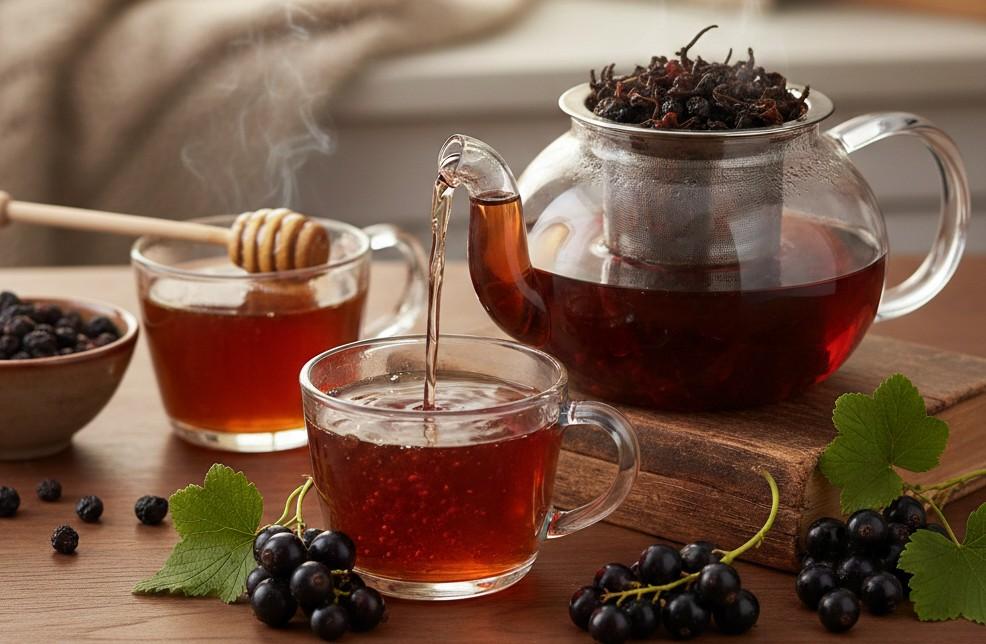
Black currant tea is a vibrant, antioxidant-rich herbal infusion made from the berries or leaves of the black currant plant. Known for its deep purple color and tangy-sweet flavor, this tea has been traditionally valued in Europe and Asia for immune support, skin health, and overall vitality. Modern research now supports many of its traditional uses, particularly due to its high concentration of vitamin C and anthocyanins. In this guide, you will learn everything about black currant tea, including its nutritional profile, proven health benefits, side effects, preparation methods, ideal dosage, and safety precautions.
What is Black Currant Tea?
Black currant tea is made from the dried berries or leaves of the plant Ribes nigrum, a deciduous shrub native to Europe and parts of Asia. The berries are small, dark purple fruits with a tart flavor, while the leaves are aromatic and slightly herbal in taste.
There are two main types of black currant tea:
- Black Currant Berry Tea – Made from dried berries; fruity, tangy, and slightly sweet.
- Black Currant Leaf Tea – Made from dried leaves; more herbal and earthy.
Black currants have long been used in traditional medicine for supporting immunity, circulation, joint health, and skin wellness. The berries are particularly famous for their high vitamin C content and potent antioxidants called anthocyanins, which give them their rich purple color.
Nutritional Facts of Black Currant Tea
The nutritional value of black currant tea depends on how concentrated the brew is and whether it is made from berries or leaves. Below is an approximate nutrients extracted into one cup (240 ml) of black currant berry tea.
| Nutrient | Approximate Amount per Cup | Key Function |
|---|---|---|
| Vitamin C | 15–30 mg | Immune support, antioxidant protection |
| Anthocyanins | 50–150 mg | Anti-inflammatory, heart health |
| Polyphenols | 100–200 mg | Cellular protection |
| Potassium | 50–100 mg | Blood pressure regulation |
| Iron | Small amounts | Oxygen transport |
| Gamma-Linolenic Acid (trace from seeds) | Minimal in tea | Hormonal and anti-inflammatory support |
| Calories | 2–5 kcal | Very low calorie |
| Caffeine | 0 mg | Naturally caffeine-free |
Black currant tea is naturally caffeine-free unless blended with black or green tea.
20 Science-Backed Benefits of Black Currant Tea
- Rich in Powerful Antioxidants – Black currant tea contains high levels of anthocyanins and polyphenols that help neutralize harmful free radicals in the body.
- Boosts Immune System – Its high vitamin C content strengthens immune defense and may reduce the duration of colds.
- Supports Heart Health – Anthocyanins help improve blood vessel function and reduce oxidative stress linked to cardiovascular disease.
- Reduces Inflammation – Polyphenols in black currants may help lower inflammatory markers in the body.
- Improves Eye Health – Research suggests anthocyanins may enhance night vision and reduce eye fatigue.
- Enhances Skin Health – Antioxidants protect skin cells from UV damage and premature aging.
- Supports Joint Health – Anti-inflammatory compounds may reduce stiffness and discomfort in joints.
- Promotes Healthy Blood Pressure – Potassium and flavonoids may help regulate blood pressure levels.
- Improves Circulation – Black currant compounds support better blood flow and vascular flexibility.
- May Aid in Weight Management – Low-calorie and metabolism-supporting properties make it useful in balanced diets.
- Supports Brain Function – Antioxidants may protect neurons and improve cognitive performance.
- Helps Manage Blood Sugar Levels – Polyphenols may improve insulin sensitivity and glucose metabolism.
- Supports Digestive Health – Mildly soothing properties can help reduce digestive discomfort.
- May Improve Athletic Performance – Some studies suggest black currant extract improves endurance and reduces muscle fatigue.
- Supports Liver Health – Antioxidants may help protect liver cells from oxidative damage.
- Promotes Hormonal Balance – Compounds derived from black currant seeds are linked to hormone regulation.
- Helps Reduce PMS Symptoms – Anti-inflammatory properties may ease menstrual discomfort.
- May Reduce Allergy Symptoms – Anti-inflammatory action may decrease histamine response.
- Supports Kidney Health – Mild diuretic effects may promote urinary function.
- May Improve Mood and Reduce Fatigue – Improved circulation and antioxidant protection may enhance overall energy levels.
10 Side Effects of Black Currant Tea
While generally safe, excessive consumption may cause certain side effects.
- May Cause Digestive Upset – Large amounts can lead to mild stomach discomfort or diarrhea.
- May Lower Blood Pressure Too Much – Individuals on blood pressure medication should monitor levels carefully.
- Possible Allergic Reactions – Rarely, some people may experience itching or rash.
- May Interact with Blood Thinners – Black currant may influence blood clotting in sensitive individuals.
- Risk for People with Bleeding Disorders – It may slow blood clotting in high amounts.
- May Affect Blood Sugar Levels – Diabetics should monitor glucose carefully.
- Possible Headaches in Sensitive Individuals – High antioxidant concentration may trigger headaches in rare cases.
- May Increase Urination – Its mild diuretic effect may cause frequent urination.
- Not Recommended Before Surgery – It may affect clotting and blood pressure regulation.
- Pregnancy Safety Not Fully Established – High medicinal doses should be avoided unless approved by a doctor.
How to Make Black Currant Tea?
Ingredients:
- 1–2 teaspoons dried black currant berries or leaves
- 1 cup hot water (not boiling, around 90°C)
- Optional: honey or lemon
Instructions:
- Bring water to a near boil.
- Add dried berries or leaves to a teapot or cup.
- Pour hot water over them.
- Cover and steep for 10–15 minutes.
- Strain and serve warm.
For stronger flavor, steep up to 20 minutes.
You may also combine black currant with green tea, hibiscus, or mint for added flavor and benefits.
Other Uses of Black Currant Tea
Black currant tea is versatile and can be used beyond drinking.
- Hair Rinse – Used as a natural antioxidant scalp rinse.
- Skin Toner – Cooled tea may help soothe irritated skin.
- Smoothie Base – Brewed tea can be added to fruit smoothies.
- Iced Beverage – Chilled tea makes a refreshing summer drink.
- Herbal Steam – Used in facial steaming routines.
- Flavoring for Desserts – Can be reduced into syrups.
How Much Black Currant Tea Can You Drink a Day?
For most healthy adults:
- 1–3 cups per day is considered safe.
- Avoid exceeding 4 cups daily unless advised by a healthcare provider.
- If using concentrated extracts, follow product instructions.
Moderation ensures benefits without increasing the risk of side effects.
Tips for Consuming Black Currant Tea
- Choose organic dried berries when possible.
- Avoid adding excessive sugar.
- Store dried berries in an airtight container.
- Combine with lemon to enhance vitamin C absorption.
- Drink fresh for maximum antioxidant potency.
Best Time to Drink Black Currant Tea
- Morning – Supports immune system and energy.
- Afternoon – Helps fight fatigue without caffeine.
- Evening – Safe before bed since it is caffeine-free.
- Before workouts – May improve endurance.
Who Should Drink Black Currant Tea?
Black currant tea may be especially beneficial for:
- People with low immunity
- Individuals with joint discomfort
- Those managing high blood pressure
- Athletes seeking recovery support
- Individuals with skin concerns
- People looking for caffeine-free alternatives
Who Should Not Drink Black Currant Tea?
Avoid or consult a doctor if you:
- Take blood-thinning medications
- Have bleeding disorders
- Have very low blood pressure
- Are pregnant or breastfeeding (in medicinal doses)
- Have severe kidney disease
- Have known berry allergies
Precautions and Interactions
Black currant tea may interact with:
- Anticoagulants (e.g., warfarin)
- Blood pressure medications
- Diabetes medications
- Anti-inflammatory drugs
Precautionary measures:
- Stop consumption 2 weeks before surgery.
- Monitor blood pressure if prone to hypotension.
- Start with small amounts if trying for the first time.
- Consult a healthcare provider if taking prescription medications.
Final Thoughts
Black currant tea is a nutrient-rich, antioxidant-packed herbal infusion that offers a wide range of health benefits—from immune support and heart health to skin protection and anti-inflammatory effects. Its caffeine-free nature makes it suitable for daily consumption in moderate amounts.
While generally safe, it is important to drink it responsibly and be mindful of potential interactions with medications or medical conditions. When enjoyed as part of a balanced lifestyle, black currant tea can be a refreshing and health-supportive addition to your routine.
FAQ’s
How long does it take for Black Currant Tea to work?
Hydration and digestion benefits may be noticed within hours, while immune, heart, or skin support typically takes 2–4 weeks of regular use.
What is Black Currant Tea good for?
Black currant tea from Ribes nigrum is good for immune support, heart health, reducing inflammation, improving circulation, and providing antioxidant protection.
Is blackcurrant tea good for the kidneys?
It may support kidney health due to mild diuretic and antioxidant effects, but people with kidney disease should consult a doctor before regular use.
Is black currant tea caffeine-free?
Yes, black currant tea made purely from the berries or leaves of Ribes nigrum is naturally caffeine-free, unless it is blended with black or green tea.
Can I drink black currant tea every day?
Yes, most healthy adults can safely drink 1–3 cups daily, provided they do not have medical conditions or medication interactions.
What does black currant tea taste like?
Black currant berry tea has a tangy, slightly sweet, fruity flavor, while leaf tea tastes more herbal and earthy.
Is black currant tea good for immunity?
Yes, it contains vitamin C and antioxidants that help support immune function and reduce oxidative stress.
Can black currant tea help with weight loss?
It may support weight management due to its low-calorie content and metabolism-supporting antioxidants, but it is not a standalone weight-loss solution.
Is black currant tea safe during pregnancy?
Small food-based amounts are generally considered safe, but medicinal doses should only be used after consulting a healthcare provider.
Does black currant tea lower blood pressure?
It may help regulate blood pressure due to its potassium and flavonoid content, but individuals on blood pressure medication should monitor levels carefully.
Can diabetics drink black currant tea?
Yes, but they should monitor blood sugar levels since black currant compounds may influence glucose metabolism.
Can children drink black currant tea?
In small, diluted amounts, it is generally safe for older children, but it is best to consult a pediatrician before regular use.
Is black currant tea good for skin?
Yes, its antioxidants help protect skin cells from oxidative damage and may support a clearer, healthier complexion.
Does black currant tea help with joint pain?
Its anti-inflammatory properties may help reduce mild joint stiffness and discomfort over time.
How should black currant tea be stored?
Store dried berries or leaves in an airtight container in a cool, dry place away from sunlight to preserve potency.
Can I drink black currant tea before bed?
Yes, since it is caffeine-free, it is suitable for evening consumption and does not usually interfere with sleep.
Also Read: