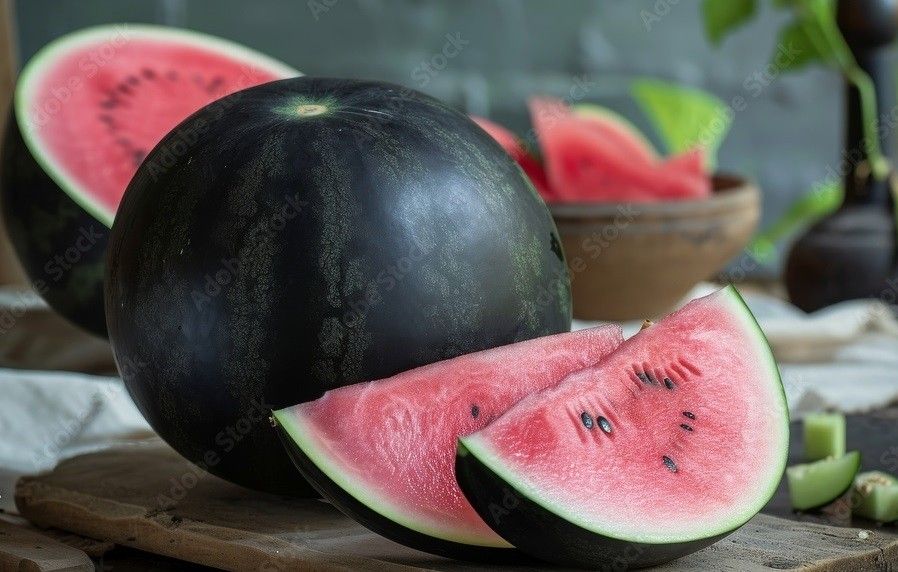
Watermelon is often associated with bright red flesh and striped green rinds, but there’s a lesser-known variety that stands out for its size, sweetness, and deep-colored rind — Black Diamond Watermelon (also known as Black Rind Watermelon, Densuke, Black Skin or Black Beauty). This heirloom watermelon has been around for decades, yet many people are just beginning to rediscover it for its impressive nutrition profile, refreshing taste, and versatility.
Whether you’re a fruit lover, someone focused on hydration and health, or simply curious about unique watermelon varieties, Black Diamond Watermelon deserves attention. In this guide, we’ll explore everything you need to know — from nutrition and science-backed health benefits to side effects, storage tips, and who should or should not eat it.
What Is Black Diamond Watermelon?
Black Diamond Watermelon is a large, heirloom watermelon variety known for its dark green, almost black rind and bright red, juicy flesh. It was originally cultivated in the southern United States and quickly became popular due to its size and sweetness.
Unlike seedless varieties commonly found in supermarkets today, Black Diamond Watermelons usually contain large black seeds. While this may seem inconvenient to some, many people appreciate the fruit’s old-fashioned flavor and firm texture.
Key Characteristics of Black Diamond Watermelon
- Thick, dark green rind with a dull finish
- Deep red flesh with high juice content
- Naturally sweet flavor
- Large size, often weighing 30 to 50 pounds
- Heirloom, open-pollinated variety
Because of its thick rind, Black Diamond Watermelon is also known for better shelf life compared to softer-rind varieties.
Nutrition Facts of Black Diamond Watermelon (Per 100 grams)
Black Diamond Watermelon is low in calories and high in water content, making it an excellent fruit for hydration and weight-conscious diets.
| Nutrient | Amount |
|---|---|
| Calories | 30 kcal |
| Water | 91% |
| Carbohydrates | 7.6 g |
| Natural Sugars | 6.2 g |
| Fiber | 0.4 g |
| Protein | 0.6 g |
| Fat | 0.2 g |
| Vitamin C | 8.1 mg |
| Vitamin A | 569 IU |
| Potassium | 112 mg |
| Magnesium | 10 mg |
| Lycopene | 4,500 mcg |
These values may vary slightly depending on ripeness and growing conditions.
20 Proven Health Benefits of Black Diamond Watermelon
1. Keeps the Body Hydrated
With over 90% water content, Black Diamond Watermelon is excellent for preventing dehydration, especially during hot weather or after physical activity.
2. Supports Heart Health
The fruit contains lycopene, a powerful antioxidant known to help reduce bad cholesterol and improve overall cardiovascular health.
3. Aids Digestion
Its water and fiber combination helps keep digestion smooth, preventing constipation and bloating when consumed in moderation.
4. Boosts Immunity
Vitamin C plays a key role in strengthening the immune system and helping the body fight infections.
5. Supports Healthy Skin
Vitamin A and vitamin C contribute to skin repair, collagen production, and protection against premature aging.
6. Helps Maintain Healthy Blood Pressure
Potassium in Black Diamond Watermelon helps regulate blood pressure by balancing sodium levels in the body.
7. Promotes Muscle Recovery
Watermelon contains citrulline, an amino acid that may help reduce muscle soreness and improve recovery after exercise.
8. Low-Calorie Snack for Weight Management
It satisfies sweet cravings without adding many calories, making it ideal for weight-conscious individuals.
9. Improves Eye Health
Vitamin A supports good vision and helps protect the eyes from age-related damage.
10. Supports Kidney Function
High water content encourages urine production, which helps flush toxins from the kidneys.
11. Helps Reduce Inflammation
Antioxidants like lycopene and vitamin C help combat inflammation in the body.
12. Supports Brain Health
Good hydration is linked to improved focus and cognitive performance, making watermelon a brain-friendly fruit.
13. Natural Energy Booster
Natural sugars provide a quick energy lift without the crash associated with processed sweets.
14. Supports Bone Health
Minerals like magnesium help maintain strong bones and support muscle function.
15. May Improve Blood Circulation
Citrulline may help improve blood flow, which supports heart and vascular health.
16. Helps Manage Heat Exhaustion
Its cooling nature makes it ideal for preventing heat-related fatigue and dizziness.
17. Supports Liver Detoxification
Adequate hydration supports liver function and helps eliminate waste products.
18. Supports Healthy Pregnancy (When Eaten in Moderation)
Provides hydration, vitamins, and minerals that may help reduce pregnancy-related swelling and dehydration.
19. Helps Reduce Acidity
Its alkaline nature may help neutralize excess stomach acid in some people.
20. Refreshes the Body and Mind
Few fruits offer the same refreshing and satisfying experience as a chilled slice of Black Diamond Watermelon.
10 Side Effects of Black Diamond Watermelon
While generally safe, excessive consumption can cause certain issues.
1. May Cause Digestive Discomfort
Eating too much can lead to bloating or diarrhea due to its high water content.
2. Blood Sugar Spikes
Though natural, watermelon sugars can raise blood sugar levels if eaten in large amounts.
3. Not Ideal for People with IBS
High FODMAP content may trigger symptoms in sensitive individuals.
4. Can Cause Frequent Urination
Its diuretic effect may be inconvenient for some people.
5. May Lower Blood Pressure Too Much
People on blood pressure medications should monitor intake.
6. Risk of Overhydration
Excessive consumption can dilute electrolytes if eaten in very large quantities.
7. Can Trigger Allergic Reactions (Rare)
Some individuals may experience itching or mild allergic symptoms.
8. May Interfere with Kidney Conditions
High potassium levels may be problematic for those with kidney disease.
9. Can Cause Acid Reflux in Some People
Despite being alkaline, it may trigger reflux in sensitive individuals.
10. Overeating May Lead to Weight Gain
Large portions can add up in calories despite being low-calorie per serving.
How to Eat Black Diamond Watermelon?
- Fresh slices, chilled or at room temperature
- Cubed and added to fruit salads
- Blended into smoothies or juices
- Frozen into popsicles
- Paired with mint, lime, or feta cheese
Tips for Consuming Black Diamond Watermelon
- Eat in moderate portions
- Avoid eating late at night
- Combine with protein or healthy fats to balance sugar absorption
- Always wash the rind before cutting
- Remove seeds if preferred
Other Uses of Black Diamond Watermelon
- Watermelon juice and mocktails
- Watermelon sorbet or granita
- Pickled watermelon rind
- Skincare masks using fresh pulp
- Natural hydration snack for athletes
How Much Black Diamond Watermelon Can You Eat in a Day?
A healthy adult can safely consume 2–3 cups per day. Athletes or people exposed to heat may consume slightly more, but moderation is key.
Best Time to Eat Black Diamond Watermelon
- Morning or mid-day
- As a post-workout snack
- Between meals rather than immediately after heavy meals
Who Should Eat Black Diamond Watermelon?
- People prone to dehydration
- Athletes and active individuals
- Those seeking a low-calorie sweet snack
- People with mild constipation
- Individuals wanting heart-friendly foods
Who Should Not Eat Black Diamond Watermelon?
- People with uncontrolled diabetes
- Those with severe kidney disease
- Individuals with watermelon allergies
- People suffering from severe IBS symptoms
How to Store Black Diamond Watermelon?
- Whole watermelon: Store at room temperature for up to 1 week
- Cut watermelon: Refrigerate in an airtight container and consume within 2–3 days
- Avoid freezing fresh slices unless blending later
Precautions and Interactions
- Monitor intake if you have diabetes or kidney issues
- Avoid combining with alcohol
- Wash thoroughly to prevent bacterial contamination
- Consult a healthcare provider if on potassium or blood pressure medications
Final Thoughts
Black Diamond Watermelon is more than just a large, old-fashioned fruit. It’s a refreshing, nutrient-rich addition to a healthy diet when eaten mindfully. Its hydration benefits, antioxidant content, and natural sweetness make it a summer favorite with year-round appeal.
FAQ’s
Can pregnant women eat Black Diamond Watermelon?
Yes, in moderation. It provides hydration and essential vitamins, but excessive consumption may lead to digestive discomfort.
Is Black Diamond Watermelon safe for diabetics?
Diabetics can eat it in small portions, but they should monitor blood sugar levels due to its natural sugar content.
How do I know if Black Diamond Watermelon is ripe?
Look for a deep, uniform dark green rind, a creamy yellow spot where it rested on the ground, and a hollow sound when tapped.
Can children eat Black Diamond Watermelon?
Yes, it is safe for children in moderate amounts, but seeds should be removed to prevent choking.
Where to buy Black Diamond Watermelon?
Black Diamond Watermelon is available at local farmers’ markets, specialty grocery stores, and some online fruit retailers. Availability may vary by region and season.
What is Black Diamond Watermelon good for?
It is excellent for hydration, weight management, heart health, skin care, digestion, and providing a natural energy boost.
What does Black Diamond Watermelon taste like?
It has a sweet, juicy flavor with a firm, crisp texture, slightly richer than common watermelons.
Can you eat Black Diamond Watermelon raw?
Yes, it is most commonly eaten raw, either sliced, cubed, or blended into drinks and smoothies.
Is Black Diamond Watermelon safe to consume every day?
Yes, in moderation. Consuming 2–3 cups per day is generally safe, but excessive intake may cause digestive issues or blood sugar spikes.
Why are Black Diamond Watermelons so expensive?
They are heirloom varieties with larger size, thicker rinds, and longer growing periods, which increases cultivation costs and limits availability.
What is the difference between a normal watermelon and a Black Diamond Watermelon?
Black Diamond Watermelon has a darker, almost black rind, firmer flesh, larger size, and slightly sweeter taste compared to regular watermelons.
Are Black Diamond Watermelons seasonal?
Yes, they are typically available in late summer and early fall, though exact timing depends on your region and climate.
Also Read: