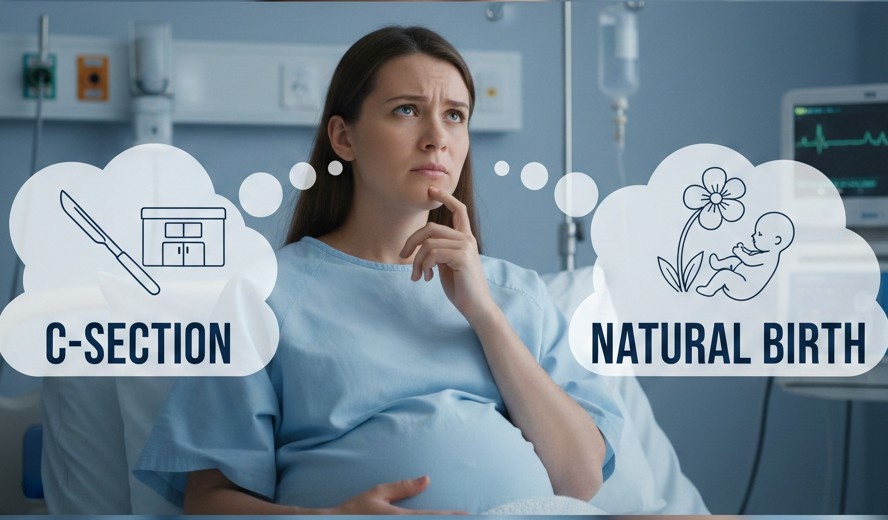
Pregnancy is a journey filled with excitement, anticipation, questions, and sometimes quiet worries that surface late at night. One of the biggest questions expectant parents face is this: Should I plan for a natural birth or a C-section?
For some, the answer seems straightforward. For others, it feels overwhelming. Advice pours in from relatives, friends, social media, and even strangers. One person praises natural birth as empowering, while another insists a C-section is safer and less painful. Somewhere between opinions and medical facts, many parents feel confused, pressured, or even judged.
The truth is simple but often overlooked: both C-section and natural birth are valid ways to bring a baby into the world. Neither defines your strength, your love, or your success as a parent. This guide is not about choosing sides. It is about understanding both options clearly, honestly, and without fear. Whether you are planning your birth, facing an unexpected medical decision, or simply seeking knowledge, this guide will help you make an informed and confident choice.
What Is Natural Birth?
Natural birth, also known as vaginal delivery, is when a baby is born through the birth canal without surgical intervention. It may happen with or without medical pain relief, and it can take place in hospitals, birthing centers, or at home under professional supervision. Natural birth is often described as a process that follows the body’s natural rhythm. Labor begins, contractions gradually intensify, the cervix dilates, and eventually the baby is pushed out through the vagina.
Many women associate natural birth with minimal medical intervention, but it is important to understand that natural birth does not mean “no help”. Monitoring, guidance, and support from healthcare professionals are always present, especially in hospital settings.
What Is a C-Section?
A C-section, or cesarean section, is a surgical procedure in which the baby is delivered through an incision made in the abdomen and uterus. It can be planned (elective) or unplanned (emergency), depending on medical circumstances.
Some C-sections are scheduled in advance due to known complications, while others happen during labor if vaginal delivery becomes unsafe for the mother or baby. Although a C-section is a major surgery, it is also a life-saving medical procedure that has safely delivered millions of babies worldwide.
Why This Comparison Matters
Comparing C-section vs natural birth is not about determining which is “better.” It is about understanding:
- How each method affects the body
- What recovery looks like
- When one may be safer than the other
- What emotional experiences may arise
Knowledge replaces fear. Understanding replaces guilt. And informed parents make calmer decisions.
The Experience of Natural Birth
The Physical Process
Natural labor usually unfolds in stages. Early labor may feel like mild cramps or back pain. As labor progresses, contractions become stronger, longer, and closer together. The cervix opens to allow the baby to pass through.
The pushing stage can be intense, requiring focus, stamina, and support. Many women describe it as physically demanding but deeply instinctive.
Pain and Sensation
Pain during natural birth varies greatly. Some women describe it as manageable and purposeful, while others find it overwhelming. Pain relief options such as epidurals, spinal anesthesia, breathing techniques, water therapy, and movement are commonly used.
It is important to remember that choosing pain relief does not make your birth any less natural.
Emotional Experience
Many women report feeling empowered after a vaginal birth. The sense of actively participating in the birth can be emotionally fulfilling. Hormones released during labor often promote bonding and emotional connection immediately after birth.
However, natural birth can also be exhausting, especially if labor is long or complicated.
The Experience of a C-Section
The Surgical Process
During a C-section, the mother is usually awake but numb from the chest down due to spinal or epidural anesthesia. The procedure typically takes about 30 to 60 minutes.
The baby is delivered quickly, often within the first few minutes. The rest of the time is spent carefully closing the incision.
Pain and Sensation
A C-section itself is painless due to anesthesia, but recovery involves post-surgical pain, tenderness, and limited mobility for several days or weeks.
Pain management is provided, but healing from surgery takes time and patience.
Emotional Experience
Some women feel relieved knowing exactly when and how their baby will be born. Others may feel disappointed if a C-section was unplanned, especially after preparing for vaginal birth.
These emotions are normal. A C-section does not take away from the significance of birth or the bond with your baby.
Medical Reasons for Choosing a C-Section
While some C-sections are elective, many are medically necessary. Common reasons include:
- Baby in breech or transverse position
- Placenta previa (placenta covering the cervix)
- Fetal distress during labor
- Prolonged or stalled labor
- Previous uterine surgery or multiple C-sections
- High-risk pregnancies such as severe preeclampsia
In these cases, a C-section is often the safest option for both mother and baby.
Recovery After Natural Birth
Physical Recovery
Recovery from a vaginal birth is generally faster. Many women can walk within hours and return to normal activities sooner.
However, recovery is not always easy. Some women experience:
- Perineal tears or stitches
- Swelling and soreness
- Postpartum bleeding
- Pelvic floor weakness
Healing time varies depending on the complexity of the birth.
Emotional Recovery
Hormonal changes after birth can cause mood swings, baby blues, or emotional sensitivity. Adequate rest, support, and reassurance play a major role in recovery.
Recovery After a C-Section
Physical Recovery
C-section recovery typically takes longer. Mothers may experience:
- Pain at the incision site
- Difficulty moving or lifting
- Increased fatigue
- Risk of infection
Hospital stays are often longer, and full recovery can take several weeks.
Emotional Recovery
Some women struggle emotionally after a C-section, especially if it was unexpected. Feelings of disappointment, grief, or guilt may arise, even though the surgery was necessary.
Talking openly about these emotions and seeking support can make a significant difference.
Impact on the Baby
Babies Born Through Natural Birth
Babies born vaginally are exposed to beneficial bacteria from the birth canal, which may help strengthen their immune system. The pressure during birth also helps clear fluid from the baby’s lungs.
Babies Born Through C-Section
C-section babies are typically healthy and thrive just as well. In some cases, they may experience mild breathing issues initially, but modern medical care manages this effectively. Breastfeeding and bonding are absolutely possible after a C-section with proper support.
Breastfeeding: Does Birth Method Matter?
Both birth methods can support successful breastfeeding. However:
- Vaginal birth may allow earlier skin-to-skin contact
- C-section mothers may need extra help positioning due to incision pain
With guidance and patience, breastfeeding can be successful regardless of delivery method.
The Role of Choice and Consent
One of the most important aspects of childbirth is feeling heard and respected.
Some women prefer to plan every detail. Others choose flexibility. Birth plans are helpful, but they should always allow room for medical judgment and safety.
No one should feel pressured into a decision based on fear, guilt, or societal expectations.
Myths Around C-Section and Natural Birth
Myth 1: Natural birth makes you a better mother
Motherhood begins with love and care, not the method of delivery.
Myth 2: C-sections are the easy way out
A C-section is major surgery and requires significant recovery.
Myth 3: You cannot bond after a C-section
Bonding happens through touch, care, and time, not the delivery method.
C-Section vs Natural Birth: A Quick Comparison
| Aspect | Natural Birth | C-Section |
|---|---|---|
| Procedure | Vaginal delivery | Surgical delivery |
| Recovery Time | Usually shorter | Longer |
| Pain | During labor | After surgery |
| Hospital Stay | Shorter | Longer |
| Medical Risk | Lower in low-risk pregnancies | Higher surgical risks |
| When Preferred | Low-risk pregnancy | High-risk or complications |
How to Decide What’s Right for You
There is no universal answer. The best choice depends on:
- Your medical history
- Pregnancy risks
- Baby’s position and health
- Your comfort level and preferences
- Advice from a trusted healthcare provider
Open conversations with your doctor or midwife are essential. Ask questions. Express concerns. Understand risks and benefits clearly.
The Importance of Letting Go of Guilt
Many women carry unnecessary guilt about how they gave birth. Some feel they “failed” at natural birth. Others feel judged for choosing a C-section.
Birth is unpredictable. What matters most is a healthy mother and baby. You did not take shortcuts. You did not miss out. You brought life into the world in the way that was right at that moment.
Final Thoughts
C-section vs natural birth is not a competition. It is not a test of endurance or bravery. It is a deeply personal medical and emotional experience shaped by countless factors. Some births are quiet and surgical. Others are long and intense. Some go exactly as planned. Others take unexpected turns.
If you are preparing for birth, know this: you are allowed to change your mind, ask for help, and trust medical guidance. If you have already given birth, know this: your experience is valid, and your body did something extraordinary.
FAQ’s
Which is safer: C-section or natural birth?
Both are safe when done for the right reasons. Natural birth is generally safer for low-risk pregnancies, while a C-section is safer when medical complications arise. The safest option depends on the mother’s and baby’s health.
Is C-section more painful than natural birth?
Natural birth involves pain during labor, while a C-section is usually painless during surgery but painful during recovery. Pain levels vary for every woman, and both methods involve different kinds of discomfort.
Can I choose a C-section even if there are no complications?
In some cases, yes. Elective C-sections are allowed in certain hospitals, but doctors usually recommend natural birth when there are no medical risks due to faster recovery and fewer complications.
Does a C-section affect future pregnancies?
A C-section may increase the chances of repeat C-sections in future pregnancies and slightly raise the risk of complications like uterine rupture or placenta issues. Many women, however, go on to have healthy pregnancies after a C-section.
Is recovery faster after natural birth?
Yes, in most cases. Women who have a vaginal birth usually recover faster, move more easily, and experience less long-term discomfort compared to C-section recovery.
Can I breastfeed after a C-section?
Yes. Breastfeeding after a C-section is absolutely possible. Some mothers may need extra support initially due to pain or limited movement, but milk production and bonding are not affected long-term.
Does natural birth help with bonding?
Natural birth may allow earlier skin-to-skin contact, which can support bonding. However, strong bonding also develops after a C-section through touch, care, and time spent with the baby.
Is it true that C-section babies have weaker immunity?
C-section babies may miss exposure to certain beneficial bacteria at birth, but this does not mean they have weak immunity. Breastfeeding and proper care help build a healthy immune system.
What if my birth plan changes suddenly?
Birth plans are flexible guides, not strict rules. If medical conditions change, doctors may recommend a C-section for safety. A change in plan does not mean failure.
Which delivery method is best for first-time mothers?
There is no single best option. First-time mothers with low-risk pregnancies are often encouraged to try natural birth, but the final decision should be based on medical advice and personal comfort.
Also Read: