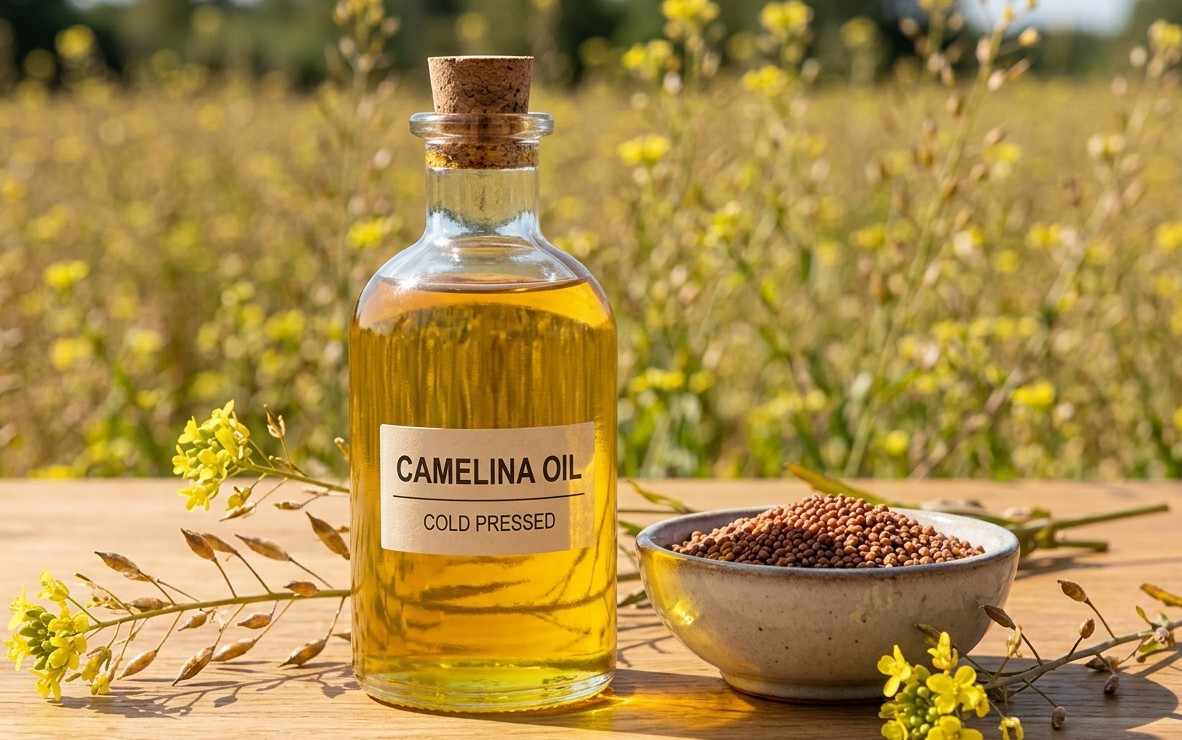
Camelina oil is one of those ancient oils that is quietly making a modern comeback. Often called “false flax oil” or “gold-of-pleasure oil,” camelina oil has been used for centuries in Europe and parts of Asia. Today, it’s gaining attention for its impressive omega fatty acid profile, mild nutty flavor, and versatility in both cooking and skincare. In this guide, you’ll learn everything you need to know about camelina oil — from its nutrition facts and science-backed health benefits to side effects, dosage, usage tips, and storage recommendations.
What is Camelina Oil?
Camelina oil is extracted from the seeds of the Camelina sativa plant, a flowering plant belonging to the Brassicaceae family, which also includes mustard, cabbage, and broccoli. The plant is hardy and grows well in poor soil conditions, making it a sustainable crop.
Historically cultivated in Europe for over 3,000 years, camelina oil was used for cooking, lamp fuel, and even skin treatments. With the growing interest in plant-based omega-3 sources, camelina oil is now appreciated as a sustainable alternative to flaxseed oil and fish oil.
Camelina oil is typically cold-pressed to preserve its nutritional value. It has a golden color and a mild, slightly nutty taste. Unlike many other omega-3-rich oils, it has relatively high oxidative stability, which means it doesn’t spoil as quickly.
Nutrition Facts of Camelina Oil
Below is the approximate nutritional profile per 1 tablespoon (14 grams) of cold-pressed camelina oil:
| Nutrient | Amount per 1 tbsp (14g) |
|---|---|
| Calories | 120 kcal |
| Total Fat | 14 g |
| Saturated Fat | 1–1.5 g |
| Monounsaturated Fat | 4–5 g |
| Polyunsaturated Fat | 8–9 g |
| Omega-3 (ALA) | 4.5–5 g |
| Omega-6 | 2–3 g |
| Omega-9 | 3–4 g |
| Vitamin E | 2–3 mg |
| Cholesterol | 0 mg |
| Carbohydrates | 0 g |
| Protein | 0 g |
Camelina seeds oil is especially rich in alpha-linolenic acid (ALA), a plant-based omega-3 fatty acid, making it one of the most omega-3-dense plant oils available.
20 Proven Benefits of Camelina Oil
- Rich in Omega-3 Fatty Acids – Camelina seeds oil contains high levels of alpha-linolenic acid (ALA), which supports heart health and reduces inflammation.
- Supports Heart Health – Regular consumption may help lower LDL (bad cholesterol) and improve overall cardiovascular function.
- Balances Omega-6 to Omega-3 Ratio – Camelina oil offers a healthier fatty acid balance compared to many common cooking oils.
- Reduces Inflammation – The anti-inflammatory properties of omega-3s may help reduce chronic inflammation in the body.
- Improves Skin Hydration – When used topically, it helps lock in moisture and support skin barrier function.
- Promotes Brain Health – Omega-3 fatty acids are essential for cognitive function and long-term brain health.
- Supports Joint Health – Anti-inflammatory compounds may ease stiffness and joint discomfort.
- Boosts Immune Function – Healthy fats and antioxidants support overall immune response.
- High in Antioxidants – Vitamin E content helps combat oxidative stress and protect cells from damage.
- May Aid Weight Management – Healthy fats promote satiety and reduce overeating.
- Improves Digestive Health – Healthy fats can support gut lining integrity and smooth digestion.
- Supports Hormonal Balance – Essential fatty acids are crucial for hormone production and regulation.
- Enhances Hair Health – When applied to the scalp, camelina oil may improve shine and reduce dryness.
- May Lower Blood Pressure – Omega-3 fatty acids are associated with improved vascular function.
- Stable for Cooking – Its relatively high smoke point and oxidative stability make it safer for moderate-heat cooking.
- May Improve Insulin Sensitivity – Healthy fats may help regulate blood sugar levels when part of a balanced diet.
- Supports Eye Health – Omega-3 fatty acids are important for maintaining retinal health.
- Helps Repair Skin Barrier – Topical application can support recovery from dryness and irritation.
- Sustainable and Eco-Friendly – Camelina requires fewer inputs, making it environmentally friendly.
- May Reduce Risk of Chronic Disease – Regular intake of omega-3-rich oils may lower the risk of heart disease and metabolic disorders.
10 Side Effects of Camelina Oil
- Digestive Upset – Excessive intake may cause bloating, diarrhea, or stomach discomfort.
- Allergic Reactions – Individuals sensitive to mustard-family plants may experience allergic responses.
- Blood Thinning Effect – High omega-3 intake may increase bleeding risk in susceptible individuals.
- Lower Blood Pressure – It may reduce blood pressure excessively in people already on medication.
- Interaction with Medications – It may interact with blood thinners or anti-inflammatory drugs.
- Caloric Density – Overconsumption may contribute to unwanted weight gain due to high calorie content.
- Oxidation if Improperly Stored – Rancid oil may cause oxidative stress if consumed.
- Mild Nausea – Some individuals may experience nausea when taking large doses.
- Possible Hormonal Effects – Excessive intake may influence hormone-sensitive conditions.
- Not Suitable for Deep Frying – Although stable, very high temperatures may degrade nutrients.
How to Use Camelina Oil?
Camelina oil is highly versatile and can be used in several ways:
- Drizzle over salads as a dressing base.
- Add to smoothies for a healthy fat boost.
- Use in homemade mayonnaise or sauces.
- Mix into yogurt or oatmeal.
- Light sautéing or baking.
- Apply topically as a facial oil.
- Massage into scalp for hair nourishment.
Other Uses of Camelina Oil
Beyond culinary uses, camelina oil has several alternative applications:
- Natural moisturizer for dry skin
- Carrier oil for essential oils
- Lip balm ingredient
- Cuticle oil
- Beard oil base
- Massage oil
- Animal feed supplement
- Industrial biofuel research
Tips for Consuming Camelina Oil
- Choose cold-pressed, unrefined oil for maximum nutrients.
- Start with small amounts if new to omega-rich oils.
- Avoid overheating to preserve omega-3 content.
- Pair with antioxidant-rich foods for better benefits.
- Check expiration dates carefully.
How to Take Camelina Oil?
You can take camelina seeds oil in different forms:
- 1 tablespoon mixed into food daily.
- As part of salad dressings.
- Blended into smoothies.
- Softgel supplement form (if available).
- Mixed with lemon juice for a quick daily shot.
Always start small and increase gradually.
How to Make Camelina Oil at Home?
Making camelina seeds oil at home requires access to camelina seeds and a cold-press oil extractor.
Basic steps:
- Clean and dry camelina seeds thoroughly.
- Use a home oil press machine.
- Press seeds slowly to extract oil.
- Filter using cheesecloth.
- Store in a dark glass bottle.
Note that commercial cold pressing ensures better extraction efficiency.
How Much Camelina Oil Can You Use Per Day?
For most adults, 1–2 tablespoons (15–30 ml) per day is generally considered safe when used as part of a balanced diet.
If using for omega-3 supplementation, even 1 tablespoon provides a significant amount of ALA.
Camelina Oil Dosage
- General wellness: 1 tablespoon daily
- Heart health support: 1–2 tablespoons daily
- Topical use: Few drops as needed
- Supplement capsules: Follow manufacturer instructions
Consult a healthcare provider for personalized advice.
Best Time to Use Camelina Oil
- Morning with breakfast for better absorption
- With meals to reduce digestive discomfort
- Post-workout to support recovery
- At night for skin application
Consistency matters more than timing.
Who Should Use Camelina Oil?
Camelina seeds oil may be beneficial for:
- Individuals with low omega-3 intake
- Vegetarians and vegans
- People seeking heart-healthy oils
- Those with dry skin
- Individuals looking for sustainable oil alternatives
- Adults managing cholesterol levels
Who Should Not Use Camelina Oil?
Avoid or consult a doctor if you:
- Are allergic to mustard-family plants
- Are on blood thinners
- Have bleeding disorders
- Have upcoming surgery
- Experience chronic digestive sensitivity
- Are pregnant or breastfeeding (consult doctor first)
How to Store Camelina Oil?
Proper storage is essential:
- Keep in a dark glass bottle
- Store in a cool, dry place
- Refrigerate after opening
- Keep tightly sealed
- Avoid exposure to sunlight and heat
Properly stored oil can last 6–12 months.
Precautions and Interactions
- May interact with anticoagulants like warfarin.
- Monitor blood pressure if on antihypertensive medication.
- Avoid excessive intake with other omega-3 supplements.
- Stop usage before surgery due to mild blood-thinning effects.
- Perform patch test before topical application.
Final Thoughts
Camelina oil is a nutrient-dense, sustainable, and versatile oil rich in omega-3 fatty acids and antioxidants. Its balance of fatty acids, mild flavor, and relatively high stability make it a valuable addition to both the kitchen and skincare routine. While it offers numerous potential benefits — including heart support, inflammation reduction, and skin nourishment — moderation is key. Like all oils, it is calorie-dense and should be consumed as part of a balanced diet.
FAQ’s
What is camelina oil made from?
Oil is extracted from the seeds of the Camelina sativa plant, a member of the mustard family.
Is camelina oil good for heart health?
Yes, camelina seeds oil is rich in omega-3 fatty acids, which may help support cardiovascular health and maintain healthy cholesterol levels.
Can camelina oil be used for cooking?
Yes, camelina seeds oil has good oxidative stability and can be used for salad dressings, baking, and light sautéing.
What does camelina oil taste like?
Oil has a mild, slightly nutty and earthy flavor that blends well with both sweet and savory dishes.
Can camelina oil help reduce inflammation?
Its high alpha-linolenic acid (ALA) content may help reduce inflammation when consumed regularly as part of a balanced diet.
Is camelina oil safe for daily use?
For most healthy adults, 1–2 tablespoons per day is generally considered safe when included in a balanced diet.
Can camelina oil be applied to the skin?
Yes, camelina seeds oil can be used topically as a moisturizer or carrier oil for essential oils.
Does camelina oil help with hair growth?
While it may not directly stimulate hair growth, it can nourish the scalp and improve hair shine and strength.
Is camelina oil suitable for vegans?
Yes, camelina seeds oil is plant-based and an excellent vegan source of omega-3 fatty acids.
Should camelina oil be refrigerated?
Refrigerating after opening helps preserve freshness and prevent oxidation.
Can pregnant women use camelina oil?
Pregnant or breastfeeding women should consult a healthcare provider before using camelina seeds oil regularly.
Is camelina oil good for weight loss?
Oil may support weight management when used in moderation as part of a balanced diet due to its healthy fat profile.
Does camelina oil contain cholesterol?
No, camelina seeds oil is plant-based and contains zero cholesterol.
How long does it take for Camelina Oil to work?
The effects of camelina seeds oil may vary depending on the purpose, but improvements in cholesterol or inflammation markers may take several weeks of consistent use as part of a balanced diet.
Is Camelina Oil safe for children?
Oil can be safe for children in small food-based amounts, but it’s best to consult a pediatrician before giving it regularly as a supplement.
What is camelina oil used for?
Oil is used for cooking, salad dressings, omega-3 supplementation, skincare, hair care, and as a sustainable plant-based oil alternative.
Is camelina oil the same as flaxseed oil?
No, camelina seeds oil and flaxseed oil come from different plants, although both are rich in plant-based omega-3 fatty acids; camelina oil is generally more stable and less prone to oxidation.
Is camelina oil the same as omega-3?
Oil is not omega-3 itself, but it is a rich source of alpha-linolenic acid (ALA), which is a type of plant-based omega-3 fatty acid.
Is camellia oil better than olive oil?
Camellia oil and olive oil have different nutrient profiles; camellia oil is high in monounsaturated fats similar to olive oil, but whether it is “better” depends on dietary needs and cooking preferences.
What is another name for camellia oil?
Camellia oil is also commonly known as tea seed oil or tea oil, especially in Asian countries.
Also Read: