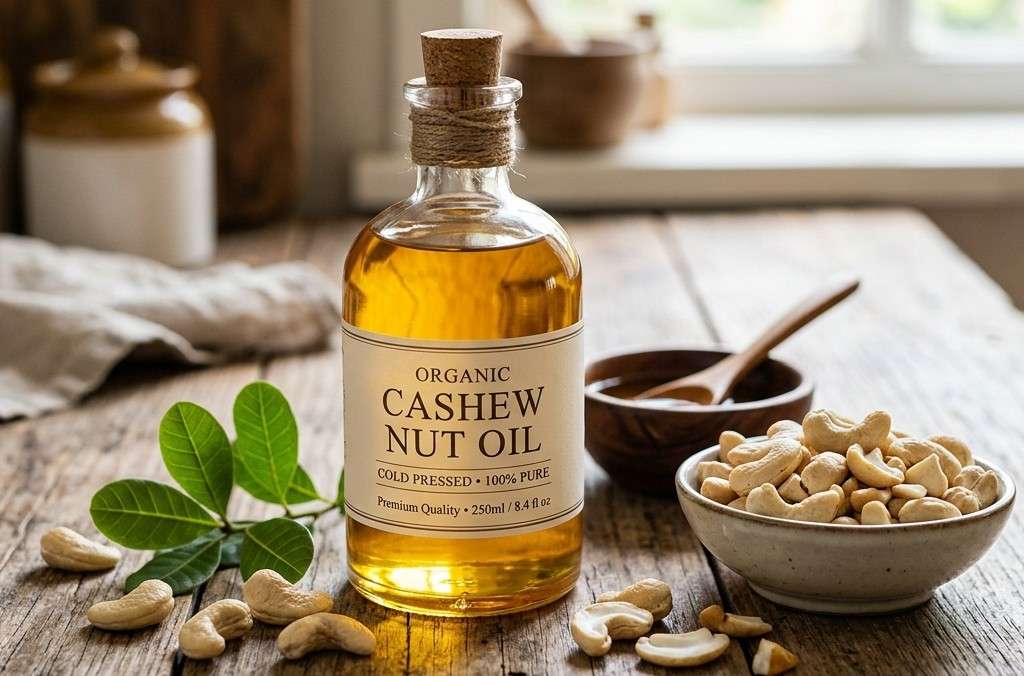
Cashews are loved around the world for their creamy texture and mildly sweet taste. But beyond the snack bowl lies something even more interesting — cashew nut oil. Extracted from the kernel of the cashew nut, this oil is gaining attention for its nutritional value, skin benefits, and versatile culinary applications.
In this guide, you’ll discover everything about cashew nut oil — from its nutrition profile and science-backed health benefits to side effects, dosage, usage tips, and storage recommendations.
What is Cashew Nut Oil?
Cashew nut oil is a light, golden oil extracted from the edible kernel of the cashew nut (Anacardium occidentale). It is different from cashew shell liquid (CNSL), which is a toxic by-product extracted from the shell and used for industrial purposes. The oil discussed in this article is derived strictly from the edible nut and is safe for consumption when properly processed.
Cashew nut oil has a mild, slightly nutty aroma and a smooth texture. It is commonly used in:
- Cooking and salad dressings
- Skin and hair care
- Massage oils
- Cosmetic formulations
Thanks to its balanced fat composition and natural antioxidants, cashew nut oil is considered a heart-friendly and skin-supportive oil.
Nutrition Facts of Cashew Nut Oil
| Nutrient | Amount (Per 1 Tablespoon – 14g) |
|---|---|
| Calories | 120 kcal |
| Total Fat | 14 g |
| Saturated Fat | 2.5 g |
| Monounsaturated Fat | 8 g |
| Polyunsaturated Fat | 2.5 g |
| Vitamin E | 1.9 mg |
| Phytosterols | Present |
| Omega-6 Fatty Acids | Moderate |
| Cholesterol | 0 mg |
| Carbohydrates | 0 g |
| Protein | 0 g |
Cashew nut oil is primarily composed of healthy fats, especially monounsaturated fatty acids, which support heart and metabolic health.
20 Proven Benefits of Cashew Nut Oil
- Supports Heart Health – The high monounsaturated fat content helps reduce bad cholesterol (LDL) and supports cardiovascular function.
- Promotes Healthy Skin – Vitamin E and antioxidants nourish the skin and help protect against environmental damage.
- Improves Skin Elasticity – Natural fatty acids maintain moisture and improve skin firmness over time.
- Boosts Brain Function – Healthy fats provide energy for brain cells and may support cognitive clarity.
- Reduces Inflammation – Anti-inflammatory compounds may help ease mild inflammatory conditions.
- Enhances Hair Strength – Nourishing lipids improve scalp hydration and reduce hair dryness.
- Prevents Premature Aging – Antioxidants help combat oxidative stress linked to wrinkles and fine lines.
- Supports Weight Management – Healthy fats increase satiety and reduce overeating when used moderately.
- Improves Nutrient Absorption – Fat-soluble vitamins like A, D, E, and K are better absorbed with dietary fats.
- Promotes Joint Comfort – Anti-inflammatory properties may help reduce joint stiffness.
- Boosts Immune Function – Antioxidants strengthen the body’s natural defense mechanisms.
- Supports Hormonal Balance – Healthy fats are essential for hormone production and regulation.
- Improves Digestion – Moderate use may stimulate digestive secretions and improve gut lubrication.
- Maintains Healthy Blood Pressure – Balanced fats support vascular health and circulation.
- Provides Natural Energy – The calorie-dense composition offers quick and sustained energy.
- Supports Eye Health – Vitamin E protects eye tissues from oxidative damage.
- Helps Repair Skin Barrier – Topical use strengthens the skin’s protective lipid layer.
- Improves Scalp Health – Moisturizing properties reduce dandruff and dryness.
- May Support Bone Health – Healthy fats aid in absorption of bone-supporting nutrients.
- Encourages Healthy Metabolism – Balanced fats support metabolic processes when consumed appropriately.
10 Side Effects of Cashew Nut Oil
- Allergic Reactions – Individuals allergic to cashews may experience itching, swelling, or difficulty breathing.
- Weight Gain – Excess consumption can lead to calorie overload and unwanted weight gain.
- Digestive Discomfort – Overuse may cause bloating, diarrhea, or stomach upset.
- High Caloric Density – Even small amounts are calorie-rich and can disrupt calorie control.
- Skin Sensitivity – Some individuals may experience irritation when applied topically.
- Risk of Oxidation – Improperly stored oil may become rancid and harmful.
- Interaction with Blood Pressure Medication – It may enhance the effect of antihypertensive drugs.
- Potential Acne Trigger – Oily skin types may experience clogged pores with heavy application.
- Cross-Contamination Risk – Poor processing may result in shell oil contamination.
- Not Suitable for Nut-Free Diets – Individuals avoiding nuts for medical or religious reasons should avoid it.
How to Use Cashew Nut Oil?
Cashew nut oil can be used both internally and externally.
In Cooking:
- Drizzle over salads
- Add to smoothies
- Use for light sautéing
- Mix into dips and sauces
For Skin:
- Apply as a facial oil
- Use as body massage oil
- Mix with essential oils
For Hair:
- Warm slightly and massage into scalp
- Use as pre-shampoo treatment
Other Uses of Cashew Nut Oil
- Ingredient in natural moisturizers
- Base oil for aromatherapy
- Lip balm formulations
- Nail strengthening oil
- Mild makeup remover
- Beard conditioning oil
Its smooth texture makes it ideal for cosmetic use.
Tips for Consuming Cashew Nut Oil
- Use cold-pressed oil for maximum benefits.
- Avoid overheating to preserve nutrients.
- Measure portions carefully due to high calorie content.
- Store in a dark glass bottle.
- Always check for nut allergies before consumption.
How to Take Cashew Nut Oil?
For internal use:
- 1 teaspoon added to salads
- Mixed into cooked vegetables
- Added to warm (not hot) soups
- Blended into smoothies
For topical use:
- 2–3 drops for face
- 1 tablespoon for full scalp massage
How to Make Cashew Nut Oil at Home?
While commercial extraction requires pressing equipment, small-scale home preparation is possible.
Basic Method:
- Roast high-quality raw cashews lightly.
- Blend them in a high-speed blender.
- Continue blending until they release oil and form a paste.
- Place paste in cheesecloth and press firmly.
- Collect extracted oil in a clean glass container.
Note: This yields limited oil and is less efficient than cold pressing.
How Much Cashew Nut Oil Can You Use Per Day?
For adults:
- 1–2 tablespoons per day is generally safe for cooking purposes.
- For supplementation, 1 teaspoon daily is sufficient.
Excess intake may increase calorie load significantly.
Cashew Nut Oil Dosage
| Purpose | Recommended Dosage |
|---|---|
| General health | 1 teaspoon daily |
| Cooking | 1–2 tablespoons per day |
| Skin care | 2–3 drops for face |
| Hair care | 1 tablespoon weekly |
Always adjust based on dietary fat intake and medical conditions.
Best Time to Use Cashew Nut Oil
- Morning with breakfast for nutrient absorption
- Before workouts for energy
- After shower for skin application
- At night for scalp massage
Consistency matters more than timing.
Who Should Use Cashew Nut Oil?
- Individuals looking for heart-healthy oils
- People with dry skin
- Those seeking natural hair conditioning
- Individuals following Mediterranean-style diets
- Adults needing healthy fat sources
Who Should Not Use Cashew Nut Oil?
- People with cashew or tree nut allergies
- Individuals on strict calorie-restricted diets
- Those with severe digestive disorders
- Anyone advised to limit fat intake
- Children unless approved by a healthcare professional
How to Store Cashew Nut Oil?
Proper storage prevents oxidation.
- Store in airtight glass bottle
- Keep away from sunlight
- Refrigerate after opening (optional but helpful)
- Use within 3–6 months
- Discard if smell becomes sour or rancid
Precautions and Interactions
- Consult a doctor if pregnant or breastfeeding.
- Avoid if you have confirmed nut allergies.
- Monitor intake if on cholesterol or blood pressure medication.
- Do not use industrial-grade cashew shell oil for consumption.
- Perform patch test before topical application.
Final Thoughts
Cashew nut oil is a nutrient-rich, versatile oil that supports heart health, skin hydration, and overall wellness when used responsibly. Its mild flavor and cosmetic benefits make it a valuable addition to both kitchen shelves and skincare routines. However, like all oils, moderation is essential. High in calories and unsuitable for those with nut allergies, it should be incorporated thoughtfully into a balanced lifestyle.
FAQ’s
Is cashew oil healthy?
Yes, cashew oil is healthy in moderation because it contains heart-friendly fats and vitamin E, but it should be used in controlled portions due to its high calorie content.
What is cashew nut oil used for?
Oil is used for cooking, salad dressings, and skincare, as well as for moisturizing hair and skin due to its nourishing properties.
Is cashew nut oil safe for daily consumption?
Yes, oil is generally safe for daily use when consumed in moderation, typically 1–2 teaspoons per day as part of a balanced diet.
Can cashew nut oil help with weight loss?
Oil may support weight management when used in controlled portions because healthy fats promote satiety, but excessive intake can lead to weight gain.
Is cashew nut oil good for heart health?
Yes, it contains monounsaturated fats that may help lower LDL cholesterol and support overall cardiovascular health.
Can people with nut allergies use cashew nut oil?
No, individuals with cashew or tree nut allergies should avoid oil due to the risk of allergic reactions.
Is cashew nut oil good for skin?
Yes, it is rich in vitamin E and healthy fats that help moisturize the skin, improve elasticity, and support the skin barrier.
Can cashew nut oil clog pores?
It may clog pores in people with very oily or acne-prone skin, so a patch test is recommended before regular facial use.
Is cashew nut oil good for hair growth?
Oil can improve scalp hydration and reduce dryness, which may create a healthier environment for hair growth.
Can you cook with cashew nut oil?
Yes, it can be used for light sautéing, salad dressings, and low to medium-heat cooking, but it should not be overheated.
Does cashew nut oil contain cholesterol?
No, oil is plant-based and contains zero cholesterol.
What does cashew nut oil taste like?
It has a mild, slightly nutty flavor that blends well with salads, vegetables, and sauces.
How long does cashew nut oil last?
When stored properly in a cool, dark place, it typically lasts 3–6 months after opening.
Can pregnant women use cashew nut oil?
Pregnant women can generally consume it in moderate amounts, but it is best to consult a healthcare provider before regular use.
Is cashew nut oil better than olive oil?
Both oils contain healthy fats, but olive oil has more research supporting heart health benefits; oil can still be a nutritious alternative.
Can cashew nut oil improve digestion?
In small amounts, it may help lubricate the digestive tract and support nutrient absorption.
Is cold-pressed cashew nut oil better?
Yes, cold-pressed oil retains more nutrients and antioxidants compared to refined versions.
Can children use cashew nut oil?
Children can consume small amounts if they do not have nut allergies, but moderation is important.
How do I know if cashew nut oil has gone bad?
If the oil smells sour, tastes bitter, or appears cloudy, it may have become rancid and should be discarded.
Can cashew nut oil reduce inflammation?
It contains antioxidants and healthy fats that may help reduce mild inflammation when used as part of a healthy diet.
Is cashew nut oil suitable for keto diets?
Yes, because it is high in fats and contains no carbohydrates, it can fit into a ketogenic diet when portion-controlled.
Can cashew nut oil be used for massage?
Yes, its smooth texture and moisturizing properties make it suitable as a massage oil, especially for dry skin.
Also Read: