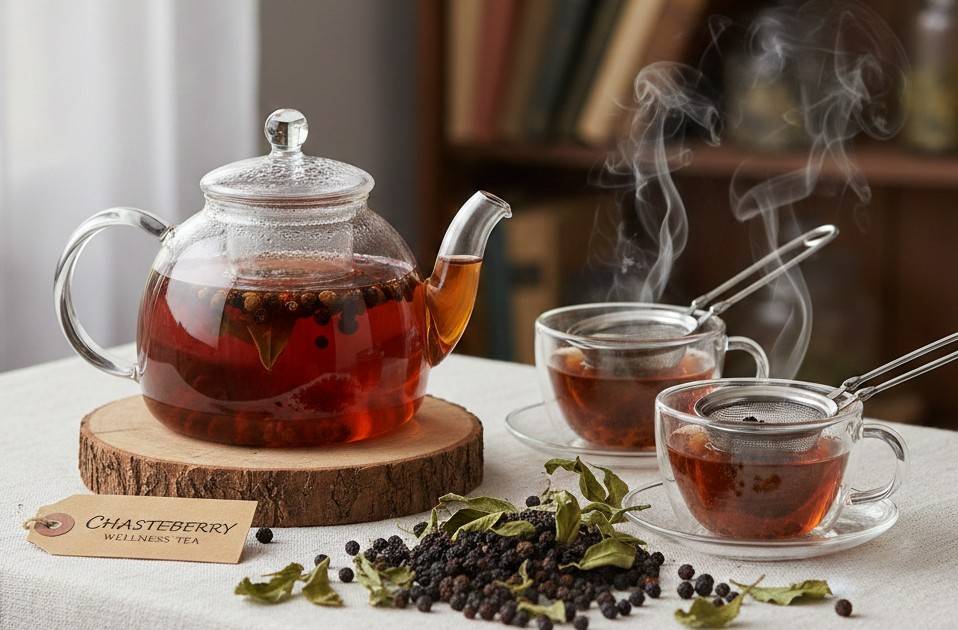
Chasteberry tea has been used for centuries as a natural remedy for women’s hormonal health. Rooted in traditional herbal medicine, this gentle yet powerful herbal infusion continues to gain attention for its potential to support menstrual balance, fertility, and overall reproductive wellness. In this guide, you will learn everything about chasteberry tea — what it is, its proven health benefits, side effects, how to prepare it, dosage recommendations, and important precautions.
What is Chasteberry Tea?
Chasteberry tea is an herbal infusion made from the dried fruits of the Vitex agnus-castus plant. Also known as chaste tree, monk’s pepper, or Vitex, this plant has been traditionally used in European and Mediterranean herbal medicine for hormonal regulation.
The berries of Vitex agnus-castus are small, dark purple fruits that resemble peppercorns. When dried and steeped in hot water, they produce a mildly bitter, earthy tea.
Historically, chasteberry was used by monks to reduce libido, which is why it earned the name “chaste tree.” Today, it is more widely known for supporting:
- Premenstrual syndrome (PMS)
- Irregular menstrual cycles
- Hormonal acne
- Fertility concerns
- Perimenopause symptoms
Unlike herbs that contain hormones, chasteberry works indirectly by influencing the pituitary gland, which regulates hormone production in the body.
Components of Chasteberry Tea
Chasteberry tea is not consumed for macronutrients but for its bioactive plant compounds. Below is a general nutritional overview per 1 cup (240 ml) of brewed chasteberry tea:
| Nutrient / Compound | Approximate Amount |
|---|---|
| Calories | 2–5 kcal |
| Carbohydrates | <1 g |
| Protein | 0 g |
| Fat | 0 g |
| Fiber | 0 g |
| Flavonoids | Present (trace) |
| Iridoid glycosides | Present |
| Essential oils | Small amounts |
| Diterpenes | Present |
| Antioxidants | Moderate levels |
| Caffeine | 0 mg |
Key active compounds include:
- Agnuside
- Casticin
- Flavonoids
- Iridoid glycosides
These compounds are responsible for its hormone-modulating and anti-inflammatory effects.
20 Science-Backed Benefits of Chasteberry Tea
1. Supports PMS Relief
Chasteberry tea may help reduce common PMS symptoms such as mood swings, irritability, and bloating by regulating prolactin levels.
2. Reduces Breast Tenderness
It may ease cyclical breast pain (mastalgia) by lowering elevated prolactin levels.
3. Helps Regulate Menstrual Cycles
Chasteberry tea may support cycle regularity by influencing pituitary hormone signaling.
4. Supports Fertility
It may improve luteal phase defects by increasing progesterone production indirectly.
5. May Help with PCOS Symptoms
Chasteberry tea may assist in balancing hormones in women with polycystic ovary syndrome.
6. Eases Hormonal Acne
It may reduce acne linked to hormonal fluctuations by stabilizing androgen levels.
7. Supports Perimenopause Balance
Chasteberry tea may help manage mood and cycle changes during perimenopause.
8. Reduces Mood Swings
It may support emotional stability by influencing dopamine receptors.
9. May Reduce Headaches Linked to PMS
Chasteberry tea may lessen menstrual-related headaches.
10. Supports Ovulation
It may promote ovulation in women with mild hormonal imbalances.
11. May Improve Luteal Phase Length
Chasteberry tea may help lengthen a short luteal phase associated with infertility.
12. Supports Healthy Prolactin Levels
It may reduce elevated prolactin, which can interfere with ovulation.
13. May Reduce Menstrual Cramps
Chasteberry tea may ease cramps by stabilizing hormonal fluctuations.
14. Supports Endometriosis Symptom Management
It may help regulate hormones that contribute to endometrial tissue growth.
15. May Help with Postpartum Hormonal Recovery
Chasteberry tea may support gradual hormonal balance after childbirth.
16. May Improve Sleep During PMS
It may promote better sleep by stabilizing hormone-related mood disturbances.
17. Supports Emotional Well-Being
Chasteberry tea may positively affect dopamine pathways involved in mood regulation.
18. May Reduce Water Retention
It may decrease bloating associated with hormonal fluctuations.
19. Supports Skin Health
Balanced hormones may contribute to clearer and healthier skin.
20. May Help Reduce Irritability
Chasteberry tea may ease irritability linked to the premenstrual phase.
10 Side Effects of Chasteberry Tea
Although generally considered safe for most healthy adults, chasteberry tea may cause side effects in some individuals.
1. Nausea
Some people may experience mild stomach upset or nausea.
2. Headache
Chasteberry tea may cause headaches in sensitive individuals.
3. Skin Rash
Allergic skin reactions may occur rarely.
4. Acne Flare-Up Initially
Some users report temporary worsening of acne before improvement.
5. Digestive Discomfort
Mild bloating or diarrhea may occur.
6. Dizziness
Hormonal shifts may cause occasional lightheadedness.
7. Menstrual Changes
It may temporarily alter cycle timing when first started.
8. Dry Mouth
Some individuals report mild dryness.
9. Itching
Allergic reactions may cause itching.
10. Interaction with Hormonal Medications
Chasteberry tea may interfere with birth control pills or hormone therapy.
How to Make Chasteberry Tea?
Making chasteberry tea at home is simple.
Ingredients:
- 1 teaspoon dried chasteberries (crushed)
- 1 cup hot water (240 ml)
Instructions:
- Lightly crush the dried berries using a mortar and pestle.
- Boil water and pour it over the crushed berries.
- Cover and steep for 10–15 minutes.
- Strain and drink warm.
- Add honey if desired to reduce bitterness.
For stronger tea, steep up to 20 minutes.
Other Uses of Chasteberry Tea
Beyond drinking it as tea, chasteberry can also be used in other forms:
- Tinctures
- Capsules
- Powder supplements
- Herbal blends for women’s health
- Combined with red clover or black cohosh in menopause formulas
Tea is often preferred for gentle, gradual support.
How Much Chasteberry Tea Can You Drink a Day?
A typical dosage is:
- 1 cup daily for general hormonal support
- Up to 2 cups daily under professional guidance
Most research uses standardized extracts rather than tea, so consistency matters more than high doses.
Chasteberry works slowly and may take 2–3 menstrual cycles to show noticeable effects.
Tips for Consuming Chasteberry Tea
- Drink consistently at the same time daily.
- Use crushed berries for better extraction.
- Avoid combining with hormonal medication without medical advice.
- Track your menstrual cycle to monitor changes.
- Start with a small amount to assess tolerance.
Best Time to Drink Chasteberry Tea
The best time to drink chasteberry tea is:
- In the morning on an empty stomach for optimal hormonal regulation
- Daily throughout the cycle (not just during PMS)
Consistency is key, as chasteberry works gradually.
Who Should Drink Chasteberry Tea?
Chasteberry tea may benefit:
- Women with PMS symptoms
- Women with irregular cycles
- Those experiencing mild fertility challenges
- Women with hormonal acne
- Women in perimenopause
It is particularly helpful for individuals with elevated prolactin or luteal phase issues.
Who Should Not Drink Chasteberry Tea?
Avoid chasteberry tea if you:
- Are pregnant
- Are breastfeeding (unless advised by a doctor)
- Take hormonal birth control
- Use hormone replacement therapy
- Have hormone-sensitive conditions
- Take dopamine-related medications
Always consult a healthcare professional before starting.
Precautions and Interactions
Chasteberry tea may interact with:
- Birth control pills
- Estrogen or progesterone therapy
- Antipsychotic medications
- Parkinson’s medications
- Fertility treatments
Because it influences the pituitary gland and dopamine receptors, caution is essential if you are on medications affecting these pathways. If you experience severe side effects, discontinue use immediately and consult a healthcare provider.
Final Thoughts
Chasteberry tea is a traditional herbal remedy with promising scientific support for hormonal balance, PMS relief, and reproductive health. While it is not a quick fix, consistent use over several cycles may help restore balance gently and naturally. However, it is not suitable for everyone. Because it influences hormonal pathways, professional guidance is recommended before long-term use.
FAQ’s
What is Chasteberry Tea made from?
Chasteberry tea is made from the dried fruits (berries) of the Vitex agnus-castus plant, commonly known as chaste tree or monk’s pepper, which are crushed and steeped in hot water.
Can I drink Chasteberry Tea every day?
Yes, chasteberry tea is typically taken daily for consistent hormonal support, but it is best to consult a healthcare professional before long-term use because it influences hormone-regulating pathways.
How should Chasteberry Tea be stored?
Dried chasteberries should be stored in an airtight container in a cool, dry, and dark place away from moisture and direct sunlight to preserve their potency.
Is Chasteberry Tea safe for children?
Chasteberry tea is generally not recommended for children because it affects hormonal balance, and it should only be used under medical supervision if ever considered.
What is Chasteberry Tea good for?
Chasteberry tea is commonly used to support hormonal balance, relieve PMS symptoms, regulate menstrual cycles, reduce hormonal acne, and assist with mild fertility concerns.
How long does chasteberry tea take to work?
Chasteberry tea typically takes 2 to 3 menstrual cycles to show noticeable improvements because it works gradually through hormonal regulation.
Does chasteberry tea contain hormones?
No, chasteberry tea does not contain hormones; it works indirectly by influencing the pituitary gland, which regulates hormone production.
Can chasteberry tea help with PMS?
Yes, chasteberry tea is widely used to reduce PMS symptoms such as mood swings, breast tenderness, irritability, and bloating.
Is chasteberry tea good for fertility?
Chasteberry tea may support fertility by improving progesterone levels and supporting ovulation in women with mild hormonal imbalances.
Can chasteberry tea help with PCOS?
Chasteberry tea may help regulate menstrual cycles and hormone levels in some women with PCOS, but it should be used under medical supervision.
Does chasteberry tea affect birth control?
Yes, chasteberry tea may interfere with hormonal birth control methods, so it is not recommended to use both without consulting a healthcare provider.
Can men drink chasteberry tea?
Although traditionally used for women’s hormonal health, men can drink chasteberry tea, but it is generally not recommended unless prescribed for specific hormonal concerns.
Is chasteberry tea safe during pregnancy?
No, chasteberry tea is not recommended during pregnancy because it may affect hormone levels.
Can I drink chasteberry tea while breastfeeding?
Chasteberry tea should only be used during breastfeeding if advised by a healthcare professional, as it may influence prolactin levels.
Does chasteberry tea contain caffeine?
No, chasteberry tea is naturally caffeine-free.
Can chasteberry tea help with hormonal acne?
Yes, chasteberry tea may reduce hormonal acne by helping regulate androgen and progesterone levels.
What does chasteberry tea taste like?
Chasteberry tea has a mildly bitter, earthy, and slightly peppery flavor.
Can chasteberry tea delay or change my period?
Chasteberry tea may temporarily alter menstrual timing when first introduced, as the body adjusts to hormonal changes.
Is chasteberry tea safe for long-term use?
Chasteberry tea can be used long term under medical supervision, especially if taken for hormonal balance.
Can teenagers drink chasteberry tea?
Teenagers should only use chasteberry tea if recommended by a healthcare provider due to its hormonal effects.
Does chasteberry tea help with menopause?
Chasteberry tea may support perimenopausal symptoms such as mood swings and cycle irregularities.
Can chasteberry tea cause weight gain?
There is no strong evidence linking chasteberry tea directly to weight gain.
Also Read: