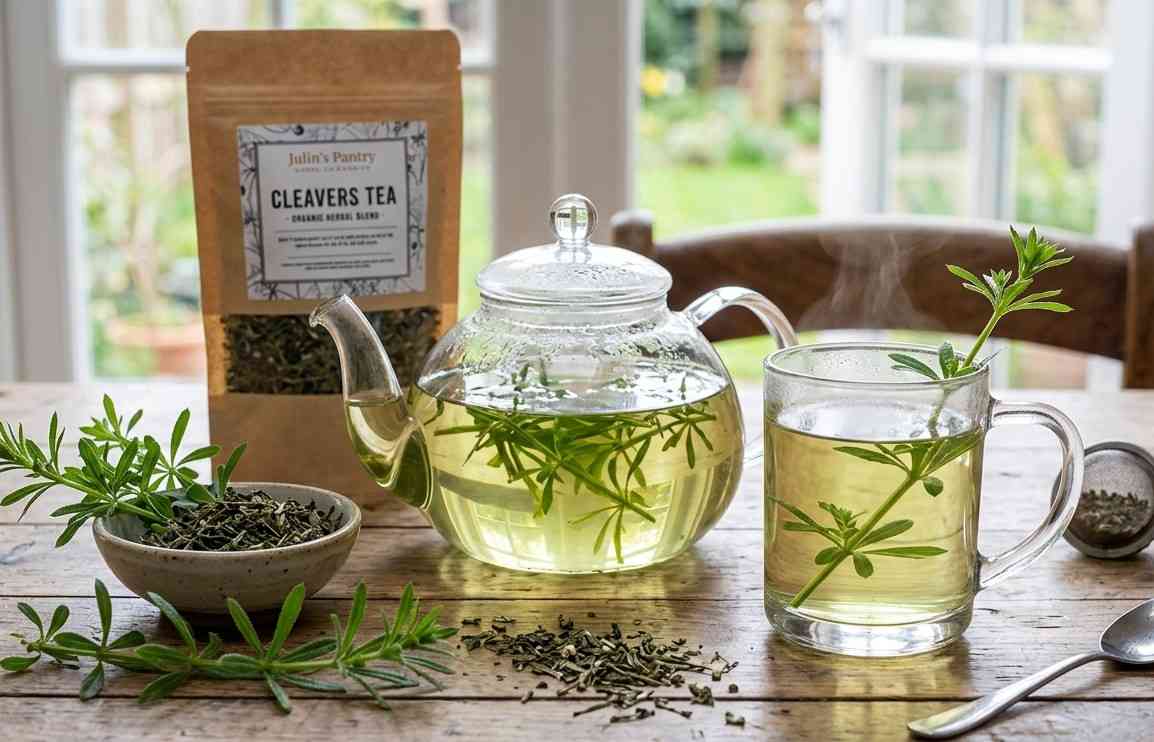
Cleavers tea is a traditional herbal infusion made from the aerial parts of the cleavers plant, a wild herb long valued in European and Asian folk medicine. Known for its gentle detoxifying and lymphatic-supporting properties, cleavers tea has gained renewed popularity among natural health enthusiasts. This in-depth guide explores what cleavers tea is, its nutritional profile, proven health benefits, potential side effects, preparation methods, and safety considerations.
What is Cleavers Tea?
Cleavers tea is an herbal tea prepared from the leaves, stems, and sometimes flowers of the cleavers plant (Galium aparine). Also known as goosegrass, sticky weed, catchweed, and bedstraw, cleavers is a fast-growing annual herb commonly found in hedgerows, gardens, and woodland edges.
The plant is recognizable by its square stems and tiny hook-like hairs that allow it to cling to clothing and animal fur. Traditionally, herbalists have used cleavers as a diuretic, lymphatic tonic, and skin-supporting herb. When consumed as tea, it is believed to help flush toxins, support kidney function, and promote overall detoxification. Cleavers tea has a mild, grassy flavor and can be consumed hot or cold. It is caffeine-free and often included in cleansing and detox herbal blends.
Components of Cleavers Tea
Cleavers tea is low in calories and does not provide significant macronutrients in typical serving sizes. However, it contains several beneficial phytochemicals and micronutrients.
| Nutrient / Compound | Approximate Presence | Potential Function |
|---|---|---|
| Vitamin C | Small amounts | Antioxidant, immune support |
| Flavonoids | Moderate | Anti-inflammatory, antioxidant |
| Tannins | Moderate | Astringent properties |
| Iridoid glycosides | Present | Anti-inflammatory effects |
| Coumarins | Trace amounts | Circulatory support |
| Citric acid | Small amounts | Metabolic support |
| Minerals (trace amounts) | Present | General metabolic function |
| Chlorophyll | Present | Detox and antioxidant activity |
| Saponins | Present | Immune and cleansing support |
| Calories | 0–5 per cup | Minimal caloric value |
Note: Nutritional composition may vary depending on plant maturity, growing conditions, and preparation method.
20 Science-Backed Benefits of Cleavers Tea
1. Supports Lymphatic Drainage
Cleavers tea is traditionally used as a lymphatic tonic and may help stimulate lymph flow to support detoxification and immune health.
2. Promotes Natural Detoxification
The herb’s mild diuretic properties may help the body eliminate waste through increased urine production.
3. Enhances Kidney Function
Cleavers tea may support kidney health by encouraging gentle urinary output and reducing fluid retention.
4. Reduces Water Retention
Its natural diuretic action may help decrease mild bloating and swelling associated with fluid buildup.
5. Supports Urinary Tract Health
Cleavers has been used in herbal medicine to soothe mild urinary tract irritation and promote urinary comfort.
6. Provides Antioxidant Protection
Flavonoids and vitamin C in cleavers may help neutralize harmful free radicals in the body.
7. Exhibits Anti-Inflammatory Properties
Iridoid glycosides and plant compounds may help reduce mild inflammation in tissues.
8. May Improve Skin Health
Traditional herbalists use cleavers to support clearer skin by addressing internal detoxification pathways.
9. Supports Acne Management
By promoting lymphatic and liver function, cleavers tea may help reduce toxin-related breakouts.
10. Aids Digestive Health
Cleavers tea may gently stimulate digestion and reduce minor digestive discomfort.
11. Helps Soothe Minor Infections
Some laboratory studies suggest cleavers contains antimicrobial compounds that may inhibit certain bacteria.
12. Supports Immune Function
By promoting lymphatic circulation, cleavers tea may indirectly enhance immune response.
13. Assists in Mild Edema Relief
Cleavers may help reduce mild swelling in the legs and ankles due to its diuretic effect.
14. May Support Weight Management
As a low-calorie herbal tea with diuretic properties, it may assist in reducing temporary water weight.
15. Supports Liver Health
Cleavers is sometimes included in detox blends aimed at supporting liver function and bile flow.
16. May Help Relieve Mild Cystitis Symptoms
Its soothing properties may assist in easing mild bladder discomfort.
17. Encourages Gentle Cleansing
Cleavers tea acts as a mild alterative herb, traditionally believed to gradually cleanse the body.
18. May Support Glandular Health
Herbal traditions associate cleavers with supporting swollen glands and lymph nodes.
19. Promotes Circulatory Health
Coumarins found in cleavers may help support healthy blood circulation.
20. May Help Calm Mild Inflammatory Skin Conditions
By supporting detox and immune balance, cleavers tea may contribute to improved inflammatory skin conditions.
10 Side Effects of Cleavers Tea
1. Increased Urination
Its diuretic effect may cause more frequent urination.
2. Dehydration Risk
Excessive consumption may lead to dehydration if fluid intake is not maintained.
3. Electrolyte Imbalance
Heavy use could potentially disrupt sodium or potassium balance.
4. Allergic Reactions
Some individuals may experience skin rashes or allergic responses.
5. Digestive Upset
Large amounts may cause mild stomach discomfort.
6. Blood Sugar Changes
Cleavers may influence blood sugar levels in sensitive individuals.
7. Interaction with Diuretics
Combining with pharmaceutical diuretics may increase fluid loss excessively.
8. Interaction with Blood Thinners
Coumarin compounds may theoretically enhance anticoagulant effects.
9. Not Recommended in Pregnancy
Limited safety data makes it unsuitable during pregnancy.
10. Possible Headache
Excess detoxification or dehydration may trigger mild headaches.
How to Make Cleavers Tea?
Using Fresh Cleavers
Ingredients:
- 1 handful fresh cleavers (chopped)
- 1 cup hot water
Instructions:
- Rinse fresh cleavers thoroughly.
- Chop into small pieces.
- Place in a cup and pour hot (not boiling) water over it.
- Cover and steep for 10–15 minutes.
- Strain and drink.
Using Dried Cleavers
Ingredients:
- 1–2 teaspoons dried cleavers
- 1 cup boiling water
Instructions:
- Add dried herb to a teapot or cup.
- Pour boiling water over it.
- Cover and steep for 10–15 minutes.
- Strain before drinking.
Optional: Add honey or lemon for flavor.
Other Uses of Cleavers Tea
- Used as a skin wash for minor irritations.
- Applied as a compress for swollen lymph nodes.
- Added to detox baths.
- Used as a hair rinse.
- Included in herbal cleansing blends.
- Used in traditional spring tonics.
How Much Cleavers Tea Can You Drink a Day?
Most herbalists recommend 1–3 cups per day for general wellness. For short-term detox use, up to 3 cups daily is commonly suggested. Long-term daily use should be supervised by a healthcare professional.
Always start with one cup to assess tolerance.
Tips for Consuming Cleavers Tea
- Use high-quality organic or wildcrafted herbs.
- Drink plenty of water alongside the tea.
- Consume between meals for best absorption.
- Avoid excessive intake.
- Store dried herbs in airtight containers.
- Combine with complementary herbs like nettle or dandelion for enhanced detox support.
Best Time to Drink Cleavers Tea
- Morning: To support daily detox and kidney function.
- Midday: To assist digestion and hydration.
- Avoid late evening: Due to its diuretic effect, it may disturb sleep with frequent urination.
Who Should Drink Cleavers Tea?
- Individuals seeking gentle detox support.
- Those with mild water retention.
- People interested in lymphatic health.
- Adults looking for caffeine-free herbal alternatives.
- Individuals aiming to support urinary tract health naturally.
Who Should Not Drink Cleavers Tea?
- Pregnant or breastfeeding women.
- Individuals with severe kidney disease.
- People taking strong diuretics.
- Those on anticoagulant therapy.
- Individuals allergic to plants in the Rubiaceae family.
- Children without medical supervision.
Precautions and Interactions
Cleavers tea should be used cautiously in individuals taking diuretic medications, as combined effects may lead to excessive fluid loss and electrolyte imbalance. Those on blood-thinning medications should consult a healthcare provider before use due to potential coumarin interactions.
People with chronic kidney disease should avoid self-medicating with diuretic herbs without medical supervision. Always consult a healthcare professional before adding cleavers tea to your routine, especially if you have underlying medical conditions or take prescription medications.
Discontinue use if adverse reactions occur.
Conclusion
Cleavers tea is a traditional herbal remedy valued for its lymphatic, detoxifying, and mild diuretic properties. Rich in plant compounds like flavonoids and iridoids, it may offer antioxidant, anti-inflammatory, and immune-supporting benefits. While generally safe in moderate amounts, excessive consumption may lead to dehydration or interactions with certain medications.
FAQ’s
What is cleavers tea good for?
Cleavers tea is traditionally used to support lymphatic drainage, promote kidney and urinary tract health, reduce mild water retention, and assist the body’s natural detoxification processes. It is also valued in herbal medicine for supporting skin health and gentle cleansing.
What does cleavers tea taste like?
Cleavers tea has a mild, grassy, and slightly earthy flavor with a subtle green taste, similar to fresh meadow herbs.
Is cleavers tea caffeine-free?
Yes, cleavers tea is naturally caffeine-free and suitable for those avoiding stimulants.
Can I drink cleavers tea every day?
Cleavers tea can be consumed daily in moderate amounts (1–3 cups), but long-term continuous use should be discussed with a healthcare professional.
How long does it take for cleavers tea to work?
Some people may notice increased urination within a few hours, while benefits related to skin or lymphatic health may take several days to weeks.
Does cleavers tea help with weight loss?
Cleavers tea may reduce temporary water weight due to its diuretic effect, but it does not directly burn fat.
Is cleavers tea good for the kidneys?
Cleavers tea is traditionally used to support kidney function, but individuals with kidney disease should consult a doctor before using it.
Can cleavers tea help with urinary tract infections?
Cleavers tea may help soothe mild urinary irritation, but it should not replace medical treatment for confirmed urinary tract infections.
Is cleavers tea safe during pregnancy?
Cleavers tea is not recommended during pregnancy due to limited safety research.
Can breastfeeding mothers drink cleavers tea?
Breastfeeding women should consult a healthcare provider before consuming cleavers tea.
Does cleavers tea detox the body?
Cleavers tea supports natural detoxification processes by promoting lymphatic drainage and urine output, but the body already has its own detox systems.
Can cleavers tea lower blood pressure?
Its mild diuretic effect may slightly influence blood pressure, but it should not replace prescribed blood pressure medication.
Does cleavers tea affect blood sugar levels?
Cleavers may influence blood sugar in sensitive individuals, so people with diabetes should monitor levels and consult a doctor.
Can children drink cleavers tea?
Children should only consume cleavers tea under professional medical supervision.
How should cleavers tea be stored?
Dried cleavers should be stored in an airtight container in a cool, dark place to preserve potency.
Can I use fresh cleavers instead of dried?
Yes, fresh cleavers can be used and often provide a brighter flavor and stronger herbal activity.
Can cleavers tea help with acne?
Cleavers tea may support clearer skin by promoting detoxification and lymphatic health, though results vary between individuals.
Can cleavers tea cause dehydration?
Excessive consumption may increase urination and potentially lead to dehydration if fluids are not replenished.
Also Read: