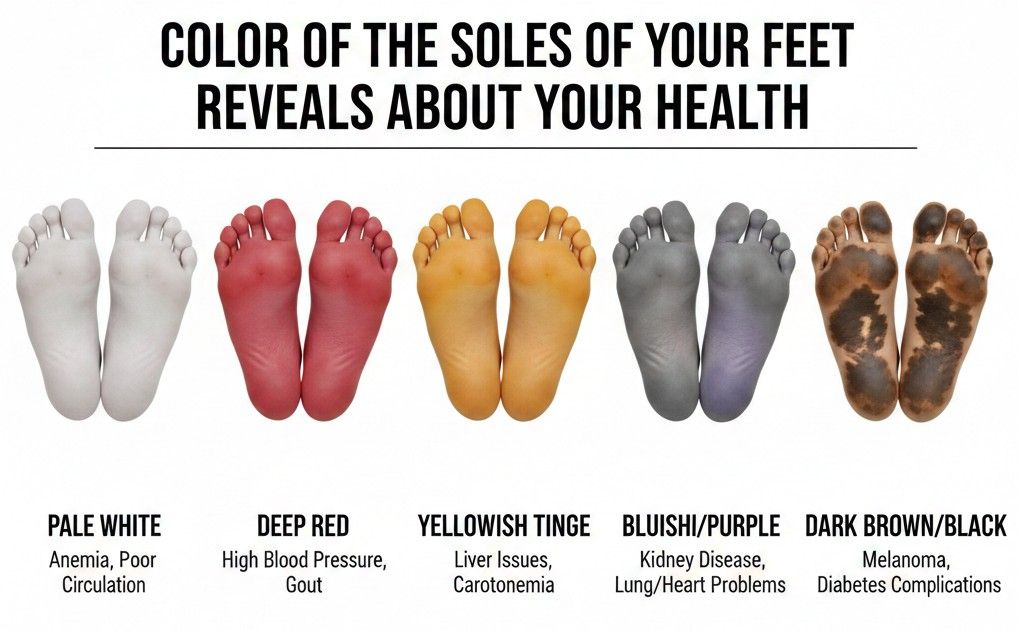
Have you ever taken a moment to really look at the soles of your feet? Not just to check for cracks or dryness, but to notice their color?
Most of us focus on our face, hair, or hands when thinking about health signals. But your feet, especially the soles, quietly reflect what’s happening inside your body. From circulation problems to vitamin deficiencies, infections, or even systemic diseases, the color of the soles of your feet can reveal important health clues.
Ancient medical systems like Ayurveda and Traditional Chinese Medicine have long believed that the feet mirror the body’s internal organs. Modern medicine, too, recognizes that changes in skin color, temperature, and texture in the feet can indicate underlying health conditions. This guide takes a deep dive into what different sole colors may mean, when changes are harmless, and when they deserve medical attention.
Why the Soles of Your Feet Matter in Health Assessment
The soles of your feet are unique. They contain:
- Thick skin layers
- A dense network of blood vessels
- Thousands of nerve endings
- Sweat glands and pressure points
Because of this, changes in blood flow, oxygen levels, nerve health, and skin integrity often show up in the feet earlier than in other parts of the body.
Doctors often examine feet to assess:
- Circulation
- Nerve damage
- Skin conditions
- Metabolic and autoimmune disorders
Color changes are especially important because they are often visible signs of internal imbalances.
What Is a Normal Sole Color?
A healthy sole color varies depending on skin tone, but generally:
- Light pink to pale red is considered normal
- The color should be even
- Temporary redness after walking or standing is normal
- The skin should feel warm, not cold or overly hot
Persistent or unusual color changes are what raise health concerns.
What Does the Color of Your Foot Soles Reveals About Your Health?
White or Pale Soles: What They May Indicate
If the soles of your feet look unusually pale or white, it may signal reduced blood flow or other systemic issues.
Possible Causes:
1. Poor Blood Circulation:
Inadequate blood flow can make the soles look pale or washed out. This is often seen in:
- Peripheral artery disease (PAD)
- Heart-related circulation issues
- Prolonged immobility
You may also notice:
- Cold feet
- Numbness or tingling
- Slow-healing cuts
2. Anemia:
Low red blood cell count or hemoglobin levels reduce oxygen delivery to tissues, making the skin appear pale.
Common accompanying symptoms:
- Fatigue
- Dizziness
- Shortness of breath
- Brittle nails
3. Low Blood Pressure:
When blood pressure drops, blood may not circulate efficiently to extremities like the feet.
4. Vitamin Deficiencies:
Deficiencies in iron, vitamin B12, or folate can affect skin tone and circulation.
When to Be Concerned: If pale soles persist, especially along with fatigue or breathlessness, medical evaluation is important.
Red Soles: When Redness Is More Than Just Warmth
Red soles can be harmless or a warning sign, depending on the context.
Common Causes of Red Soles:
1. Increased Blood Flow:
Temporary redness can occur after:
- Walking
- Standing for long periods
- Exposure to heat
This usually fades with rest.
2. Inflammation:
Chronic redness may indicate inflammation caused by:
- Allergic reactions
- Contact dermatitis
- Skin sensitivity to soaps or footwear materials
3. Erythromelalgia:
This rare condition causes intense redness, burning pain, and warmth in the feet. Symptoms often worsen with heat and improve with cooling.
4. Infections:
Bacterial or fungal infections may cause redness along with:
- Itching
- Swelling
- Cracking or peeling skin
5. Liver Disease:
In some cases, liver disorders cause redness in palms and soles, known as palmar or plantar erythema.
When to Be Concerned: Persistent redness accompanied by pain, swelling, or burning sensations should not be ignored.
Blue or Purple Soles: A Sign of Oxygen Deprivation
Bluish or purplish soles often indicate poor oxygen supply to the tissues.
Possible Health Conditions:
1. Poor Circulation:
Conditions affecting blood vessels can reduce oxygen delivery, leading to bluish discoloration.
2. Raynaud’s Phenomenon:
This condition causes blood vessels to constrict excessively in response to cold or stress, turning feet blue or purple before returning to normal color.
3. Heart or Lung Problems:
Chronic heart or lung conditions can limit oxygen levels in the blood.
4. Blood Clots:
Sudden color changes with pain or swelling could indicate a clot and require immediate medical attention.
Associated Symptoms:
- Cold feet
- Tingling or numbness
- Pain during walking
Blue soles are a strong signal to consult a healthcare provider.
Yellow Soles: Skin Thickening or Systemic Conditions
Yellowish soles may not always point to serious illness, but they should still be evaluated.
Possible Causes:
1. Calluses and Thickened Skin:
Repeated friction can cause the skin to thicken and appear yellow.
2. Fungal Infections:
Certain fungal infections can discolor the skin over time.
3. Jaundice:
In rare cases, yellowing of the soles may reflect liver dysfunction causing bilirubin buildup.
4. Diabetes:
Long-standing diabetes can cause skin changes, including yellowing due to glycation of skin proteins.
What to Watch For: If yellow soles appear suddenly or alongside yellowing of eyes or nails, medical testing is essential.
Brown or Darkened Soles: Hyperpigmentation Concerns
Dark patches or overall brown discoloration can be a sign of pigmentation changes or systemic disease.
Possible Causes:
1. Hyperpigmentation:
Excess melanin production may occur due to:
- Hormonal changes
- Aging
- Chronic friction
2. Addison’s Disease:
This rare adrenal disorder causes darkening of skin, especially in pressure areas like soles.
Other symptoms include:
- Fatigue
- Weight loss
- Low blood pressure
3. Diabetes-Related Skin Changes:
Diabetes can lead to darker patches due to poor circulation or insulin resistance.
4. Certain Medications:
Some drugs may cause pigmentation changes as a side effect.
Black or Very Dark Soles: A Medical Red Flag
Black discoloration is never normal and requires immediate attention.
Possible Causes:
1. Tissue Death (Gangrene):
Severely reduced blood flow can cause tissue death, leading to blackened skin.
2. Severe Infections:
Advanced bacterial or fungal infections may cause dark discoloration.
3. Melanoma:
Although rare on soles, skin cancer can develop there and may appear as dark patches or streaks.
Warning Signs:
- Pain
- Foul smell
- Open wounds
- Rapid spreading of dark areas
Seek medical help immediately if black discoloration appears.
Greenish Soles: Infections and Bacterial Overgrowth
Green or greenish-yellow discoloration may indicate bacterial infection.
Common Causes
Pseudomonas Infection:
This bacterium thrives in moist environments and can cause greenish discoloration, especially in cracked or sweaty skin.
Often seen in:
- People who wear closed shoes for long hours
- Those with excessive foot sweating
Mottled or Patchy Color: Circulation and Autoimmune Issues
Uneven coloring or blotchy patterns may point to vascular or immune-related conditions.
Possible Causes:
- Circulatory disorders
- Autoimmune diseases
- Chronic inflammation
- Nerve damage
How Lifestyle Affects the Color of Your Soles
Your daily habits play a major role in foot health.
Factors That Influence Sole Color:
- Smoking (affects circulation)
- Sedentary lifestyle
- Poor footwear
- Inadequate hydration
- Nutritional deficiencies
Improving lifestyle habits often improves sole color and overall foot health.
When to See a Doctor
Seek medical advice if you notice:
- Persistent color changes
- Pain, numbness, or tingling
- Open sores that don’t heal
- Sudden discoloration
- Signs of infection
Early diagnosis can prevent serious complications.
How to Keep Your Soles Healthy
Practical Tips:
- Inspect your feet regularly
- Maintain proper hygiene
- Wear well-fitting shoes
- Keep feet moisturized
- Manage blood sugar levels
- Eat a nutrient-rich diet
- Stay physically active
Final Thought
The soles of your feet are more than just a support system for your body. They act as silent messengers, offering clues about circulation, nutrition, nerve health, and internal organ function. While not every color change signals disease, persistent or unusual changes should never be ignored. Paying attention to your feet can help you detect health issues early and take timely action.
FAQ’s
Is it normal for the soles of my feet to change color during the day?
Yes, temporary color changes can happen due to physical activity, standing for long periods, temperature changes, or pressure. These changes usually resolve after rest. Ongoing or worsening discoloration may signal a health concern.
Why are my foot soles pale or white?
Pale or white soles may indicate poor blood circulation, low blood pressure, anemia, or vitamin deficiencies such as iron or vitamin B12. If this color change is persistent, medical evaluation is recommended.
What do red soles of the feet mean?
Red soles can occur due to increased blood flow, heat, inflammation, allergies, or skin infections. In rare cases, persistent redness may be linked to liver conditions or inflammatory disorders.
Why do my feet turn blue or purple?
Blue or purple soles usually suggest reduced oxygen supply to the tissues. This may be caused by poor circulation, Raynaud’s phenomenon, heart or lung issues, or blood vessel disorders. Sudden or painful discoloration requires immediate medical attention.
Are yellow soles a sign of a health problem?
Yellow soles are often caused by thickened skin, calluses, or fungal infections. However, in rare cases, they may be associated with liver disease or long-term diabetes, especially if accompanied by other symptoms.
What causes brown or dark spots on the soles of the feet?
Brown or dark discoloration can result from hyperpigmentation, hormonal changes, diabetes-related skin changes, certain medications, or rare conditions like Addison’s disease. Any unexplained dark patches should be checked by a doctor.
Is black discoloration on the soles dangerous?
Yes, black discoloration is a medical red flag. It may indicate tissue death, severe infection, or skin cancer. Immediate medical attention is necessary if black areas appear on the soles.
Can infections change the color of the soles of the feet?
Yes, bacterial and fungal infections can cause redness, greenish tones, yellowing, peeling, itching, and swelling. Keeping feet clean and dry helps prevent infections.
How does diabetes affect the color of foot soles?
Diabetes can impair circulation and nerve function, leading to pale, red, brown, or yellow discoloration. Slow-healing wounds and numbness are also common signs that require careful monitoring.
Can lifestyle habits affect the color of my foot soles?
Yes, smoking, lack of physical activity, poor diet, dehydration, and ill-fitting footwear can negatively affect circulation and skin health, leading to noticeable color changes in the soles.
How can I maintain healthy soles of my feet?
Regular foot inspection, proper hygiene, comfortable footwear, adequate hydration, balanced nutrition, and managing chronic conditions like diabetes all help maintain healthy foot soles.
Also Read: