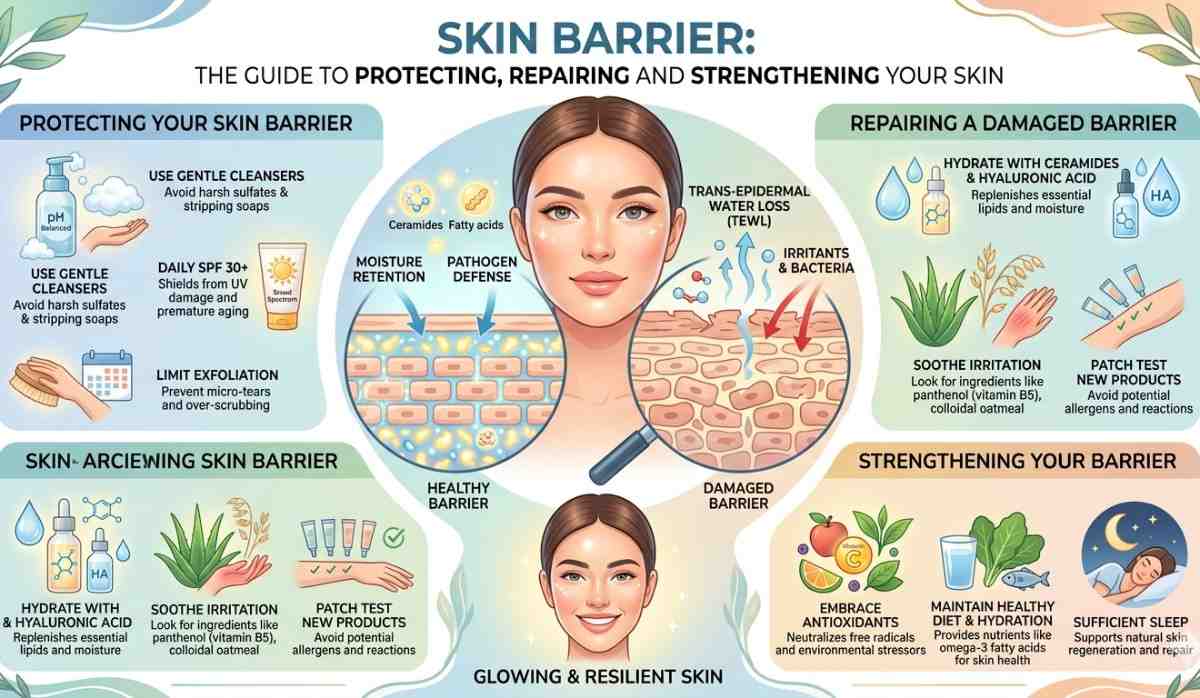
Healthy, glowing skin starts with one essential foundation: the skin barrier. If your skincare routine suddenly stops working, your face feels tight or stings after applying products, or you notice increased dryness and breakouts, your skin barrier may be compromised.
In this guide, you will learn what the skin barrier is, why it matters, how it gets damaged, signs of a weakened barrier, and proven strategies to repair and strengthen it. Whether you have dry, oily, acne-prone, or sensitive skin, understanding your skin barrier can transform your skincare results.
What Is the Skin Barrier?
The skin barrier is the outermost layer of your skin, also known as the stratum corneum. It acts as a protective shield between your body and the external environment.
Think of it as a brick wall:
- Skin cells (corneocytes) are the bricks
- Lipids (ceramides, cholesterol, and fatty acids) are the mortar
- Together, they form a protective structure that keeps moisture in and irritants out
This layer plays a critical role in maintaining hydration and defending against pollution, bacteria, allergens, and environmental stressors.
Structure of the Skin Barrier
The skin has three main layers:
- Epidermis – The outermost layer, which contains the skin barrier
- Dermis – The middle layer with collagen, elastin, and blood vessels
- Hypodermis – The deeper fatty layer that insulates and cushions
The skin barrier sits within the epidermis and is made up of:
- Ceramides (about 50% of skin lipids)
- Cholesterol
- Free fatty acids
- Natural moisturizing factors (NMF)
- Acid mantle (a slightly acidic surface layer)
Each component works together to maintain skin health and balance.
Why the Skin Barrier Is So Important
Your skin barrier is responsible for:
1. Preventing Water Loss
It reduces transepidermal water loss (TEWL), keeping your skin hydrated and plump.
2. Protecting Against Irritants
It blocks pollutants, chemicals, allergens, and bacteria.
3. Supporting Skin Immunity
A healthy barrier helps prevent inflammation and infections.
4. Maintaining Skin pH
Your skin’s natural pH (around 4.5–5.5) supports healthy bacteria and enzyme function.
When the barrier is strong, skin appears smooth, glowing, and resilient. When damaged, problems begin.
Signs of a Damaged Skin Barrier
Many people unknowingly damage their skin barrier with over-exfoliation or harsh products. Common signs include:
- Dryness and flakiness
- Tightness after cleansing
- Redness and irritation
- Stinging or burning sensation
- Increased sensitivity
- Sudden breakouts
- Rough texture
- Itchy patches
If your skin reacts to products that never bothered you before, your barrier may be compromised.
What Damages the Skin Barrier?
1. Over-Exfoliation
Using strong acids, scrubs, or retinoids too frequently strips natural lipids.
2. Harsh Cleansers
Sulfate-based cleansers can disrupt the acid mantle.
3. Excessive Washing
Washing your face too often removes protective oils.
4. Sun Exposure
UV radiation weakens the barrier and increases inflammation.
5. Pollution
Environmental toxins increase oxidative stress.
6. Cold or Dry Weather
Low humidity pulls moisture from the skin.
7. Hot Showers
High temperatures strip protective oils.
8. Stress and Poor Diet
Internal health affects skin resilience.
How to Repair a Damaged Skin Barrier
Healing your skin barrier requires a simplified, strategic approach.
Step 1: Stop Active Ingredients Temporarily
Pause:
- AHAs and BHAs
- Retinoids
- Vitamin C (if irritating)
- Benzoyl peroxide
- Strong exfoliants
Give your skin 2–4 weeks to recover.
Step 2: Switch to a Gentle Cleanser
Look for:
- Sulfate-free formulas
- pH-balanced cleansers
- Non-foaming or cream cleansers
Cleanse once at night and rinse with water in the morning if needed.
Step 3: Use Barrier-Repair Ingredients
The best ingredients for repairing the skin barrier include:
| Ingredient | Benefits |
|---|---|
| Ceramides | Restore lipid layer |
| Hyaluronic Acid | Attracts moisture |
| Glycerin | Hydrates and softens |
| Niacinamide | Reduces inflammation |
| Panthenol | Soothes and repairs |
| Fatty Acids | Strengthen barrier |
| Cholesterol | Rebuilds lipid matrix |
Look for moisturizers that contain ceramides, cholesterol, and fatty acids together for optimal repair.
Step 4: Moisturize Consistently
Apply moisturizer on slightly damp skin to lock in hydration.
Use:
- Lightweight gel creams for oily skin
- Rich creams for dry or compromised skin
Layering tip:
Hydrating serum → Moisturizer → Occlusive (if needed)
Step 5: Protect With Sunscreen
Daily sunscreen prevents further barrier damage. Choose:
- SPF 30 or higher
- Broad-spectrum protection
- Mineral sunscreen if skin is sensitive
Sun protection is essential even when repairing.
How Long Does Skin Barrier Repair Take?
Recovery depends on the severity of damage:
- Mild damage: 1–2 weeks
- Moderate damage: 2–4 weeks
- Severe damage: 4–8 weeks
Consistency is key. Avoid switching products frequently during recovery.
Best Skincare Routine for a Healthy Skin Barrier
Morning Routine
- Gentle cleanser (optional)
- Hydrating toner or essence
- Barrier-support serum
- Moisturizer
- Sunscreen
Night Routine
- Gentle cleanser
- Hydrating serum
- Ceramide-rich moisturizer
- Occlusive layer if needed
Keep routines simple and focused on hydration and repair.
Skin Barrier and Different Skin Types
Dry Skin
Often has a naturally weak barrier due to low lipid production.
Focus on:
- Rich creams
- Occlusives
- Minimal exfoliation
Oily Skin
Can still have a damaged barrier, especially from acne treatments.
Focus on:
- Lightweight hydration
- Niacinamide
- Gentle cleansing
Sensitive Skin
Barrier is easily compromised.
Focus on:
- Fragrance-free products
- Minimal ingredients
- Patch testing
Acne-Prone Skin
Overuse of actives can weaken the barrier.
Balance acne treatment with hydration and repair.
The Role of the Acid Mantle
The acid mantle is a thin, slightly acidic film on the skin surface. It:
- Prevents bacterial overgrowth
- Supports enzyme function
- Maintains moisture balance
Using high-pH cleansers disrupts this layer. Stick to products formulated close to skin pH.
Ingredients to Avoid When Repairing the Skin Barrier
- Alcohol denat (high concentration)
- Fragrance
- Essential oils
- Harsh scrubs
- Strong chemical peels
- Overuse of clay masks
Gentleness is crucial during healing.
Lifestyle Tips to Strengthen the Skin Barrier
Skincare alone is not enough. Support your barrier internally.
1. Stay Hydrated
Drink adequate water daily.
2. Eat Healthy Fats
Include:
- Nuts
- Seeds
- Avocados
- Omega-3 rich foods
3. Manage Stress
Chronic stress increases inflammation.
4. Use a Humidifier
Especially in dry climates.
5. Avoid Overheating Skin
Lukewarm water is best.
Skin Barrier vs Moisture Barrier: Is There a Difference?
The terms are often used interchangeably. Technically:
- Skin barrier refers to the stratum corneum structure.
- Moisture barrier emphasizes its role in preventing water loss.
In practical skincare, both mean the same thing.
Can You Over-Moisturize Your Skin?
Yes, but rarely. Overuse of occlusives may:
- Cause congestion
- Trap sweat
- Lead to breakouts in oily skin
Choose appropriate textures for your skin type.
How to Prevent Future Skin Barrier Damage?
- Use a gentle, pH-balanced cleanser to avoid stripping your skin’s natural oils.
- Wash your face with lukewarm water instead of hot water to prevent moisture loss.
- Moisturize daily with products containing ceramides, cholesterol, and fatty acids.
- Apply moisturizer on slightly damp skin to lock in hydration.
- Wear broad-spectrum sunscreen with SPF 30 or higher every day.
- Limit exfoliation to 1–3 times per week to prevent barrier damage.
- Introduce active ingredients like retinol and acids slowly and gradually.
- Avoid layering multiple strong actives in the same routine.
- Choose fragrance-free and alcohol-free skincare products if you have sensitive skin.
- Use a humidifier in dry environments to reduce transepidermal water loss.
- Avoid over-cleansing by washing your face no more than twice daily.
- Protect your skin from extreme cold and wind with richer moisturizers.
- Include omega-3 rich foods in your diet to support skin health internally.
- Stay properly hydrated to maintain overall skin function.
- Keep your skincare routine simple and consistent to minimize irritation.
Myths About the Skin Barrier
Myth 1: Oily Skin Does Not Need Moisturizer
False. Oily skin still requires hydration.
Myth 2: Tingling Means It’s Working
Burning or stinging often signals irritation.
Myth 3: Stronger Products Give Faster Results
Aggressive treatments can backfire by damaging the barrier.
Myth 4: Natural Products Cannot Damage Skin
Essential oils and plant extracts can still irritate.
When to See a Dermatologist
Seek professional help if you experience:
- Severe redness
- Persistent itching
- Cracking or bleeding
- Chronic eczema
- Suspected skin infections
A dermatologist can prescribe barrier-repair treatments if needed.
Final Thoughts
Your skin barrier is the foundation of healthy skin. Without it, even the most expensive skincare products cannot deliver results. By simplifying your routine, focusing on hydration, using barrier-repair ingredients, and protecting your skin daily, you can restore balance and achieve long-term skin health.
FAQ’s
How can I tell if my skin barrier is damaged?
Common signs include dryness, flakiness, redness, itching, tightness, and a burning or stinging sensation when applying skincare products. You may also notice sudden breakouts or increased sensitivity.
What ingredients help repair the skin barrier?
Ceramides, cholesterol, fatty acids, hyaluronic acid, glycerin, niacinamide, and panthenol are highly effective for restoring and strengthening the barrier.
Should I stop using active ingredients if my barrier is damaged?
Yes. It is best to pause strong actives such as retinol, AHAs, BHAs, benzoyl peroxide, and high-strength vitamin C until your skin has healed.
Can over-exfoliation damage the skin barrier?
Yes. Frequent or aggressive exfoliation strips natural lipids and weakens the barrier, leading to irritation and sensitivity.
Is oily skin immune to barrier damage?
No. Oily skin can still have a compromised barrier, especially from over-cleansing or excessive acne treatments.
Does sunscreen help protect the skin barrier?
Yes. Daily sunscreen protects against UV damage, which weakens the barrier and increases inflammation.
Can a damaged skin barrier cause acne?
Yes. A weakened barrier increases inflammation and can trigger breakouts or worsen existing acne.
Can I use niacinamide if my skin barrier is compromised?
Yes. Niacinamide is generally well tolerated and helps reduce inflammation while supporting barrier repair.
Are natural or organic products safer for the skin barrier?
Not always. Some natural ingredients and essential oils can irritate the skin and worsen barrier damage.
How often should I exfoliate to avoid damaging my barrier?
Most skin types should exfoliate only 1–3 times per week, depending on sensitivity and product strength.
Does drinking water repair the skin barrier?
Staying hydrated supports overall skin health, but topical barrier-repair products are necessary for direct repair.
Can stress affect the skin barrier?
Yes. Chronic stress increases inflammation and can weaken the skin’s protective function.
Should I use a humidifier for barrier repair?
Yes. A humidifier helps maintain moisture levels in dry environments, reducing transepidermal water loss.
Can cold weather damage the skin barrier?
Yes. Low humidity and cold temperatures strip moisture from the skin, making the barrier more vulnerable.
What type of cleanser is best for protecting the skin barrier?
A gentle, sulfate-free, pH-balanced cleanser is ideal for maintaining the skin’s natural protective layer.
Also Read: