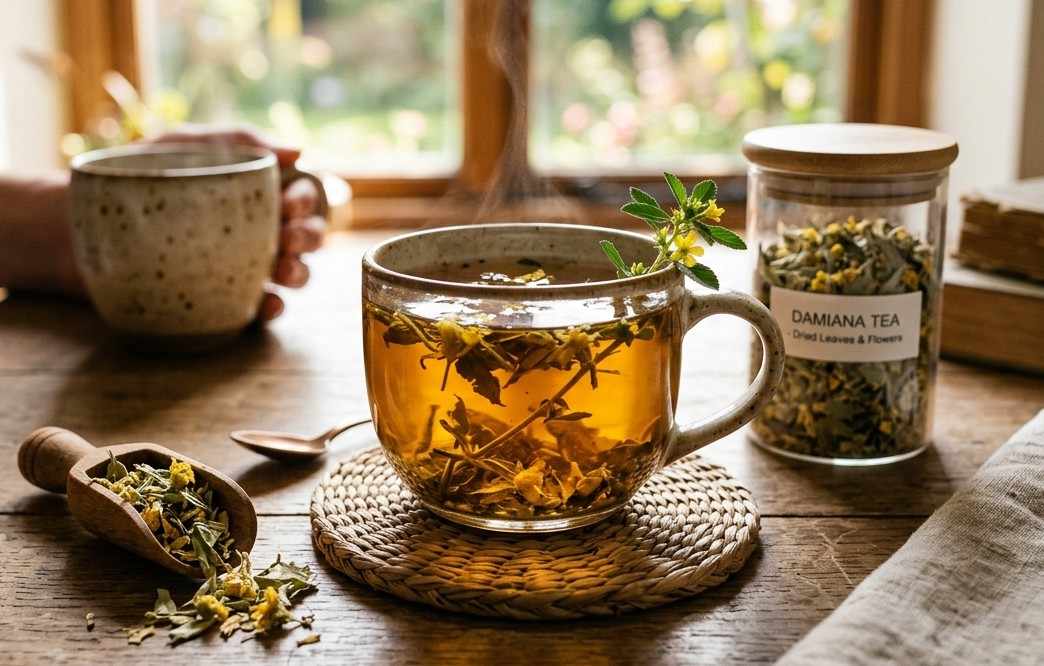
Damiana tea is a traditional herbal beverage made from the leaves of the damiana plant, long valued in folk medicine for its uplifting and aphrodisiac properties. Native to Central and South America, this aromatic tea has been used for centuries to support mood, digestion, hormonal balance, and sexual wellness.
In recent years, damiana tea has gained popularity in the natural health community due to emerging research exploring its potential effects on anxiety, libido, blood sugar regulation, and overall vitality. This guide explores everything you need to know about damiana tea, including its nutritional profile, proven health benefits, possible side effects, preparation methods, dosage recommendations, and precautions.
What is Damiana Tea?
Damiana tea is an herbal infusion made from the dried leaves of the plant Turnera diffusa, a small shrub native to Mexico, Central America, South America, and parts of the Caribbean. The plant has a long history of use in traditional medicine systems, particularly among the Maya and other indigenous cultures.
The leaves are aromatic and slightly bitter, with a mild earthy and slightly sweet taste. Traditionally, damiana has been used as a tonic herb to support:
- Sexual health and libido
- Mood and emotional balance
- Digestive function
- Hormonal regulation
- Energy and vitality
Modern herbalists classify damiana as a nervine tonic (supporting the nervous system), adaptogenic-like herb (helping the body adapt to stress), and mild aphrodisiac.
Components of Damiana Tea
Damiana tea is very low in calories and does not provide significant macronutrients. However, it contains various bioactive compounds that contribute to its medicinal properties. Below is a general overview of its nutritional and phytochemical composition per 1 cup (240 ml) of brewed tea:
| Nutrient / Compound | Approximate Amount | Role in the Body |
|---|---|---|
| Calories | 0–2 kcal | Negligible energy contribution |
| Carbohydrates | <1 g | Minimal |
| Protein | 0 g | None |
| Fat | 0 g | None |
| Fiber | 0 g | None |
| Flavonoids | Present | Antioxidant activity |
| Arbutin | Present | Urinary tract support |
| Tannins | Present | Digestive and antimicrobial properties |
| Essential oils | Trace amounts | Aromatic and calming effects |
| Caffeine | 0 mg | Naturally caffeine-free |
Note: Exact values vary depending on leaf quality, growing conditions, and brewing strength.
20 Science-Backed Benefits of Damiana Tea
Below are 20 potential benefits of damiana tea, each supported by traditional use and emerging scientific research.
1. Supports Libido and Sexual Function
Damiana has traditionally been used as an aphrodisiac, and some animal and preliminary human studies suggest it may enhance sexual desire and performance.
2. May Improve Erectile Function
Research indicates that damiana extracts may support erectile function by promoting blood flow and nerve sensitivity.
3. Enhances Female Sexual Health
Damiana has been used in women to improve arousal and reduce symptoms of sexual dysfunction, possibly through hormonal modulation.
4. Helps Reduce Anxiety
Flavonoids and other plant compounds in damiana may exert mild anxiolytic effects by influencing neurotransmitter activity.
5. Promotes Mood Elevation
Damiana has been traditionally used as a mood enhancer and may support dopamine and serotonin balance.
6. Supports Mild Depression Relief
Preliminary studies suggest damiana may act as a natural antidepressant by modulating central nervous system pathways.
7. Improves Digestive Health
The bitter compounds in damiana can stimulate digestive secretions and improve appetite and digestion.
8. May Relieve Constipation
Damiana has mild laxative properties that may help regulate bowel movements.
9. Supports Blood Sugar Balance
Animal studies indicate that damiana extracts may help lower blood glucose levels.
10. Provides Antioxidant Protection
Damiana contains flavonoids that help neutralize free radicals and reduce oxidative stress.
11. May Support Weight Management
Some formulations containing damiana have been shown to delay gastric emptying, increasing satiety.
12. Promotes Hormonal Balance
Damiana may help regulate sex hormones and support reproductive health in both men and women.
13. Supports Urinary Tract Health
The presence of arbutin may contribute to antimicrobial activity in the urinary tract.
14. May Reduce Menstrual Discomfort
Traditional use suggests damiana can help ease cramps and premenstrual symptoms.
15. Supports Nervous System Health
Damiana acts as a mild nervine tonic, potentially calming overstimulated nerves.
16. May Improve Cognitive Focus
Some herbalists believe damiana enhances mental clarity by improving circulation and reducing stress.
17. Exhibits Mild Antimicrobial Properties
Laboratory studies have demonstrated antibacterial activity in damiana extracts.
18. Supports Respiratory Health
Traditional medicine has used damiana to relieve mild respiratory discomfort.
19. May Help with Stress Adaptation
Damiana may act similarly to adaptogens by helping the body manage stress more efficiently.
20. Promotes Overall Vitality
Due to its combined effects on mood, digestion, and hormones, damiana tea may enhance general well-being.
10 Side Effects of Damiana Tea
While generally safe in moderate amounts, damiana tea can cause side effects in some individuals.
1. Digestive Upset
High doses may cause stomach irritation, nausea, or diarrhea.
2. Insomnia
Because damiana can be mildly stimulating, it may interfere with sleep if consumed late at night.
3. Headaches
Some individuals report mild headaches after consuming large quantities.
4. Allergic Reactions
People sensitive to herbal plants may experience itching, rash, or swelling.
5. Blood Sugar Fluctuations
Damiana may lower blood sugar, potentially causing hypoglycemia in diabetics.
6. Seizure Risk in High Doses
Extremely high doses of concentrated extracts have been associated with seizure-like symptoms.
7. Hormonal Interference
Due to its potential hormonal effects, it may alter menstrual cycles in sensitive individuals.
8. Interaction with Sedatives
Damiana may amplify the effects of sedative medications.
9. Increased Heart Rate
Some users report mild palpitations with strong preparations.
10. Liver Stress (Rare)
Excessive use of herbal extracts may place strain on the liver.
How to Make Damiana Tea?
Making damiana tea is simple and requires only dried leaves and hot water.
Ingredients:
- 1–2 teaspoons dried damiana leaves
- 1 cup (240 ml) hot water
Instructions:
- Bring water to a boil and let it cool slightly.
- Place dried damiana leaves in a cup or tea infuser.
- Pour hot water over the leaves.
- Cover and steep for 10–15 minutes.
- Strain and drink warm.
Optional: Add honey or lemon to reduce bitterness.
Other Uses of Damiana Tea
Damiana is versatile and can be used in various forms beyond tea:
- Herbal smoking blends (traditional use)
- Tinctures and extracts
- Capsules and supplements
- Herbal liqueurs
- Bath infusions for relaxation
- Combined in aphrodisiac herbal blends
How Much Damiana Tea Can You Drink a Day?
- Standard recommendation: 1–3 cups per day
- Use 1–2 teaspoons per cup
- Avoid continuous long-term high-dose use without professional guidance
For beginners, start with one cup daily and monitor your body’s response.
Tips for Consuming Damiana Tea
- Start with a small amount to test tolerance.
- Avoid drinking on an empty stomach if you have digestive sensitivity.
- Do not combine with alcohol or sedative medications.
- Take breaks after several weeks of daily use.
- Purchase from reputable herbal suppliers.
Best Time to Drink Damiana Tea
The best time depends on your goal:
- For mood support: Morning or early afternoon
- For libido enhancement: 30–60 minutes before intimacy
- For digestion: After meals
- For stress relief: Late afternoon
Avoid drinking it close to bedtime if you are sensitive to stimulation.
Who Should Drink Damiana Tea?
Damiana tea may be beneficial for:
- Adults experiencing low libido
- Individuals with mild anxiety or stress
- Those seeking natural digestive support
- Women with mild PMS symptoms
- People looking for caffeine-free herbal alternatives
Who Should Not Drink Damiana Tea?
Damiana tea may not be suitable for:
- Pregnant or breastfeeding women
- Children
- Individuals with seizure disorders
- People with uncontrolled diabetes
- Those taking strong sedatives
- Individuals preparing for surgery
Precautions and Interactions
Before using damiana tea regularly, consider the following:
- Consult a healthcare provider if you have chronic conditions.
- Monitor blood sugar levels if diabetic.
- Stop use at least two weeks before surgery.
- Avoid combining with hormone therapy without medical supervision.
- Discontinue use if adverse reactions occur.
Final Thoughts
Damiana tea is a traditional herbal remedy with a long history of use for sexual wellness, mood enhancement, digestive health, and overall vitality. While many of its benefits are supported by traditional knowledge and early research, more large-scale human studies are needed to fully confirm its effectiveness.
When consumed in moderation, damiana tea is generally safe and can be a valuable addition to a balanced wellness routine. As with any herbal supplement, responsible use and medical consultation are essential, especially if you have underlying health conditions or take medications.
FAQ’s
Is Damiana Tea safe for children?
Damiana tea is not recommended for children because its effects on hormones and the nervous system have not been well studied in young people. Always consult a healthcare professional before giving herbal remedies to children.
What is damiana tea good for?
Damiana tea is traditionally used to support libido, mood balance, digestion, and hormonal health. It is also valued for its mild anxiety-relieving and energizing properties.
Does damiana tea really increase libido?
Damiana has long been used as a natural aphrodisiac, and some preliminary studies suggest it may support sexual desire and function. However, more large-scale human research is needed to confirm its effectiveness.
Is damiana tea safe to drink every day?
Damiana tea is generally safe when consumed in moderate amounts, such as 1–3 cups daily. Long-term or high-dose use should be discussed with a healthcare professional.
How long does it take for damiana tea to work?
Some people notice mood or relaxation effects within 30–60 minutes. Benefits related to hormonal balance or libido may take several days or weeks of consistent use.
Does damiana tea contain caffeine?
No, damiana tea is naturally caffeine-free. It can be a good option for those avoiding stimulants.
Can damiana tea help with anxiety?
Damiana may have mild calming properties due to its flavonoid content. It may help reduce mild stress and nervous tension in some individuals.
Is damiana tea good for women?
Damiana tea is often used by women to support libido, hormonal balance, and relief from mild PMS symptoms. It may also promote mood stability.
Can men benefit from damiana tea?
Yes, damiana tea is commonly used by men to support sexual health, energy levels, and mood. Some studies suggest it may help with erectile function.
Can damiana tea lower blood sugar?
Animal studies suggest damiana may have blood sugar-lowering effects. People with diabetes should monitor levels carefully and consult a doctor before use.
Is damiana tea safe during pregnancy?
Damiana tea is not recommended during pregnancy due to its potential hormonal and uterine-stimulating effects.
What does damiana tea taste like?
Damiana tea has a mildly bitter, earthy flavor with slightly sweet and aromatic notes. Adding honey or lemon can improve the taste.
Can damiana tea help with weight loss?
Some research suggests damiana may delay gastric emptying and increase feelings of fullness. However, it should not replace a balanced diet and exercise.
Does damiana tea help with sleep?
Damiana is mildly stimulating for some people and may not be ideal before bedtime. Others may experience relaxation, so effects can vary.
Can damiana tea affect hormones?
Damiana may influence sex hormones and reproductive health. Individuals with hormone-sensitive conditions should consult a healthcare provider before use.
Is damiana tea addictive?
Damiana tea is not considered addictive. However, it should be used responsibly and in moderation.
Can I mix damiana tea with other herbs?
Yes, damiana is often blended with herbs like chamomile, peppermint, or ginger. Make sure combinations are safe and appropriate for your health condition.
How should damiana tea be stored?
Store dried damiana leaves in an airtight container in a cool, dry place away from sunlight to preserve potency.
Also Read: