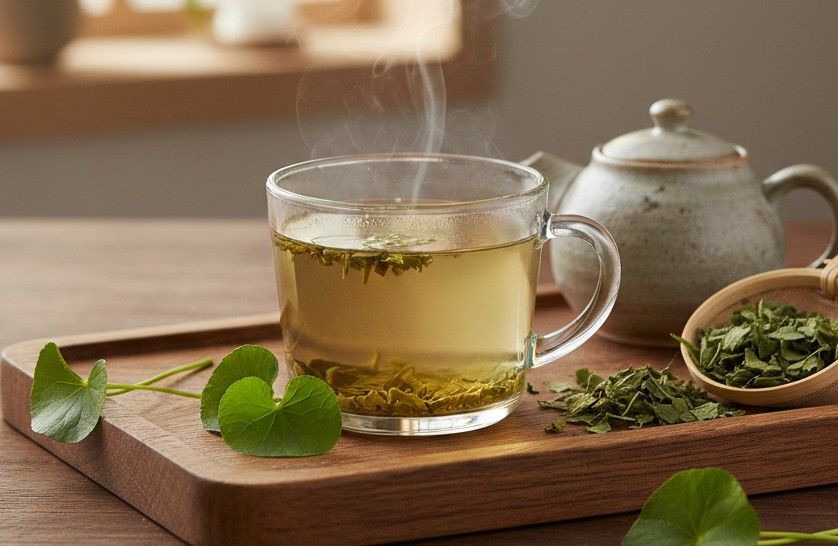
Gotu Kola Tea has been cherished for centuries in traditional healing systems for its calming, rejuvenating, and brain-boosting properties. Often referred to as a “longevity herb,” gotu kola is deeply rooted in ancient herbal medicine and is now gaining global recognition for its science-backed benefits. In this guide, we’ll explore what Gotu Kola Tea is, its proven health benefits, possible side effects, how to prepare it, dosage guidelines, precautions, and much more.
What is Gotu Kola Tea?
Gotu Kola Tea is a herbal infusion made from the dried or fresh leaves of Centella asiatica, a creeping perennial plant native to wetlands in Asia.
Known as Mandukaparni in Ayurveda and widely used in Ayurveda and Traditional Chinese Medicine, gotu kola has long been valued for enhancing memory, improving circulation, supporting wound healing, and promoting longevity.
Unlike kola nut, Gotu Kola does not contain caffeine. The tea has a mild, earthy, slightly bitter taste and is often blended with honey, lemon, or mint to improve flavor.
Traditionally, it has been used to:
- Improve mental clarity
- Reduce anxiety
- Promote skin healing
- Support venous circulation
- Aid digestion
- Enhance overall vitality
Modern research attributes many of its benefits to active compounds called triterpenoids, particularly asiaticoside, madecassoside, asiatic acid, and madecassic acid.
Components of Gotu Kola Tea
While Gotu Kola Tea is low in calories, it contains several bioactive compounds and micronutrients that contribute to its health benefits.
| Nutrient / Compound | Approximate Presence | Health Role |
|---|---|---|
| Calories | ~2–5 per cup | Very low-calorie beverage |
| Vitamin C | Small amounts | Antioxidant, immune support |
| Vitamin A | Trace amounts | Skin and eye health |
| B Vitamins | Small amounts | Energy metabolism |
| Magnesium | Trace | Nerve and muscle function |
| Calcium | Trace | Bone support |
| Potassium | Trace | Fluid balance |
| Asiaticoside | Present | Wound healing, collagen production |
| Madecassoside | Present | Anti-inflammatory effects |
| Flavonoids | Present | Antioxidant protection |
| Triterpenoids | Present | Circulatory and brain support |
Note: Nutritional content varies depending on preparation and leaf quality.
20 Science-Backed Benefits of Gotu Kola Tea
- Enhances Memory Function – Gotu Kola Tea supports cognitive performance by improving blood flow to the brain and stimulating nerve growth.
- Reduces Anxiety Symptoms – Studies suggest it helps calm the nervous system and reduce stress-related anxiety.
- Supports Wound Healing – The triterpenoids stimulate collagen synthesis and accelerate tissue repair.
- Improves Circulation – It enhances venous tone and helps reduce symptoms of chronic venous insufficiency.
- Boosts Collagen Production – Gotu kola promotes collagen formation, improving skin elasticity and healing.
- Promotes Skin Health – Its antioxidant properties protect the skin from premature aging.
- May Improve Focus and Concentration – It enhances mental clarity and cognitive alertness.
- Supports Brain Cell Protection – Antioxidants in gotu kola protect neurons from oxidative damage.
- Helps Reduce Inflammation – Active compounds reduce inflammatory markers in the body.
- Supports Liver Health – Preliminary research suggests hepatoprotective effects against toxin-induced damage.
- May Reduce Stretch Marks – Topical and internal use may improve skin resilience.
- Helps Manage Blood Pressure – It may support healthy circulation and vascular function.
- Supports Detoxification – Traditional systems use it to purify the blood and support liver function.
- Improves Sleep Quality – Its calming properties may assist in reducing stress-related insomnia.
- Supports Joint Health – Anti-inflammatory effects may help ease mild joint discomfort.
- Enhances Mood Stability – It may balance stress hormones and support emotional well-being.
- May Aid in ADHD Symptoms – Some early studies suggest improvements in attention and hyperactivity.
- Supports Hair Growth – Improved circulation may enhance nutrient delivery to hair follicles.
- May Assist in Ulcer Healing – It supports mucosal repair and protective effects in the digestive tract.
- Promotes Longevity – Traditionally regarded as a longevity herb due to its systemic rejuvenating properties.
10 Side Effects of Gotu Kola Tea
While generally safe in moderate amounts, excessive use may cause side effects.
- May Cause Headaches – High doses can trigger mild headaches in sensitive individuals.
- Can Lead to Digestive Upset – Some people may experience nausea or stomach discomfort.
- May Cause Drowsiness – Its calming effect can lead to excessive sleepiness.
- Potential Skin Reactions – Rare allergic reactions may occur.
- May Affect Liver Function – Prolonged high-dose use has been associated with liver stress.
- Possible Dizziness – Overconsumption may lower blood pressure slightly.
- May Interact with Sedatives – It can enhance the effects of calming medications.
- Risk During Pregnancy – Safety during pregnancy is not well established.
- May Increase Photosensitivity – Some individuals may experience increased sensitivity to sunlight.
- Potential Blood Sugar Changes – It may influence glucose metabolism in some cases.
How to Make Gotu Kola Tea?
Ingredients:
- 1–2 teaspoons dried gotu kola leaves (or 5–6 fresh leaves)
- 1 cup hot water
- Optional: honey or lemon
Instructions:
- Bring water to a gentle boil.
- Add dried or fresh leaves to a cup.
- Pour hot water over the leaves.
- Cover and steep for 5–10 minutes.
- Strain and serve warm.
For stronger tea, steep for up to 15 minutes.
Other Uses of Gotu Kola Tea
Beyond drinking, gotu kola has various applications:
- Herbal bath infusion for skin soothing
- Facial steam for skin rejuvenation
- Hair rinse to promote scalp health
- Topical compress for minor wounds
- Herbal blends with green tea or mint
- Powdered leaf capsules
- Extracts and tinctures
- Added to smoothies in powdered form
How Much Gotu Kola Tea Can You Drink a Day?
Most herbal experts recommend:
- 1–2 cups per day for general wellness.
- Up to 3 cups daily for short-term therapeutic use.
It is best not to use continuously for more than 6 weeks without a break.
Always consult a healthcare professional for long-term use.
Tips for Consuming Gotu Kola Tea
- Start with small amounts to assess tolerance.
- Avoid combining with strong sedatives.
- Use high-quality organic leaves.
- Take breaks after extended use.
- Drink after meals if sensitive to herbs.
- Pair with lemon or ginger for improved flavor.
- Store dried leaves in an airtight container away from light.
Best Time to Drink Gotu Kola Tea
- Morning: For mental clarity and focus.
- Afternoon: For stress relief.
- Evening: For relaxation and sleep support (if it doesn’t cause alertness in you).
Avoid very late-night use if you are sensitive to herbal stimulation.
Who Should Drink Gotu Kola Tea?
Gotu Kola Tea may be beneficial for:
- Students needing focus
- Individuals with mild anxiety
- People with poor circulation
- Those recovering from wounds
- Individuals seeking natural skin support
- Adults looking for cognitive enhancement
- People under high stress
Who Should Not Drink Gotu Kola Tea?
It may not be suitable for:
- Pregnant or breastfeeding women
- Individuals with liver disease
- People taking sedatives or anti-anxiety medication
- Those scheduled for surgery
- Individuals with known allergies to herbal plants
- Children without medical supervision
Precautions and Interactions
Gotu Kola Tea may interact with:
- Sedatives and anti-anxiety medications
- Blood pressure medications
- Diabetes medications
- Liver-metabolized drugs
- Diuretics
Precautions include:
- Avoid high doses for extended periods.
- Monitor liver function if using long term.
- Discontinue use two weeks before surgery.
- Stop immediately if allergic reactions occur.
Final Thoughts
Gotu Kola Tea is a time-tested herbal remedy with impressive science-backed benefits for brain health, circulation, skin repair, and stress relief. Its active compounds support collagen production, improve blood flow, and protect against oxidative damage.
When consumed responsibly, it can be a powerful addition to a holistic wellness routine. However, like any herbal remedy, moderation and awareness of potential interactions are essential. If you’re considering incorporating Gotu Kola Tea into your daily routine for cognitive support, skin health, or stress management, start slowly and consult a healthcare provider if you have underlying health conditions.
FAQ’s
What is Gotu Kola Tea made from?
Gotu Kola Tea is made from the dried or fresh leaves of Centella asiatica, a creeping medicinal herb traditionally used in Ayurveda and other herbal systems for brain, skin, and circulation support.
How should Gotu Kola Tea be stored?
Dried gotu kola leaves should be stored in an airtight container in a cool, dry place away from direct sunlight and moisture, while brewed tea should be refrigerated and consumed within 24 hours for best freshness and potency.
What is Gotu Kola Tea good for?
Gotu Kola Tea is commonly used to support memory and cognitive function, reduce mild anxiety, improve blood circulation, promote collagen production for healthy skin, assist in wound healing, and provide antioxidant protection for overall wellness.
What does Gotu Kola Tea taste like?
Gotu Kola Tea has a mild, earthy, slightly grassy flavor with a subtle bitterness, and many people add honey or lemon to improve its taste.
Is Gotu Kola the same as kola nut?
No, Gotu Kola comes from Centella asiatica and does not contain caffeine, while kola nut is a caffeine-containing seed from a different plant species.
Can I drink Gotu Kola Tea every day?
Yes, most people can safely drink 1–2 cups daily for general wellness, but long-term continuous use should include periodic breaks.
How long does it take for Gotu Kola Tea to work?
Some people notice calming effects within days, while cognitive and skin benefits may take several weeks of consistent use.
Does Gotu Kola Tea help with anxiety?
Research suggests it may help reduce mild anxiety by calming the nervous system and supporting stress balance.
Is Gotu Kola Tea good for memory?
Studies indicate it may improve memory and cognitive function by enhancing blood circulation to the brain.
Can Gotu Kola Tea improve skin health?
Yes, its compounds promote collagen production, which supports skin elasticity and wound healing.
Does Gotu Kola Tea contain caffeine?
No, Gotu Kola Tea is naturally caffeine-free.
Is Gotu Kola Tea safe during pregnancy?
It is generally not recommended during pregnancy or breastfeeding due to limited safety research.
Can children drink Gotu Kola Tea?
Children should only consume it under medical supervision, as research on pediatric safety is limited.
Does Gotu Kola Tea help with sleep?
Its calming properties may help improve sleep quality, especially if stress is the underlying cause of insomnia.
Can Gotu Kola Tea affect the liver?
High doses or prolonged use may impact liver function in rare cases, so moderation is important.
Is Gotu Kola Tea good for circulation?
Yes, it is traditionally used to support healthy blood circulation and venous function.
Can Gotu Kola Tea help with hair growth?
Improved circulation and antioxidant support may contribute to healthier scalp and hair growth.
Can Gotu Kola Tea help with stretch marks?
Some research suggests it may improve skin elasticity, which could help reduce the appearance of stretch marks over time.
Is Gotu Kola Tea suitable for long-term use?
It is best used in cycles, such as 4–6 weeks on followed by a short break, to reduce the risk of side effects.
Also Read: