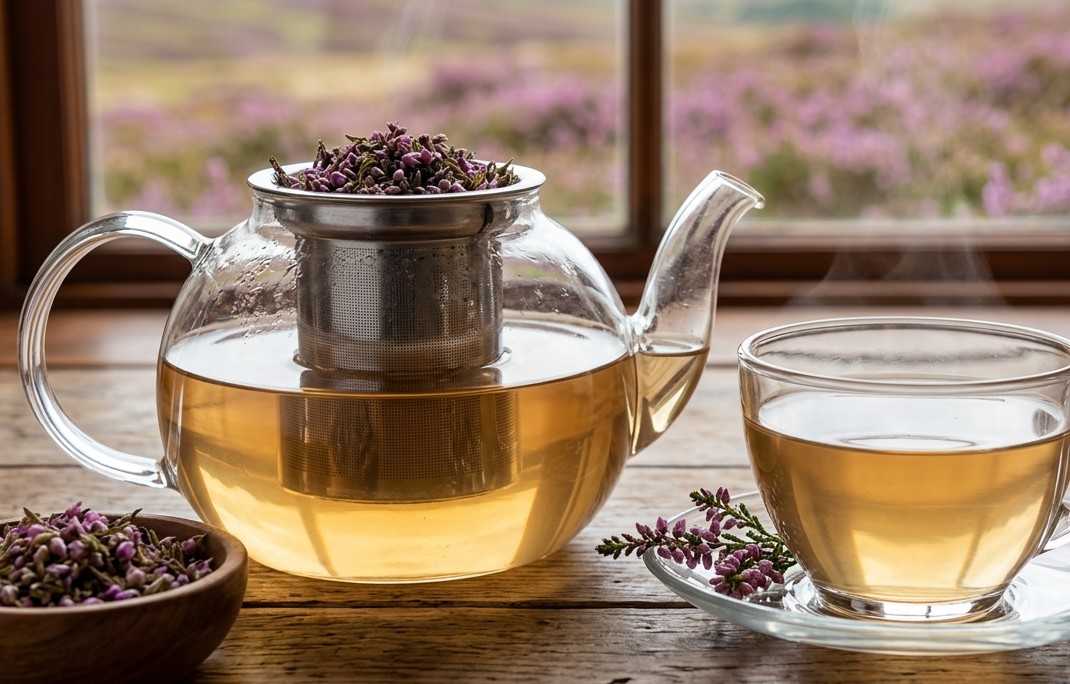
Heather Tea is a traditional herbal infusion made from the flowering tops of the heather plant, valued for centuries in European folk medicine for its soothing, cleansing, and urinary-supportive properties. Known for its delicate floral aroma and mildly earthy taste, this tea has gained attention for its potential health benefits, especially in supporting urinary tract health, digestion, relaxation, and overall wellness. This guide explores everything you need to know about Heather Tea, including its nutritional profile, proven health benefits, preparation methods, side effects, dosage, precautions, and more.
What Is Heather Tea?
Heather Tea is an herbal infusion prepared from the dried flowers and aerial parts of the heather plant, scientifically known as Calluna vulgaris. This evergreen shrub belongs to the Ericaceae family and grows abundantly in Europe, parts of Asia, and North America.
Traditionally, Heather Tea has been used in Scottish, Irish, and Nordic herbal medicine for its diuretic, antiseptic, anti-inflammatory, and calming properties. The tea is often consumed to support urinary tract health, kidney function, digestion, and stress relief.
The plant contains various bioactive compounds such as flavonoids, tannins, phenolic acids, arbutin, and essential oils, which contribute to its medicinal effects. Unlike caffeinated teas like green or black tea, Heather Tea is naturally caffeine-free.
Components of Heather Tea
Heather Tea is low in calories and contains trace amounts of vitamins and minerals. Its primary value lies in its phytochemicals rather than macronutrients. Below is the approximate nutritional profile per 1 cup (240 ml) of brewed Heather Tea (unsweetened):
| Nutrient | Amount (Per Cup) |
|---|---|
| Calories | 2–5 kcal |
| Carbohydrates | <1 g |
| Sugars | 0 g |
| Protein | 0 g |
| Fat | 0 g |
| Fiber | 0 g |
| Vitamin C | Trace amounts |
| Potassium | Small amounts |
| Calcium | Small amounts |
| Magnesium | Small amounts |
| Flavonoids | Present |
| Tannins | Present |
| Phenolic Compounds | Present |
| Arbutin | Present |
Note: Values may vary depending on the concentration and preparation method.
20 Science-Backed Benefits of Heather Tea
Below are evidence-supported benefits based on the known properties of its bioactive compounds:
- Supports Urinary Tract Health – Heather Tea contains arbutin and phenolic compounds that may help reduce bacterial growth in the urinary tract.
- Acts as a Natural Diuretic – The plant’s compounds promote increased urine production, helping flush toxins and excess fluids.
- May Help Prevent Urinary Tract Infections (UTIs) – Its mild antiseptic properties may inhibit certain bacteria associated with UTIs.
- Supports Kidney Function – Traditionally used to aid kidney cleansing and reduce mild water retention.
- Reduces Inflammation – Flavonoids in Heather Tea exhibit anti-inflammatory effects that may ease mild inflammatory conditions.
- Provides Antioxidant Protection – Phenolic compounds help combat oxidative stress and cellular damage.
- Aids Digestion – Tannins may help soothe digestive discomfort and reduce mild diarrhea.
- Relieves Mild Stomach Upset – The tea’s soothing properties may calm gastrointestinal irritation.
- May Support Prostate Health – Traditional herbal practices use Heather for urinary support in men with mild prostate issues.
- Promotes Relaxation – Mild calming properties may reduce stress and nervous tension.
- Supports Detoxification – Its diuretic action assists in eliminating metabolic waste products.
- May Help With Mild Edema – Increased urine flow can reduce mild fluid retention.
- Supports Immune Function – Antioxidant compounds contribute to immune system support.
- Helps Soothe Sore Throat – Anti-inflammatory and mild antiseptic properties may relieve throat irritation.
- May Support Liver Health – Traditional herbal medicine associates Heather with gentle liver cleansing.
- Promotes Skin Health – Antioxidants may support clearer skin when consumed regularly.
- May Help With Mild Joint Discomfort – Anti-inflammatory compounds may ease minor aches.
- Supports Bladder Health – Historically used to calm bladder irritation.
- May Improve Circulation – Certain plant compounds may assist vascular function.
- Provides Mild Antimicrobial Effects – Bioactive compounds may inhibit the growth of some harmful microorganisms.
10 Side Effects of Heather Tea
Although generally considered safe in moderate amounts, Heather Tea may cause side effects in certain individuals:
- May Cause Stomach Irritation – Tannins can irritate sensitive stomachs when consumed in excess.
- Excessive Diuresis – Drinking too much may lead to dehydration due to increased urination.
- Allergic Reactions – Individuals allergic to plants in the Ericaceae family may experience sensitivity.
- May Lower Blood Pressure Slightly – Its diuretic action could contribute to mild blood pressure reduction.
- Potential Kidney Strain in Excess – Overuse of diuretics may stress kidney function.
- Not Recommended During Pregnancy – Limited safety data exists for pregnant women.
- May Interact With Diuretic Medications – Combining with prescribed diuretics may enhance fluid loss.
- Possible Electrolyte Imbalance – Excessive use may alter sodium or potassium levels.
- May Aggravate Severe Kidney Disorders – Individuals with advanced kidney disease should avoid it.
- Potential Drug Interactions – May interact with blood pressure or urinary medications.
How to Make Heather Tea?
Ingredients:
- 1–2 teaspoons dried heather flowers
- 1 cup (240 ml) boiling water
- Honey or lemon (optional)
Instructions:
- Place dried heather flowers in a cup or teapot.
- Pour boiling water over the herbs.
- Cover and steep for 10–15 minutes.
- Strain the tea.
- Add honey or lemon if desired.
- Serve warm.
For a stronger infusion, steep up to 20 minutes, but avoid over-concentration to reduce bitterness.
Other Uses of Heather Tea
Heather Tea is not only consumed as a beverage but also used externally and in wellness applications:
- Used as a gargle for sore throat relief.
- Applied as a compress for minor skin irritation.
- Added to bathwater for relaxation.
- Used in traditional herbal blends for urinary health.
- Included in natural skincare preparations.
- Combined with other herbs such as nettle or dandelion for detox blends.
How Much Heather Tea Can You Drink a Day?
For most healthy adults, 1–3 cups per day is considered moderate and generally safe.
Long-term daily use should be done cautiously and ideally under guidance from a healthcare professional, especially if used for therapeutic purposes. Avoid consuming large quantities for extended periods due to its diuretic properties.
Tips for Consuming Heather Tea
- Use high-quality, organically sourced dried flowers.
- Avoid over-steeping to prevent excessive bitterness.
- Stay hydrated when consuming due to its diuretic effect.
- Start with one cup daily to assess tolerance.
- Avoid adding excessive sugar.
- Store dried heather in an airtight container away from light.
Best Time to Drink Heather Tea
- Morning: To support detoxification and fluid balance.
- Midday: To aid digestion.
- Early evening: For relaxation, but not too late to avoid nighttime urination.
Avoid drinking right before bedtime due to increased urination.
Who Should Drink Heather Tea?
Heather Tea may be suitable for:
- Individuals seeking natural urinary tract support.
- People prone to mild fluid retention.
- Those looking for a caffeine-free herbal tea.
- Individuals wanting gentle digestive support.
- Adults seeking mild relaxation support.
- People interested in antioxidant-rich herbal infusions.
Who Should Not Drink Heather Tea?
Heather Tea may not be suitable for:
- Pregnant or breastfeeding women.
- Individuals with severe kidney disease.
- People taking strong diuretic medications.
- Individuals with known plant allergies to heather.
- Those with chronic dehydration issues.
- Children without medical supervision.
Precautions and Interactions
While Heather Tea is traditionally considered safe, the following precautions should be observed:
- Consult a healthcare provider if you have kidney disease.
- Avoid combining with prescription diuretics.
- Monitor electrolyte balance if consumed regularly.
- Discontinue use if allergic symptoms occur.
- Avoid excessive intake over long periods.
- Consult a doctor if taking blood pressure medications.
- Do not use as a replacement for medical treatment of UTIs or kidney infections.
Final Thoughts
Heather Tea is a time-honored herbal infusion known for its urinary-supportive, antioxidant, anti-inflammatory, and calming properties. Its traditional use across Europe reflects its reputation as a gentle yet effective herbal remedy.
While scientific research specifically on Heather Tea remains limited, the known properties of its phytochemicals support many of its traditional uses. When consumed in moderation, it can be a beneficial addition to a balanced herbal wellness routine.
As with any herbal remedy, moderation and awareness are key. Always consult a healthcare professional if you have underlying medical conditions or take prescription medications before incorporating Heather Tea into your daily routine.
FAQ’s
How long does it take for Heather Tea to work?
Its mild diuretic effects may be noticed within a few hours, while other benefits may take several days of regular use.
What is Heather Tea good for?
Heather Tea is commonly used to support urinary tract health, reduce fluid retention, aid digestion, and provide antioxidant support.
What does Heather Tea taste like?
Heather Tea has a mild floral flavor with slightly earthy and subtly bitter undertones, especially if steeped for a longer time.
Is Heather Tea caffeine-free?
Yes, Heather Tea is naturally caffeine-free, making it suitable for people avoiding stimulants.
Can Heather Tea help with urinary tract infections (UTIs)?
Heather Tea contains arbutin and phenolic compounds that may provide mild antimicrobial support, but it should not replace prescribed antibiotics for active infections.
Is Heather Tea safe for daily use?
For most healthy adults, drinking 1–3 cups per day is generally considered safe when consumed in moderation.
Can Heather Tea help with kidney health?
Heather Tea has traditionally been used to support kidney function due to its mild diuretic properties, but individuals with kidney disease should consult a doctor before use.
Does Heather Tea help with bloating?
Its diuretic effect may help reduce mild water retention, which can contribute to a feeling of reduced bloating.
Can pregnant women drink Heather Tea?
Pregnant or breastfeeding women should avoid Heather Tea due to limited safety research.
Can Heather Tea lower blood pressure?
Its mild diuretic action may slightly lower blood pressure, so people on antihypertensive medication should consult a healthcare provider.
How long should Heather Tea be steeped?
Heather Tea should be steeped for about 10–15 minutes for optimal flavor and benefits.
Can Heather Tea be consumed cold?
Yes, Heather Tea can be chilled and consumed as an iced herbal tea.
Is Heather Tea good for digestion?
The tannins and plant compounds in Heather Tea may help soothe mild digestive discomfort.
Can children drink Heather Tea?
Children should only consume Heather Tea under medical supervision.
How much Heather Tea is too much?
Consuming more than 3–4 cups daily for extended periods may increase the risk of dehydration or electrolyte imbalance.
Does Heather Tea help with inflammation?
Heather contains flavonoids with anti-inflammatory properties that may support overall wellness.
Can Heather Tea be mixed with other herbs?
Yes, it is often blended with herbs like nettle, dandelion, or chamomile for enhanced herbal benefits.
How should Heather Tea be stored?
Dried heather flowers should be stored in an airtight container away from moisture, heat, and direct sunlight.
Is Heather Tea good for detox?
Its diuretic properties may assist the body’s natural detoxification processes by increasing urine output.
Also Read: