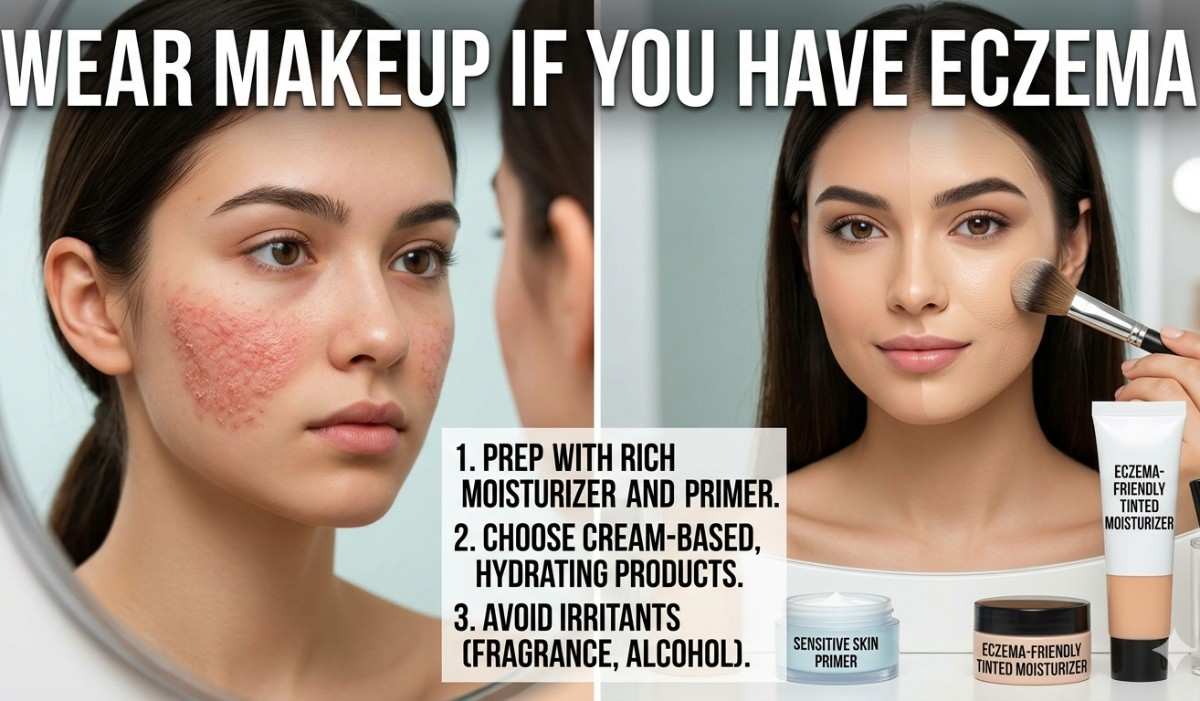
Living with eczema can make even the simplest beauty routine feel complicated. Redness, dryness, flaking, itching, and sensitivity can turn makeup application into a frustrating experience. Many people with eczema worry that cosmetics will worsen their condition, trigger flare-ups, or cause painful irritation.
The good news is that you can wear makeup if you have eczema. The key is choosing the right products, preparing your skin properly, and applying makeup in a way that protects your skin barrier rather than damaging it. This guide will walk you through everything you need to know about wearing makeup safely and comfortably with eczema.
Understanding Eczema Before Applying Makeup
Eczema, also known as atopic dermatitis, is a chronic inflammatory skin condition that weakens the skin barrier. When the barrier is compromised, the skin loses moisture easily and becomes more vulnerable to irritants, allergens, and bacteria.
Common eczema symptoms include:
- Dry, flaky skin
- Redness and inflammation
- Itching
- Cracked or thickened patches
- Sensitivity to skincare and cosmetics
Because eczema-prone skin is already compromised, the wrong makeup products can worsen inflammation or trigger flare-ups. That is why your makeup routine must start with barrier protection, not coverage.
How to Apply Makeup on Eczema-Prone Skin?
Step 1: Never Apply Makeup on an Active Flare
This is the most important rule.
If your skin is:
- Oozing
- Cracked and bleeding
- Severely inflamed
- Extremely itchy
Avoid makeup entirely. Applying products over an active flare can delay healing and increase irritation.
Instead, focus on:
- Gentle cleansing
- Intensive moisturizing
- Prescribed topical treatments (if recommended by your doctor)
- Sun protection
Once the skin has calmed, you can reintroduce makeup slowly.
Step 2: Prep Your Skin the Right Way
Healthy makeup starts with healthy preparation. For eczema-prone skin, prep is more important than the makeup itself.
1. Use a Gentle Cleanser
Choose a:
- Fragrance-free cleanser
- Soap-free formula
- Non-foaming or cream cleanser
Avoid harsh surfactants like sodium lauryl sulfate. Cleansing should remove dirt without stripping natural oils.
2. Apply a Rich Moisturizer
Hydration is essential. Apply a thick, eczema-friendly moisturizer immediately after cleansing while the skin is slightly damp.
Look for ingredients like:
- Ceramides
- Glycerin
- Hyaluronic acid
- Colloidal oatmeal
- Shea butter
Wait at least 10–15 minutes before applying makeup to allow the moisturizer to fully absorb.
3. Use Sunscreen (If Daytime)
Choose a mineral sunscreen with:
- Zinc oxide
- Titanium dioxide
Mineral sunscreens are typically better tolerated than chemical filters for sensitive skin.
Step 3: Choose the Right Makeup Products
When you have eczema, ingredient selection matters more than brand name.
Avoid These Ingredients:
- Fragrance (including natural fragrance)
- Alcohol (especially denatured alcohol)
- Essential oils
- Menthol
- Eucalyptus
- Lanolin (if sensitive)
- Formaldehyde-releasing preservatives
Look for These Labels:
- Fragrance-free
- Hypoallergenic
- Non-comedogenic
- Dermatologist-tested
- Suitable for sensitive skin
However, always patch-test new products before full application.
Step 4: Primer – Is It Necessary?
Primer is optional. Many traditional primers contain silicone blends that can feel heavy or irritating.
If you choose to use one:
- Pick a hydrating primer
- Avoid mattifying or pore-minimizing formulas
- Choose fragrance-free options
In many cases, a good moisturizer can replace primer completely.
Step 5: Foundation for Eczema-Prone Skin
Foundation can be tricky because eczema skin often has texture, flaking, and redness.
Choose the Right Type:
Best options:
- Liquid foundations
- Cream foundations
- Serum foundations
Avoid:
- Powder foundations
- Matte formulas
- Full-coverage heavy products
Matte foundations emphasize dry patches and flakes.
Coverage Tips:
- Choose light to medium coverage
- Build coverage only where needed
- Use a damp sponge instead of a brush
- Press, do not drag
Dragging foundation over dry skin can worsen flaking.
Step 6: Concealing Redness Without Irritation
Redness is common with eczema, especially around the nose, cheeks, and eyelids.
Use:
- Creamy concealers
- Hydrating formulas
- Lightweight correctors
Apply in thin layers and blend gently.
For red areas, a green-tinted corrector can neutralize redness, but always ensure it is fragrance-free and designed for sensitive skin.
Step 7: Powder – Use With Caution
Powder is one of the biggest triggers for visible dryness.
If you must use powder:
- Use a finely milled translucent powder
- Apply only to oily areas
- Use a soft brush
- Apply minimal product
Skip powder entirely on dry patches.
Step 8: Blush, Bronzer, and Highlighter
Cream formulas are generally better than powders.
Why Cream Products Work Better:
- They do not cling to dry patches
- They look more natural on textured skin
- They add hydration rather than dryness
Stick or cream blushes are ideal for eczema-prone cheeks.
Avoid glittery highlighters, as they emphasize texture.
Step 9: Eye Makeup and Eczema
Eczema often affects eyelids and under-eye areas.
If You Have Eyelid Eczema:
- Avoid shimmery shadows
- Use cream eyeshadows labeled safe for sensitive eyes
- Avoid glitter
- Avoid waterproof formulas
Waterproof mascaras and eyeliners require stronger removers, which can irritate skin.
Choose:
- Tubing mascara
- Sensitive-eye mascara
- Pencil eyeliner instead of liquid
Step 10: Lip Products and Perioral Eczema
If you experience eczema around the mouth:
- Avoid matte liquid lipsticks
- Avoid long-wear formulas
- Avoid strongly scented lip products
Use:
- Tinted lip balms
- Cream lipsticks
- Hydrating glosses
Ingredients like beeswax and shea butter can be soothing, but always patch-test first.
Step 11: Application Tools Matter
Dirty brushes and sponges can introduce bacteria and worsen eczema.
Best practices:
- Wash brushes weekly
- Replace sponges frequently
- Avoid sharing makeup
- Use gentle brush cleansers
For very sensitive skin, clean hands may be better than brushes for certain products.
Step 12: Patch Testing Is Essential
Before using any new product:
- Apply a small amount behind the ear or inside the elbow.
- Wait 24–48 hours.
- Check for redness, itching, or irritation.
Never skip this step, even if a product claims to be for sensitive skin.
How to Remove Makeup Without Triggering Eczema
Makeup removal is just as important as application.
Avoid:
- Harsh wipes
- Strong micellar waters with fragrance
- Rubbing or scrubbing
Use:
- Cleansing balms for sensitive skin
- Cream cleansers
- Soft cotton cloths
Massage gently and rinse with lukewarm water. Follow immediately with moisturizer.
Never sleep with makeup on, as it can worsen inflammation.
Makeup During Seasonal Changes
Eczema often worsens during:
- Winter (due to dry air)
- Allergy seasons
- High stress periods
Adjust your makeup routine accordingly:
- Use richer moisturizers in winter
- Reduce product layers during flare-prone periods
- Simplify your routine when skin feels reactive
Sometimes less makeup is better for long-term skin health.
Building a Minimal Eczema-Friendly Makeup Routine
Here is a simple routine:
- Gentle cleanse
- Rich moisturizer
- Mineral sunscreen
- Light liquid foundation
- Cream blush
- Tubing mascara
- Tinted lip balm
This approach reduces product layering and lowers irritation risk.
Ingredients That Support the Skin Barrier
Certain makeup products now include skin-beneficial ingredients.
Look for:
- Ceramides
- Niacinamide (if tolerated)
- Squalane
- Panthenol
- Colloidal oatmeal
These ingredients can support hydration while providing coverage.
When to See a Dermatologist?
If makeup consistently triggers:
- Burning
- Severe itching
- Swelling
- Recurrent flare-ups
Consult a dermatologist.
They may:
- Perform patch testing
- Recommend prescription creams
- Suggest medical-grade cosmetics
Do not ignore persistent reactions.
Emotional Confidence and Eczema
Eczema can affect self-esteem. Makeup can be empowering when used safely.
However, remember:
- Clear skin is not a requirement for beauty
- Your comfort comes first
- Healing skin is more important than coverage
A balanced approach protects both your skin and confidence.
Common Mistakes to Avoid
- Applying makeup over broken skin
- Skipping moisturizer
- Using matte products
- Trying too many new products at once
- Over-exfoliating dry patches
- Using expired makeup
- Ignoring ingredient lists
Each of these can worsen eczema symptoms.
Final Thoughts
Wearing makeup with eczema is absolutely possible when approached carefully. The focus should always be on protecting and repairing your skin barrier first, then enhancing your features second. Prioritize hydration, choose fragrance-free products, avoid heavy powders, and remove makeup gently every night. By following these guidelines, you can enjoy makeup without compromising your skin health.
FAQ’s
Can I wear makeup if I have eczema?
Yes, you can wear makeup if you have eczema, as long as your skin is not in an active flare and you choose gentle, fragrance-free products designed for sensitive skin.
Should I avoid makeup during an eczema flare-up?
Yes, it is best to avoid makeup during active flare-ups because applying products over inflamed or broken skin can delay healing and increase irritation.
What type of foundation is best for eczema-prone skin?
Hydrating liquid or cream foundations with light to medium coverage are best, as they are less likely to cling to dry patches compared to matte or powder formulas.
Is powder makeup bad for eczema?
Powder makeup can worsen dryness and emphasize flaking, so it should be used sparingly or avoided on dry areas.
Are natural or organic products safer for eczema?
Not always, because natural ingredients like essential oils and botanical extracts can still trigger irritation in sensitive skin.
How do I prevent makeup from clinging to dry patches?
Properly moisturize your skin before applying makeup and use a damp sponge to gently press foundation into the skin instead of dragging it.
Can primer irritate eczema?
Some primers can irritate eczema-prone skin, especially mattifying or silicone-heavy formulas, so hydrating and fragrance-free options are safer choices.
What ingredients should I avoid in makeup?
Avoid fragrance, alcohol (especially denatured alcohol), essential oils, menthol, and harsh preservatives that may trigger irritation.
Is mineral makeup good for eczema?
Liquid mineral-based products are often better tolerated, while loose mineral powders may increase dryness and irritation.
Can eye makeup worsen eyelid eczema?
Yes, especially waterproof, glittery, or heavily pigmented formulas, so it is better to use gentle, sensitive-eye products.
How often should I clean my makeup brushes?
Makeup brushes should be cleaned at least once a week to prevent bacteria buildup that can worsen skin irritation.
Can makeup cause eczema to spread?
Makeup does not spread eczema, but using contaminated tools or irritating products can worsen inflammation in affected areas.
Can I wear makeup every day with eczema?
Yes, if your skin tolerates it well and you maintain a strong skincare routine focused on hydration and barrier repair.
Should I patch-test new makeup products?
Yes, patch-testing new products for 24 to 48 hours helps identify potential reactions before applying them to your face.
Does makeup block eczema treatments from working?
Makeup can reduce the effectiveness of topical treatments if applied immediately over them, so allow prescribed creams to absorb fully before layering products.
Is waterproof makeup safe for eczema?
Waterproof formulas often require stronger removers, which can irritate sensitive skin, so they are generally not recommended.
Can stress from worrying about appearance worsen eczema?
Yes, stress can trigger or worsen eczema flare-ups, so focusing on gentle care and self-confidence can help both skin health and emotional well-being.
What should I do if makeup causes burning or itching?
Immediately remove the product with a gentle cleanser and apply a soothing moisturizer, and discontinue use of the irritating product.
Can a dermatologist recommend safe makeup products?
Yes, dermatologists can suggest suitable brands, perform patch testing, and guide you toward products that are less likely to trigger eczema symptoms.
Also Read: