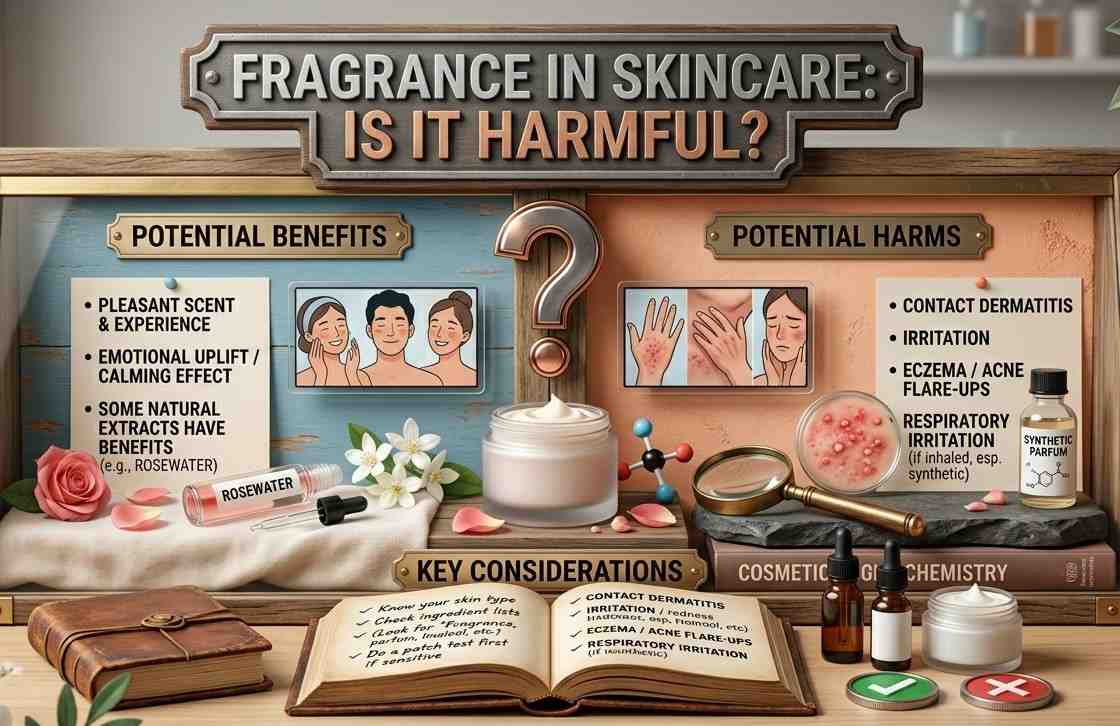
Fragrance is one of the most debated ingredients in modern skincare. Some people love beautifully scented creams and serums, while others actively avoid any product labeled “fragrance.” If you have ever wondered whether fragrance in skincare is harmful, irritating, or simply misunderstood, this comprehensive guide will give you clarity.
In this guide, we will explore what fragrance really means in skincare, how it affects your skin, who should avoid it, how to read ingredient labels, and whether fragrance-free products are always better. We will also include a comparison table to help you make informed decisions for your skin type.
What Does “Fragrance” Mean in Skincare?
In skincare, “fragrance” is a broad term used to describe ingredients added to products to give them a specific scent. These fragrances can be:
- Synthetic (lab-created aromatic compounds)
- Natural (essential oils or plant extracts)
- A blend of both
On ingredient labels, fragrance may appear as:
- Fragrance
- Parfum
- Aroma
- Essential oils (e.g., lavender oil, citrus oil)
In many countries, companies are allowed to list fragrance as a single term because the exact formula is considered a trade secret. This means one product’s “fragrance” can contain dozens or even hundreds of individual components.
Why Is Fragrance Added to Skincare Products?
Fragrance serves several purposes:
- Enhances user experience: A pleasant scent can make skincare feel luxurious and enjoyable.
- Masks unpleasant odors: Active ingredients like sulfur, retinol, or certain plant extracts may have strong smells. Fragrance helps neutralize them.
- Supports brand identity: Signature scents can make products recognizable and memorable.
While these benefits are mostly sensory, they do not contribute directly to skin health.
Is Fragrance Harmful to the Skin?
The answer is not black and white. Fragrance is not automatically harmful for everyone, but it can be problematic for certain skin types. Let’s break it down.
1. Fragrance and Skin Irritation
Fragrance is one of the most common causes of cosmetic-related skin irritation. It can cause:
- Redness
- Burning sensation
- Stinging
- Itching
This reaction can happen immediately or after repeated use.
2. Fragrance and Allergic Contact Dermatitis
Some people develop allergic contact dermatitis from fragrance ingredients. This is a delayed immune reaction that may include:
- Rash
- Swelling
- Flaking
- Blisters
Fragrance mix is commonly used in patch testing because fragrance allergies are so widespread.
3. Fragrance and Sensitive Skin
If you have sensitive skin, fragrance can increase your risk of irritation. Sensitive skin often has a weakened skin barrier, making it more reactive to external substances.
4. Fragrance and Acne
Fragrance does not directly cause acne, but it can irritate the skin. Irritated skin may produce more oil or become inflamed, which can worsen breakouts in acne-prone individuals.
Natural vs Synthetic Fragrance: Which Is Worse?
Many people assume that natural fragrance is safer than synthetic fragrance. However, this is not always true.
Natural Fragrance (Essential Oils)
Examples include:
- Lavender oil
- Lemon oil
- Peppermint oil
- Eucalyptus oil
Pros:
- Perceived as more natural
- May contain antioxidant properties
Cons:
- Highly concentrated
- Can cause irritation
- Some are phototoxic (e.g., citrus oils)
- Higher risk of allergic reactions
Synthetic Fragrance
Pros:
- More stable
- Can be formulated to reduce allergenic components
- Consistent scent
Cons:
- May contain irritants
- Not transparent due to trade secret labeling
In many cases, essential oils can be more irritating than well-formulated synthetic fragrance.
How Fragrance Affects the Skin Barrier?
Your skin barrier is responsible for keeping moisture in and irritants out. Fragrance can disrupt the skin barrier in the following ways:
- Triggers inflammation
- Increases transepidermal water loss
- Weakens protective lipids
- Makes skin more reactive over time
Repeated exposure to irritants may lead to chronic sensitivity.
Who Should Avoid Fragrance in Skincare?
Fragrance-free skincare is often recommended for the following individuals:
- People with sensitive skin
- Those with eczema or rosacea
- Individuals with a history of fragrance allergies
- People using strong actives like retinoids or chemical exfoliants
- Post-procedure skin (after chemical peels or laser treatments)
If your skin is compromised, adding fragrance may increase irritation.
When Fragrance May Be Safe
Fragrance may not be harmful if:
- You have resilient, non-sensitive skin
- The fragrance concentration is low
- The product is rinse-off (like cleanser)
- You have no history of allergies
Many people use fragranced products for years without any issues.
Fragrance-Free vs Unscented: What’s the Difference?
These two terms are often confused.
- Fragrance-Free: No fragrance ingredients are added.
- Unscented: The product may contain masking fragrance to neutralize natural odors.
Always check the ingredient list to confirm.
Common Fragrance Allergens in Skincare
Some fragrance ingredients are more likely to cause reactions:
- Linalool
- Limonene
- Citral
- Eugenol
- Geraniol
- Cinnamal
These may appear individually on labels, especially in regions with stricter regulations.
Fragrance in Skincare at a Glance
| Factor | Fragrance-Free Products | Fragranced Products |
|---|---|---|
| Risk of Irritation | Low | Moderate to High (depends on skin type) |
| Suitable for Sensitive Skin | Yes | Often not recommended |
| User Experience | Neutral scent | Pleasant scent |
| Allergy Risk | Low | Higher risk |
| Skin Barrier Impact | Minimal disruption | May cause barrier irritation |
| Ideal for Medical Conditions | Yes | Usually discouraged |
Does Fragrance Cause Long-Term Damage?
There is no strong evidence that fragrance causes permanent damage in healthy skin. However, repeated irritation can lead to:
- Chronic inflammation
- Increased sensitivity
- Compromised skin barrier
Over time, this may make skin more reactive.
Fragrance in Anti-Aging Skincare
Many anti-aging products contain powerful ingredients such as:
- Retinol
- Vitamin C
- Peptides
- AHAs
These ingredients can already cause irritation. Adding fragrance increases the risk of sensitivity and redness, especially for beginners.
For anti-aging routines, fragrance-free formulations are generally safer.
Fragrance in Body Care vs Face Care
The skin on your body is typically thicker and less sensitive than facial skin.
- Body lotions: Fragrance is usually tolerated better
- Facial serums and moisturizers: Higher risk of irritation
However, if you have eczema or sensitive skin anywhere on the body, fragrance-free is preferable.
Can Fragrance Trigger Hormonal Disruption?
There are concerns about certain fragrance ingredients potentially acting as endocrine disruptors. However:
- Cosmetic regulations restrict harmful levels
- Most modern formulations are considered safe within approved limits
Still, if you prefer a precautionary approach, fragrance-free options offer peace of mind.
How to Know If Fragrance Is Irritating Your Skin
Signs that fragrance may be the problem include:
- Burning after application
- Red patches
- Sudden sensitivity to products
- Itchy or flaky skin
- Reaction that improves after stopping the product
Patch testing new products can help prevent full-face reactions.
Patch Testing Guide
To test for fragrance sensitivity:
- Apply a small amount behind your ear or on inner forearm.
- Wait 24 to 48 hours.
- Look for redness, itching, or swelling.
If no reaction occurs, it is likely safe for you.
Is Fragrance Ever Beneficial?
Fragrance does not improve skin health, but it may:
- Encourage consistent product use
- Improve mood through aromatherapy effects
- Enhance relaxation during skincare routines
However, mood benefits should not override skin safety.
Dermatologists’ Perspective on Fragrance
Many dermatologists recommend fragrance-free skincare, especially for:
- Acne-prone skin
- Rosacea
- Eczema
- Post-treatment skin
The general professional stance is that fragrance is unnecessary and potentially irritating.
The Psychological Side of Fragrance
Scent is closely linked to memory and emotion. A pleasant fragrance can:
- Increase enjoyment
- Encourage self-care
- Create a spa-like experience
For some users, this emotional benefit matters.
Regulatory Standards for Fragrance Safety
Different regions regulate cosmetic fragrance ingredients:
- European Union requires disclosure of certain allergens
- United States allows “fragrance” as a general term
- Many countries follow International Fragrance Association guidelines
These regulations aim to reduce risk but do not eliminate it entirely.
How to Choose the Right Product for Your Skin
If you have sensitive skin:
- Choose fragrance-free
- Avoid essential oils
- Keep routine minimal
If you have normal skin:
- Lightly fragranced products may be fine
- Monitor for irritation
If you are using actives:
- Avoid fragrance to reduce cumulative irritation
Minimalist Skincare and Fragrance
The modern minimalist skincare trend focuses on:
- Fewer ingredients
- Barrier support
- Lower irritation risk
Fragrance-free formulations align well with this philosophy.
Final Verdict: Should You Avoid Fragrance?
Fragrance in skincare is not universally harmful, but it is one of the most common causes of irritation and allergic reactions. It provides no direct skincare benefit and can compromise the skin barrier in sensitive individuals.
If your skin is sensitive, acne-prone, or compromised, fragrance-free skincare is the safer choice. If your skin is resilient and you enjoy scented products without experiencing irritation, moderate use may be acceptable. The best approach is personalized skincare. Listen to your skin, read labels carefully, and prioritize barrier health over sensory appeal.
FAQ’s
Is fragrance bad for all skin types?
No, but it increases the risk of irritation, especially for sensitive or compromised skin.
Does fragrance cause acne?
Fragrance does not directly clog pores or cause acne, but it can irritate the skin. Irritated skin may become inflamed, which can worsen acne breakouts.
Is fragrance safe in cleansers?
Fragrance in rinse-off products like cleansers is generally less risky because it does not stay on the skin for long. However, people with sensitive skin may still experience irritation.
Should I avoid fragrance if I have sensitive skin?
Yes, dermatologists commonly recommend fragrance-free skincare for people with sensitive skin, rosacea, or eczema to reduce the risk of irritation.
Is fragrance bad when using retinol or exfoliating acids?
It is best to avoid fragrance when using active ingredients like retinol, AHAs, or BHAs. These ingredients already increase sensitivity, and fragrance may add extra irritation.
Are essential oils considered fragrance?
Yes, essential oils are natural fragrance components. Even though they come from plants, they can still cause irritation or allergic reactions.
Why do skincare brands use fragrance if it can irritate skin?
Fragrance improves the sensory experience of a product and helps mask unpleasant ingredient smells. It also supports branding and customer appeal.
Can fragrance cause hyperpigmentation?
Indirectly, yes. Chronic irritation from fragrance can lead to inflammation, which may result in post-inflammatory hyperpigmentation in some skin types.
How can I tell if fragrance is irritating my skin?
Signs include burning, stinging, redness, itching, or flaking after using a product. If symptoms improve after discontinuing the product, fragrance may have been the trigger.
Is fragrance regulated in skincare products?
Yes, cosmetic regulations limit certain fragrance allergens and restrict harmful ingredients. However, companies can list fragrance as a general term without disclosing every component.
Is it safe to use fragranced body lotion?
The skin on the body is generally thicker and less sensitive than facial skin. Many people tolerate fragranced body products well, but those with eczema or sensitive skin should choose fragrance-free options.
Should teenagers avoid fragrance in skincare?
Teenagers with acne-prone or sensitive skin may benefit from fragrance-free products. Minimizing irritation helps support healthier skin during hormonal changes.
Are luxury fragranced products more irritating?
Not necessarily. Price does not determine irritation risk. Even expensive products can contain fragrance components that irritate sensitive skin.
Is fragrance always unnecessary in skincare?
From a skin health perspective, fragrance is not essential. It mainly enhances the sensory experience rather than providing therapeutic benefits.
Also Read: