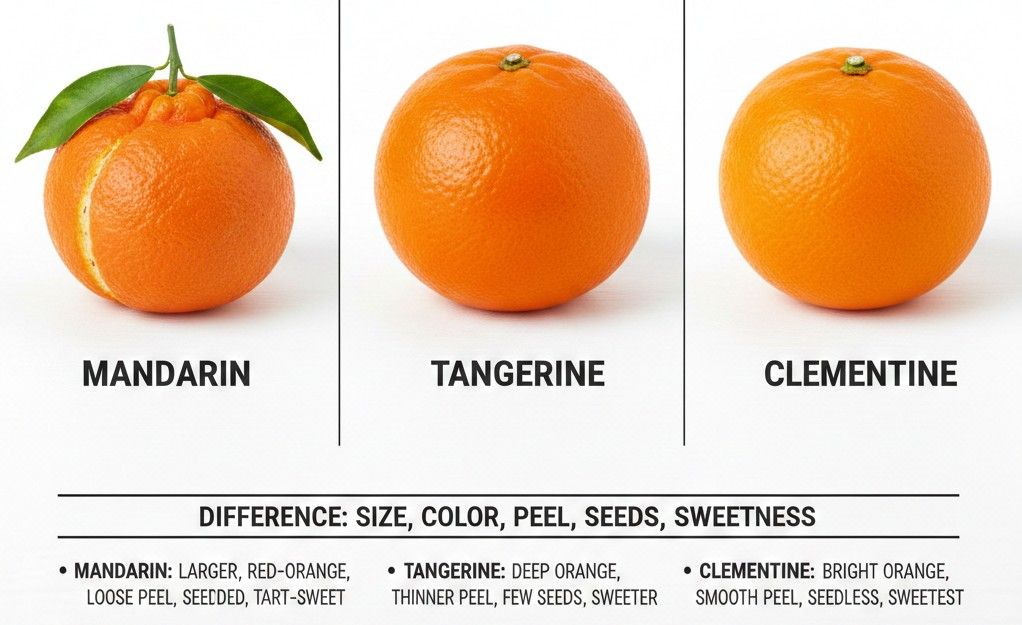
Walk into any fruit market or grocery store during citrus season, and you’ll see baskets filled with small, bright orange fruits labeled mandarin, tangerine, or clementine. At first glance, they look almost identical. Many people use these names interchangeably, assuming they are the same fruit with different labels.
But here’s the truth: while mandarins, tangerines, and clementines are closely related, they are not exactly the same. Each has its own history, flavor profile, texture, nutritional nuances, and best uses.
If you’ve ever wondered:
- Why clementines are often seedless
- Whether tangerines are sweeter than mandarins
- Which one is healthiest or easiest to peel
This guide will clear up the confusion once and for all. Let’s explore the differences.
Understanding the Citrus Family First
Before comparing mandarins, tangerines, and clementines, it helps to understand where they come from.
All three belong to the citrus family, scientifically known as Citrus reticulata. This means:
- They are types of mandarins
- They share similar physical traits
- Their differences come from varieties, growing conditions, and breeding
So technically speaking:
- Mandarin is the broad category
- Tangerines and clementines are specific types of mandarins
Think of it like this:
- Mandarin is the family name
- Tangerine and clementine are siblings within that family
What Is a Mandarin?
Mandarins are one of the oldest cultivated citrus fruits in the world. They originated in China, where they were named after Chinese officials called “Mandarins,” who were gifted these fruits as symbols of prosperity.
Key Characteristics of Mandarins
Mandarins are known for being:
- Smaller than oranges
- Easy to peel
- Mildly sweet with balanced acidity
- Juicy but not overly sharp
They are the parent category from which many varieties have developed, including tangerines and clementines.
Common Mandarin Varieties
Some well-known mandarin varieties include:
- Satsuma
- Clementine
- Tangerine
- Honey mandarins (Murcott)
- Pixie mandarins
Because “mandarin” is a broad term, its taste, sweetness, and appearance can vary depending on the variety.
What Is a Tangerine?
Tangerines are a specific type of mandarin that gained popularity in the 19th century when they were shipped to Europe from Tangier, Morocco. That’s where the name “tangerine” comes from.
How Tangerines Stand Out
Compared to other mandarins, tangerines usually have:
- A deeper orange or reddish-orange color
- Slightly thicker skin
- A stronger citrus aroma
- A tangy-sweet flavor
They are a little bolder in taste than most mandarins, making them a favorite for people who enjoy a stronger citrus punch.
Are Tangerines Always Sweet?
Not always. Tangerines tend to be:
- Slightly less sweet than clementines
- More acidic than most mandarins
This balance of sweetness and tang makes them excellent for:
- Fresh eating
- Juicing
- Citrus-based desserts
What Is a Clementine?
Clementines are the smallest and sweetest of the three. They are a hybrid developed in the early 20th century, believed to be a cross between a mandarin and a sweet orange.
They became especially popular because they are:
- Easy to peel
- Usually seedless
- Very sweet and mild
Why Clementines Are So Popular
Clementines are often sold as:
- “Seedless mandarins”
- “Cuties” or “Halos” in some countries
They are especially loved by:
- Children
- People who dislike bitter citrus
- Anyone who wants a mess-free snack
Because of their sweetness and convenience, clementines dominate winter citrus sales in many parts of the world.
Mandarin vs Tangerine vs Clementine: Comparison
| Feature | Mandarin | Tangerine | Clementine |
|---|---|---|---|
| Category | Citrus species | Type of mandarin | Type of mandarin |
| Size | Small to medium | Medium | Small |
| Peel | Loose, easy to peel | Slightly thicker | Very thin, easy |
| Color | Light orange | Deep orange to reddish | Bright orange |
| Taste | Mildly sweet | Sweet-tangy | Very sweet |
| Seeds | May contain seeds | May contain seeds | Usually seedless |
| Acidity | Low to moderate | Moderate | Low |
| Juiciness | Moderate | High | Moderate |
| Best For | Everyday eating | Juicing & snacking | Kids & quick snacks |
Taste Comparison: Which One Is Sweeter?
Taste is often the biggest deciding factor when choosing between these fruits.
Mandarin Taste
- Balanced sweetness
- Mild citrus flavor
- Less acidic than tangerines
- Pleasant but not overpowering
Tangerine Taste
- Strong citrus aroma
- Tangier than mandarins
- Slightly sharp aftertaste
- More “zesty” overall
Clementine Taste
- Noticeably sweet
- Very low acidity
- Smooth, mellow flavor
- Almost dessert-like
If sweetness is your top priority, clementines usually win. If you enjoy a bit of tang, tangerines shine. For a middle ground, mandarins are ideal.
Peel and Texture Differences
One reason these fruits are so popular is how easy they are to peel—but there are differences.
Mandarin Peel
- Loose and puffy
- Peels off easily
- Slightly thicker than clementines
Tangerine Peel
- Firmer and thicker
- Can be slightly harder to peel
- Strong citrus oils in the skin
Clementine Peel
- Very thin
- Smooth texture
- Comes off effortlessly
If convenience matters, clementines are the easiest to peel, especially for children or quick snacking.
Seed Content: Which One Is Seedless?
Seeds can be a deal-breaker for many people.
- Mandarins: May contain seeds depending on variety
- Tangerines: Often contain seeds
- Clementines: Usually seedless
Clementines are seedless only when grown away from other citrus trees. If cross-pollination occurs, seeds may appear—but this is rare in commercial production.
Nutritional Comparison
Nutritionally, all three fruits are very similar because they come from the same citrus family.
Nutritional Value Per 100g (Approximate)
| Nutrient | Mandarin | Tangerine | Clementine |
|---|---|---|---|
| Calories | 53 kcal | 53 kcal | 47 kcal |
| Carbohydrates | 13 g | 13 g | 12 g |
| Natural Sugars | 10 g | 10.5 g | 9 g |
| Fiber | 1.8 g | 1.8 g | 1.7 g |
| Vitamin C | 26 mg | 26 mg | 48 mg |
| Potassium | 166 mg | 166 mg | 177 mg |
| Water Content | High | High | Very high |
Key Takeaway
- Clementines are higher in vitamin C
- All three are low in calories
- All support immunity and digestion
From a health perspective, none is “bad” or inferior—it really depends on taste preference.
Health Benefits: Do They Differ?
Because their nutritional profiles are similar, their health benefits largely overlap.
Shared Health Benefits
All three fruits:
- Boost immunity due to vitamin C
- Support digestion with dietary fiber
- Help keep the body hydrated
- Support skin health
- Provide antioxidants
Slight Differences
- Clementines: Best for immune support due to higher vitamin C
- Tangerines: Slightly better for juicing and refreshing drinks
- Mandarins: Ideal for balanced daily consumption
Culinary Uses: Which One Should You Use?
Each fruit works best in slightly different culinary roles.
Best Uses for Mandarins
- Fruit salads
- Light desserts
- Everyday snacking
- Lunchbox fruit
Best Uses for Tangerines
- Fresh juices
- Marmalades
- Citrus glazes
- Baking
Best Uses for Clementines
- Quick snacks
- Kids’ meals
- Desserts
- Garnishing salads
Because clementines are very sweet, they’re less commonly used in savory dishes compared to tangerines.
Availability and Seasonality
All three fruits are winter citrus, but their peak seasons can vary.
| Fruit | Peak Season |
|---|---|
| Mandarin | November to March |
| Tangerine | December to February |
| Clementine | November to January |
Clementines usually appear first in the season, followed by tangerines and other mandarins.
Which One Is Best for Kids?
For children, convenience and sweetness matter most.
- Clementines are small, seedless, and sweet
- Easy to peel without help
- Less acidic on sensitive stomachs
That’s why clementines are often marketed as kid-friendly citrus fruits.
Mandarin vs Tangerine vs Clementine: Which Should You Choose?
There is no single “best” fruit—it depends on what you’re looking for.
Choose mandarins if:
- You want a balanced flavor
- You like variety
- You eat citrus daily
Choose tangerines if:
- You enjoy a bold citrus taste
- You plan to juice them
- You like a tangy kick
Choose clementines if:
- You want sweetness
- You prefer seedless fruit
- You need a quick, mess-free snack
Final Thoughts
Mandarins, tangerines, and clementines may look similar, but their subtle differences make each one special. Understanding these differences helps you choose the right fruit for your taste buds, recipes, and lifestyle.
Next time you’re standing in the fruit aisle, you’ll know exactly what you’re picking—and why. Instead of wondering whether they’re the same, you can enjoy each for what it truly is: a small citrus fruit with its own personality.
FAQ’s
Are mandarin, tangerine, and clementine the same fruit?
They are closely related but not the same. Mandarin is the broad category, while tangerines and clementines are specific types of mandarins with different taste, sweetness, and seed content.
Are clementines always seedless?
Most clementines are seedless, especially those grown without cross-pollination. However, in rare cases, they may contain a few seeds.
Which one is healthiest?
All three are healthy and provide vitamin C, fiber, and antioxidants. Clementines contain slightly more vitamin C, but the overall health benefits are very similar.
Can diabetics eat mandarins, tangerines, or clementines?
Yes, they can be eaten in moderation. These fruits contain natural sugars but also fiber, which helps manage blood sugar levels when consumed as part of a balanced diet.
Which fruit is best for kids?
Clementines are ideal for children because they are small, sweet, easy to peel, and usually seedless.
Are tangerines more acidic than mandarins?
Yes, tangerines are generally more acidic and have a stronger citrus flavor compared to mandarins and clementines.
Which is better for juicing?
Tangerines are often preferred for juicing because of their bold flavor and high juice content.
When is the best season to buy these fruits?
Mandarins are available from late autumn to early spring, tangerines peak in mid-winter, and clementines usually appear early in the citrus season.
Can these fruits be eaten every day?
Yes, they can be eaten daily in moderate amounts. They are low in calories, hydrating, and rich in nutrients that support overall health.
Also Read: