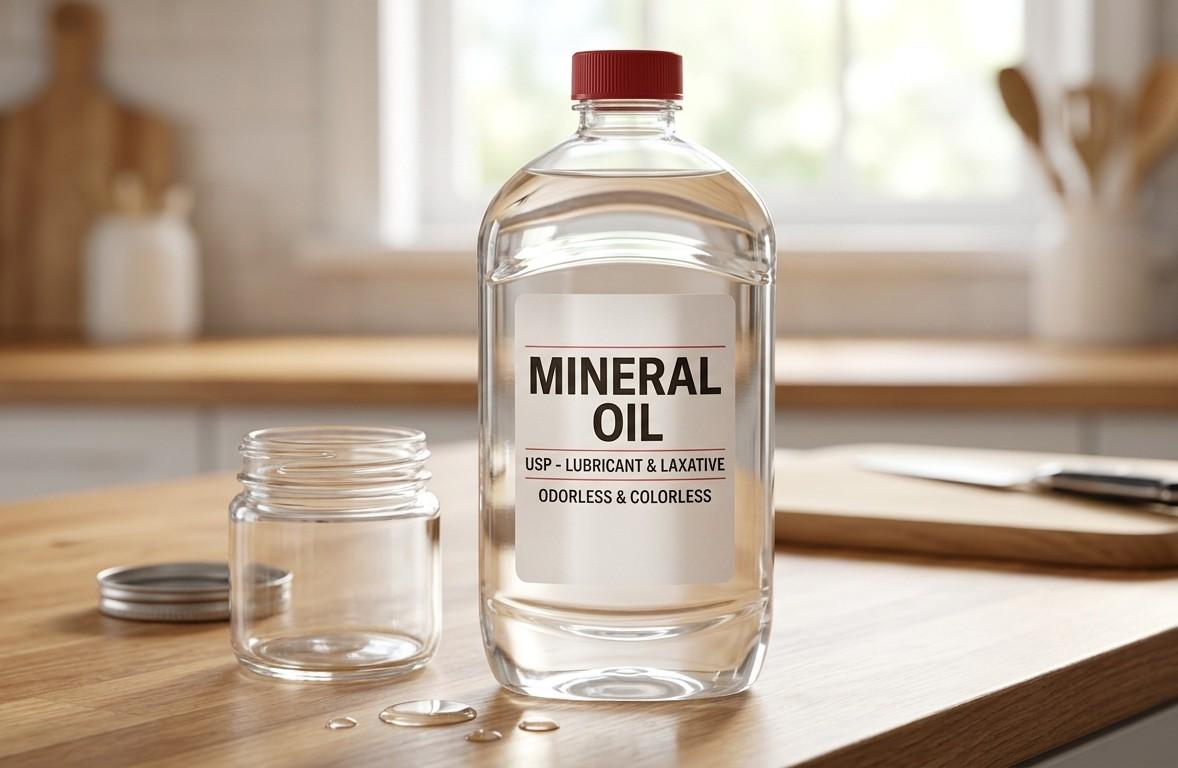
Mineral oil is one of the most widely used and debated ingredients in skincare, personal care, and even medicine. Found in moisturizers, baby oils, ointments, laxatives, and cosmetic formulations, white oil has stood the test of time due to its stability, affordability, and effectiveness.
Despite its popularity, mineral oil is often misunderstood. Some consider it a skincare hero, while others question its safety. In this guide, we will explore everything you need to know about mineral oil — from its composition and science-backed benefits to side effects, usage methods, and precautions.
What is Mineral Oil?
Mineral oil is a colorless, odorless oil derived from petroleum. It is created as a byproduct during the refining of crude oil into gasoline and other petroleum products. After undergoing extensive purification and refinement, mineral oil becomes safe for cosmetic, pharmaceutical, and food-grade use.
There are different types of mineral oil:
- Cosmetic-grade mineral oil – Used in skincare and beauty products.
- Pharmaceutical-grade mineral oil – Used as a laxative and in medicinal preparations.
- Food-grade mineral oil – Used in food processing and kitchen equipment lubrication.
- Industrial-grade mineral oil – Used in machinery and technical applications (not safe for personal use).
Highly refined mineral oil used in skincare is considered safe by major health authorities when properly processed. It works mainly as an occlusive agent, meaning it creates a protective barrier over the skin to prevent moisture loss.
Components of Mineral Oil
| Component | Amount per 100g |
|---|---|
| Calories | 884 kcal |
| Total Fat | 100 g |
| Saturated Fat | 0 g |
| Monounsaturated Fat | 0 g |
| Polyunsaturated Fat | 0 g |
| Cholesterol | 0 mg |
| Carbohydrates | 0 g |
| Protein | 0 g |
| Vitamins | None |
| Minerals | None |
| Active Compounds | Hydrocarbons |
Important Note: White oil is not metabolized by the body when taken orally in small medicinal doses. It works mechanically rather than nutritionally.
20 Proven Benefits of Mineral Oil
- Deep Moisture Locking: Oil forms a protective barrier on the skin that prevents water loss and keeps the skin hydrated for long hours.
- Softens Dry Skin: It smooths rough and flaky skin by sealing in moisture and reducing dryness.
- Prevents Skin Irritation: The protective layer shields sensitive skin from environmental irritants.
- Improves Skin Barrier Function: Oil strengthens the outer layer of skin by reducing transepidermal water loss.
- Safe for Sensitive Skin: Highly refined mineral oil is non-irritating and suitable for delicate skin types.
- Effective Makeup Remover: It dissolves heavy and waterproof makeup without harsh rubbing.
- Soothes Eczema Symptoms: Oil helps relieve dryness and itching associated with eczema.
- Relieves Psoriasis Dryness: It reduces scaling and dryness in psoriasis-prone skin.
- Baby Skin Protection: Often used in baby oil, it protects and moisturizes infant skin.
- Supports Wound Healing: It keeps minor cuts and burns moist, promoting better healing conditions.
- Reduces Chafing: Oil reduces friction on the skin, preventing chafing and irritation.
- Prevents Diaper Rash: It acts as a barrier against moisture and irritants in babies.
- Treats Constipation: Pharmaceutical-grade mineral oil works as a lubricant laxative to ease bowel movements.
- Improves Scalp Hydration: It helps reduce scalp dryness and flakiness.
- Enhances Hair Shine: When used sparingly, it adds shine and smoothness to hair.
- Protects Against Windburn: The occlusive layer shields skin in cold, windy conditions.
- Improves Nail Health: It softens cuticles and strengthens brittle nails.
- Reduces Foot Cracks: It deeply softens thick, cracked heels.
- Non-Comedogenic (Highly Refined): Cosmetic-grade mineral oil does not clog pores when properly formulated.
- Stable and Long Shelf Life: Oil resists oxidation and does not go rancid easily, making it a stable ingredient.
10 Side Effects of Mineral Oil
While generally safe when used properly, oil may cause issues in certain situations.
- Pore Clogging in Some Individuals: Though considered non-comedogenic, it may feel heavy for acne-prone skin.
- Greasy Skin Feel: Oil can leave a heavy or oily residue on the skin.
- Allergic Reactions (Rare): Some individuals may experience mild irritation or rash.
- Dependency for Bowel Movement: Long-term oral use as a laxative can lead to dependence.
- Nutrient Absorption Interference: Oral mineral oil may reduce absorption of fat-soluble vitamins (A, D, E, K).
- Aspiration Risk: Inhaling mineral oil accidentally can cause serious lung complications.
- Stomach Cramps: Some people may experience abdominal discomfort after oral use.
- Leakage Issues: Oral use can cause anal leakage if dosage is excessive.
- Not Environmentally Friendly: Being petroleum-derived, it is not biodegradable like plant oils.
- Build-Up on Hair: Overuse on hair may lead to product buildup and dullness.
How to Use Mineral Oil?
Oil can be used in multiple ways depending on your purpose.
For Skin
- Apply on damp skin after bathing.
- Use a small amount and massage gently.
- Best applied before bedtime.
For Hair
- Warm a small quantity.
- Massage into scalp.
- Leave for 30 minutes before washing.
For Constipation
- Use only pharmaceutical-grade white oil.
- Follow doctor-recommended dosage.
Other Uses of Mineral Oil
Oil is incredibly versatile beyond skincare.
- Used as a lubricant for kitchen appliances.
- Applied to wooden cutting boards to prevent cracking.
- Used in ear drops to soften earwax.
- Added to shaving creams for smoother glide.
- Used in massage therapy.
- Applied on stainless steel to prevent rust.
- Used in candle making.
- Used in food processing equipment lubrication.
Tips for Consuming Mineral Oil
If using oil as a laxative:
- Always use pharmaceutical-grade mineral oil.
- Take it on an empty stomach.
- Do not lie down immediately after consumption.
- Avoid mixing with meals to prevent nutrient absorption issues.
- Drink plenty of water.
- Use only short-term unless prescribed.
How to Take Mineral Oil?
For constipation relief:
- Adults: Typically 15–45 ml per day (follow medical advice).
- Children: Only under doctor supervision.
- Best taken at bedtime.
- Use a measuring spoon for accuracy.
Never exceed recommended dosage.
How Much Mineral Oil Can You Use Per Day?
For topical use:
- A thin layer once or twice daily is usually sufficient.
For oral use:
- 15–45 ml per day (adults).
- Do not use for more than one week without medical advice.
Overuse may lead to side effects.
Best Time to Use Mineral Oil
For skin:
- After shower when skin is damp.
- At night for deep hydration.
For constipation:
- At bedtime for next-morning relief.
For hair:
- Before shampooing.
Who Should Use Mineral Oil?
Oil is suitable for:
- People with dry or sensitive skin
- Babies (when using baby-safe products)
- Individuals with eczema
- People with psoriasis
- Adults with occasional constipation
- Individuals living in cold climates
Who Should Not Use Mineral Oil?
Avoid or consult a doctor if you:
- Have chronic digestive disorders
- Are pregnant or breastfeeding (oral use)
- Have difficulty swallowing
- Have vitamin deficiencies
- Have severe acne-prone skin
- Are allergic to petroleum derivatives
How to Store Mineral Oil?
- Keep in a tightly sealed container.
- Store in a cool, dry place.
- Avoid direct sunlight.
- Keep away from children.
- Ensure cap is closed to prevent contamination.
Oil has a long shelf life due to its chemical stability.
Precautions and Interactions
Important precautions include:
- Avoid long-term oral use.
- Do not inhale white oil.
- Avoid using before sleeping if taken orally.
- Separate from medications by at least 2 hours.
- Consult a doctor if constipation lasts more than 7 days.
- Monitor vitamin levels if used regularly.
Drug interactions may occur with:
- Fat-soluble vitamin supplements
- Blood thinners
- Certain oral medications
Always seek medical guidance before using oil internally.
Final Thoughts
Mineral oil remains one of the most stable, effective, and affordable ingredients in skincare and medicine. Despite myths surrounding its petroleum origin, highly refined cosmetic and pharmaceutical-grade white oil is considered safe when used correctly. Its ability to lock in moisture, protect sensitive skin, relieve dryness, and even treat constipation makes it a multifunctional ingredient. However, like any product, responsible use is key.
FAQ’s
What is mineral oil also known as?
Mineral oil is also known as white oil, liquid paraffin, paraffinum liquidum, white mineral oil, baby oil (when fragranced), and sometimes liquid petroleum oil depending on its grade and use.
Can I make mineral oil at home?
White oil cannot be made at home because it is derived from crude petroleum and requires industrial refining processes.
What is Mineral Oil made from?
Oil is made from petroleum and is produced during the refining of crude oil; it undergoes extensive purification to make it safe for cosmetic, pharmaceutical, or food-grade use.
How long does it take for Mineral Oil to work?
When taken orally as a laxative, oil usually works within 6 to 8 hours; when applied to the skin, it begins preventing moisture loss immediately.
What does Mineral Oil smell like?
Highly refined white oil is colorless and odorless, meaning it has little to no noticeable smell.
Is Mineral Oil safe for pregnant women?
Topical use of cosmetic-grade oil is generally considered safe during pregnancy, but oral use should only be taken under medical supervision.
Is Mineral Oil safe for children?
Oil is safe for external use in children when using properly formulated products; oral use for constipation should only be given under a doctor’s guidance.
What is Mineral Oil good for?
Oil is good for moisturizing dry skin, protecting the skin barrier, soothing eczema and psoriasis dryness, removing makeup, softening cuticles, and relieving occasional constipation.
Can I put mineral oil in my ear?
Yes, a few drops of pharmaceutical-grade white oil can be used to soften earwax, but it should be used carefully and not if you suspect an ear infection or a ruptured eardrum.
Can you use baby oil instead of mineral oil?
Baby oil can be used as a substitute because it is primarily made of mineral oil with added fragrance; however, fragrance-free oil may be better for sensitive skin.
What is mineral oil used for?
Oil is mainly used as a skin moisturizer, protective barrier ingredient in cosmetics, and as a lubricant laxative for relieving constipation.
Is mineral oil safe for skin?
Yes, highly refined cosmetic-grade oil is considered safe for skin and is widely used in dermatological and baby care products.
Does mineral oil clog pores?
Properly refined oil is generally non-comedogenic, but people with very oily or acne-prone skin may find it feels heavy.
Can mineral oil help with dry skin?
Yes, oil is very effective at preventing moisture loss and softening extremely dry or flaky skin.
Is mineral oil good for eczema?
Oil can help reduce dryness and itching associated with eczema by forming a protective barrier on the skin.
Can I use mineral oil on my face daily?
Yes, it can be used daily in small amounts, especially if you have dry or sensitive skin.
Is mineral oil safe for babies?
Yes, baby oil products commonly contain purified oil and are considered safe when used externally.
Can mineral oil lighten skin?
No, oil does not lighten skin; it only moisturizes and protects it.
Is mineral oil natural?
Oil is derived from petroleum, so it is not plant-based, but it is highly refined and purified for safe use.
Can mineral oil be used for hair?
Yes, oil can be used to reduce scalp dryness and add shine, but it should be washed out properly to avoid buildup.
How does mineral oil relieve constipation?
Oil works as a lubricant laxative by coating the stool and intestines, helping stool pass more easily.
How long does mineral oil take to work for constipation?
It usually works within 6 to 8 hours when taken orally.
Can I take mineral oil every day?
Oil should not be used daily for long periods unless prescribed by a doctor, as it may interfere with nutrient absorption.
Does mineral oil absorb into the skin?
Oil mainly stays on the surface of the skin and does not deeply penetrate, which helps lock in moisture.
Can mineral oil cause acne?
Although generally non-comedogenic, some individuals with acne-prone skin may prefer lighter alternatives.
Is mineral oil better than coconut oil?
Mineral oil is more stable and less likely to cause allergic reactions, while coconut oil contains nutrients but may clog pores for some people.
Can mineral oil expire?
Oil has a long shelf life and is resistant to oxidation, but it should still be stored properly and checked for changes in smell or appearance.
Is food-grade mineral oil safe to consume?
Food-grade white oil is safe for limited internal use, but it should only be consumed as directed.
Can mineral oil interfere with vitamins?
Yes, oral white oil may reduce the absorption of fat-soluble vitamins such as A, D, E, and K if used frequently.
Also Read: