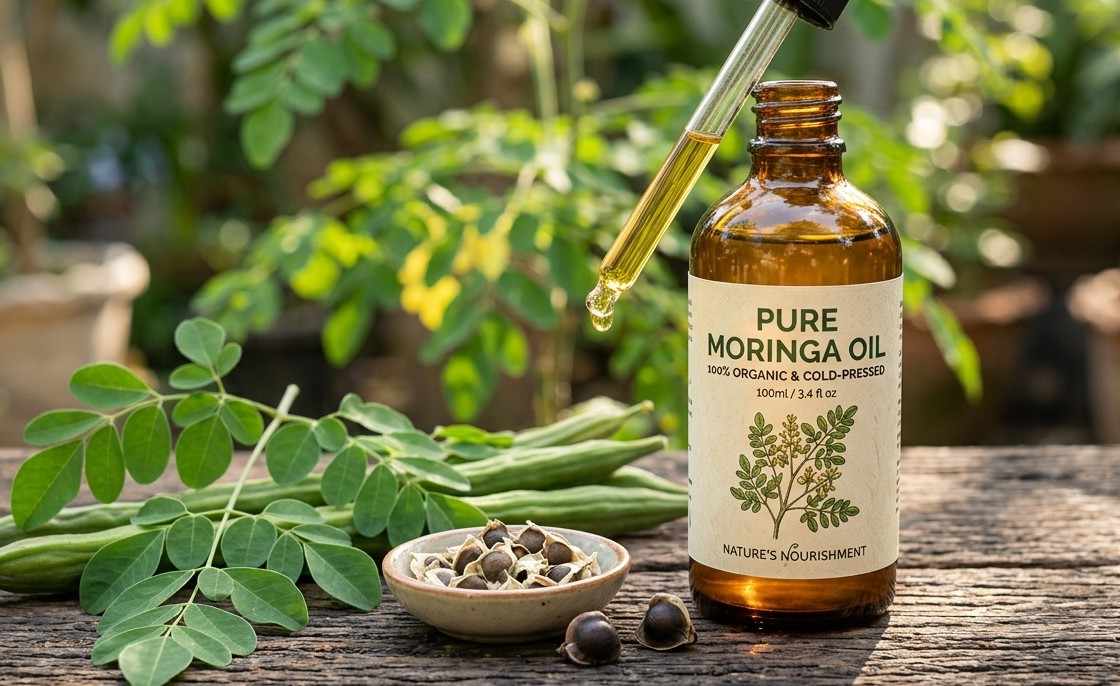
Moringa oil has quietly become one of the most respected natural oils in holistic wellness and skincare. Extracted from the seeds of the Moringa tree, this golden oil has been used for centuries in traditional medicine systems across Asia and Africa. Today, it is widely appreciated for its nourishing, moisturizing, anti-inflammatory, and antioxidant-rich properties.
If you are curious about whether moringa oil deserves a place in your daily routine, this guide will walk you through everything you need to know — from nutrition facts and proven health benefits to side effects, dosage, storage, and precautions.
What is Moringa Oil?
Moringa oil is a natural oil extracted from the seeds of the Moringa oleifera tree, often called the “drumstick tree” or “miracle tree.” This plant is native to parts of India and Africa and is known for its highly nutritious leaves, pods, and seeds.
The oil is typically cold-pressed from mature seeds to preserve its nutrients. It has a light texture, mild nutty aroma, and long shelf life due to its high antioxidant content. Moringa oil is also known as Ben oil, named after behenic acid — a fatty acid it contains in high amounts. Unlike many plant oils that oxidize quickly, moringa oil remains stable for longer periods, making it valuable in both culinary and cosmetic applications.
Nutrition Facts of Moringa Oil
Moringa oil is composed mainly of healthy fats and bioactive plant compounds. Below is an approximate nutritional profile per 1 tablespoon (about 14 grams):
| Nutrient | Approximate Amount |
|---|---|
| Calories | 120 kcal |
| Total Fat | 14 g |
| Monounsaturated Fat | 9–10 g |
| Polyunsaturated Fat | 1 g |
| Saturated Fat | 2–3 g |
| Behenic Acid | High |
| Oleic Acid | 65–75% |
| Vitamin E | Moderate amount |
| Plant Sterols | Present |
| Antioxidants | Rich |
Moringa oil is especially rich in oleic acid, the same heart-healthy fat found in olive oil.
20 Science-Backed Benefits of Moringa Oil
1. Supports Heart Health
The high oleic acid content may help improve good cholesterol levels and support overall cardiovascular health.
2. Rich in Antioxidants
Moringa oil contains powerful antioxidants that help neutralize free radicals and reduce oxidative stress.
3. Reduces Inflammation
Its anti-inflammatory compounds may help reduce swelling and inflammation in the body.
4. Promotes Healthy Skin
The oil deeply nourishes skin, helping improve elasticity and natural glow.
5. Fights Premature Aging
Antioxidants in moringa essential oil may help reduce fine lines and protect skin from environmental damage.
6. Moisturizes Dry Skin
It acts as an excellent natural emollient for dry, flaky, or rough skin.
7. Supports Hair Growth
When massaged into the scalp, it may improve circulation and support stronger hair roots.
8. Reduces Dandruff
Its antimicrobial properties may help control scalp dryness and flaking.
9. Strengthens Nails
Regular application may reduce brittleness and improve nail health.
10. Helps Manage Acne
Its antibacterial properties may help reduce acne-causing bacteria.
11. Supports Wound Healing
Traditionally, moringa essential oil has been used to support minor wound recovery.
12. Enhances Digestive Health
When consumed in moderation, it may support digestive function.
13. Balances Oil Production
Despite being an oil, it may help regulate natural sebum production in the skin.
14. Boosts Immune Function
Its antioxidant and nutrient profile may support immune health.
15. Protects Against Environmental Damage
Moringa oil forms a protective barrier against pollution and UV stress.
16. Supports Joint Comfort
Its anti-inflammatory properties may ease joint stiffness when used topically.
17. Improves Skin Tone
Regular use may help brighten dull or uneven skin.
18. Soothes Irritated Skin
It may calm redness and minor irritation.
19. Supports Metabolic Health
Healthy fats in moringa essential oil may contribute to better metabolic balance.
20. Long Shelf Life
Its natural stability means it remains effective longer without going rancid quickly.
10 Side Effects of Moringa Oil
1. Allergic Reactions
Some individuals may experience itching, rash, or redness.
2. Digestive Upset
Excess consumption may cause nausea or mild stomach discomfort.
3. Low Blood Pressure
Moringa may lower blood pressure, which could be problematic for some individuals.
4. Blood Sugar Reduction
It may lower blood sugar levels and interact with diabetes medications.
5. Skin Sensitivity
Sensitive skin types may experience irritation without a patch test.
6. Hormonal Effects
Some compounds may influence hormone levels.
7. Pregnancy Concerns
High doses may not be recommended during pregnancy.
8. Medication Interactions
It may interact with blood pressure or blood sugar medications.
9. Diarrhea (High Intake)
Large amounts may lead to loose stools.
10. Headache in Rare Cases
Some individuals may report mild headaches after excessive use.
How to Use Moringa Oil?
Moringa oil is extremely versatile and can be used both internally and externally.
For Skin:
- Apply a few drops to clean skin as a moisturizer.
- Mix with your regular cream for enhanced hydration.
- Use as a night oil for deep nourishment.
For Hair:
- Massage into scalp before washing.
- Add to hair masks.
- Apply to dry ends to reduce frizz.
For Cooking:
- Use as a salad dressing oil.
- Drizzle over cooked vegetables.
- Avoid overheating to preserve nutrients.
Other Uses of Moringa Oil
- Carrier oil for essential oils
- Massage oil
- Natural makeup remover
- Lip balm base
- Cuticle oil
- Beard oil
- Baby massage oil (after consultation)
- Aromatherapy blends
Tips for Consuming Moringa Oil
- Always choose cold-pressed, food-grade oil.
- Start with small amounts.
- Do not overheat during cooking.
- Store properly to maintain freshness.
- Consult a healthcare provider if on medication.
How to Take Moringa Oil?
For internal use:
- Start with ½ teaspoon daily.
- Increase gradually to 1 teaspoon if tolerated.
- Mix into smoothies, soups, or salads.
For external use:
- Apply directly to skin.
- Use 2–3 times weekly for hair treatments.
How to Make Moringa Oil at Home?
Cold pressing at home is difficult, but a basic infusion can be made:
- Collect dried moringa seeds.
- Crush seeds lightly.
- Add to a clean jar with carrier oil (like coconut oil).
- Let sit in sunlight for 2–3 weeks.
- Strain and store in a dark bottle.
Note: This is an infused oil, not pure cold-pressed moringa essential oil.
How Much Moringa Oil Can You Use Per Day?
For internal use:
- ½ to 1 teaspoon daily is generally sufficient.
For topical use:
- 3–5 drops for face.
- 1–2 tablespoons for full hair treatment.
Moringa Oil Dosage
| Purpose | Recommended Dosage |
|---|---|
| General wellness | ½–1 teaspoon daily |
| Skin care | 3–5 drops |
| Hair mask | 1–2 tablespoons |
| Massage | 1 tablespoon |
Always start with the lowest effective dose.
Best Time to Use Moringa Oil
- Morning: In smoothies or salads.
- Night: As a facial oil.
- Before shower: As a scalp treatment.
- After bath: As body moisturizer.
Consistency matters more than timing.
Who Should Use Moringa Oil?
- Individuals with dry skin
- People with frizzy or damaged hair
- Those seeking natural heart-healthy fats
- Individuals looking for antioxidant support
- People interested in natural skincare alternatives
Who Should Not Use Moringa Oil?
- Pregnant women without medical advice
- Individuals on blood pressure medication
- Those with severe allergies to plant oils
- People with low blood sugar issues
- Children without pediatric consultation
How to Store Moringa Oil?
- Store in a cool, dark place.
- Keep in an airtight glass bottle.
- Avoid direct sunlight.
- Close lid tightly after use.
- Refrigeration is optional but not necessary.
Proper storage extends shelf life up to 1–2 years.
Precautions and Interactions
- Consult a healthcare provider if you are pregnant, breastfeeding, or on medication.
- Monitor blood sugar and blood pressure if consuming internally.
- Perform a patch test before applying to skin.
- Do not exceed recommended dosage.
- Stop use if irritation or adverse symptoms occur.
Final Thoughts
Moringa oil truly lives up to its reputation as a multi-purpose natural remedy. From supporting heart health to nourishing skin and hair, it offers a wide range of potential benefits. However, like any natural product, it should be used responsibly and in moderation.
When chosen in high-quality, cold-pressed form and used appropriately, moringa essential oil can become a valuable addition to both your wellness routine and beauty regimen. If you are considering adding moringa essential oil to your daily life, start small, observe how your body responds, and enjoy the many nourishing benefits this remarkable oil has to offer.
FAQ’s
Can I use moringa oil every day?
Yes, moringa essential oil can be used daily in small amounts for both skin and hair care, as long as your skin tolerates it well. For internal use, stick to ½–1 teaspoon per day unless advised otherwise by a healthcare professional.
What does moringa oil taste like?
Moringa oil has a mild, slightly nutty flavor that is not overpowering. It blends well with salads, smoothies, and light dishes.
Is moringa oil good for acne-prone skin?
Yes, moringa essential oil has antibacterial and anti-inflammatory properties that may help reduce acne-causing bacteria and calm redness. Always perform a patch test before applying it to the face.
Does moringa oil clog pores?
Moringa oil is considered low to moderately comedogenic and is generally suitable for most skin types. However, very oily or highly acne-prone individuals should test it carefully before regular use.
Can moringa oil lighten skin?
Moringa oil does not bleach the skin, but its antioxidants may help improve skin tone and brightness over time. It promotes a natural glow rather than artificial lightening.
Is moringa oil safe during pregnancy?
Pregnant women should avoid consuming moringa essential oil unless approved by a healthcare provider. Topical use in small amounts may be safer, but medical advice is still recommended.
Can children use moringa oil?
Topical use in small amounts may be safe for children after a patch test, but internal use should only be done under pediatric guidance. Always consult a healthcare professional first.
Does moringa oil expire?
Yes, although it has a long shelf life of up to 1–2 years if stored properly in a cool, dark place. If it develops a strong odor or changes in color, it should be discarded.
Can moringa oil lower blood sugar?
Moringa may have blood sugar-lowering effects, which can be beneficial for some individuals. However, people taking diabetes medication should monitor levels closely and consult a doctor.
Can moringa oil help with joint pain?
Its anti-inflammatory properties may provide mild relief when massaged onto sore joints. It works best as part of a broader pain management routine.
Is moringa oil better than coconut oil?
Both oils have different benefits — moringa oil is richer in oleic acid and antioxidants, while coconut oil is high in saturated fats and deeply moisturizing. The better choice depends on your specific needs.
Can I mix moringa oil with other oils?
Yes, moringa essential oil blends well with oils like jojoba, almond, or coconut oil. It also works effectively as a carrier oil for essential oils.
How do I know if my moringa oil is pure?
Look for cold-pressed, unrefined, and food-grade labeling from a reputable brand. Pure moringa essential oil is light golden in color with a mild scent.
Can moringa oil help reduce wrinkles?
Its antioxidant content may help reduce the appearance of fine lines by supporting collagen and protecting skin from oxidative damage. Consistent use is key for visible improvement.
Is moringa oil good for lips?
Yes, it works as a natural lip moisturizer and may help repair dryness or chapping.
Can moringa oil cause weight gain?
Like all oils, moringa essential oil is calorie-dense, so excessive consumption may contribute to weight gain. Moderate use within a balanced diet is unlikely to cause problems.
What is the best way to apply moringa oil to the face?
Apply 2–3 drops to clean, slightly damp skin and gently massage in upward motions. It works best as the final step in your nighttime skincare routine.
What is Moringa Oil made from?
Moringa oil is extracted from the seeds of the Moringa oleifera tree, often called the drumstick tree or miracle tree. The oil is usually cold-pressed to preserve its nutrients, healthy fats, and antioxidants.
How long does it take for Moringa Oil to work?
For skin hydration and softness, results may be noticeable within a few days of regular use. Hair and internal health benefits typically take 3–6 weeks of consistent application or consumption.
How should Moringa Oil be stored?
Moringa essential oil should be stored in a cool, dark place in an airtight glass bottle. Keep it away from direct sunlight and heat to maintain freshness and extend its shelf life.
What is Moringa Oil good for?
Moringa essential oil is commonly used for moisturizing dry skin, supporting hair strength and shine, reducing inflammation, and providing antioxidant protection. It is also used in small amounts for heart health support due to its high oleic acid content.
How to use moringa oil for hair growth?
Massage 1–2 tablespoons of moringa essential oil into your scalp for 5–10 minutes to stimulate circulation, then leave it on for at least 30 minutes or overnight before washing. Repeat 2–3 times per week for best results.
Also Read: