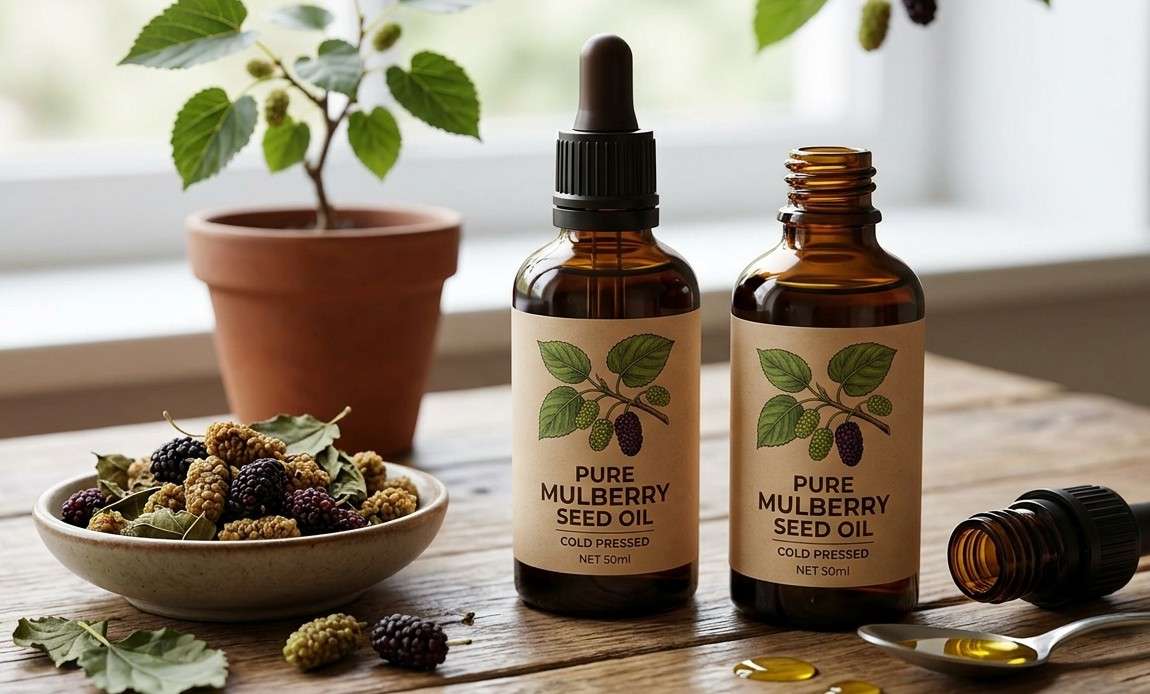
Mulberries are often celebrated for their sweet-tart flavor and vibrant color, but very few people talk about the powerful oil hidden inside their tiny seeds. Mulberry Seed Oil is a lightweight, nutrient-rich oil extracted from the seeds of mulberry fruits, and it is quickly gaining attention in the world of skincare, nutrition, and natural wellness.
If you are looking for a plant-based oil that supports skin health, hair vitality, and overall well-being, Mulberry Seed Oil deserves a closer look. In this guide, we will explore everything you need to know about Mulberry Seed Oil, from its nutritional profile to its science-backed health benefits, side effects, usage tips, dosage, and more.
What is Mulberry Seed Oil?
Mulberry Seed Oil is a natural oil extracted from the seeds of mulberry fruits, typically from species such as white mulberry, red mulberry, or black mulberry. The oil is usually obtained through cold-pressing, a method that preserves its delicate fatty acids, antioxidants, and vitamins.
Unlike many heavy plant oils, Mulberry Seed Oil is light in texture, fast-absorbing, and non-greasy. It is rich in essential fatty acids, particularly omega-3 and omega-6, along with vitamin E and plant-based antioxidants. Because of this, it is widely used in skincare formulations, hair products, and sometimes as a nutritional supplement.
The oil has a mild, slightly nutty aroma and a pale yellow to golden color. Its balanced fatty acid profile makes it especially valuable for maintaining healthy skin barriers, soothing inflammation, and supporting overall wellness.
Nutrition Facts of Mulberry Seed Oil
Below is an approximate nutritional breakdown per 100 grams of cold-pressed Mulberry Seed Oil. Values may vary depending on the source and processing method.
| Nutrient / Component | Approximate Amount per 100g |
|---|---|
| Calories | 884 kcal |
| Total Fat | 100 g |
| Omega-3 Fatty Acids (ALA) | 20–30 g |
| Omega-6 Fatty Acids (Linoleic) | 50–60 g |
| Omega-9 Fatty Acids | 10–15 g |
| Saturated Fat | 5–8 g |
| Vitamin E (Tocopherols) | 50–70 mg |
| Phytosterols | Moderate amount |
| Antioxidants (Polyphenols) | Present |
The most remarkable aspect of Mulberry Seed Oil is its high omega-3 and omega-6 content, which is relatively rare among fruit seed oils.
20 Proven Benefits of Mulberry Seed Oil
- Supports Skin Barrier Function – Mulberry Seed Oil strengthens the skin’s natural barrier by replenishing essential fatty acids that prevent moisture loss.
- Deeply Hydrates the Skin – Its high omega content helps lock in hydration, making the skin soft, smooth, and supple.
- Reduces Inflammation – The anti-inflammatory properties of omega-3 fatty acids help calm redness, irritation, and sensitive skin conditions.
- Improves Skin Elasticity – Regular use promotes firmer, more elastic skin due to its nourishing lipid profile.
- Helps Reduce Fine Lines – Antioxidants and vitamin E in the oil help combat oxidative stress, which contributes to premature aging.
- Brightens Dull Complexion – Mulberry Seed Oil can improve skin tone and radiance by supporting healthy cell turnover.
- Supports Acne-Prone Skin – Its lightweight and non-comedogenic nature makes it suitable for acne-prone skin without clogging pores.
- Balances Oily Skin – The linoleic acid content helps regulate sebum production and reduce excess oiliness.
- Promotes Hair Shine – When applied to hair, it enhances shine and smoothness without weighing it down.
- Strengthens Hair Strands – The fatty acids nourish the scalp and hair roots, supporting stronger strands.
- Soothes Dry Scalp – Its moisturizing and anti-inflammatory properties help relieve flaky, itchy scalp conditions.
- Protects Against Environmental Damage – Antioxidants in the oil protect skin from pollution and UV-induced free radical damage.
- Supports Heart Health – When consumed in small amounts, its omega-3 content may contribute to cardiovascular support.
- Boosts Immune Function – Essential fatty acids and antioxidants play a supportive role in immune health.
- Enhances Wound Healing – The oil supports faster skin recovery due to its nourishing and restorative properties.
- Reduces Skin Redness – Regular application can visibly calm irritated or reactive skin.
- Improves Lip Health – It can be used as a natural lip treatment to prevent dryness and cracking.
- Softens Cuticles – Massaging the oil into nails and cuticles keeps them healthy and hydrated.
- Supports Joint Comfort – The anti-inflammatory nature of omega fatty acids may help ease mild joint discomfort when included in a balanced diet.
- Acts as a Natural Emollient – Mulberry Seed Oil smooths rough skin patches by softening and conditioning the surface.
10 Side Effects of Mulberry Seed Oil
Although generally safe, Mulberry Seed Oil may cause side effects in certain individuals.
- Allergic Reactions – People allergic to mulberries may experience itching, redness, or swelling.
- Skin Irritation – Sensitive individuals may develop mild irritation when using it topically without patch testing.
- Digestive Upset – Excessive internal consumption may lead to nausea or loose stools.
- Oil Oxidation Risk – Improperly stored oil can oxidize and cause skin irritation.
- Acne Flare in Rare Cases – Though non-comedogenic, some individuals may still experience breakouts.
- Headache in Sensitive Individuals – Rarely, sensitivity to plant oils may trigger mild headaches.
- Interaction with Blood Thinners – High omega-3 intake may affect blood clotting when combined with anticoagulant medications.
- Lowered Blood Sugar – Those with diabetes should monitor blood sugar when consuming it internally.
- Hormonal Sensitivity – Individuals with hormone-sensitive conditions should consult a doctor before use.
- Rancidity Issues – Using expired oil can cause skin reactions due to oxidation.
How to Use Mulberry Seed Oil?
Mulberry Seed Oil can be used in several ways:
- Apply 2–3 drops directly to clean, damp skin as a facial oil.
- Mix a few drops with your regular moisturizer.
- Use as a scalp massage oil before shampooing.
- Blend into DIY face masks or hair masks.
- Add to body lotions for extra nourishment.
Always perform a patch test before first use.
Other Uses of Mulberry Seed Oil
Beyond skincare and nutrition, Mulberry Seed Oil can also be used:
- As a carrier oil for essential oils.
- In handmade soaps and cosmetics.
- In massage therapy for lightweight hydration.
- As a cuticle and nail oil.
- In lip balms and body butters.
Tips for Consuming Mulberry Seed Oil
If consuming Mulberry Seed Oil:
- Choose cold-pressed, food-grade oil.
- Start with small amounts to check tolerance.
- Do not heat it excessively, as high temperatures can destroy nutrients.
- Store properly to prevent oxidation.
How to Take Mulberry Seed Oil?
For internal use:
- Take ½ to 1 teaspoon daily.
- Mix into smoothies or salad dressings.
- Drizzle over cooked vegetables after cooling.
Always consult a healthcare provider before regular internal consumption.
How to Make Mulberry Seed Oil at Home?
Making Mulberry Seed Oil at home is difficult due to the tiny size of the seeds and the need for specialized oil extraction equipment. However, a simplified method includes:
- Collect ripe mulberries.
- Separate and clean the seeds.
- Dry the seeds thoroughly.
- Use a mechanical oil press to extract oil.
- Filter the oil through a fine cloth.
- Store in a dark glass bottle.
Cold pressing is essential to retain nutrients.
How Much Mulberry Seed Oil Can You Use Per Day?
For topical use, 3–5 drops for the face and 1–2 teaspoons for body application is generally sufficient.
For internal use, ½ to 1 teaspoon per day is typically considered moderate for healthy adults.
Mulberry Seed Oil Dosage
- Topical: 2–5 drops for facial application.
- Hair: 1 teaspoon for scalp massage.
- Internal: ½–1 teaspoon daily (food-grade only).
Always start with smaller amounts.
Best Time to Use Mulberry Seed Oil
- Morning: As a lightweight facial oil under sunscreen.
- Night: As a nourishing overnight treatment.
- Before Shampoo: For scalp nourishment.
- With Meals: If taken internally, consume with food.
Who Should Use Mulberry Seed Oil?
Mulberry Seed Oil may be especially beneficial for:
- People with dry or sensitive skin.
- Individuals experiencing early signs of aging.
- Those with dull or damaged hair.
- Individuals seeking plant-based omega sources.
- People looking for lightweight, non-greasy oils.
Who Should Not Use Mulberry Seed Oil?
Avoid or consult a doctor if you:
- Have a known mulberry allergy.
- Are on blood-thinning medications.
- Are pregnant or breastfeeding without medical advice.
- Have severe skin conditions requiring medical treatment.
- Have uncontrolled diabetes and plan to consume it internally.
How to Store Mulberry Seed Oil?
Proper storage is essential to maintain quality:
- Store in a dark glass bottle.
- Keep away from heat and direct sunlight.
- Refrigerate after opening if possible.
- Close tightly after each use.
- Use within 6–12 months.
Precautions and Interactions
- Perform a patch test before topical application.
- Consult a healthcare provider before internal use.
- Avoid combining high doses with omega-3 supplements.
- Monitor for allergic reactions.
- Do not use rancid or expired oil.
Final Thoughts
Mulberry Seed Oil is a hidden gem in the world of natural oils. With its rich omega fatty acid profile, vitamin E content, and antioxidant properties, it offers powerful benefits for skin, hair, and overall wellness. Its lightweight texture makes it suitable for almost all skin types, while its nutritional value adds to its appeal as a functional oil.
Like any natural remedy, it should be used thoughtfully and in moderation. When chosen in high-quality, cold-pressed form and stored properly, Mulberry Seed Oil can become a versatile addition to your skincare routine and wellness lifestyle.
FAQ’s
What is Mulberry Seed Oil made from?
Oil is extracted from the tiny seeds of mulberry fruits, usually through a cold-pressing process that preserves its nutrients and essential fatty acids.
Is Mulberry Seed Oil good for the skin?
Yes, oil is rich in omega-3, omega-6, and vitamin E, which help hydrate, soothe, and protect the skin while improving elasticity and glow.
Can Mulberry Seed Oil clog pores?
Oil is generally lightweight and considered non-comedogenic, making it suitable for most skin types, including oily and acne-prone skin.
Is Mulberry Seed Oil safe for sensitive skin?
It is often well tolerated by sensitive skin due to its anti-inflammatory properties, but a patch test is recommended before full application.
Can Mulberry Seed Oil help with acne?
Its high linoleic acid content may help balance sebum production and reduce inflammation, which can support acne-prone skin when used properly.
How do you use Mulberry Seed Oil on the face?
Apply 2–3 drops to clean, slightly damp skin and gently massage it in, or mix it with your regular moisturizer.
Can Mulberry Seed Oil be used on hair?
Yes, it can be used as a scalp massage oil or applied lightly to hair strands to enhance shine and reduce dryness.
Is Mulberry Seed Oil edible?
Food-grade, cold-pressed Mulberry Seed Oil can be consumed in small amounts, but you should consult a healthcare professional before regular internal use.
Can pregnant women use Mulberry Seed Oil?
Pregnant or breastfeeding women should consult their healthcare provider before using oil internally or regularly on the skin.
How long does it take to see results on skin?
Visible improvements in hydration and texture may appear within a few weeks of consistent use, depending on skin type and overall routine.
What does Mulberry Seed Oil smell like?
Oil typically has a mild, slightly nutty scent that is not overpowering.
Can Mulberry Seed Oil lighten skin?
It does not bleach the skin, but its antioxidant properties may help improve overall brightness and evenness of complexion over time.
Can I use Mulberry Seed Oil every day?
Yes, oil can generally be used daily for skincare or hair care, especially because it is lightweight and rich in essential fatty acids, but start with small amounts to see how your skin responds.
Is Mulberry Seed Oil safe for children?
Topical use in small amounts may be safe for older children, but it is best to consult a pediatrician before regular use, especially for internal consumption.
What is Mulberry Seed Oil good for?
Oil is good for moisturizing and soothing the skin, improving elasticity, supporting scalp and hair health, and providing antioxidant and omega fatty acid benefits when used appropriately.
Also Read: