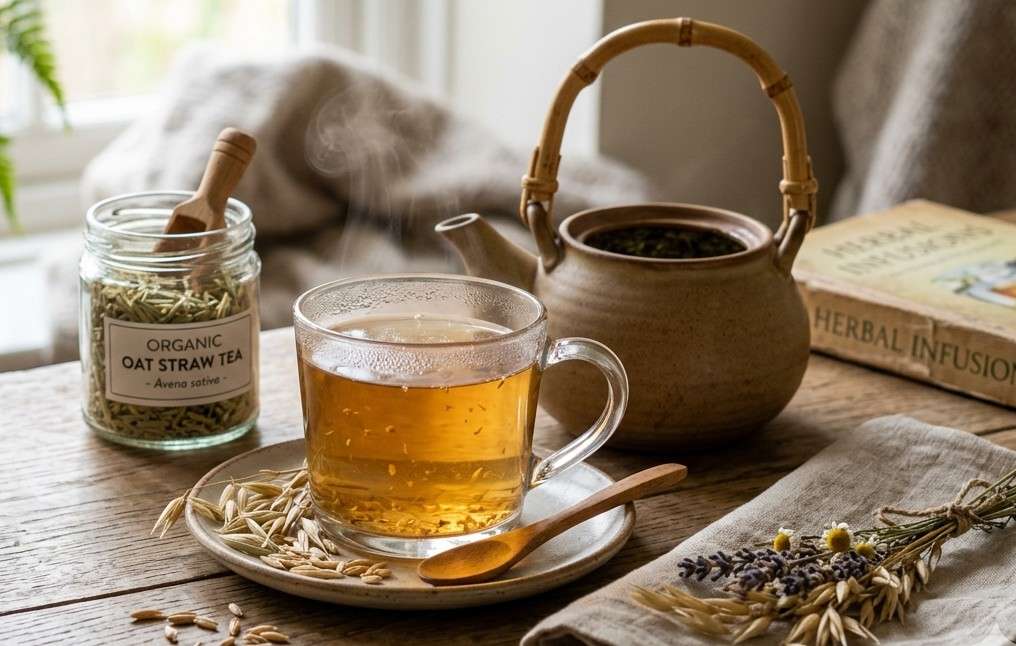
Oat Straw Tea is a gentle, nourishing herbal infusion made from the green tops and stems of the oat plant. While most people are familiar with oatmeal and oat grains, oat straw has a long history in traditional herbal medicine as a restorative tonic for the nervous system, bones, and overall vitality.
Today, Oat Straw Tea is gaining popularity among those seeking natural remedies for stress, fatigue, hormonal balance, and mineral support. In this guide, you will learn what Oat Straw Tea is, its nutritional profile, proven health benefits, potential side effects, preparation methods, and who should or should not consume it.
What is Oat Straw Tea?
Oat Straw Tea is made from the dried stems and green tops of the oat plant, scientifically known as Avena sativa. Unlike oatmeal, which comes from the grain, oat straw is harvested before the plant fully matures and forms seeds.
Traditionally, oat straw has been used in Western herbal medicine as a:
- Nervine tonic (supports the nervous system)
- Mild adaptogen (helps the body cope with stress)
- Mineral-rich infusion
- Bone-supportive herb
- Gentle mood stabilizer
It is typically prepared as a long-steeped infusion to extract its rich mineral content. The tea has a mild, grassy flavor and is often described as soothing and earthy.
Nutritional Facts of Oat Straw Tea
The nutritional content of Oat Straw Tea depends on preparation time and concentration. A long infusion (4–8 hours) extracts significantly more minerals than a quick 10-minute steep. Below is an approximate nutritional profile per 1 cup (240 ml) of strongly brewed oat straw infusion:
| Nutrient | Approximate Amount | Benefit |
|---|---|---|
| Calcium | 50–100 mg | Supports bone health |
| Magnesium | 20–40 mg | Supports nerve and muscle function |
| Potassium | 40–80 mg | Maintains electrolyte balance |
| Iron | 0.5–1 mg | Supports oxygen transport |
| Zinc | Trace amounts | Supports immunity |
| Silica | Moderate amounts | Supports hair, skin, nails, joints |
| B Vitamins | Small amounts | Supports energy metabolism |
| Flavonoids | Present | Antioxidant effects |
| Saponins | Present | Anti-inflammatory potential |
| Avenanthramides | Present | Unique oat antioxidants |
Note: Values vary depending on herb quality and steeping time.
20 Science-Backed Benefits of Oat Straw Tea
- Supports Nervous System Health – Oat Straw Tea nourishes and strengthens the nervous system due to its magnesium, calcium, and calming phytochemicals.
- Reduces Stress Levels – Studies suggest Avena sativa extracts may help reduce stress by modulating cortisol and supporting adrenal balance.
- Improves Sleep Quality – Its calming nervine properties may help promote deeper, more restful sleep.
- Enhances Cognitive Function – Research on Avena sativa extracts indicates improved attention and mental performance.
- Boosts Mood Stability – Oat straw may help reduce mild anxiety and irritability by supporting neurotransmitter balance.
- Supports Bone Density – The calcium, magnesium, and silica content contribute to stronger bones.
- Promotes Heart Health – Oat-derived compounds such as avenanthramides have antioxidant and anti-inflammatory cardiovascular benefits.
- Improves Circulation – Oat straw may enhance blood flow and vascular function.
- Balances Hormones – Traditionally used to support hormonal balance, especially during menopause.
- Eases Menopausal Symptoms – Its mineral and nervine properties may help reduce hot flashes and mood swings.
- Supports Libido – Some herbal traditions consider oat straw a mild aphrodisiac that supports sexual vitality.
- Enhances Skin Health – Silica and antioxidants contribute to healthier skin structure.
- Strengthens Hair and Nails – The silica content supports keratin production and structural integrity.
- Improves Joint Health – Anti-inflammatory compounds may help ease mild joint discomfort.
- Stabilizes Blood Sugar – Oat plant compounds may help regulate glucose metabolism.
- Supports Digestive Health – Oat straw may gently soothe the digestive tract.
- Reduces Inflammation – Avenanthramides are known for their anti-inflammatory properties.
- Supports Recovery from Burnout – Herbalists traditionally use oat straw for nervous exhaustion and adrenal fatigue.
- Promotes Muscle Relaxation – Magnesium content helps reduce muscle tension.
- Provides Gentle Daily Mineral Support – Long infusions act as a natural mineral supplement.
10 Side Effects of Oat Straw Tea
Although generally safe, Oat Straw Tea may cause side effects in certain individuals.
- Allergic Reactions – Individuals with oat allergies may experience itching, rash, or respiratory symptoms.
- Gluten Sensitivity Concerns – Cross-contamination with gluten can affect people with celiac disease.
- Digestive Discomfort – Some individuals may experience bloating or mild stomach upset.
- Headache – Rarely, sensitive individuals may experience mild headaches.
- Low Blood Pressure – It may slightly lower blood pressure in sensitive individuals.
- Drug Interactions – It may interact with sedatives or blood pressure medications.
- Increased Urination – Mild diuretic effects may increase urination frequency.
- Hormonal Sensitivity – Those with hormone-sensitive conditions should consult a doctor.
- Skin Irritation (Rare) – Very rarely, skin irritation may occur.
- Excessive Mineral Intake – Overconsumption may contribute to mineral imbalance.
How to Make Oat Straw Tea?
There are two main preparation methods:
1. Standard Tea (Quick Method)
Ingredients:
- 1 tablespoon dried oat straw
- 1 cup boiling water
Instructions:
- Add oat straw to a cup.
- Pour boiling water over it.
- Cover and steep for 10–15 minutes.
- Strain and drink warm.
2. Mineral-Rich Infusion (Traditional Method)
Ingredients:
- 1 ounce (about 1 cup loosely packed) dried oat straw
- 1 quart (4 cups) boiling water
Instructions:
- Place oat straw in a glass jar.
- Pour boiling water over the herb.
- Cover and steep for 4–8 hours or overnight.
- Strain and refrigerate.
- Drink within 24–48 hours.
The long infusion extracts significantly more minerals.
Other Uses of Oat Straw Tea
Beyond drinking, Oat Straw Tea can be used in other ways:
- Added to bathwater for skin soothing and relaxation
- Used as a hair rinse to strengthen hair
- Applied as a facial toner
- Used in compresses for inflamed skin
- Combined with other herbs like chamomile or nettle
- Used as a base for herbal smoothies
How Much Oat Straw Tea Can You Drink a Day?
For general wellness:
- 1–3 cups per day of regular tea
For mineral infusion:
- Up to 1 quart (4 cups) per day
It is best to start with 1 cup daily and gradually increase while monitoring how your body responds.
Tips for Consuming Oat Straw Tea
- Use high-quality, organic oat straw.
- Prepare as a long infusion for maximum mineral benefits.
- Store infusion in the refrigerator.
- Drink consistently for 2–4 weeks to notice benefits.
- Combine with other mineral-rich herbs like nettle if desired.
- Avoid sweetening excessively.
- Consult a healthcare provider if taking medications.
Best Time to Drink Oat Straw Tea
- Morning – For gentle energy and mental clarity.
- Afternoon – To combat stress and fatigue.
- Evening – To promote relaxation and better sleep.
- During menopause – For hormone and mood support.
It is caffeine-free and safe for evening use.
Who Should Drink Oat Straw Tea?
Oat Straw Tea may be beneficial for:
- Individuals experiencing chronic stress
- People with mild anxiety
- Women in menopause
- Individuals with low mineral intake
- People with mild insomnia
- Those recovering from burnout
- Adults seeking natural bone support
- Students and professionals needing cognitive support
Who Should Not Drink Oat Straw Tea?
- People allergic to oats
- Individuals with confirmed celiac disease unless certified gluten-free
- Those on sedative medications without medical advice
- People with hormone-sensitive medical conditions
- Individuals with severe kidney disease
- Children without pediatric guidance
Precautions and Interactions
- Consult a healthcare provider if pregnant or breastfeeding.
- Monitor if taking blood pressure medication.
- Use certified gluten-free oat straw if gluten-sensitive.
- Avoid excessive intake.
- Discontinue use if allergic symptoms occur.
- Not a replacement for prescribed medication.
Final Thoughts
Oat Straw Tea is a deeply nourishing herbal infusion with a long history of traditional use. Rich in minerals and unique antioxidants like avenanthramides, it supports the nervous system, bones, mood, and overall vitality. When consumed in moderation and prepared correctly, it can be a gentle yet powerful addition to a daily wellness routine. However, like any herbal remedy, it should be used thoughtfully and with medical guidance when necessary.
FAQ’s
What is Oat Straw Tea good for?
Oat Straw Tea is mainly used to support the nervous system, reduce stress, improve sleep quality, and provide natural mineral nourishment. It is also commonly consumed for bone health, hormonal balance, and overall vitality.
Is Oat Straw Tea safe to drink every day?
Yes, Oat Straw Tea is generally safe for daily consumption when taken in moderate amounts such as 1–3 cups per day. Long infusions can also be consumed daily, but it is best to monitor your body’s response.
Does Oat Straw Tea contain caffeine?
No, Oat Straw Tea is completely caffeine-free. It is suitable for people who are sensitive to caffeine or looking for a calming evening beverage.
How long does it take for Oat Straw Tea to work?
Some people may notice relaxation benefits within a few days, while mineral and long-term nervous system support may take 2–4 weeks of consistent use. Herbal remedies often work gradually and build effects over time.
Can Oat Straw Tea help with anxiety?
Oat Straw Tea is traditionally used as a nervine tonic, meaning it supports and strengthens the nervous system. It may help reduce mild anxiety and stress, though it is not a replacement for medical treatment.
Is Oat Straw Tea good for sleep?
Yes, its calming properties may help improve sleep quality and relaxation before bedtime. It does not cause drowsiness like sedatives but promotes gentle nervous system support.
Can Oat Straw Tea help with menopause symptoms?
Oat Straw Tea is often used to support hormonal balance and reduce mood swings or irritability during menopause. Its mineral content may also support bone health during this stage of life.
Does Oat Straw Tea contain gluten?
Oat straw itself does not naturally contain high gluten levels, but cross-contamination can occur during processing. People with celiac disease should choose certified gluten-free oat straw products.
Can pregnant or breastfeeding women drink Oat Straw Tea?
Oat Straw Tea is generally considered mild, but pregnant or breastfeeding women should consult a healthcare provider before use. Medical guidance ensures safety for both mother and baby.
Can Oat Straw Tea lower blood pressure?
It may have a mild relaxing effect that can slightly lower blood pressure in some individuals. People taking blood pressure medication should consult their doctor before regular use.
Is Oat Straw Tea good for hair and skin?
Yes, the silica and mineral content may support stronger hair, healthier skin, and improved nail strength when consumed regularly over time.
Can children drink Oat Straw Tea?
Small amounts may be safe for older children, but it is best to consult a pediatrician before giving herbal teas to children.
What does Oat Straw Tea taste like?
Oat Straw Tea has a mild, grassy, slightly earthy flavor. It can be blended with herbs like chamomile, peppermint, or lemon balm for enhanced taste.
Also Read: